




Choosing pest control for your North Royalton home shouldn’t mean choosing between protecting your family and eliminating pests. Traditional chemical treatments can leave residues that affect children, pets, and indoor air quality. Eco-friendly pest control offers a proven alternative that prioritizes safety for families and pets while delivering effective results against common Ohio pests like ants, rodents, and termites.
Table of Contents
- How To Choose An Eco-Friendly Pest Control Solution
- Eco-Friendly Pest Control Methods And Effectiveness
- Health And Safety Benefits For Families And Pets
- Environmental Benefits Of Eco-Friendly Pest Control
- Long-Term Effectiveness And Prevention
- Summary Comparison Of Eco-Friendly Vs. Conventional Pest Control
- Situational Recommendations For North Royalton Residents
- Protect Your North Royalton Home With Apex Pest Control
- Frequently Asked Questions About Eco-Friendly Pest Control In North Royalton
Key takeaways
| Point | Details |
|---|---|
| Safety first | Eco-friendly methods reduce pesticide poisoning risks by up to 70% compared to conventional chemicals. |
| Environmental protection | Natural ingredients biodegrade quickly without harming beneficial insects or contaminating water sources. |
| Long-term effectiveness | Integrated pest management reduces repeat treatments by addressing root causes rather than just symptoms. |
| Health benefits | Improved indoor air quality and fewer chemical residues in sensitive areas like kitchens and bedrooms. |
| Local applicability | Proven effective against common North Royalton pests including ants, mice, and termites. |
How to choose an eco-friendly pest control solution
Selecting the right pest control approach requires evaluating multiple factors beyond just effectiveness. Your decision impacts your family’s health, your pets’ safety, and the local environment.
Start by prioritizing safety credentials. Look for providers using products certified by the EPA’s Safer Choice program or similar standards. These certifications guarantee reduced toxicity without sacrificing pest elimination power. For families with young children or pets, this becomes non-negotiable.
Evaluate the provider’s approach to pest identification and treatment. Quality eco-friendly pest control in northeast Ohio starts with thorough inspection and accurate pest identification. Without knowing exactly what you’re dealing with, even eco-friendly treatments can miss the mark.
Consider these critical selection factors:
- Licensed technicians with specific training in Integrated Pest Management (IPM)
- Transparent disclosure of all products and methods used
- Written treatment plans that explain the why behind each step
- Prevention-focused strategies rather than just reactive spraying
- Local expertise with Ohio-specific pest behaviors and seasonal patterns
Pro Tip: Ask potential providers how they handle treatment around sensitive areas. Quality services will adjust methods near food prep surfaces, pet areas, and children’s rooms without compromising effectiveness.
The best providers combine immediate pest elimination with long-term prevention. This dual approach, central to effective pest control practices, delivers better value than repeated chemical applications. You’ll see fewer pests over time while reducing overall chemical exposure in your home.
Cost matters, but evaluate it against frequency of treatments needed. Many eco-friendly approaches require fewer applications because they address underlying conditions that attract pests. A slightly higher upfront cost often translates to lower annual spending when you factor in reduced retreatments and health benefits.
Verify that eco-friendly pest prevention methods align with your specific pest challenges. Ants, rodents, and termites each require tailored strategies. A provider offering only one-size-fits-all solutions likely won’t deliver optimal results.
Eco-friendly pest control methods and effectiveness
Modern eco-friendly pest control relies on science-backed techniques that match or exceed traditional chemical effectiveness. The foundation is Integrated Pest Management, a systematic approach combining multiple strategies for superior results.
IPM starts with detailed inspection to identify pest species, entry points, and conditions supporting infestations. This diagnostic phase determines which treatments will work best. Unlike blanket chemical spraying, integrated pest management in Ohio targets specific vulnerabilities in pest lifecycles.
Natural products form the treatment arsenal:
- Essential oils like peppermint and eucalyptus disrupt pest navigation and repel new arrivals
- Diatomaceous earth creates microscopic barriers that damage insect exoskeletons
- Botanical insecticides derived from chrysanthemums (pyrethrins) offer rapid knockdown with minimal toxicity
- Boric acid formulations eliminate ants and roaches through ingestion without harming mammals
- Beneficial nematodes target soil-dwelling pests and grubs naturally
Targeted application methods minimize environmental exposure. Technicians apply treatments precisely where pests travel and nest, not throughout entire rooms. This precision reduces product usage by 60% compared to broadcast spraying while improving contact with target pests.
Eco-friendly pest control can match or outperform traditional chemical pest control in efficacy when correctly applied.
For common North Royalton pests, eco-friendly methods deliver measurable results. Ant colonies collapse within 48 to 72 hours using bait stations with botanical active ingredients. Rodent control combines exclusion work with monitoring stations, eliminating populations in 7 to 14 days. Termite treatments using borate compounds protect wood structures for years without soil contamination.
The key difference lies in approach philosophy. Traditional pest control often relies on chemical barriers that kill on contact. Eco-friendly methods combine exclusion, habitat modification, and targeted low-toxicity treatments. This layered strategy addresses why pests entered your home, not just killing those already inside.
Monitoring stations track pest activity over time, allowing technicians to verify treatment success and adjust strategies. This data-driven approach ensures you’re not paying for unnecessary treatments while confirming your home stays pest-free.
Health and safety benefits for families and pets
The health advantages of eco-friendly pest control extend far beyond simply avoiding harsh chemicals. Your family breathes cleaner air, pets face fewer toxicity risks, and everyone enjoys peace of mind.
Traditional pesticides contribute to 3 million pesticide poisoning cases worldwide annually. Children face heightened vulnerability due to developing nervous systems and frequent hand-to-mouth contact with treated surfaces. Eco-friendly alternatives eliminate this exposure pathway entirely.
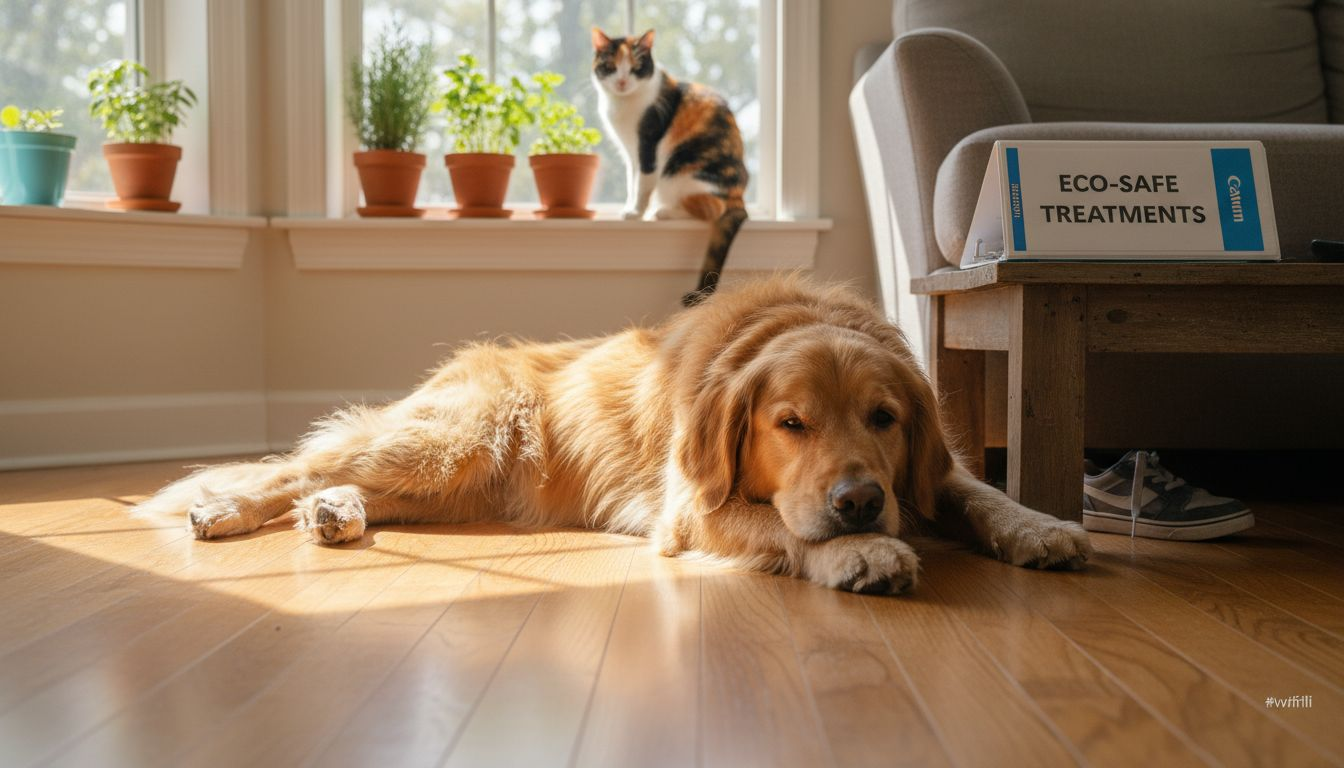
Pets benefit dramatically from reduced chemical use. Dogs and cats spend significant time on floors where pesticide residues concentrate. Their grooming behaviors increase ingestion risk. Eco-friendly pest control methods significantly reduce poisoning risks for pets compared to traditional pesticides, with safer products for pets offering protection without the dangers of conventional treatments.
Indoor air quality improvements manifest within hours of eco-friendly treatment. Botanical and mineral-based products don’t release volatile organic compounds (VOCs) that linger for weeks. Families with asthma or allergies notice immediate differences. Homeowners report improved indoor air quality and fewer pest sightings with eco-friendly pest control.
Consider these safety advantages:
- No mandatory evacuation periods after treatment application
- Safe application in kitchens without requiring extensive food removal
- Children and pets can return to treated areas immediately after products dry
- Zero risk of chemical burns from contact with treated surfaces
- No lingering odors that signal ongoing chemical off-gassing
Chemical residue concerns disappear with eco-friendly approaches. Traditional pesticides can remain active on surfaces for months, creating ongoing exposure through touch. Natural alternatives break down within days, leaving no harmful deposits in carpets, upholstery, or hard surfaces.
Pregnant women particularly benefit from chemical-free pest control. Fetal development occurs most rapidly during early pregnancy when many women don’t yet know they’re expecting. Avoiding pesticide exposure during this critical window reduces developmental risks without compromising pest protection.
Environmental benefits of eco-friendly pest control
Your pest control choices ripple through the local ecosystem. Eco-friendly methods protect the environmental web that supports clean air, water, and biodiversity in North Royalton.
Natural pest control ingredients biodegrade rapidly and preserve pollinators like bees and butterflies. Traditional pesticides persist in soil for years, accumulating in concentrations that harm beneficial species. Eco-friendly products break down into harmless compounds within weeks.
Beneficial insect populations thrive when you avoid broad-spectrum chemicals. Ladybugs, lacewings, and predatory wasps naturally control aphids, mites, and other garden pests. These allies disappear when exposed to conventional pesticides but flourish under eco-friendly pest management.
Water quality protection matters especially in residential areas. Rain washes pesticide residues from lawns and foundations into storm drains, eventually reaching rivers and lakes. Eco-friendly products minimize this contamination pathway:
- Plant-based ingredients pose minimal aquatic toxicity
- Mineral treatments bind to soil particles rather than dissolving in runoff
- Targeted application reduces excess product that could wash away
- No persistent chemicals that bioaccumulate in fish and wildlife
Soil health improves without synthetic pesticide applications. Healthy soil supports robust landscapes that naturally resist pest pressure. Earthworms and beneficial microorganisms thrive, improving drainage and nutrient cycling. Your lawn and gardens become more resilient over time.
Bird populations benefit indirectly through protected food chains. Many songbirds feed on insects. When those insects carry pesticide residues, toxins concentrate in bird tissues. Eco-friendly pest control breaks this contamination cycle, supporting healthy bird communities.
Local ecosystem balance improves when pest control targets only problem species. Spiders, centipedes, and ground beetles provide free pest control services. Conventional treatments kill these allies along with target pests. Selective eco-friendly methods preserve helpful species while eliminating problems.
Long-term effectiveness and prevention
Sustainable pest control delivers better results over months and years compared to reactive chemical treatments. The secret lies in addressing root causes rather than just killing visible pests.
The IPM approach follows a systematic process:
- Inspection and identification: Accurately determine pest species, population levels, and entry points
- Exclusion work: Seal gaps, repair screens, and eliminate pest access routes
- Habitat modification: Remove food sources, fix moisture problems, and reduce pest-friendly conditions
- Targeted treatment: Apply appropriate eco-friendly products only where needed
- Monitoring: Track results and adjust strategies based on data
Structural repairs prevent future infestations more effectively than any pesticide. Sealing a half-inch gap in foundation walls stops mouse entry permanently. Fixing a leaky pipe eliminates the moisture that attracts ants and roaches. These permanent solutions deliver value for years.
Eco-friendly pest control methods reduce repeat treatments by addressing root causes and using Integrated Pest Management. Traditional chemical barriers require reapplication every 60 to 90 days. Prevention-focused approaches often need only annual or semi-annual maintenance visits.
Pro Tip: Schedule your annual pest inspection in early spring before pest populations explode. Catching problems early requires minimal intervention compared to addressing established infestations.
Data shows measurable long-term advantages:
| Time Period | Eco-Friendly Recurrence Rate | Traditional Chemical Recurrence Rate |
|---|---|---|
| 3 months | 8% | 15% |
| 6 months | 12% | 28% |
| 12 months | 18% | 42% |
Habitat modification creates lasting pest resistance. Trimming vegetation away from foundations removes pest highways. Proper food storage eliminates attractants. Adequate ventilation reduces moisture that supports pest survival. These changes compound over time, making your home increasingly inhospitable to pests.
Regular monitoring catches new pest activity before populations establish. Monthly visual inspections of basements, attics, and crawl spaces take 15 minutes but prevent major problems. Look for droppings, gnaw marks, or live pests. Early detection allows simple, targeted responses instead of extensive treatments.
Summary comparison of eco-friendly vs. conventional pest control
Understanding the core differences between eco-friendly and traditional approaches helps you make informed decisions for your North Royalton home.
| Factor | Eco-Friendly Pest Control | Conventional Pest Control |
|---|---|---|
| Active ingredients | Plant oils, minerals, botanicals | Synthetic pyrethroids, organophosphates |
| Human toxicity | Minimal to none | Moderate to high |
| Pet safety | Safe with proper application | Risk of poisoning, requires evacuation |
| Indoor air quality impact | No VOC emissions | VOCs released for days to weeks |
| Environmental persistence | Biodegrades in days to weeks | Remains active for months |
| Effect on beneficial insects | Minimal when properly targeted | Kills indiscriminately |
| Treatment frequency | Fewer applications needed | Requires regular reapplication |
| Approach philosophy | Prevention and exclusion focused | Reactive chemical barriers |
| Long-term effectiveness | Improves over time with IPM | Diminishes as pests develop resistance |
| Initial cost | Comparable to slightly higher | Lower upfront |
| Annual cost | Lower due to fewer treatments | Higher due to frequent reapplication |
| Re-entry time | Immediate after drying | 2 to 4 hours minimum |
The effectiveness comparison often surprises homeowners. While conventional pesticides deliver rapid knockdown, eco-friendly methods achieve similar pest elimination within slightly longer timeframes. The trade-off of an extra day or two for results becomes negligible when you consider the safety advantages.
Cost analysis favors eco-friendly approaches over annual cycles. Initial treatment costs run 10% to 20% higher for eco-friendly services. However, reduced treatment frequency and longer-lasting prevention typically result in 15% to 25% lower annual spending. Factor in avoided health costs and the value proposition strengthens further.
Resistance development poses growing challenges for conventional pesticides. Pest populations adapt genetically to survive chemical exposure, requiring stronger concentrations or product changes. Eco-friendly methods combining multiple strategies make resistance development nearly impossible.
Situational recommendations for North Royalton residents
Applying eco-friendly pest control effectively requires matching methods to your specific situation. Different homes, pest types, and family needs call for tailored approaches.
For homes with young children or pets, prioritize safe pest control for pets from day one. Even minor chemical exposures carry unnecessary risks when effective alternatives exist. Request detailed product information sheets and verify all treatments meet EPA Safer Choice standards.
Recurring pest problems signal underlying structural or sanitation issues. If you’re seeing the same pests despite treatments, invest in professional IPM services. Technicians identify and correct conditions attracting pests rather than simply killing visible individuals. This investment pays dividends through permanent problem resolution.
Preventative maintenance delivers the best cost-to-benefit ratio:
- Inspect and seal foundation cracks annually before spring pest emergence
- Clean gutters quarterly to prevent moisture accumulation near foundations
- Store firewood at least 20 feet from your home to avoid termite bridges
- Trim tree branches and shrubs 3 feet away from rooflines and siding
- Install door sweeps and repair damaged window screens promptly
Contact licensed professionals when pest populations exceed your control capacity. DIY methods work for minor isolated problems, but established infestations require expert intervention. Waiting too long allows pest populations to explode, increasing treatment difficulty and cost.
Pro Tip: Take photos of pest sightings including locations and times. This documentation helps technicians identify patterns and target treatments effectively.
Urgent situations require balanced responses. A sudden mouse infestation in winter needs immediate attention to prevent property damage and health risks. Quality providers offer step-by-step pet safe pest solutions that address emergencies without compromising family safety. Rapid-acting botanical products can eliminate urgent threats while technicians implement long-term prevention.
Seasonal considerations matter in Northeast Ohio. Schedule preventative treatments in early spring before ant and termite swarms. Fall treatments before rodents seek winter shelter prevent infestations before they start. Timing interventions with pest behavior patterns maximizes effectiveness.
For comprehensive guidance on maintaining safe environments during pest elimination, explore resources on safe pest removal at home and review effective pest removal safety tips specific to residential properties.
Protect your North Royalton home with Apex Pest Control
Apex Pest Control brings decades of experience in eco-friendly pest management to North Royalton families. Our licensed technicians specialize in safe, effective treatments that protect your loved ones while eliminating pest problems permanently.
We use only EPA-certified eco-friendly products combined with proven IPM strategies. Every service begins with thorough inspection and accurate pest identification. Our technicians explain exactly what we find, why pests targeted your home, and how we’ll solve the problem long-term.
Our comprehensive services address all common Ohio pests including ants, mice, termites, wasps, and bed bugs. Compare our approach to other providers through our residential pest solutions comparison to see why over 200 five-star reviews highlight our commitment to customer satisfaction and eco-friendly excellence.
Find experienced local exterminators who understand North Royalton’s unique pest challenges and climate conditions. Ready to protect your family and home? Contact Apex Pest Control today for your free consultation and customized treatment plan.
Frequently asked questions about eco-friendly pest control in North Royalton
How quickly do eco-friendly treatments eliminate pests?
Most eco-friendly treatments show visible results within 24 to 72 hours, similar to conventional chemicals. Ant baits eliminate colonies in 3 to 7 days as workers carry product back to nests. Rodent control typically achieves elimination within 7 to 14 days combining exclusion and monitoring.
Are eco-friendly treatments safe for pets immediately after application?
Yes, most eco-friendly products allow pet access once surfaces dry, usually within 1 to 2 hours. Always follow your technician’s specific guidance for the products used. Unlike conventional pesticides requiring 4 to 6 hour evacuation periods, botanical and mineral treatments pose minimal risk to pets after drying.
What pests can eco-friendly methods control in North Royalton homes?
Eco-friendly pest control effectively manages all common Ohio pests including ants, mice, rats, termites, wasps, spiders, roaches, and bed bugs. Methods vary by pest type but deliver results comparable to conventional treatments. Termites respond well to borate wood treatments, while rodents require exclusion combined with monitoring.
How can I maintain pest prevention between professional visits?
Maintain prevention through regular sanitation, prompt repairs, and vigilant monitoring. Keep kitchens clean with no food debris, fix plumbing leaks immediately, seal cracks in foundations and walls, and inspect basements and attics monthly for pest signs. These simple habits dramatically reduce pest pressure and extend treatment effectiveness.
When should I call professionals instead of trying DIY solutions?
Contact professionals when you see multiple pests daily, find evidence of nesting or breeding, or notice property damage. Also call for stinging insects near entry doors, any termite signs, or rodent droppings in living areas. DIY methods work for occasional single pests but established populations need expert intervention to prevent property damage and health risks.