



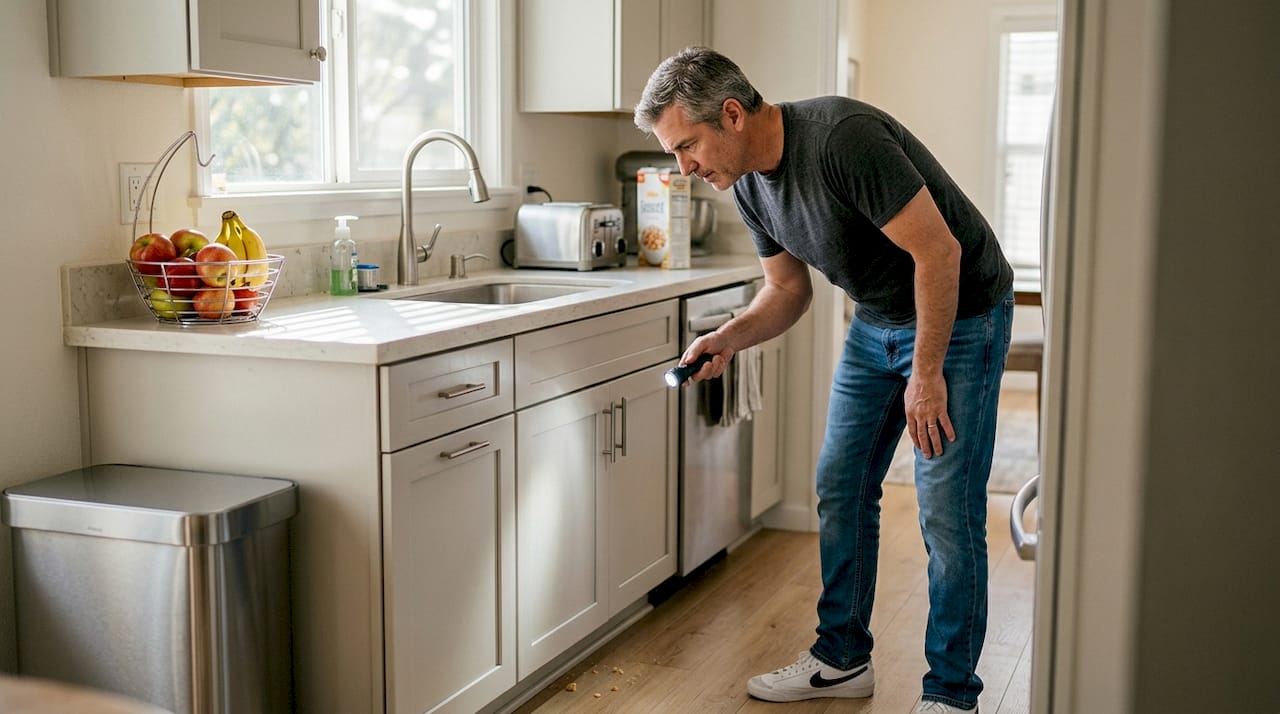
TL;DR:
- Pests in Westlake are active year-round, especially rodents in fall and winter.
- Professional pest control offers targeted, long-lasting solutions that DIY methods can’t match.
- Eco-friendly IPM strategies prevent pests sustainably by addressing entry points and habitat.
Pests in Westlake, Ohio aren’t just a summer problem. Mice squeeze inside when temperatures drop, bed bugs travel home with guests year-round, and ants scout your kitchen no matter the season. Many homeowners and business owners assume a single spray treatment will solve the problem, but that thinking is exactly what keeps pests coming back. This guide covers the most common pest threats in Westlake, why professional help matters, how eco-friendly solutions work, and the step-by-step prevention plan that actually keeps properties protected through every season Ohio throws at you.
Table of Contents
- Common pest threats in Westlake (and when they strike)
- Why professional pest control makes a difference
- Eco-friendly and integrated pest solutions for Westlake
- Step-by-step guide: Protect your Westlake property year-round
- Why most Westlake properties stay pest-free with layered solutions
- Protect your Westlake home or business — get professional help
- Frequently asked questions
Key Takeaways
| Point | Details |
|---|---|
| Know your pest risks | Understanding local pest threats by season helps you act before problems start. |
| Choose expert solutions | Professional pest control offers advanced, safe, and lasting results compared to DIY methods. |
| Go eco-friendly | Eco-friendly and integrated approaches protect people, pets, and the environment without sacrificing effectiveness. |
| Stay proactive | A step-by-step yearly plan keeps your home or business pest-free longer. |
Common pest threats in Westlake (and when they strike)
Westlake sits in a climate zone that gives pests multiple opportunities throughout the year. Warm, humid summers accelerate insect breeding. Cool falls push rodents indoors. Mild winters create false confidence. Knowing which pests are active and when is the first step toward real control.
Here’s a quick look at the top pests and their peak activity windows in Westlake:
| Pest | Peak season | Primary risk |
|---|---|---|
| Rodents (mice/rats) | Fall and winter | Structural damage, disease |
| Bed bugs | Year-round | Health, sleep disruption |
| Stinging insects | Late spring to fall | Physical injury, allergic reactions |
| Ants | Spring through fall | Food contamination, structural damage |
| Cockroaches | Year-round (worse in summer) | Disease, allergens |
Each pest leaves clues. Rodents leave small, dark droppings along walls and in cabinets. Bed bugs leave tiny rust-colored stains on mattress seams and cause clusters of small bites on skin. Stinging insects build visible nests in eaves, attics, and ground burrows. Ants leave visible trails toward food sources. Cockroaches produce a musty odor and shed skins near warm, dark hiding spots.
Understanding top pest threats by season helps you time your prevention efforts correctly. Don’t wait until you see pests to act.
The biggest structural risks come from rodents and carpenter ants, which chew through wood, wiring, and insulation. The biggest health risks come from cockroaches, bed bugs, and rodents, all of which spread bacteria, allergens, and in some cases serious disease, according to EPA pest facts.
Pests with the highest building risk:
- Rodents (chew wiring, create fire hazards)
- Carpenter ants (hollow out wood structures)
- Cockroaches (contaminate food prep surfaces)
Pests with the highest health risk:
- Rodents (carry hantavirus, salmonella)
- Cockroaches (trigger asthma and allergies)
- Bed bugs (cause sleep loss, skin infections)
One of the most important data points for Westlake property owners: rodent infestations peak by 300% in fall across Ohio. That’s not a small uptick. It means your home becomes a far more attractive target the moment temperatures start dropping. Planning your seasonal pest prevention before fall arrives is one of the highest-value actions you can take.
Why professional pest control makes a difference
With a sense of which pests you’re up against, it’s important to choose not just any solution, but the right approach to keep your property safe.
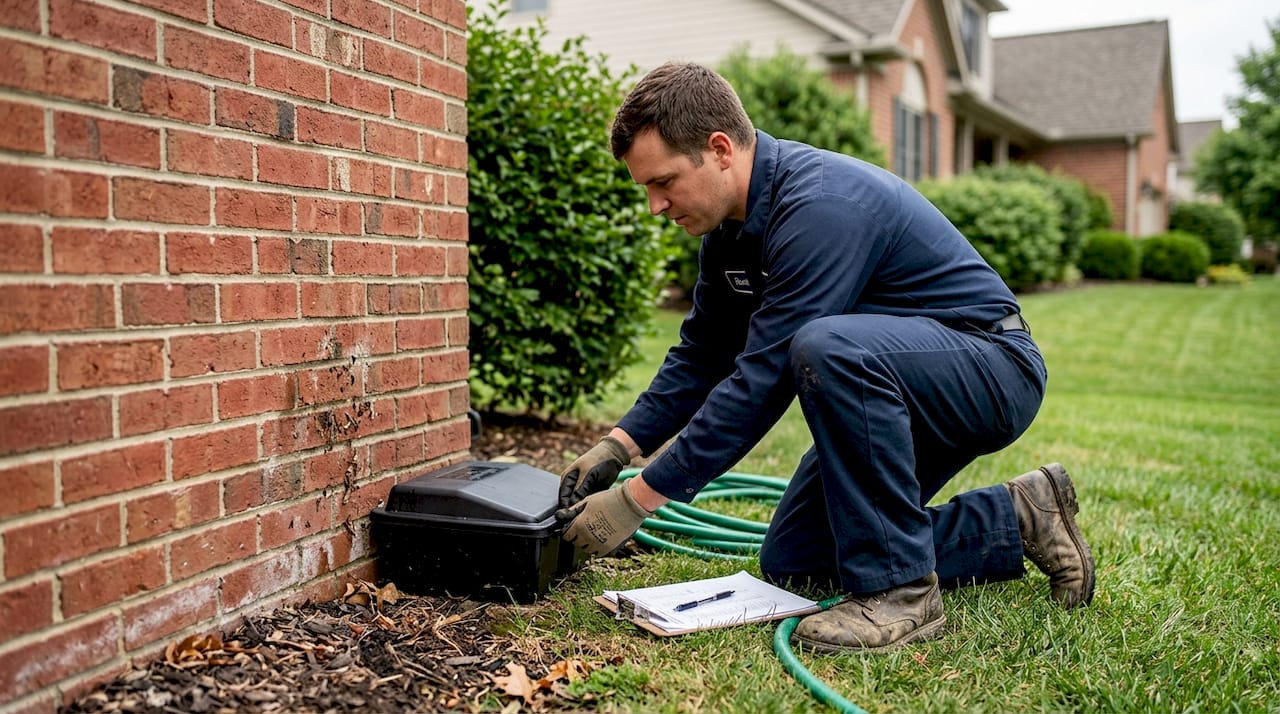
Store-bought sprays and traps work for minor, isolated issues. But when an infestation takes hold, DIY methods rarely reach the source. Here’s how professional and DIY approaches compare:
| Factor | DIY | Professional |
|---|---|---|
| Effectiveness | Surface-level, temporary | Targets source, long-lasting |
| Cost over time | Low upfront, high repeat cost | Higher upfront, lower total cost |
| Safety | Risk of misapplication | Trained, certified application |
| Long-term results | Rarely resolves root cause | Addresses entry points and habits |
| Equipment | Limited | Specialized tools and treatments |
Professionals follow a structured process that most homeowners simply can’t replicate:
- Thorough inspection of the entire property, including hidden areas like wall voids, crawl spaces, and attic insulation.
- Accurate identification of the pest species and the extent of the infestation.
- Customized treatment plan based on the specific pest, property layout, and risk factors.
- Targeted application using products and methods suited to the local environment.
- Follow-up monitoring to confirm the infestation is resolved and prevent reentry.
Local certification matters. Ohio-licensed pest control technicians complete continuing education on updated methods, chemical regulations, and emerging pest threats. That knowledge gap between a certified pro and a homeowner with a hardware store product is significant.
Integrated pest management is the gold standard approach, using advanced, safer methods tailored to the local environment rather than blanket chemical applications.
Some infestations almost always need professional intervention. Bed bugs reproduce rapidly and hide in places most people never check. Rodents, as the CDC on rodents notes, carry serious diseases and require full exclusion work, not just traps. Trying to handle these alone usually delays resolution and increases total cost.
Pro Tip: When choosing a local pest control service, ask three questions: Are your technicians Ohio-licensed? Do you offer a follow-up guarantee? What’s your approach to reducing pesticide use? If a company can’t answer clearly, keep looking.
Eco-friendly and integrated pest solutions for Westlake
Besides effectiveness, more homeowners and business owners want pest solutions that are safe for families, pets, and the planet.
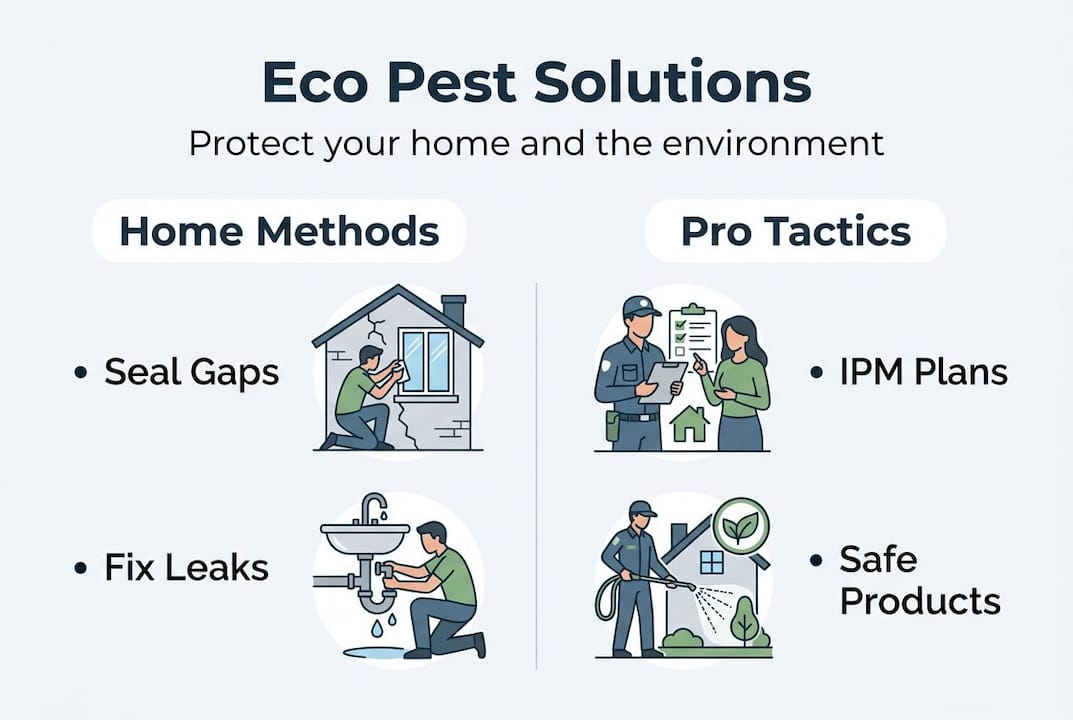
Eco-friendly pest control doesn’t mean lighting incense and hoping for the best. It means using science-backed strategies that minimize chemical exposure while still eliminating pests at the source. Integrated Pest Management, or IPM, is the framework most responsible pest control providers use today.
IPM works by combining multiple strategies rather than relying on a single pesticide application. The goal is to control pests with the least possible risk to people, pets, and the surrounding environment. According to EPA IPM principles, this approach prioritizes long-term prevention over repeated chemical treatments.
Here’s what safer pest management looks like in practice:
- Habitat reduction: Eliminating moisture, clutter, and food sources that attract pests in the first place.
- Targeted treatments: Applying low-toxicity products only where pests are active, not across entire rooms or yards.
- Physical barriers: Sealing cracks, gaps, and entry points to block pest access.
- Biological controls: Using natural predators or pest-resistant landscaping where appropriate.
- Monitoring: Regular checks to catch problems early before they become expensive infestations.
Integrated Pest Management reduces risk to people and the environment without sacrificing results. In fact, IPM-based treatments often outperform traditional spray-and-pray methods because they address root causes instead of symptoms.
Pro Tip: Start your eco-friendly defense at home right now. Fix any leaky pipes under sinks, store food in sealed containers, and trim shrubs away from your foundation. These three steps remove the conditions pests need to survive, and they cost nothing.
For a deeper look at sustainable pest control options available in Ohio, there are local providers who specialize in green-certified treatments that work for both residential and commercial properties.
Step-by-step guide: Protect your Westlake property year-round
Eco-friendly or not, the best pest control is proactive and consistent. Here’s exactly how to start.
As preventative steps are the foundation of long-term pest management in Ohio homes, building a routine around these actions is the smartest investment you can make:
- Inspect your property every season. Walk the perimeter of your home or business and look for cracks in the foundation, gaps around pipes, and damage to window screens. Ohio’s freeze-thaw cycles create new entry points every year.
- Seal all entry points. Use caulk for small gaps and steel wool or hardware cloth for larger openings. Pay special attention to where utility lines enter the building.
- Eliminate food and water sources. Fix dripping faucets, clean under appliances regularly, and never leave pet food out overnight. Pests follow food and moisture.
- Reduce clutter and harborage sites. Stacked boxes, wood piles near the house, and dense ground cover all give pests places to nest and hide.
- Set up monitoring stations. Sticky traps near entry points and in basements give you early warning of activity before it becomes a full infestation.
- Schedule a professional inspection annually. Even if you see no signs of pests, a trained eye catches what you miss.
“The properties we see with the fewest pest problems aren’t the ones that react fastest. They’re the ones that never stop preventing.” This is the core lesson from years of working with Ohio homeowners.
Knowing your seasonal pest threats in advance lets you time each step correctly. For example, seal entry points in late summer before rodents start seeking warmth. Treat for stinging insects in early spring before colonies grow large.
If you spot early warning signs like droppings, shed skins, or unusual odors, don’t wait. Early action costs far less than a full-scale removal. The PestWorld pest guide is a useful reference for identifying what you’re dealing with before calling for help.
Why most Westlake properties stay pest-free with layered solutions
Here’s what experience actually teaches about keeping pests out of Westlake homes and businesses long-term.
We see the same pattern repeatedly. A homeowner gets a one-time treatment, the visible pests disappear, and they assume the problem is solved. Six months later, the mice are back or the ants have found a new trail. That cycle is frustrating, expensive, and completely avoidable.
The properties that stay pest-free aren’t necessarily the cleanest or the newest. They’re the ones where owners treat pest control as an ongoing system, not a one-time event. That means combining education about local pest behavior, consistent prevention habits, and a professional partnership for monitoring and intervention when needed.
Ohio’s climate makes this especially important. The same weather that makes Westlake a great place to live also creates ideal conditions for pests to cycle through your property across all four seasons. A step-by-step pest control approach that layers prevention with professional oversight is the only reliable long-term answer. One-time fixes address symptoms. Layered solutions address causes.
Protect your Westlake home or business — get professional help
You’re now equipped to prevent and manage pests. Here’s how to get help when you need it most.
Apex Pest Control has served Ohio homeowners and businesses since 1969, and we understand exactly how Westlake’s climate and property types create unique pest challenges. Whether you’re dealing with a rodent problem heading into fall or looking for a greener long-term plan, we’re ready to help. Our rodent extermination services use proven exclusion and removal methods that go beyond traps. We also offer organic pest control solutions for families and businesses that prioritize safety. The best first step is a free local inspection so we can assess your specific situation and build a plan that works.
Frequently asked questions
What are the most common pests found in Westlake homes?
The most common pests in Westlake include rodents, bed bugs, ants, cockroaches, and stinging insects, each with its own seasonal peak and risk profile.
How often should pest prevention steps be performed in Ohio homes?
Inspect and address potential issues at least once per season. Preventative steps before major weather changes, especially fall and spring, give you the best protection.
Are eco-friendly pest control options as effective as traditional methods?
Modern eco-friendly methods like IPM deliver powerful results with significantly less risk to people, pets, and the surrounding environment compared to blanket chemical treatments.
Can business owners in Westlake use the same pest solutions as homeowners?
Businesses need tailored plans due to higher foot traffic and regulatory requirements, but many eco-friendly IPM techniques apply effectively to both commercial and residential properties.