


TL;DR:
- Education transforms pest prevention into a proactive, science-based process emphasizing monitoring and early detection.
- Ohio’s IPM programs teach minimal chemical use, focusing on prevention, inspection, and targeted interventions.
- Proper training and awareness reduce long-term pest issues, resistance, and reliance on chemical treatments.
Most Ohio homeowners assume pest prevention means calling someone to spray chemicals around the foundation every spring. That assumption costs money, creates unnecessary chemical exposure, and often fails to address why pests showed up in the first place. Ohio is actually a leader in education-driven pest management, with programs through Ohio State University Extension reaching thousands of residents and businesses each year. When you understand how pests behave, what attracts them, and how to monitor for early warning signs, you gain something no spray bottle can give you: lasting control. This article walks you through how education transforms pest prevention from a reactive chore into a proactive system.
Table of Contents
- How education drives pest prevention in Ohio
- Key Integrated Pest Management (IPM) principles taught through education
- Educational requirements for Ohio businesses under Ohio Rule 15
- Practical examples: Education in action for proven pest prevention
- Why education outperforms reactive pest control in Ohio
- Effective resources for Ohio pest management
- Frequently asked questions
Key Takeaways
| Point | Details |
|---|---|
| Education empowers prevention | Learning IPM principles enables Ohio residents to stop pests before they start. |
| Minimal pesticide use | Educational strategies promote monitoring and cultural controls instead of chemicals. |
| Compliance and safety | Ohio businesses benefit from educational mandates that reduce exposure and enhance recordkeeping. |
| Evidence-based methods | Tools like fact sheets and hands-on outreach have demonstrated increased pest prevention success. |
How education drives pest prevention in Ohio
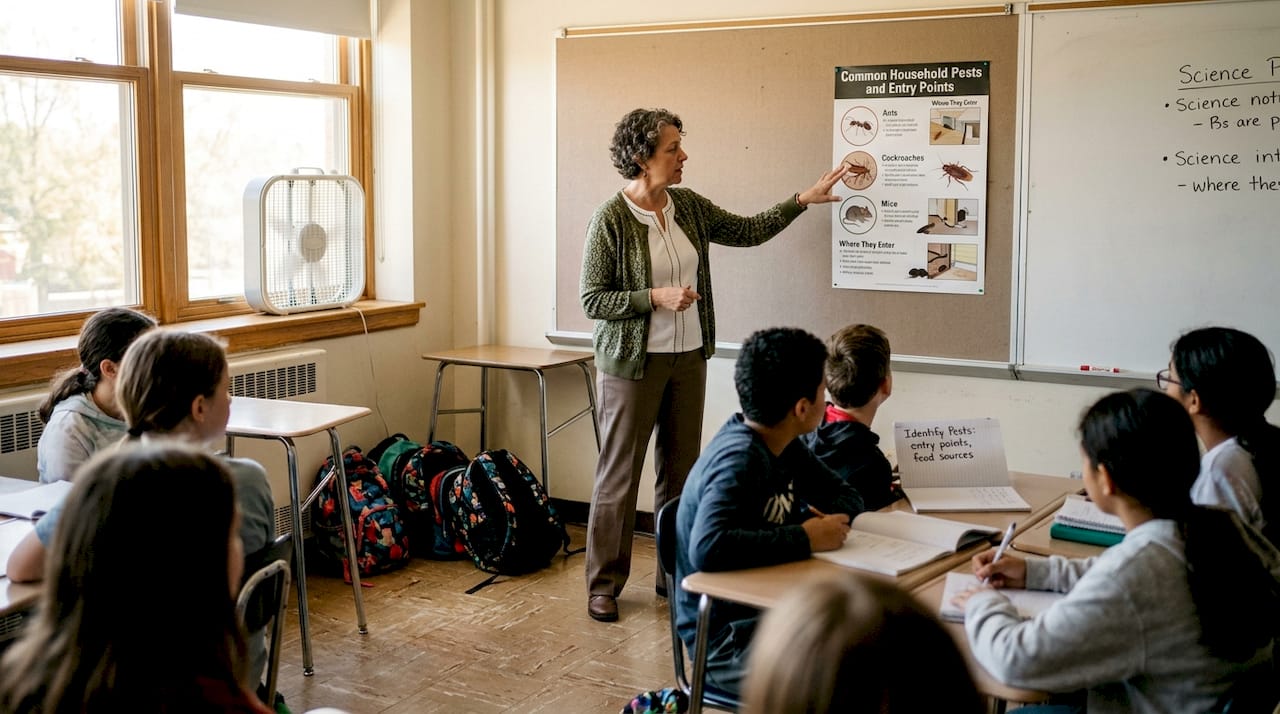
Pest prevention used to mean waiting for a problem and then throwing chemicals at it. Education flips that model entirely. Instead of reacting, you learn to recognize conditions that invite pests, eliminate those conditions, and monitor for activity before it becomes an infestation. That shift in thinking is exactly what Ohio State University Extension has been building toward for decades.
OSU Extension education resources include fact sheets, webinars, and hands-on programs that teach Integrated Pest Management (IPM) principles to everyday Ohioans. IPM is a science-based approach that prioritizes prevention, monitoring, and minimal pesticide use. The OSU Extension 2025 guide confirms that education is a core component of effective pest prevention, connecting research findings directly to real-world application for homeowners and businesses.
One of the more surprising developments in pest education is the use of 3D-printed models to help people recognize pest damage and understand scouting techniques. Empirical research from the Journal of IPM shows that these hands-on tools increase IPM adoption rates among participants. When someone can physically examine a model of a carpet beetle larva or a bed bug, identification becomes far less intimidating.
Ohio’s educational outreach covers pests that are genuinely relevant to the state’s climate and housing stock. The most common topics include:
- Bed bugs: detection, early signs, and non-chemical responses
- Carpet beetles: fabric damage identification and prevention habits
- Box tree moth: a newer invasive pest threatening Ohio landscapes
- Rodents: entry point sealing and sanitation practices
Understanding pest risk factors in Ohio homes is the starting point for any effective prevention plan. Education gives you the vocabulary and the framework to act on that understanding.
| Educational tool | Format | Primary benefit |
|---|---|---|
| Ohioline fact sheets | PDF/online | Species-specific guidance |
| OSU webinars | Live/recorded | Q&A with extension experts |
| 3D-printed models | In-person workshops | Hands-on pest identification |
| County extension offices | In-person | Local, tailored advice |
“The bridge between research and practice is education. Without it, even the best pest management science stays locked in a lab.”
For a deeper look at how IPM works in Ohio households, the IPM for Ohio homes resource covers the full framework in plain language.
Key Integrated Pest Management (IPM) principles taught through education
IPM is not a single technique. It is a decision-making process built around knowledge. Ohio’s educational programs teach it in layers, starting with the most basic question: do you actually have a pest problem, or just a pest sighting?
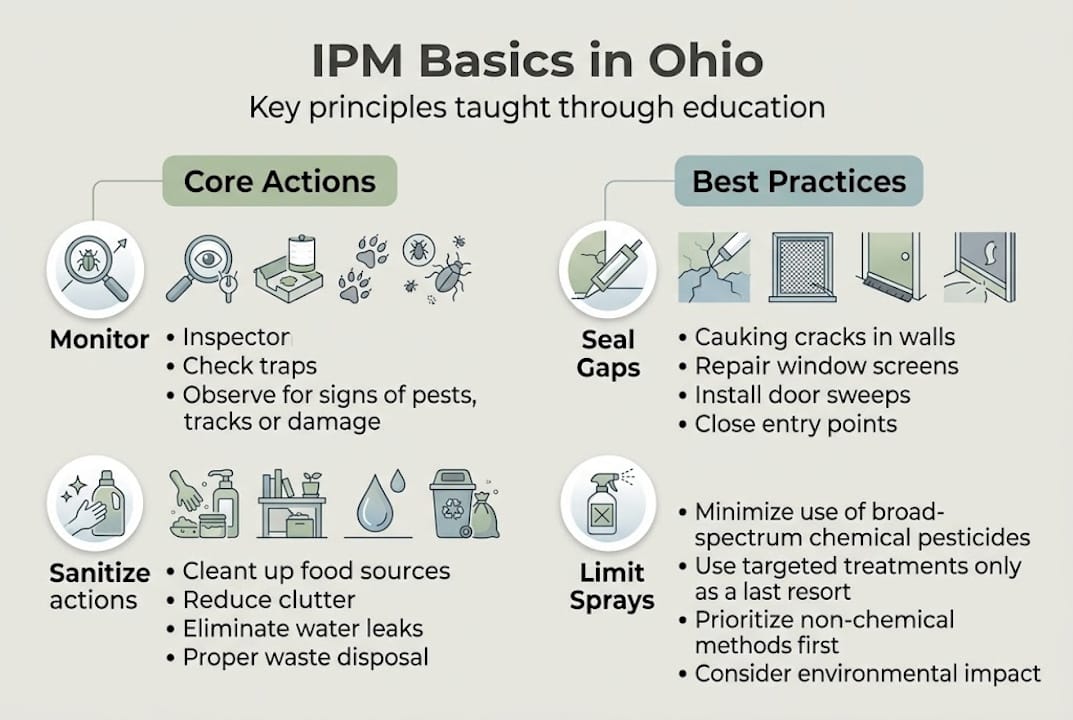
The Box Tree Moth IPM guidelines illustrate how IPM methodologies emphasize education for monitoring, prevention, and minimal pesticide use, reducing reliance on chemicals for Ohio homeowners. That principle applies across all pest types, not just invasive moths.
Here is how IPM education breaks down into sequential steps:
- Identify the pest correctly. Misidentification leads to wrong treatments. A carpet beetle is not a bed bug, and treating for the wrong pest wastes time and money.
- Monitor and set thresholds. Not every pest sighting requires action. Learn what population level actually causes damage or risk.
- Apply cultural controls first. Sanitation, sealing entry points, and removing food sources are the most effective long-term tools.
- Use biological controls when appropriate. Some beneficial insects naturally reduce pest populations.
- Choose chemical controls as a last resort. When pesticides are necessary, select the least toxic option and apply it precisely.
| Approach | Chemical use | Long-term effectiveness | Cost over time |
|---|---|---|---|
| Spray-first | High | Low (resistance builds) | High |
| IPM education-driven | Minimal | High | Lower |
The contrast is stark. Spray-first approaches create a cycle of dependency. Pests develop resistance, secondary pest outbreaks occur, and costs keep climbing. IPM breaks that cycle by making prevention the default.
Pro Tip: Keep a simple pest log for 30 days before calling anyone. Note where you see activity, what time of day, and what conditions are present. That data makes any intervention far more targeted and effective.
For practical steps you can start today, the DIY pest prevention tips guide and pest prevention planning in Ohio resource both translate IPM principles into homeowner-friendly action items. Sealing gaps around pipes, storing food in airtight containers, and fixing moisture issues are not glamorous tasks, but they outperform any preventive spray schedule.
Educational requirements for Ohio businesses under Ohio Rule 15
For Ohio businesses, pest management education is not just good practice. In many cases, it is a regulatory requirement. Schools and other institutions operate under Ohio Rule 15 regulations, which set clear expectations for how pest control is managed in environments where vulnerable populations are present.
Ohio Rule 15 requires businesses, particularly schools, to:
- Designate a contact person responsible for pest management decisions
- Provide prior notification to parents, staff, or occupants before any pesticide application
- Maintain records of all pesticide use on the property
- Develop and follow an IPM plan that minimizes chemical exposure
For businesses like schools, education involves prior notification policies and IPM plans under Ohio Rule 15 to minimize exposure. This is not bureaucratic red tape. It is a framework that protects children, employees, and customers while also reducing long-term pest management costs.
| Requirement | Who it applies to | Purpose |
|---|---|---|
| Designated contact person | Schools and institutions | Accountability and coordination |
| Prior notification | All regulated facilities | Reduce unexpected chemical exposure |
| Pest management records | All regulated facilities | Track patterns and compliance |
| IPM plan (encouraged) | Schools and businesses | Systematic, low-chemical prevention |
The practical benefit for businesses goes beyond compliance. When staff understand why pests enter a facility and what conditions attract them, they become active participants in prevention. A cafeteria worker who knows that improperly sealed food containers attract cockroaches is more valuable than a monthly spray visit.
Pro Tip: Schedule a brief annual training session for all staff who handle food, waste, or building maintenance. Even 30 minutes of IPM education dramatically improves prevention outcomes and keeps your business aligned with Ohio Rule 15 expectations.
The pest management for businesses resource and the commercial pest control checklist are both practical starting points for Ohio business owners who want to build a compliant, education-based pest management program.
Practical examples: Education in action for proven pest prevention
Theory is useful. Real results are better. Ohio’s education-driven pest prevention programs have produced measurable outcomes that show what happens when knowledge replaces guesswork.
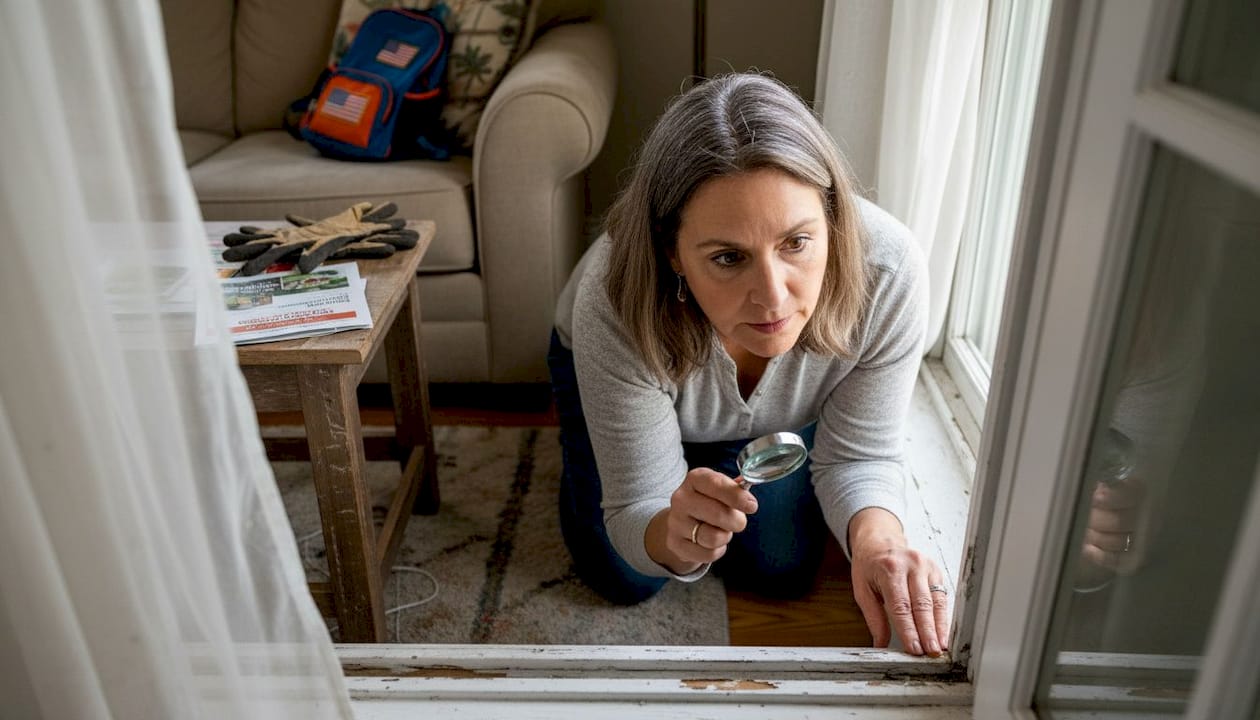
The OSU Extension 2025 guide documents how bed bug outreach via fact sheets and events distributed hundreds of educational materials across Ohio, leading to earlier detection and fewer full-blown infestations. When residents know what bed bug staining looks like on a mattress seam, they catch problems at stage one instead of stage four.
OSU bed bug education research highlights a critical edge case: over-spraying creates resistance. Bed bugs exposed to repeated pyrethroid treatments develop resistance within a few generations. Education stresses early detection and targeted response, which avoids this trap entirely.
Here is a practical checklist Ohio homeowners and businesses can implement right now:
- Inspect mattress seams, headboards, and furniture joints monthly for bed bug signs.
- Check stored fabrics and wool items seasonally for carpet beetle damage.
- Walk your property perimeter after rain to identify new entry points.
- Review your trash and recycling storage for conditions that attract rodents.
- Document any pest activity with photos and dates before contacting a professional.
“Early detection is the single most powerful tool in pest prevention. Education makes early detection possible.”
For more on identifying bed bugs in Ohio, the signs are more visible than most people expect once you know what to look for. Combining that knowledge with year-round pest protection strategies keeps your home or business ahead of seasonal pest pressure.
Why education outperforms reactive pest control in Ohio
Here is something most pest control conversations miss: the biggest barrier to effective prevention is not access to products. It is behavior. Reactive spraying feels decisive, but it addresses symptoms rather than causes. Education addresses causes.
Behavioral changes like sanitation, sealing entry points, and monitoring thresholds before intervention are what actually reduce pest pressure over time. These habits do not wear off the way a pesticide treatment does. They compound. A homeowner who seals every gap around pipes and stores food properly in year one has fewer pest problems in year three, not more.
The uncomfortable truth is that reactive pest control creates customers for life, while education creates self-sufficient homeowners and businesses. We believe the second outcome is better for Ohio communities, even when it means fewer service calls. When you understand seasonal pest prevention tips and apply them consistently, you stop the cycle before it starts. That is what 55-plus years in Ohio pest management has taught us: knowledge applied early beats chemicals applied late, every single time.
Effective resources for Ohio pest management
As you apply these insights, here are specialized Ohio resources to support your pest prevention journey. At Apex Pest Control, we have served Ohio homeowners and businesses since 1969, and we know that the best outcomes happen when education and professional service work together. Our residential pest control guide walks you through what to expect from a professional program built on IPM principles. If rodents are a concern, our rodent extermination solutions combine targeted treatment with prevention education. For families prioritizing low-chemical environments, our organic pest control services align perfectly with the IPM philosophy this article covers. Contact us for a free quote and let education-backed expertise work for your home or business.
Frequently asked questions
How can education help prevent household pests in Ohio?
Education teaches monitoring, sanitation, and timely intervention, helping Ohio residents prevent pest issues before they escalate. IPM principles for prevention are the foundation of this approach, promoted widely through OSU Extension programs.
What is IPM, and how is it taught in Ohio?
Integrated Pest Management uses education to emphasize safe monitoring, prevention, and minimal pesticide use. IPM education for monitoring is widely promoted through OSU Extension fact sheets, webinars, and county office programs across Ohio.
Are there educational requirements for pest control in Ohio schools?
Yes, Ohio Rule 15 requires designated contacts, prior notifications, and encourages IPM plans to minimize exposure. Prior notification and IPM plans are mandated for schools and other regulated facilities under this rule.
Which pests benefit most from education-based prevention?
Bed bugs, carpet beetles, rodents, and box tree moths respond well to education-driven monitoring and prevention strategies. Educational outreach for these pests is a core focus of Ohio’s extension programs.
Can over-spraying pesticides cause resistance problems in Ohio?
Yes, routine preventive spraying increases resistance and secondary pest outbreaks. Avoiding preventative sprays to prevent resistance is a central lesson in Ohio’s IPM education programs.