




TL;DR:
- Over 600 pest species worldwide have developed resistance to pesticides, including in Ohio.
- Resistance builds through natural selection, often within a single pest season, making pests harder to control.
- Integrated pest management strategies, including monitoring and rotating chemicals, are essential for long-term control.
Hundreds of pest species have quietly evolved to survive the very chemicals designed to eliminate them. If you’ve sprayed, treated, and sprayed again only to watch the same pests return, resistance may be the reason. Over 600 pest species globally have developed resistance to pesticides, and Ohio is not immune. From resistant weeds taking over farmland to pyrethroid-resistant insects creeping into homes and businesses, the challenge is real and growing. This guide explains what resistant pest species are, which ones show up in Ohio, why resistance happens, and what you can actually do about it.
Table of Contents
- Defining resistant pest species
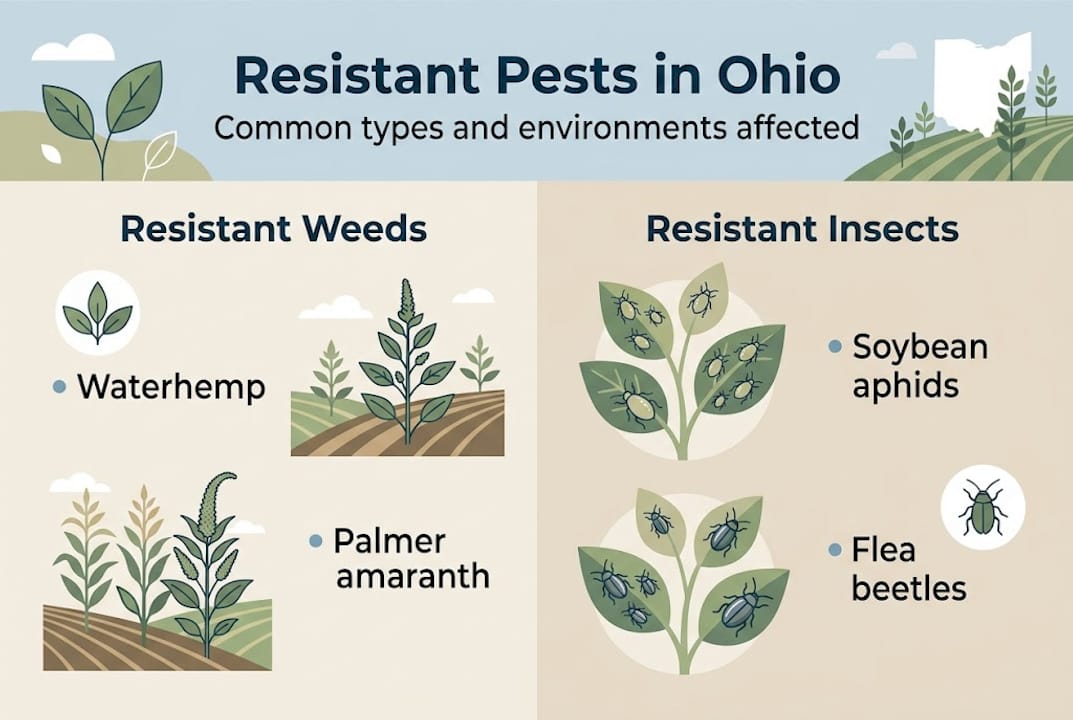
- Common resistant pest species in Ohio
- How resistance develops and why it matters
- Practical strategies to manage resistant pest species
- Our perspective: Why the quick fix mentality causes more harm than good
- Get help managing resistant pests in Ohio
- Frequently asked questions
Key Takeaways
| Point | Details |
|---|---|
| Resistant pests are evolving | Ohio faces growing pest populations that can survive conventional pesticides, making old solutions less effective. |
| Integrated pest management works | Rotating control methods and monitoring pests is the safest, most effective way to manage resistance long term. |
| Avoid chemical-only quick fixes | Relying solely on pesticides creates stronger pests and secondary outbreaks, so diversify your approach. |
| Expert diagnosis is essential | Reporting suspected resistance and consulting local experts ensures you use the right tools for your pest situation. |
Defining resistant pest species
The term “resistant pest species” gets thrown around a lot, but what does it actually mean for you as a homeowner or business owner? Simply put, resistant pest species are populations of pests, including insects, weeds, and pathogens, that have developed heritable resistance to pesticides, surviving doses that would kill normal populations. The key word here is heritable. The resistance gets passed down to offspring, which means each generation can be harder to kill than the last.
Resistance does not happen because a single pest “learns” to survive a chemical. It happens through natural selection. In any pest population, a small number of individuals may carry a genetic trait that makes them slightly less vulnerable to a pesticide. When you apply that pesticide, the vulnerable pests die, but the resistant ones survive and reproduce. Over time, the resistant trait dominates the population.
Here is what makes this especially tricky for pest control:
- Resistance can develop within just a few generations of pests, sometimes in a single season.
- A pest can be resistant to one pesticide class while remaining vulnerable to others.
- Resistance is not always visible. Resistant pests look identical to non-resistant ones.
- Cross-resistance is possible, meaning a pest resistant to one chemical may also resist related chemicals it has never encountered.
This is why integrated pest management exists as a discipline. Relying on a single chemical solution is not just ineffective against resistant pests. It actively makes the problem worse by selecting for stronger resistant populations with every application.
Resistance applies across pest categories. Insect resistance is common in cockroaches, bed bugs, and aphids. Weed resistance affects properties and agricultural land. Even fungal pathogens can develop resistance to fungicides. Ohio sees all three types, which makes understanding the basics of resistance essential for anyone trying to manage a pest problem effectively.
“The more narrowly you rely on one control method, the faster you select for the pests that can survive it.”
Understanding resistance at this level changes how you think about pest control. It stops being about applying more product and starts being about applying the right strategy at the right time.
Common resistant pest species in Ohio
Ohio’s mix of agricultural land, suburban neighborhoods, and commercial districts creates a perfect environment for resistant pest species to thrive. Over 600 pest species globally have developed resistance, and several of the most problematic ones are active in Ohio right now.
| Pest | Type | Resistance concern | Environment affected |
|---|---|---|---|
| Waterhemp | Weed | Multiple herbicide classes | Agricultural, commercial |
| Palmer amaranth | Weed | Glyphosate, ALS inhibitors | Agricultural, vacant lots |
| Soybean aphid | Insect | Pyrethroid insecticides | Agricultural, nearby residential |
| German cockroach | Insect | Multiple insecticide classes | Residential, commercial |
| Bed bug | Insect | Pyrethroids, neonicotinoids | Residential, hotels, offices |
Waterhemp and Palmer amaranth are aggressive weeds that have developed resistance to multiple herbicide classes. For Ohio homeowners, these weeds can invade landscaping and property borders, and standard weed killers often fail against them. For businesses with outdoor spaces, the same problem applies.

Pyrethroid-resistant soybean aphids are primarily an agricultural concern, but their proximity to Ohio’s residential areas means pest pressure can shift. When natural predators are wiped out by broad-spectrum sprays, aphid populations near homes can surge.
German cockroaches and bed bugs are the most directly relevant resistant pests for homeowners and businesses. Both have developed resistance to pyrethroids, one of the most commonly used insecticide classes. Some German cockroach populations in Ohio have shown resistance to multiple chemical families, making over-the-counter sprays nearly useless against them.
Key behaviors that signal resistance in these pests:
- Pests return within days of treatment
- Populations do not decline after repeated applications
- Standard products that worked before suddenly stop working
- Pest numbers increase despite consistent treatment
Following an effective pest control workflow matters more than ever when resistant species are involved. A step-by-step pest control approach that accounts for resistance is the difference between a short-term fix and a lasting solution.
How resistance develops and why it matters
Resistance does not appear overnight, but it builds faster than most people expect. The primary driver is pesticide overuse, specifically applying the same chemical repeatedly without rotating to different modes of action. Every time you use the same product, you are essentially running a selection test that rewards the pests best suited to survive it.
Here are the most common mistakes that accelerate resistance:
- Using the same pesticide product for every treatment, season after season.
- Applying pesticides at lower-than-labeled rates, which kills weak pests but leaves resistant ones alive.
- Treating on a fixed calendar schedule rather than based on actual pest population thresholds.
- Ignoring non-chemical controls like sanitation, exclusion, and habitat modification.
- Skipping professional diagnosis and assuming all pests of the same type respond the same way.
The biological reality is sobering. Some insects complete multiple generations in a single season. That means resistance can evolve and spread across an entire local population within months of a new pesticide being introduced.
“Resistance is not a sign that the pest is stronger. It is a sign that the control strategy was too narrow.”
For homeowners and businesses, the stakes go beyond frustration. Resistant pests cost more to manage over time because they require more treatments, more products, and often professional intervention. There are also health implications. Cockroaches and bed bugs carry allergens and pathogens. Letting resistant populations grow unchecked creates real health risks for your family or customers.
Pro Tip: Before reaching for another can of spray, check whether the product you are using belongs to the same chemical class as your last treatment. If it does, you are likely reinforcing resistance rather than fighting it.
IPM methodology addresses this directly: rotate modes of action, use population thresholds to decide when to treat, incorporate cultural and biological controls, and avoid overreliance on any single pesticide. These are not just best practices. They are the only reliable way to stay ahead of resistance long-term. Reviewing safe pest removal steps and pest removal safety tips can help you build better habits between professional treatments.
Practical strategies to manage resistant pest species
Knowing that resistance exists is one thing. Knowing what to actually do about it is another. The good news is that effective management is achievable when you use the right combination of strategies.
| Strategy | Chemical-only approach | IPM approach |
|---|---|---|
| Pest monitoring | Rarely done | Regular scouting and thresholds |
| Pesticide use | Routine, calendar-based | Targeted, threshold-triggered |
| Resistance risk | High | Low |
| Long-term cost | Increases over time | Decreases over time |
| Beneficial insects | Often eliminated | Preserved where possible |
For Ohio homeowners and businesses, scouting and monitoring pest populations before treating is one of the most powerful tools available. Knowing your threshold, meaning the pest population level at which control becomes necessary, prevents unnecessary treatments that drive resistance.
Practical steps you can take right now:
- Monitor pest activity regularly rather than treating on a fixed schedule.
- Use resistant plant varieties in landscaping to reduce weed and insect pressure.
- Rotate between pesticide classes when chemical treatment is necessary.
- Preserve natural predators by avoiding broad-spectrum sprays when targeted options exist.
- Report suspected resistance to your local Ohio State University Extension office or the Ohio Department of Agriculture.
Pro Tip: If you suspect resistance, do not just switch to a stronger product in the same chemical family. Contact a licensed pest professional who can identify the species, confirm resistance, and recommend a rotation strategy.
Preventative sprays applied without confirmed pest pressure are risky. They can cause secondary outbreaks by eliminating beneficial insects and accelerate resistance in target pests. Combining residual treatments, chemical rotation, and non-chemical methods is the approach that holds up over time.
Exploring IPM examples gives you a clearer picture of how these strategies work in real homes and businesses. A monthly pest maintenance guide can also help you build a consistent routine that reduces pest pressure before it becomes a crisis.
Our perspective: Why the quick fix mentality causes more harm than good
After more than 50 years of pest control work across Ohio, we have seen the same pattern repeat itself. A homeowner or business owner discovers a pest problem, buys the strongest product they can find, applies it repeatedly, and then calls us when nothing works. By that point, they are often dealing with a resistant population that has been reinforced by every failed treatment.
The uncomfortable truth is that the pest control industry, including over-the-counter products, has made it too easy to reach for a chemical solution without asking whether it is the right one. More product is not better. More targeted strategy is better.
We believe the future of pest management in Ohio depends on homeowners and businesses understanding resistance, not just reacting to it. That means monitoring before treating, rotating chemicals, and calling professionals early rather than as a last resort. A comprehensive pest control guide can help you understand what a full-spectrum approach actually looks like. The goal is not to eliminate all pesticide use. It is to use pesticides wisely so they remain effective when you truly need them.
Get help managing resistant pests in Ohio
Dealing with resistant pest species requires more than a trip to the hardware store. At Apex Pest Control, we have been helping Ohio homeowners and businesses solve persistent pest problems since 1969. We understand the local pest landscape, including which species are showing resistance and which control strategies actually work against them. Whether you are dealing with stubborn cockroaches, recurring bed bugs, or invasive weeds on your property, we can assess your situation and build a targeted plan. From rodent pest extermination to full residential pest control programs, our team brings real expertise to every job. Request your free pest assessment today and get answers from professionals who know Ohio pests.
Frequently asked questions
What makes a pest species resistant?
A pest species becomes resistant when it survives doses of pesticides that would normally be fatal, usually through genetic changes passed to offspring. Resistant populations carry heritable traits that allow them to tolerate or break down pesticide compounds.
How do I identify resistant pests in my Ohio home or business?
If pests persist despite repeated pesticide applications, resistance may be the cause. Scouting and monitoring pest activity and consulting a licensed professional are the most reliable ways to confirm whether you are dealing with a resistant species.
What causes pest resistance to develop?
Pest resistance develops mainly through repeated use of the same pesticide, which allows survivors carrying resistant traits to breed and dominate the population. Rotating modes of action and using population thresholds are the most effective ways to slow resistance development.
What are some practical steps for managing resistant pest species?
Use integrated pest management: monitor populations, rotate pesticide classes, apply insecticides only when thresholds are reached, and use non-chemical controls alongside targeted treatments. Preventative sprays without confirmed pressure can make resistance worse by eliminating beneficial insects and selecting for tougher survivors.