



TL;DR:
- Licensed Ohio exterminators use targeted, environmentally safe treatments based on local pest behavior.
- IPM emphasizes fixing conditions, physical barriers, and biological controls over just chemical sprays.
- Professional pest control is cost-effective long-term and more reliable than DIY or unverified companies.
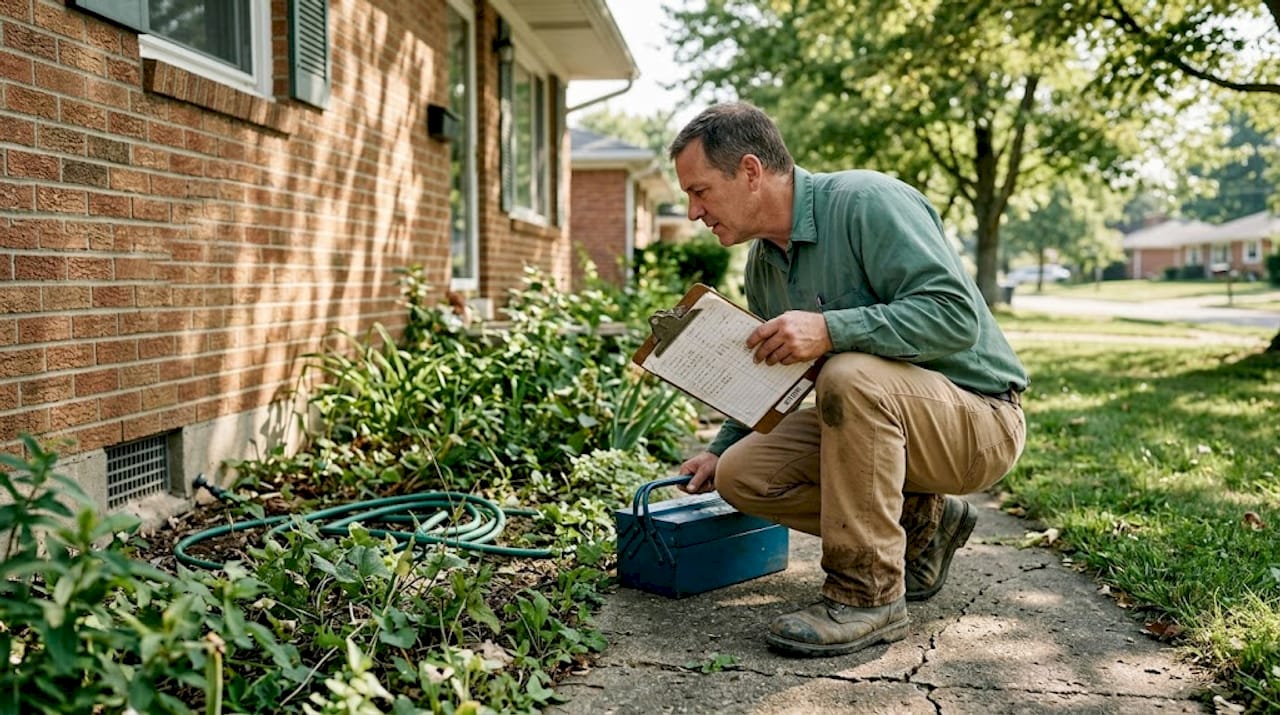
Most Ohio homeowners assume that a can of store-bought spray or a few mouse traps will solve a pest problem for good. That assumption costs time, money, and peace of mind when the same ants reappear two weeks later or the scratching sounds in the wall get louder. Professional exterminators don’t just kill what’s visible. They trace infestations back to their source, apply treatments built around Ohio’s specific pest patterns, and return if problems persist. This guide walks you through why licensed professionals outperform DIY every time, how to evaluate your options, what methods to expect, and what you’ll realistically pay for service in Ohio.
Table of Contents
- Why professional pest control matters in Ohio
- How to assess and choose the best exterminator near you
- Understanding exterminator methods: Integrated Pest Management and beyond
- Ohio exterminator costs and what to expect during service
- Why ‘near me’ isn’t always enough: What really matters when hiring an exterminator
- Connect with trusted Ohio exterminators for safe, effective results
- Frequently asked questions
Key Takeaways
| Point | Details |
|---|---|
| Choose licensed pros | Hiring a licensed exterminator ensures safe, effective pest control tailored to Ohio laws. |
| Verify and compare | Always check credentials, get several quotes, and compare methods before hiring. |
| Prefer IPM methods | Integrated Pest Management is safer and more effective for long-term control with minimal chemicals. |
| Plan for seasonal threats | Ohio pest issues change by season—early action prevents infestations from spreading. |
Why professional pest control matters in Ohio
Ohio’s climate creates ideal conditions for a rotating cast of pest problems. Warm, humid summers bring carpenter ants and stinging insects. Cold winters push rodents indoors. Bed bugs hitch rides year-round. Each of these pests behaves differently, breeds differently, and responds to different treatments. A single over-the-counter product rarely addresses more than one life stage of any one pest, which is why most DIY attempts push the problem deeper instead of eliminating it.
Hiring a licensed exterminator changes the equation entirely. Licensed professionals carry state-approved training, understand local pest biology, and have access to commercial-grade products not available in hardware stores. More importantly, they know how to apply those products safely around children, pets, and food preparation areas. That knowledge gap between a licensed pro and a weekend warrior with a spray bottle is enormous.
Here’s what sets licensed exterminators apart:
- Targeted identification: They confirm exactly which species you’re dealing with before applying any treatment
- Access to commercial products: Stronger and longer-lasting formulations unavailable to the public
- Knowledge of Ohio regulations: State-licensed firms must follow application rules that protect you and the environment
- Integrated approaches: Combining chemical and non-chemical tools for lasting results
- Warranties and callbacks: Most reputable companies return at no extra charge if pests come back
Licensed pest control providers in Ohio are required to register with the Ohio Department of Agriculture. Top recommended exterminators in Ohio include Terminix, Orkin, and locally licensed firms, all verifiable through the state’s online database. That verification step alone separates legitimate companies from fly-by-night operators.
Orkin Columbus has a 4.9/5 rating based on over 3,211 reviews, which reflects consistent service quality rather than a lucky streak. Those numbers matter when you’re inviting someone into your home or business.
For a science-backed approach that prioritizes long-term effectiveness, Integrated Pest Management has become the gold standard in Ohio pest control. We’ll cover exactly what that looks like in practice a little further down.
Pro Tip: Before you call anyone, document where you’re seeing pest activity. Photos, timestamps, and the location of entry points will help your exterminator diagnose faster and quote more accurately.
How to assess and choose the best exterminator near you
Now that you know the value of licensed professionals, let’s walk through exactly how to find and evaluate the right exterminator near you.
Shopping for an exterminator isn’t like ordering takeout. The cheapest option and the closest option are rarely the best option. Here’s a clear process that actually works:
- Verify the license first. Verify licenses via Ohio Dept of Ag using the pest business search tool. If a company isn’t listed, walk away.
- Get three quotes minimum. Pricing varies significantly between companies for the same service. Three quotes give you a realistic range and negotiating power.
- Check local references. Ask neighbors, check Google reviews, and look at community forums. Real Ohio customers will tell you what the company’s website won’t.
- Ask about guarantees. Any reputable company should offer a return visit if treatment doesn’t hold. No guarantee is a red flag.
- Compare treatment methods. Ask specifically whether they use IPM (more on that shortly) or rely solely on chemical spray. The answer reveals a lot about their approach.
Here’s a quick comparison to help you decide between national chains and local firms:
| Factor | National chains (Orkin, Terminix) | Local firms (Apex, Buckeye, Brown) |
|---|---|---|
| Brand recognition | High | Moderate |
| Pricing | Often higher | Often more flexible |
| Local knowledge | Standardized programs | Tailored to Ohio conditions |
| Customer relationships | Rotating technicians | Consistent technicians |
| Response time | Variable | Often faster locally |
| Guarantees | Standardized policies | May be more negotiable |
For practical Ohio pest control tips that apply to your specific region, it helps to look at both statewide guidance and your local conditions. If you’re in the northeast, for example, exploring Cleveland exterminator options may surface firms with specific experience in that region’s pest patterns.
“Don’t wait for a full infestation before calling. Early intervention during the first signs of pest activity dramatically lowers treatment complexity and cost.” — Pest management best practice used by Ohio licensed professionals
Pro Tip: Always request proof of insurance and a state-issued license number before any technician enters your property. Legitimate companies provide both without hesitation.
Understanding exterminator methods: Integrated Pest Management and beyond
The extermination process can look very different depending on the company you choose. Here’s what to expect.
Not all pest control is created equal. Walk into one company and they’ll spray baseboards and hand you a bill. Walk into another and they’ll spend an hour inspecting your home, seal entry points, set monitoring stations, and only apply chemicals if other methods fall short. That second approach is called Integrated Pest Management, or IPM.
IPM prioritizes cultural, mechanical, biological, chemical controls in that order. In plain terms: fix conditions that attract pests first, use physical barriers second, introduce natural predators or biological agents third, and resort to targeted chemical treatments only when necessary.
Here’s how the IPM hierarchy plays out in practice:
| IPM level | What it means | Example action |
|---|---|---|
| Cultural controls | Change conditions that attract pests | Seal food, fix moisture leaks |
| Mechanical controls | Physical removal or exclusion | Traps, caulking entry points |
| Biological controls | Natural pest suppressors | Beneficial nematodes for grubs |
| Chemical controls | Targeted pesticide application | Baits, spot treatments |
The benefits of IPM over spray-only methods are measurable. Chemical-only treatments often kill surface pests but miss colonies, eggs, and harborage areas. IPM-based programs reduce recurrence because they target root causes rather than symptoms. They’re also safer for sensitive environments like homes with young children, schools, and food service businesses.
Orkin and Terminix use customized year-round plans with inspections, baits, and barriers, which reflects growing adoption of IPM principles across the industry. Local firms with strong IPM training often outperform even large chains in long-term pest suppression.
You can learn more about IPM as practiced specifically in Ohio, including which pests respond best to each control level. If you want to stay ahead of infestations all year, reviewing pest prevention year-round practices is a smart next step.
Here’s what matters most when comparing approaches:
- IPM programs cost slightly more upfront but reduce the number of return treatments needed
- Spray-only services may appear cheaper but often require more frequent visits
- Sensitivity to children, pets, and allergies should always drive the conversation about chemical choices
Pro Tip: Prioritize companies that use monitoring devices (sticky traps, bait stations) before reaching for a spray. That first step alone separates careful operators from those just going through the motions.
Ohio exterminator costs and what to expect during service
Once you know the methods, understanding pricing and what happens during service helps you plan with confidence.
Cost is usually the first question people ask, and it’s a fair one. Ohio exterminator pricing runs slightly below the national average, which is good news for homeowners and business owners watching their budgets.
General pest service averages $163 one-time, with quarterly treatments running $95 to $165 per visit. One-time treatments range from $95 to $285 depending on the pest and scope. Ongoing quarterly plans are often the smarter investment for repeat pests like ants, spiders, and rodents.
Several factors will push your quote higher or lower:
- Pest type: Bed bug elimination, for example, costs significantly more than general ant treatment due to the complexity of the process
- Severity: A small early-stage infestation costs far less to treat than one that’s had six months to spread
- Property size: Larger homes and commercial buildings require more product and labor time
- Treatment method: Heat treatments, fumigation, and multi-visit plans cost more than single-spray services
- Location in Ohio: Urban areas like Columbus and Cleveland may see slightly higher rates than rural counties
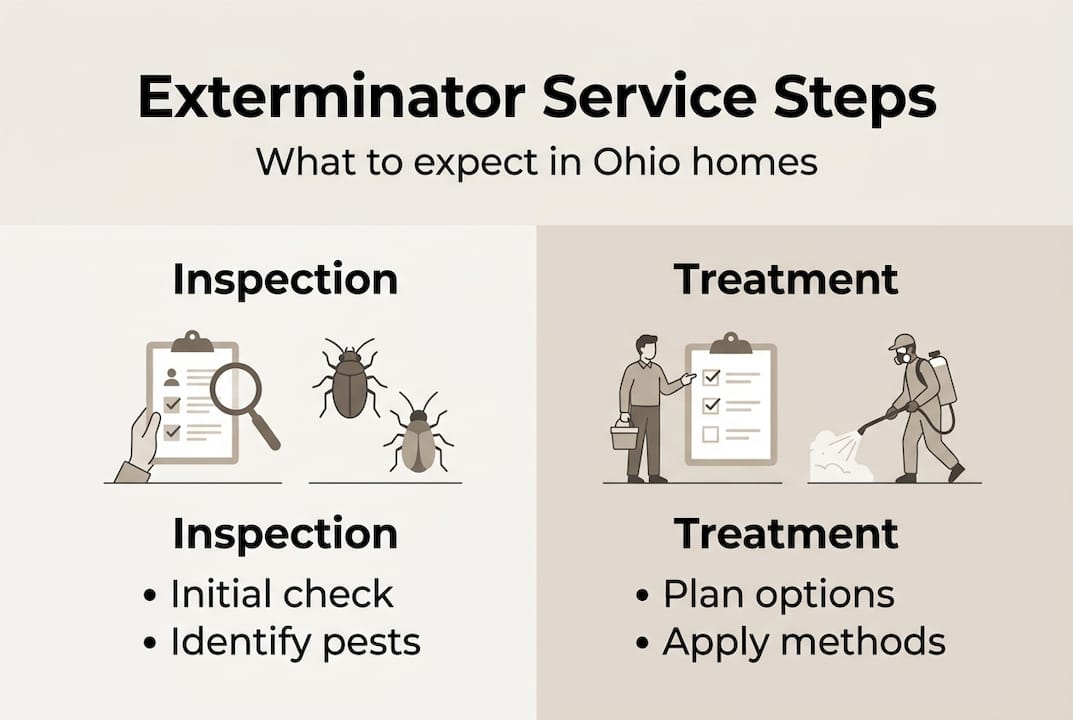
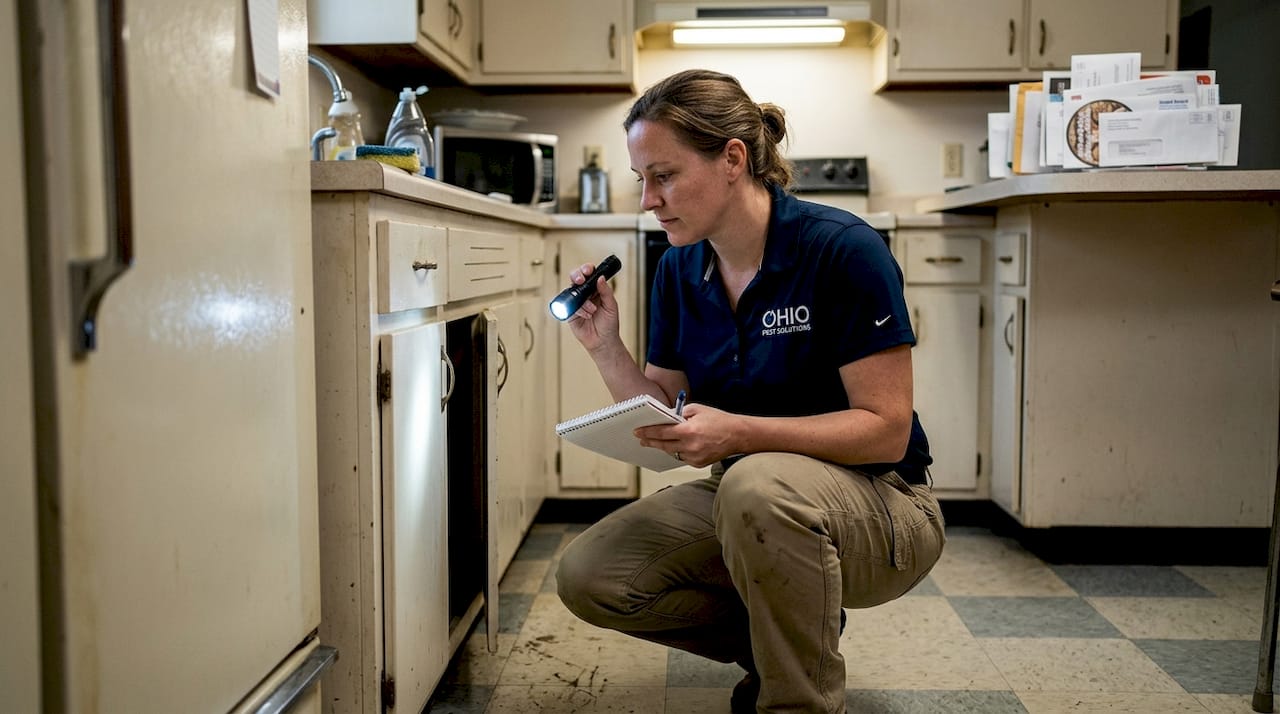
A standard exterminator visit in Ohio generally follows this sequence: a detailed inspection of the property, a customized treatment plan based on what’s found, the actual treatment using appropriate methods for that pest, and a scheduled follow-up to confirm results. The best companies document every step and provide written reports.
For planning purposes, knowing your seasonal pest threats helps you anticipate when to budget for service. Ohio’s pest calendar is predictable once you know it, and understanding top pest threats by season lets you stay a step ahead instead of reacting after the fact.
Why ‘near me’ isn’t always enough: What really matters when hiring an exterminator
Here’s something most pest control guides won’t tell you: proximity is one of the least important factors when choosing an exterminator. We’ve seen homeowners in Ohio hire a company simply because it appeared first in a Google search, only to call us months later because the problem came back worse than before.
The companies worth hiring are the ones with verifiable Ohio licenses, documented IPM training, and technicians who actually explain what they found during inspection. That combination matters far more than whether the truck can arrive in 30 minutes. A fast response that uses the wrong treatment is just expensive noise.
There’s also a persistent misconception that national chains automatically outperform local firms. That simply isn’t true. Locally licensed Ohio exterminators often carry deeper knowledge of regional pest behavior, tighter accountability to their community, and more flexibility in how they structure treatment plans. A technician who grew up in Columbus understands how Ohio winters affect rodent pressure in ways no corporate training manual covers.
Sensitive environments make this especially critical. Homes with infants, commercial kitchens, and healthcare facilities cannot afford shortcuts. In those cases, IPM credentials and chemical safety protocols outweigh every other factor. To compare residential solutions side by side, look beyond the star rating and read what actual customers say about follow-through, not just the first visit.
Choose based on evidence. Ask for a written treatment plan before any money changes hands. That single step filters out more bad actors than any review site will.
Connect with trusted Ohio exterminators for safe, effective results
Ready to resolve pest problems with professional support? Here’s how to take action.
At Apex Pest Control, we’ve been solving Ohio pest problems since 1969. That’s over five decades of understanding exactly how Ohio’s climate, housing stock, and seasonal pest cycles create the infestations you’re dealing with right now. Whether you’re facing a rodent pest extermination situation in your basement or need ant exterminators in Ohio before they take over your kitchen, we bring the right tools, licensed technicians, and guaranteed results. Start with a free pest inspection quote and get a real plan built for your specific home or business, not a generic package. Safe, targeted, and effective pest control is one call away.
Frequently asked questions
How do I verify if an exterminator is properly licensed in Ohio?
Licensed exterminators can be verified through the Ohio Department of Agriculture’s online pest business search tool, which is free and updated regularly.
What should I ask an exterminator before hiring?
Request their state license number, proof of insurance, and a clear explanation of their treatment methods. Get 3 quotes and verify credentials before committing to any company.
Are chemical sprays safe for pets and children?
When a licensed professional follows IPM guidelines that minimize chemical use, treatments are applied in targeted areas with appropriate safety precautions to protect your household.
How much does exterminator service usually cost in Ohio?
One-time pest removal averages $163, while quarterly maintenance visits typically run between $95 and $165 per visit, which is generally about 5% below the national average.
When is the best time to call an exterminator in Ohio?
Call at the first sign of pest activity rather than waiting for a full infestation. Seasonal timing matters: spring typically brings ants, winter drives rodents indoors, and summer peaks for stinging insects.