



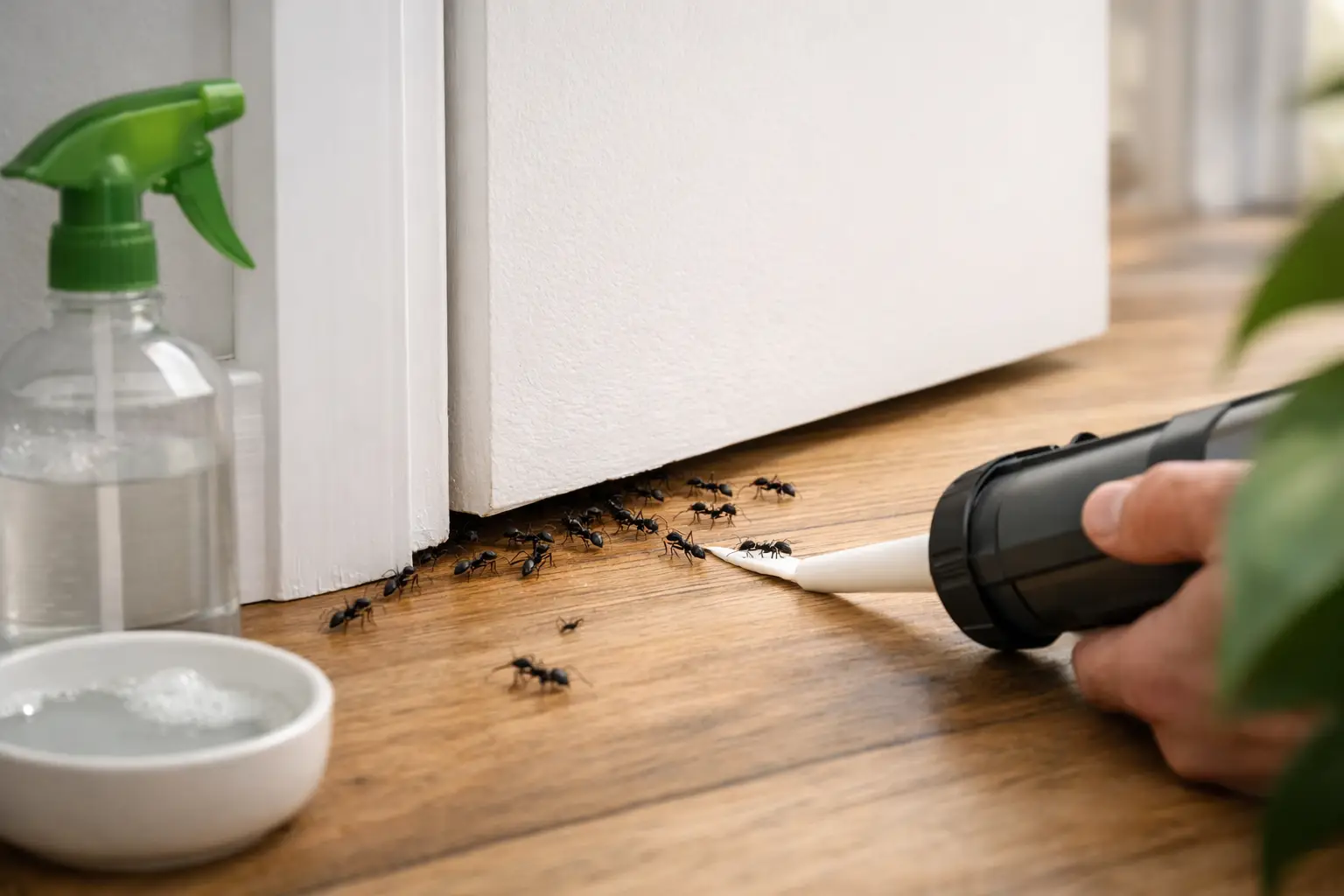
You usually notice ants after they have already solved the problem for themselves. They found water under the sink, crumbs by the toaster, or a gap around a window frame that gives them easy access. If you are wondering how to keep ants out, the answer is rarely one product or one quick spray. Effective ant prevention comes from removing what attracts them, blocking how they enter, and treating the source when activity is already established.
That matters because ants are persistent. A few scouts on the counter can turn into a steady trail within hours, especially in warmer months or during rainy weather when colonies start searching for food and moisture indoors. For homeowners and property managers, the goal is not just to kill the ants you see. The goal is to stop the conditions that keep inviting them back.
How to keep ants out starts with attraction control
Ants enter buildings for simple reasons – food, water, and shelter. If any one of those is easy to find, they will keep testing your home or facility even after you wipe away a trail.
In kitchens, the biggest issue is often not obvious filth. It is routine, low-level access. A few cereal pieces under the refrigerator, sticky residue around a trash can, pet food left out overnight, or a recycling bin with sweet drink residue can all support ant activity. For many homes, cleaning needs to be more targeted than intense. Focus on baseboards, under appliances, pantry shelves, sink cabinets, and any place where crumbs or moisture collect quietly.
Water is just as important. Ants are often drawn to condensation under sinks, damp crawl spaces, leaky hose bibs, clogged gutters, and overly wet areas around the foundation. In Ohio, seasonal moisture swings can make this worse. After heavy rain, ants may move indoors simply because their nest is disturbed or saturated.
Storage also makes a difference. Dry goods like flour, sugar, cereal, and pet treats should be sealed in hard containers when possible. Thin cardboard and loosely folded bags are easy targets. If ants get established in a pantry, you need to remove both the active food source and the scent trails that guide more workers back to it.
Seal the entry points ants use most
Ants do not need much space to get inside. Small gaps around utility lines, worn weatherstripping, cracks in mortar, settling around door frames, and window voids are common entry points. The challenge is that many of these openings are easy to overlook because they do not look serious from a structural standpoint.
Walk the perimeter slowly and look where different materials meet. Foundation lines, siding transitions, garage thresholds, and pipe penetrations are common problem areas. Indoors, pay attention to where ant trails begin and disappear. That often tells you whether they are entering through a wall void, window area, or plumbing penetration.
Caulking and weather sealing help, but sealing alone is not always enough. If ants are already nesting close to the structure, they may simply find the next available gap. Physical exclusion works best when it is combined with sanitation and targeted treatment around the areas where colonies are active.
Why wiping up ants is not the same as solving the problem
Many people clean the counter, spray the visible ants, and assume the issue is over. That can reduce activity for a day or two, but it often does not affect the colony. In some cases, the wrong over-the-counter spray creates a false sense of progress while the nest continues expanding behind walls, under slabs, or outdoors along the foundation.
Ants rely on pheromone trails to direct other workers to food and water. If you clean the trail thoroughly, you can disrupt their route. If you only kill the visible ants and leave the trail or the food source in place, more ants often return.
This is where product choice matters. Fast-kill sprays have a role for immediate knockdown, but they are not always the best long-term answer. For many ant species, baits are more effective because workers carry the material back to the colony. The trade-off is patience. Baits do not always produce instant results, and placing them in the wrong location can make them far less effective.
The best indoor habits for long-term ant prevention
If you want to know how to keep ants out for good, daily habits matter more than occasional deep cleaning. Ant prevention is about consistency.
Keep counters and floors free of food residue, especially sweets, grease, and crumbs near appliances. Empty indoor trash regularly and clean the container itself, not just the bagged contents. Do not leave dirty dishes overnight if ants are already active. Pet bowls should be cleaned daily, and food should not sit out longer than necessary.
Moisture control deserves equal attention. Repair plumbing drips, dry sink areas at night, and check less visible places like utility rooms, basements, and behind washing machines. If you have recurring humidity issues, improving ventilation or using dehumidification can make the space less favorable.
Outdoor habits also influence what happens inside. Keep mulch and heavy vegetation from pressing directly against the foundation. Trim branches and shrubs that create hidden pathways to the structure. Store firewood away from the building when possible, and avoid allowing standing water to collect near exterior walls.
How to keep ants out when they keep coming back
Recurring ant activity usually means one of three things. Either the colony is still active nearby, there are multiple colonies around the property, or the conditions that attracted ants in the first place have not been fully corrected.
This is common with odorous house ants, pavement ants, and carpenter ants. Each behaves differently. Some species form large colonies with satellite nesting sites, which means you may treat one area and still see activity from another. Carpenter ants add another concern because they can nest in moisture-damaged wood, making the issue partly a pest problem and partly a building maintenance issue.
That is why identification matters. The best treatment for one ant species may be the wrong approach for another. Sweet baits, protein baits, dust applications, crack-and-crevice treatments, and exterior perimeter work all have a place, but they need to match the ant behavior and nesting pattern.
If ants are showing up in multiple rooms, appearing seasonally despite your efforts, or coming from wall voids and structural areas, a professional inspection is the most efficient next step. A trained technician can determine whether you are dealing with a simple nuisance trail or a broader infestation that requires a customized plan.
When DIY works and when professional treatment makes sense
DIY prevention works best when the issue is caught early and the colony is small or still foraging from outside. In those cases, better sanitation, exclusion, and carefully placed bait can often reduce activity.
The limit of DIY is usually diagnosis and access. Most people do not know where the nest actually is, what species they are dealing with, or whether the visible ants are only a small part of the problem. Spraying random products in several areas can also interfere with bait acceptance or scatter certain ants into new nesting locations.
Professional service makes sense when ants are persistent, widespread, or connected to moisture problems, structural voids, or commercial sanitation risks. In homes, that means protecting kitchens, bathrooms, basements, and exterior entry points with a treatment plan that is designed for the property. In commercial settings, it means documentation, prevention, and consistent service that supports health and compliance standards.
For many Ohio properties, the best results come from layered pest management – inspection, identification, targeted treatment, exclusion recommendations, and ongoing monitoring where needed. That approach is more dependable than reacting every time a new trail appears.
Safe ant control should still be effective
People often assume they have to choose between strong results and a treatment approach that considers children, pets, and the indoor environment. A professional plan should account for both. Safe ant control is not about doing less. It is about using the right materials in the right places, with attention to exposure, application method, and the actual source of the infestation.
That is especially important in homes with kids and pets, and in commercial properties where staff, customers, or residents are present throughout the day. Precision matters more than overapplication.
Ants are small, but the stress they create is not. When they keep showing up, it usually means the property is offering something they need. Remove that access, close the easy entry points, and use treatment methods that match the species and nesting behavior. That is how you stop chasing trails and start preventing them with confidence.