



A bed bug problem changes how you sleep, where you sit, and whether you feel comfortable bringing a bag into your own home. That is why a bed bug heat treatment review should focus on more than a quick promise of extermination. The real question is whether the treatment can reach every hiding place, eliminate eggs as well as active bugs, and help prevent the infestation from starting again.
For many Ohio homeowners, whole-room heat treatment is one of the fastest and most effective options available when it is planned, monitored, and completed by trained professionals. It is not the right answer for every property or every budget, but it can deliver decisive results when bed bugs are established in bedrooms, living spaces, apartments, hotels, or other occupied areas.
Our Bed Bug Heat Treatment Review: The Real Standard
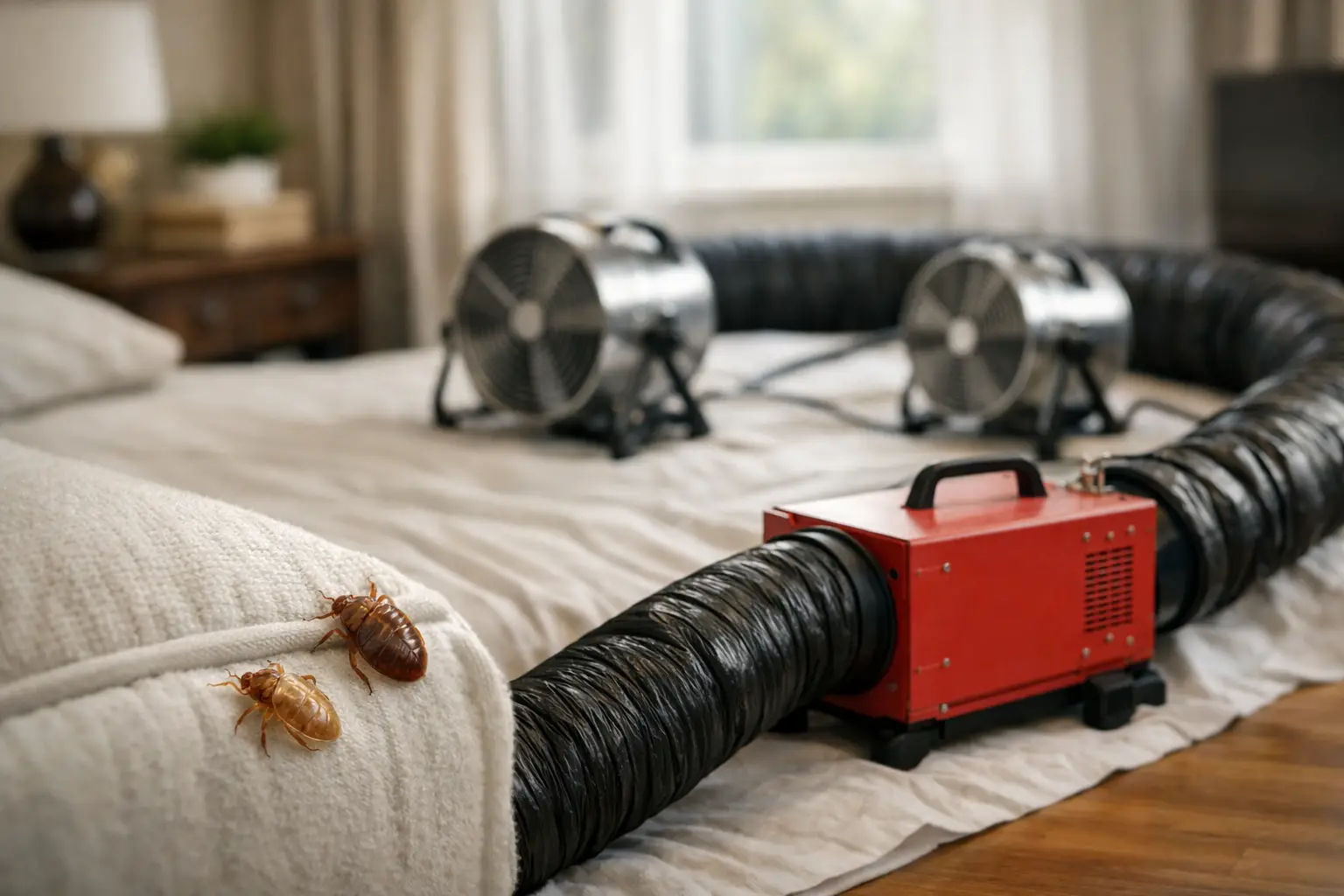
Heat treatment works by raising the temperature inside an infested room or treatment area to a level bed bugs cannot survive. Professional equipment circulates heated air throughout the space while technicians use sensors to monitor temperatures in hard-to-reach locations. The goal is not simply to make the room feel hot. It is to achieve and hold lethal temperatures where bed bugs hide: mattress seams, box springs, upholstered furniture, baseboards, wall voids, luggage, and cracks around the bed.
A properly managed treatment can kill adult bed bugs, nymphs, and eggs in one service visit. That egg control is a major advantage. Some chemical-only approaches require multiple applications because eggs may survive an initial treatment and hatch later.
Still, results depend on execution. A room with poor air circulation, dense clutter, heavy insulation, or large furniture can create cooler pockets. Bed bugs can survive in those areas if technicians do not place equipment correctly, move air effectively, and verify temperatures with multiple monitors. A professional heat treatment is a controlled process, not a space heater left running in a bedroom.
What Happens During Professional Heat Treatment
Before treatment, a technician inspects the affected areas and confirms signs of bed bug activity. This matters because bites alone do not identify bed bugs. Fleas, mosquitoes, skin irritation, and other issues can look similar. Evidence such as live insects, shed skins, dark spotting, or eggs helps determine the treatment scope.
On treatment day, commercial heaters and high-volume fans are positioned to heat the space evenly. Sensitive items may need to be removed or protected, while furniture is often shifted away from walls so air can circulate around it. Technicians monitor the treatment from beginning to end, adjusting equipment as needed to address cooler zones.
The treatment area remains unavailable while temperatures are elevated. Once the process is complete and the space has cooled, a technician performs a final review and provides instructions for returning the room to normal use. Depending on the extent of the infestation and the property layout, service may target one room, several connected rooms, or a larger section of the building.
Preparation Has a Direct Effect on Results
Good preparation protects belongings and helps heat reach the places bed bugs use for shelter. Your pest control provider should give clear, property-specific instructions before service rather than relying on a generic checklist.
In most cases, residents should remove heat-sensitive belongings, including certain medications, candles, aerosols, vinyl items, pressurized containers, and delicate electronics if directed. Fish tanks, pets, and people must be out of the treatment area. Laundry, shoes, bags, and other movable belongings may also need special handling to prevent bed bugs from being carried to untreated rooms.
Do not move infested furniture, bedding, or bags into another part of the home without professional guidance. That can spread bed bugs into previously unaffected spaces and turn a contained problem into a larger one. For apartment communities, hotels, and commercial housing, coordinated preparation is especially important because bed bugs may travel through adjoining rooms or shared wall voids.
When Heat Treatment Is Worth the Cost
Heat treatment generally costs more upfront than a basic spray service because it requires specialized equipment, continuous temperature monitoring, trained technicians, and substantial setup time. It may be worth the investment when speed, egg elimination, and reduced disruption are priorities.
For example, heat can be a strong choice for a family that needs fast relief in a heavily used bedroom, a landlord preparing an occupied unit for turnover, or a hotel that cannot tolerate a prolonged bed bug issue. It can also be valuable when residents prefer to avoid repeated chemical applications around beds, furniture, or sensitive areas.
That does not mean heat always replaces every other method. In some infestations, the most dependable plan combines heat with targeted residual treatment, mattress encasements, interception devices, follow-up inspections, and prevention guidance. This layered approach can address bed bugs that may be outside the original treatment zone or reintroduced later.
A low price is not automatically a good value. Ask what the quoted service includes: inspection, preparation guidance, temperature monitoring, follow-up visits, warranty terms, and treatment for connected areas if activity is found. A vague quote may leave out the safeguards that make heat treatment effective.
Heat Treatment vs. Chemical Treatment
Heat is fast and can kill every life stage of bed bugs in the treated area during one carefully performed service. It leaves no residual protection once the room cools, however. If a bed bug is brought back into the home after treatment, heat alone cannot stop a new infestation.
Chemical treatment can provide residual control in cracks, voids, and other designated areas, but it may require more time and repeat visits. Bed bugs also have varying levels of resistance to certain products, which is one reason professional product selection and application matter.
The best option depends on the infestation, the structure, occupant needs, budget, and urgency. A small, early infestation may respond well to a targeted, multi-visit program. A widespread infestation in a bedroom or multi-unit setting may justify heat as the faster, more comprehensive option. An experienced pest professional should explain the trade-offs plainly instead of treating every bed bug problem the same way.
How to Evaluate a Bed Bug Heat Treatment Company
Choose a provider that begins with inspection and gives you a written treatment plan. The company should be able to explain how it monitors temperatures in difficult locations, what belongings need protection, and how it handles follow-up after service.
Look for trained, licensed technicians who understand bed bug behavior and the risks of spreading an infestation during preparation. For commercial properties, ask about service documentation, tenant or guest communication support, multi-unit inspection procedures, and scalable service for additional locations.
It is also reasonable to ask what happens if activity continues after treatment. Bed bug control is not a product purchase. It is a managed extermination process that should include clear expectations, responsive support, and prevention steps tailored to the property.
Keep Bed Bugs From Returning
After treatment, reduce the chance of reintroduction by inspecting luggage after travel, avoiding used furniture unless it has been carefully checked, and using protective mattress encasements when recommended. Residents of apartments and shared housing should report suspected activity promptly. Early reporting gives professionals a better chance to contain the issue before it spreads.
If you are seeing bites, spotting, shed skins, or live insects, avoid relying on foggers or do-it-yourself heat devices. They can drive bed bugs deeper into walls, create safety concerns, and delay effective service. A prompt inspection provides answers and a treatment plan built for real control.
Apex Pest Control helps homeowners and property operators address bed bugs with proven treatment strategies, careful preparation, and the professional follow-through needed for peace of mind. The sooner a suspected infestation is assessed, the sooner you can return your home or facility to normal.