



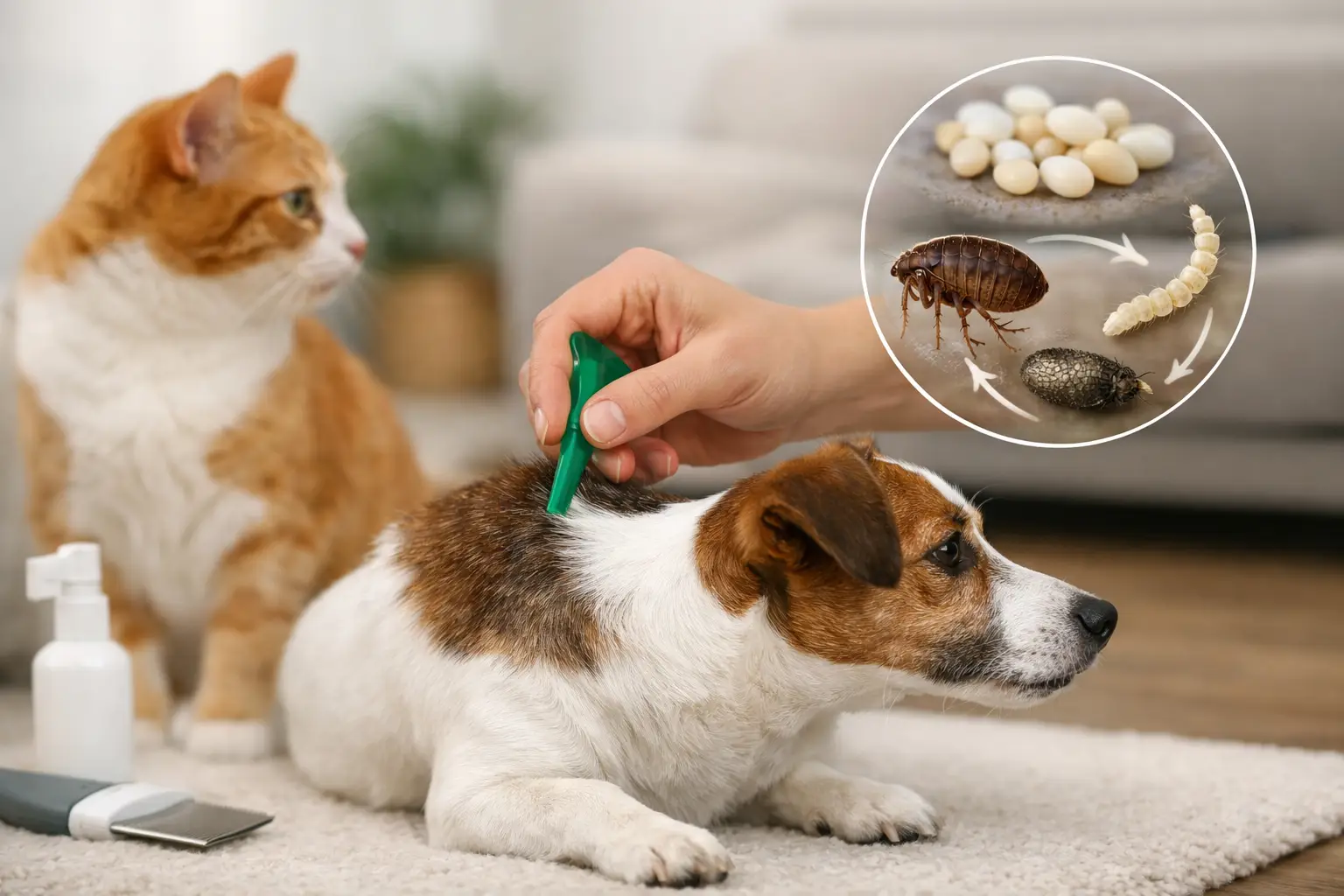
A flea treatment problem rarely begins and ends with one itchy pet. Fleas can lay eggs in carpet fibers, pet bedding, cracks near baseboards, upholstered furniture, and other protected areas of a home. By the time adult fleas are visible, immature stages may already be developing out of sight. Effective control means treating the source, interrupting the flea life cycle, and preventing the next wave from emerging.
For Ohio homeowners, flea activity can become especially frustrating after pets spend more time outdoors in warm weather or when wildlife is active near the property. A complete plan protects your family, pets, and home without relying on temporary relief alone.
Why flea treatment must address the full life cycle
Adult fleas are the stage people notice, but they represent only part of an infestation. After feeding, adult female fleas can lay eggs that fall from a pet into the places where that pet rests, sleeps, or travels. Those eggs hatch into larvae, which avoid light and feed on organic debris. Larvae then develop into pupae inside protective cocoons before emerging as biting adults.
That cocoon is why a single treatment can appear to work and then seem to fail days or weeks later. Many treatment products are effective against active adult fleas but may not fully penetrate every cocoon. Vibrations, warmth, and the presence of a nearby host can trigger emerging adults after the initial service.
A dependable flea treatment plan accounts for this timing. It combines treatment with cleaning, pet care, follow-up, and monitoring. The goal is not simply to kill the fleas seen today. It is to prevent developing fleas from rebuilding the problem tomorrow.
Start with pets, but do not stop there
Dogs and cats are often the primary hosts that bring fleas indoors, although fleas can also be introduced by wildlife, visitors, or infested items. Every pet in the household needs to be considered, including pets that are not showing obvious signs of scratching.
Speak with your veterinarian about a flea-control product appropriate for each pet’s species, age, weight, health status, and lifestyle. Never use a dog flea product on a cat unless a veterinarian specifically approves it. Some ingredients that may be used for dogs can be dangerous to cats.
Bathing a pet may remove some adult fleas, but it is not a complete solution. Without a veterinarian-recommended preventive and treatment plan, pets can continue to provide fleas with a blood meal and allow the life cycle to continue. If a pet has excessive scratching, hair loss, irritated skin, or signs of infection, veterinary care should come first.
Treat the areas where fleas actually develop
Indoor flea control is largely a sanitation and habitat-control effort. Fleas develop where pets spend time, not necessarily where people first notice bites. Focus on pet bedding, rugs, carpeted rooms, furniture, closets, pet carriers, and the edges of rooms.
Vacuum thoroughly and repeatedly, especially along baseboards, under furniture, around pet sleeping areas, and between carpet fibers. Dispose of vacuum contents in a sealed bag outside the home promptly. Launder pet bedding, throw blankets, and washable covers using the warmest settings safe for the material.
Do not overlook upholstered furniture. If a pet sleeps on the sofa, recliner, or bed, those areas are part of the infestation zone. Vacuum seams, cushions, and beneath removable covers. For severe infestations, a professional may recommend targeted treatment for these protected harborage areas.
Cleaning alone can reduce flea numbers, but it does not always eliminate an established infestation. Vacuuming stimulates pupae to emerge, which is useful because newly emerged adults are more vulnerable to treatment and pet preventives. Consistency matters more than one intense cleaning session.
When indoor products are appropriate
Over-the-counter flea sprays, foggers, powders, and bombs can create false confidence. Foggers generally do not reach deep into carpets, under furniture, or into cracks where flea stages may be protected. They can also expose more of the home than necessary if used incorrectly.
When a product is needed indoors, it should be selected for the site, pest pressure, and household conditions. Some professional programs use an adulticide to address active fleas along with an insect growth regulator that disrupts development. This layered approach helps prevent immature fleas from becoming the next generation of biting adults.
Safety depends on following the product label exactly. Keep children, pets, food items, toys, and pet bowls out of treatment areas as directed. Do not treat animal bedding or pets with a household insecticide unless the label specifically permits that use. If anyone in the home has respiratory concerns, chemical sensitivities, or special health considerations, discuss those conditions before treatment begins.
Does the yard need flea treatment?
Not every flea issue requires outdoor treatment. A yard treatment is most useful when pets regularly pick up fleas outside, wildlife activity is present, or flea populations are concentrated in shaded, protected areas near the home.
Fleas do not thrive well in open, sunny, dry lawn areas. They are more likely to develop in shaded ground cover, under decks, around porches, beneath dense shrubs, in dog runs, and near places where feral cats, raccoons, or other animals rest. Reducing leaf litter, trimming dense vegetation, and limiting wildlife access can make these areas less favorable.
Outdoor applications should be targeted rather than sprayed across every inch of a property. A professional technician can inspect likely flea harborage areas and determine whether exterior treatment is justified. This protects beneficial insects and avoids unnecessary pesticide use while addressing the conditions that support fleas.
What to expect after professional flea service
Seeing an occasional flea after treatment does not automatically mean the service failed. Pupae may continue to emerge for a period after the initial application, particularly in a heavy infestation. The difference is that those new adults should encounter treated surfaces or a protected pet host and should not be able to sustain the infestation.
Most flea-control programs require household cooperation. Continue vacuuming as instructed, maintain veterinarian-approved pet prevention, wash pet bedding, and avoid bringing untreated pets into the treated environment. Skipping these steps can allow fleas to continue reproducing.
A professional plan may also include a follow-up visit based on the severity of activity, the size of the home, the number of pets, and the conditions found during inspection. One-time flea treatment can resolve a limited, recent issue, while a more established problem may need scheduled follow-up to ensure emerging fleas are addressed at the right stage.
Flea treatment for apartments and commercial properties
In apartments, condominiums, veterinary settings, pet-friendly offices, boarding facilities, and multifamily properties, flea control requires coordinated action. Treating one unit while pets, shared corridors, neighboring units, or common areas remain active can lead to reinfestation.
Property managers should document reported activity, identify units with pets, communicate preparation requirements clearly, and work with a licensed pest management provider on a treatment sequence. In commercial environments, service records, inspection findings, and preventive recommendations help support accountability and consistent results.
Apex Pest Control develops individualized flea treatment plans based on the property, the extent of activity, pet exposure, and safety needs. Certified professionals can identify likely development sites, apply targeted solutions, and provide practical preparation and follow-up guidance for homes and facilities.
When to call for expert help
Professional support is especially valuable when fleas persist after pet treatment and cleaning, when bites are occurring in multiple rooms, or when a property has many pets, extensive carpeting, or recurring wildlife activity. It is also the right choice when you need confidence that products will be selected and applied with children, pets, occupants, and the property in mind.
The fastest path to relief is usually a coordinated one: protect the pets, clean the areas where fleas develop, treat only where treatment is needed, and give the flea life cycle no place to continue. With prompt action and a plan built for the conditions at your property, your home can return to being comfortable for the people and pets who belong there.