



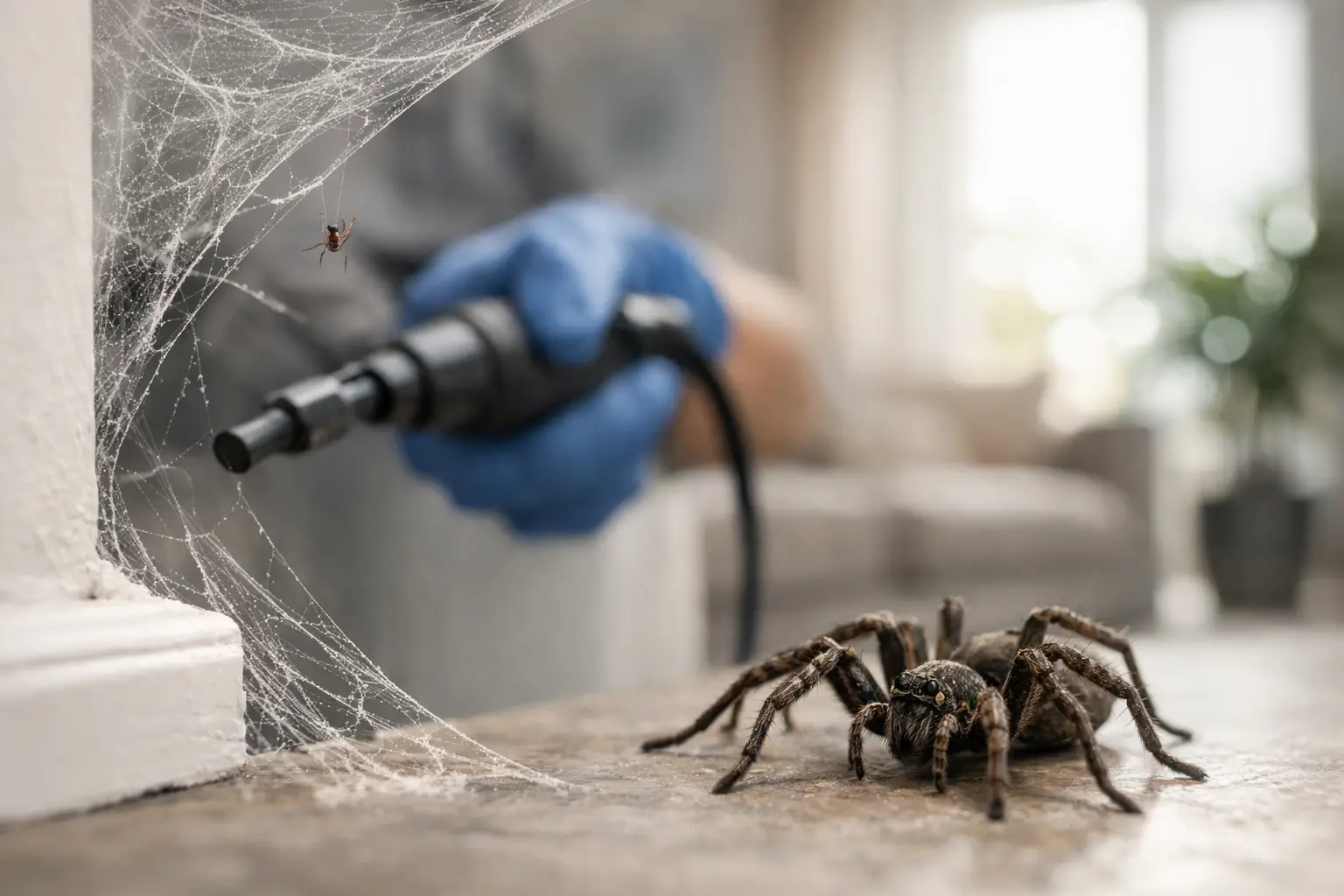
A single spider in a basement is not always an emergency. Repeated sightings in bedrooms, bathrooms, storage areas, or customer-facing spaces are different. Effective spider control addresses more than the spider you can see. It identifies why spiders are entering, where they are hiding, and which conditions are allowing their food source to thrive nearby.
For Ohio homeowners, spider activity often increases when temperatures shift and spiders move toward stable indoor shelter. For commercial properties, webs around entrances, loading docks, exterior lighting, and inventory areas can quickly become a cleanliness concern. A proven response combines inspection, targeted treatment, web removal, exclusion, and ongoing prevention.
Why spiders show up indoors
Spiders enter buildings for the same reasons many pests do: shelter, access, and food. They may come through gaps around utility lines, damaged screens, poorly sealed doors, foundation cracks, or vents. Once inside, quiet areas such as basements, garages, attics, crawl spaces, closets, and mechanical rooms provide ideal harborage.
The larger issue is often the insects spiders are feeding on. Exterior lights can attract flying insects at night. Moisture near a foundation can support other pest activity. Cluttered storage areas create protected spaces for both spiders and their prey. Treating only visible webs may improve appearance temporarily, but it does not correct the conditions that keep attracting spiders.
Most spiders found around a property are nuisance pests rather than a serious threat. They can help reduce insect populations outdoors. Indoors, however, webs, egg sacs, and unexpected sightings are understandably disruptive. A careful inspection helps determine whether occasional outdoor activity can be managed with prevention or whether a more focused treatment plan is needed.
Signs you need professional spider control
One web near an exterior window does not necessarily mean there is an infestation. Frequent webs returning after removal, spiders appearing in several rooms, or sightings in areas where children, pets, employees, or customers spend time deserve closer attention.
Watch for webs in corners, around window frames, beneath furniture, near ceiling fixtures, and around exterior doors. Egg sacs may indicate an ongoing breeding cycle. Spiders may also be found behind stored boxes, under shelving, around floor drains, and in seldom-disturbed equipment areas. In commercial settings, recurring webs can undermine housekeeping standards and raise concerns during customer visits or facility inspections.
If you see a spider that appears unusual or you are concerned about a possible bite, avoid handling it. Capture a clear photo from a safe distance if possible, and seek appropriate medical guidance for concerning symptoms. Professional identification is more reliable than guessing based on color or size alone.
What effective spider treatment involves
Reliable spider management starts with a property-specific inspection. A trained technician looks for active webs, likely entry points, moisture conditions, cluttered harborages, and evidence of insects that may be supporting spider activity. This step matters because an approach for a detached garage will differ from one for a daycare, restaurant, warehouse, or occupied family home.
Treatment may include targeted applications in cracks, crevices, voids, and other approved harborages where spiders travel or rest. Exterior perimeter treatment can help reduce activity before spiders reach the building. Web removal is also valuable because it eliminates current evidence of activity and makes it easier to monitor whether new spiders are returning.
The goal is not to apply products everywhere. Effective service uses the right materials, in the right locations, at the right intervals. This measured approach protects people, pets, property, and the environment while delivering meaningful control. Organic and eco-conscious options may be appropriate in certain situations, although the best method depends on spider pressure, building conditions, and the level of prevention required.
Why follow-up service can matter
Spider control is rarely a one-visit issue when conditions around a property continue to support insect activity. Egg sacs can hatch after an initial service, and seasonal weather can bring new spiders toward a structure. Ongoing service provides the opportunity to inspect, remove fresh webs, reinforce exterior protection, and address changing conditions before activity becomes more noticeable.
For a homeowner with an isolated issue, a one-time treatment and exclusion work may be enough. For properties with recurring activity, heavy landscaping, unfinished lower levels, or frequent exterior door traffic, a recurring prevention plan usually provides more dependable peace of mind.
Prevention steps that make treatment work better
Professional treatment is strongest when paired with practical prevention. Property owners do not need to make their home or facility sterile, but reducing shelter and insect pressure can make a major difference.
Keep vegetation trimmed away from siding, windows, and rooflines. Avoid stacking firewood, lumber, pallets, or stored materials directly against the building. Seal gaps around pipes, cable lines, doors, and windows, and repair damaged screens or door sweeps. Reduce clutter in basements, garages, storage rooms, and utility areas so spiders have fewer undisturbed places to hide.
Exterior lighting deserves attention as well. Lights are not the direct cause of spiders, but they can attract the insects spiders eat. Where practical, move bright lighting away from entry doors or use fixtures that direct light downward. Regularly clearing webs around doors, eaves, signs, and loading areas also improves appearance and helps reveal fresh activity quickly.
Spider control for businesses and multi-site facilities
A spider issue at a business can be more than a maintenance inconvenience. Webs at a front entrance can affect first impressions. Spider activity near food storage, shipping areas, patient spaces, or tenant common areas can lead to complaints and create avoidable operational distractions.
Commercial spider control should be built around the facility, not a generic schedule. High-traffic entrances, loading docks, exterior lighting, landscaping, dumpster areas, storage racks, and utility penetrations all deserve attention. Facilities with multiple locations also benefit from consistent reporting, documented service, account oversight, and a clear process for escalating urgent concerns.
For compliance-driven operations, preventive pest management supports a cleaner, more inspection-ready environment. Technicians should communicate what was found, what was treated, and which structural or sanitation corrections will reduce future pressure. That level of documentation helps facility managers make informed decisions instead of reacting to each new sighting.
Common questions about spiders
Are spiders a sign that my property is dirty?
Not necessarily. Spiders can enter clean, well-maintained buildings through small openings and may be attracted by insects near lights or moisture-prone areas. Still, clutter, excess storage, and missed exclusion repairs can give them more places to hide.
Will removing webs solve the problem?
Web removal is helpful, especially around entrances and visible areas, but it is only one part of control. Without addressing entry points, harborage, and insect activity, new webs may appear quickly.
Are spider treatments safe for children and pets?
Safety depends on using appropriate products, applying them correctly, and following technician instructions. A professional plan should account for children, pets, sensitive areas, and the specific conditions of the property.
When should I call for help?
Call when sightings are frequent, webs repeatedly return, egg sacs are present, or spiders are appearing in living spaces, work areas, or customer-facing locations. Prompt service can prevent a manageable issue from becoming a recurring source of stress.
Spiders belong outdoors, not in the spaces where your family, employees, tenants, or customers should feel comfortable. A professional inspection can turn repeated sightings into a clear plan for treatment, prevention, and lasting control.