



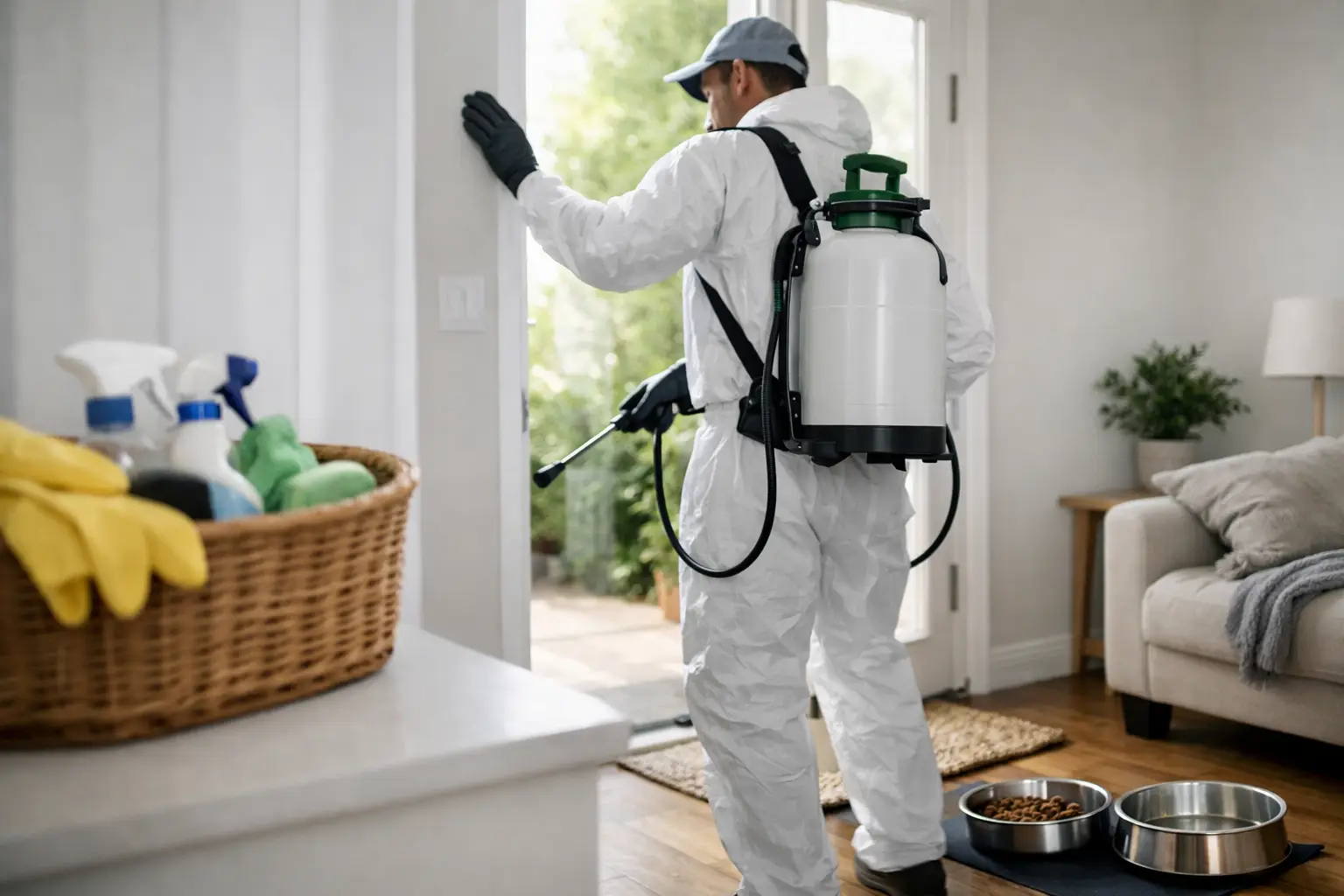
A pest control appointment is most effective when the technician can see where pests are living, feeding, and entering the property. Knowing how to prepare for an exterminator visit helps protect your family, pets, inventory, and belongings while giving the treatment its best chance to work the first time.
Your service professional will provide instructions based on the pest, the treatment method, and the conditions at your home or facility. Follow those instructions first. Preparation for a bed bug treatment, for example, is far more detailed than preparation for an exterior ant service. If anything is unclear, call before the appointment rather than guessing.
Start With the Technician’s Instructions
There is no universal checklist for every pest problem. The preparation needed for rodents may involve clearing access to a basement, attic, utility room, or crawlspace. A cockroach treatment may require kitchen and bathroom cleaning, while stinging insect service may require keeping people away from a specific outdoor area.
When scheduling service, share as much information as possible: where you see the pests, when activity began, whether anyone has been bitten or stung, and whether children, pets, or sensitive occupants are present. For commercial properties, identify food-handling areas, production lines, patient areas, restricted rooms, and any site-specific safety requirements.
Ask whether you need to leave the property, for how long, and which rooms will be treated. A professional technician can give you preparation and re-entry directions that match the materials and methods being used. Do not rely on advice from a neighbor or a generic online checklist when your actual service plan may be different.
Clean for Access, Not to Hide the Problem
A clean environment supports pest control, but excessive cleaning immediately before service can make an active infestation harder to inspect. Your goal is to remove clutter and expose likely hiding places, not erase every sign of activity.
Pick up items from floors along walls, under sinks, behind appliances, and in closets or storage areas where pests have been reported. Move furniture a few inches away from walls when requested, especially beds, sofas, dressers, and cabinets. Technicians need room to inspect baseboards, cracks, plumbing penetrations, and other common travel routes.
In kitchens and pantries, put food in sealed containers and remove crumbs, grease, and standing water. Empty trash if it is full, and make sure the technician can reach behind or beneath appliances if that area is part of the inspection. This does not mean you should scrub away live insects, droppings, nests, or other evidence. Take a photo if you can safely do so, then point it out during the visit.
For a business, preparation often means making inspection points accessible. Clear access to utility rooms, receiving doors, waste areas, floor drains, storage racks, and exterior entry points. Facility managers should also have recent pest sighting logs, sanitation records, and previous service documentation available when applicable.
Protect Food, Dishes, Pets, and Personal Items
Before treatment, store exposed food, pet food, dishes, cookware, and utensils as directed. Close food containers tightly or place them in cabinets, refrigerators, or other protected storage. Do not leave pet bowls on the floor unless your technician tells you otherwise.
Children’s toys, pet bedding, aquariums, bird cages, and reptile enclosures deserve special attention. Remove or cover them according to the service instructions. Fish tanks may require the pump to be turned off and the tank to be covered, but the correct procedure depends on the treatment. Never make assumptions about aquarium care – ask your technician in advance.
If treatment involves a bedroom, remove clothing, loose items, and personal belongings from areas the technician must access. For bed bugs, do not move potentially affected belongings into another room or take them to someone else’s home. That can spread the infestation. Bag, wash, dry, or isolate items only as directed by your pest control professional.
Plan for Children, Pets, and Sensitive Occupants
Safety is a central part of professional pest management. Still, every household has different needs. Tell the technician about infants, elderly residents, pregnancy, allergies, respiratory conditions, mobility limitations, and pets before service begins. This allows the treatment plan to account for the people and animals using the space.
You may be asked to leave during part of the treatment or remain out of a room until treated surfaces are dry. Follow the stated re-entry time exactly. It is not a suggestion or an inconvenience – it is part of using the treatment safely and correctly.
Dogs and cats should be secured away from work areas. Let the technician know if a pet is anxious, likely to escape, or reactive around strangers. For outdoor service, collect pet toys and keep animals away from treated areas until the technician confirms it is safe to return.
Make Pest Activity Easy to Find
You do not need to diagnose the pest yourself. You can make the inspection more productive by showing the technician what you have noticed. Mark or photograph areas where you have seen insects, rodent droppings, gnaw marks, damaged packaging, mud tubes, nests, bites, unusual odors, or scratching sounds.
Be specific about timing. Ants that appear near a sink each morning, mice heard in the ceiling after dark, or mosquitoes concentrated near a low area of the yard all provide useful clues. Mention recent water leaks, construction, landscaping changes, travel, used furniture, new deliveries, or tenant turnover. These details often help explain how pests arrived or why activity increased.
Avoid using store-bought sprays, foggers, repellents, or bait products right before the appointment unless you were instructed to do so. Some products can push pests deeper into walls, interfere with bait acceptance, or create unnecessary exposure. Tell the technician about anything you have already used so they can adjust the service plan if needed.
Prepare Specific Areas When Requested
Some infestations require more focused preparation. If you have rodents, clear a path to suspected entry points, attic access, the garage, and areas around water heaters, furnaces, and utility lines. Do not seal openings before the inspection unless you have been directed to do so. A technician may need to identify active travel routes first.
For cockroaches, ants, or stored-product pests, inspect pantry items and remove heavily infested products when advised. Check pet food, cereal, flour, rice, dried goods, and cardboard packaging. Vacuuming visible insects and crumbs can help, but do not wash treated areas afterward unless your technician instructs you to.
For fleas, preparation may include vacuuming carpets, rugs, upholstered furniture, and pet resting areas. Pets may need veterinary-approved treatment as well. Treating the home without addressing an actively infested pet can allow the problem to continue.
For mosquitoes, remove or empty containers holding standing water where possible. For wildlife or bats, keep people and pets away from the animal and avoid blocking an animal inside a wall, attic, or structure. Wildlife exclusion requires careful timing and methods to prevent trapping dependent young.
What to Expect During the Visit
A quality exterminator visit should begin with an inspection and a conversation, not an immediate application. The technician should evaluate the extent of activity, identify likely entry points and contributing conditions, and explain the recommended treatment. Depending on the pest, the solution may involve targeted materials, baiting, trapping, exclusion, sanitation guidance, monitoring, or follow-up service.
Be available at the beginning and end of the appointment if possible. At the start, point out activity and share any concerns. At the end, ask what was treated, what you should avoid cleaning, whether follow-up is needed, and what changes will reduce future activity. For commercial accounts, confirm documentation requirements, corrective actions, and the person responsible for completing them.
After Treatment: Let the Plan Work
The days after service matter. Some pests may remain visible briefly as treatment takes effect, especially when baiting or targeted insect treatments are used. Do not assume this means the service failed. Ask your technician what activity is normal and when to report continued sightings.
Keep up with the prevention steps provided: seal food, manage moisture, remove clutter, repair gaps, maintain landscaping, and keep waste areas clean. If a follow-up visit is scheduled, keep it. Many pest problems require more than one service because eggs may hatch later, seasonal pressure may continue, or exclusion work needs to be completed in stages.
Apex Pest Control has helped Ohio homes and businesses address pest problems since 1969 with customized treatment plans built around safety, access, and long-term prevention. The best preparation is simple: give your technician clear information, provide safe access, and follow the instructions designed for your specific pest problem. That partnership turns a service visit into lasting peace of mind.