



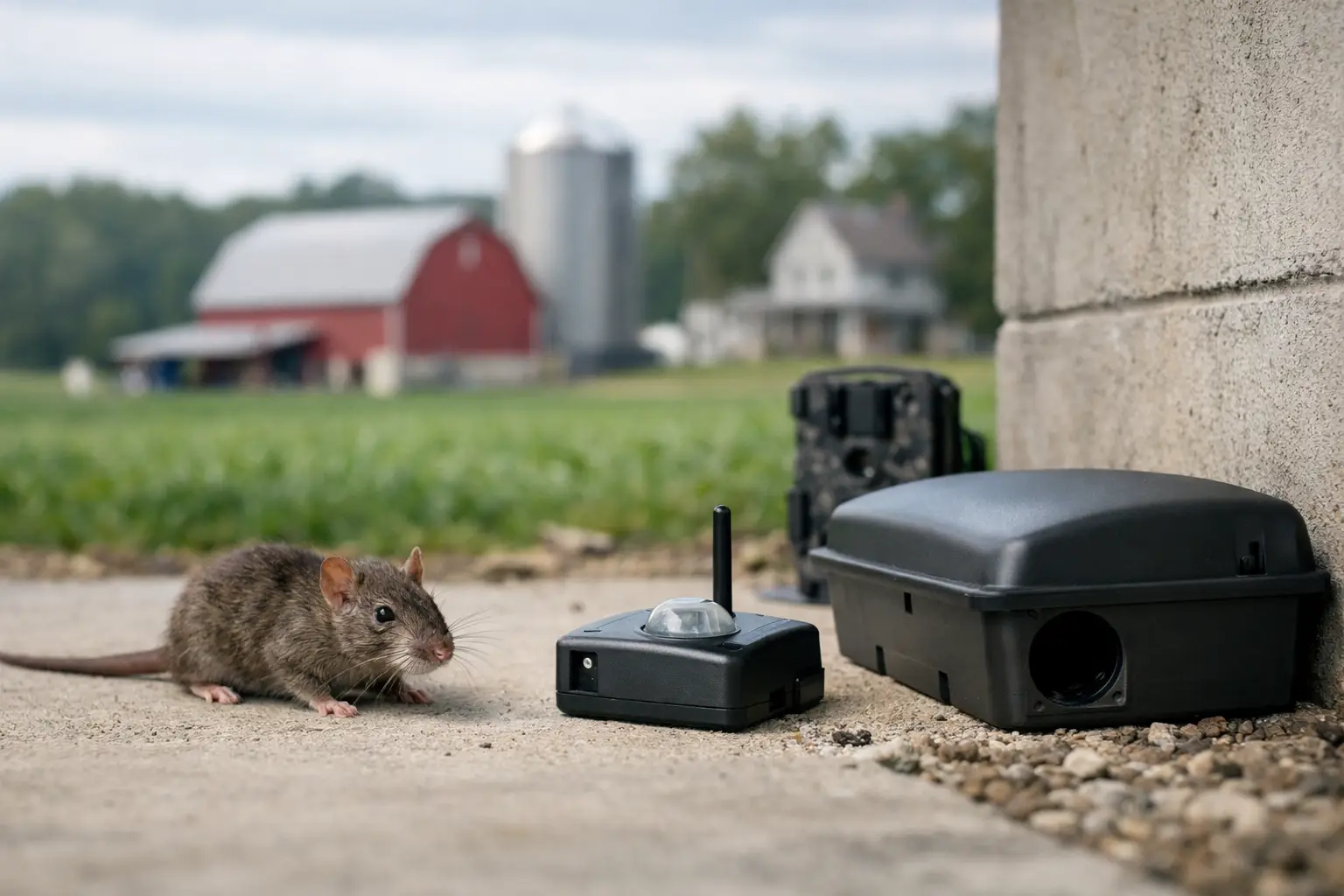
A rodent sighting in a kitchen, warehouse, break room, or basement is rarely an isolated event. Mice and rats travel along predictable routes, stay close to cover, and can remain active long before anyone sees one. This rodent monitoring system review explains what modern monitoring can detect, where it falls short, and how property owners can choose a system that supports real control rather than simply generating alerts.
For homeowners, monitoring can provide early warning before a small mouse issue becomes a larger infestation. For commercial facilities, it can support inspection records, trend reporting, food safety efforts, and faster corrective action. The right approach depends on the building, the activity level, and whether the system is paired with the exclusion and treatment work needed to stop rodents from returning.
What a Rodent Monitoring System Should Do
A rodent monitoring system is a network of devices placed in likely rodent travel areas. Depending on the system, those devices may be non-toxic monitoring stations, mechanical traps, sensor-equipped traps, exterior bait stations, or connected units that report activity electronically.
The primary purpose is not simply to catch a rodent. It is to reveal where activity is occurring, how frequently it is occurring, and whether conditions are improving after corrective action. That information helps a trained technician focus service where it matters most.
A useful system should provide three things: reliable detection, clear documentation, and a process for prompt response. If a device reports activity but no one investigates the entry point, sanitation issue, or harborage condition behind it, the property still has a rodent problem.
Rodent Monitoring System Review: Main Options
Traditional monitoring stations and traps
Traditional traps and monitoring stations remain effective because they are simple, proven, and easy to inspect. A technician can place them along walls, near utility penetrations, behind equipment, in attics, or in other protected travel zones. Physical evidence such as droppings, gnawing, rub marks, and trap activity can help confirm the scale of the issue.
These devices are often the best fit for homes and smaller facilities where regular professional inspections are practical. They also allow a technician to inspect the surrounding area closely, which is essential when identifying gaps around pipes, damaged weather stripping, clutter, food sources, or moisture problems.
The trade-off is timing. A trap or station only provides information when someone checks it. For a low-risk location, that may be sufficient. In a high-volume food facility, distribution center, healthcare setting, or multi-site commercial operation, periodic manual checks may not provide the visibility a manager needs.
Electronic monitoring devices
Electronic systems use sensors to detect a trap activation, door movement, bait disturbance, or other activity. The device transmits an alert to a platform, allowing the service provider or facility team to respond without waiting for the next scheduled inspection.
This can be valuable in areas that are difficult to access or sensitive to pest activity, such as drop ceilings, equipment rooms, loading areas, receiving docks, and remote storage spaces. It can also reduce the time between detection and response, which may limit damage and support faster documentation.
However, an electronic alert is not a diagnosis. It tells you that activity occurred at a specific device, not why rodents are entering the building or whether they are established elsewhere. A quality service program still includes technician inspections, trend analysis, exclusion recommendations, and direct communication with the customer.
Exterior monitoring and bait stations
Exterior stations are often an important first line of defense for commercial properties and certain residential settings. They are positioned around the building perimeter to monitor or control rodent pressure before animals gain access indoors.
These stations must be secured, labeled, serviced correctly, and selected according to the site. An exterior program can be especially helpful near dumpsters, landscaping, loading docks, standing water, bird-feeding areas, and neighboring properties with known activity. Yet exterior stations alone cannot solve an indoor infestation. If mice can enter through a quarter-inch gap or rats can use a damaged utility opening, exclusion work remains necessary.
What to Look for Before Choosing a System
The best system is based on risk, not sales claims. A single-family home with occasional mice needs a different plan than a restaurant, apartment community, school, manufacturing plant, or warehouse with open dock doors.
Start with the building itself. Older homes and commercial structures in Northeast Ohio often have foundation gaps, aging doors, utility penetrations, and drainage conditions that create easy access. Large facilities may have dozens of potential entry points, along with equipment layouts that create hidden travel corridors.
Next, consider the consequences of activity. In a home, rodents can contaminate stored food, damage insulation and wiring, and create stress for the family. In a commercial operation, a single confirmed rodent issue may affect product protection, employee safety, customer confidence, and audit readiness. Higher-risk environments generally benefit from more frequent inspections, detailed device mapping, and responsive reporting.
A dependable program should also define who acts on alerts. Is the customer expected to monitor an app? Does a pest management professional receive the notification and dispatch service? How quickly is a triggered device inspected? Clear responsibilities prevent a monitoring system from becoming another unattended dashboard.
Reporting Matters as Much as Detection
For commercial accounts, good reporting turns pest activity into actionable information. Facility managers should be able to see device locations, service dates, findings, corrective actions, and recurring problem areas. Trend reports can show whether activity increases near a loading dock, waste area, employee entrance, or a particular section of the building.
Documentation is particularly valuable for businesses that undergo internal reviews, customer audits, or regulatory inspections. Still, reports should be easy to understand. A long list of device numbers without explanation does not help an operations leader make decisions.
Ask whether the provider reviews patterns with you and explains the corrective actions needed. That may include sealing openings, repairing door sweeps, improving waste handling, moving stored materials away from walls, addressing landscape cover, or changing cleaning practices. Rodent control works best when monitoring data leads to practical changes.
The Limits of Monitoring Technology
No monitoring system replaces an integrated rodent control plan. Sensors can improve speed and visibility, but they cannot seal a gap, remove a nest, clean contaminated storage areas, or correct a sanitation condition that keeps attracting rodents.
False confidence is the biggest concern. A property may have many devices and still miss activity if placement is poor, service intervals are inadequate, or rodents are traveling in unmonitored areas. Placement should be based on evidence and building conditions, not a one-size-fits-all grid.
There are also safety considerations. Homes with children or pets require secure, appropriate device selection and placement. Commercial sites need a program that fits their industry, operating schedule, and safety procedures. A trained pest management professional can select methods that protect people, property, and the environment while delivering effective control.
When Professional Monitoring Is Worth It
Professional rodent monitoring is especially worthwhile when activity is recurring, the source is unclear, the property is large, or the consequences of a pest issue are high. It is also a strong choice for homeowners who have trapped one or two mice but want to prevent a seasonal problem from becoming a permanent one.
For commercial properties, the value comes from the full service structure around the devices: scheduled inspection, rapid response, detailed documentation, exclusion guidance, quality assurance, and accountability. Multi-location businesses should look for consistent standards across every site, while still allowing each facility to receive an individualized plan.
Apex Pest Control approaches rodent management as a complete protection program, not a device installation. Since 1969, our trained professionals have helped Ohio homes and commercial facilities identify activity, eliminate active problems, close entry points, and maintain long-term prevention.
If a monitoring device has revealed rodent activity at your property, treat that alert as the beginning of the investigation. Prompt inspection and targeted corrective action give you the best chance to protect your home, facility, reputation, and peace of mind.