



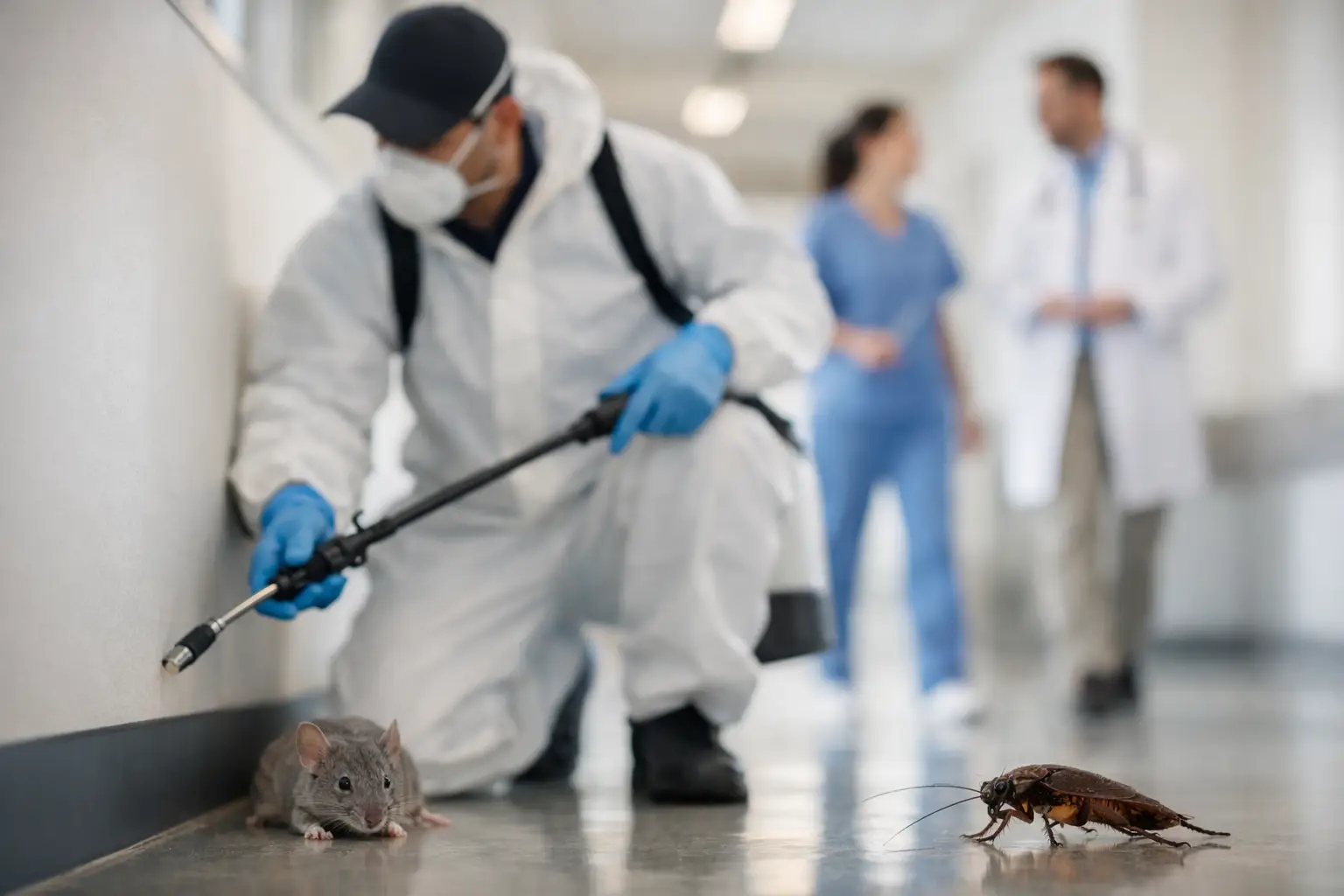
A single mouse sighting near a dietary storage room, a bed bug report from a patient area, or fruit flies around a drain can create far more than an unpleasant moment. In healthcare settings, pest activity can disrupt care, concern patients and visitors, threaten sanitation standards, and put a facility under unwanted scrutiny. Effective pest control for healthcare facilities requires more than treating a visible problem. It requires a documented prevention program built around patient safety, sanitation, rapid response, and consistent follow-through.
Hospitals, outpatient centers, long-term care communities, medical offices, laboratories, pharmacies, and behavioral health facilities each have different risks. The right program accounts for how the facility operates, where vulnerable areas are located, and which treatment methods can be used safely around patients, staff, medications, food, and sensitive equipment.
Why Healthcare Pest Problems Demand a Different Response
Healthcare facilities operate around the clock, and many areas cannot simply be closed for treatment. Patient rooms, surgical areas, pharmacies, kitchens, laundry rooms, waste handling spaces, loading docks, and mechanical rooms all have distinct exposure points. A treatment approach that works in a standard office building may not meet the operational or safety needs of a medical environment.
Pests can also move through a facility in ways that are easy to miss. Rodents may enter through utility penetrations, gaps near receiving doors, or damaged exterior seals. Cockroaches often establish themselves near heat, moisture, plumbing lines, and food sources. Flies may breed in floor drains or arrive through waste and delivery areas. Bed bugs can be introduced through personal belongings, furniture, visitors, or patient transfers.
The stakes are high because perception matters as much as the pest itself. A pest sighting can affect patient confidence, staff morale, inspection readiness, and a facility’s reputation. Quick, professional action is necessary, but reactive service alone will not solve recurring conditions. The dependable solution is integrated pest management, often called IPM.
Pest Control for Healthcare Facilities Starts With Prevention
Integrated pest management reduces pest pressure by addressing the conditions that attract, shelter, and support pests. Treatments remain an important part of the plan when activity is present, but they should be targeted and supported by inspection, exclusion, sanitation improvements, and ongoing monitoring.
A qualified technician begins with a thorough assessment of both exterior and interior conditions. Outside, this includes doors, windows, rooflines, dumpsters, loading areas, landscaping, drains, utility entrances, and foundation gaps. Inside, the inspection focuses on food storage, janitorial closets, plumbing areas, laundry operations, vending locations, patient and employee break rooms, storage areas, and locations with evidence of moisture.
The goal is to find the source, not simply remove the current pest. For example, rodent control may require trapping and exterior exclusion, but it can also reveal a need to improve dumpster management or seal a utility opening. Fly control may involve discreet monitoring devices and treatment, while also requiring drain cleaning and changes to waste handling. This layered approach provides proven results without relying on broad, unnecessary pesticide applications.
Sanitation and Maintenance Are Part of the Treatment Plan
Pest prevention is a shared responsibility between the facility and its pest management provider. Even a well-maintained property may have unavoidable risks, especially in busy medical campuses, but small corrections can make a major difference.
Food should be stored in sealed containers and removed from employee areas promptly. Waste areas need scheduled cleaning, intact lids, and dependable pickup. Standing water, leaks, and slow drains should be corrected quickly. Cardboard should not be allowed to accumulate in storage or receiving areas, where it can provide harborages for cockroaches and stored product pests.
Building maintenance is equally important. Door sweeps, weather stripping, screens, caulking, and sealed pipe penetrations reduce the paths pests use to enter. These are practical details, yet they often separate a one-time treatment from a lasting solution.
Common Healthcare Pests and Their Risks
Rodents, cockroaches, flies, ants, bed bugs, and occasional invaders are among the most common concerns in healthcare environments. Each requires a different response, and the facility’s function will guide the treatment strategy.
Rodents create sanitation concerns through droppings, urine, gnawing damage, and contamination of stored materials. They often become active during quiet hours, which means early signs such as rub marks, droppings, chewed packaging, or unusual odors should be reported immediately.
Cockroaches thrive where warmth, food residue, moisture, and harborage come together. Kitchens, break rooms, laundry areas, and plumbing chases deserve close attention. A successful cockroach program depends on precise identification, targeted treatment, sanitation recommendations, and follow-up inspections.
Flies can become an urgent issue in dietary services, waste areas, drains, and entry points. The type of fly matters. Small flies around drains require a different corrective plan than larger flies entering from exterior waste zones. Identifying the species prevents wasted effort and helps resolve the actual breeding source.
Bed bugs require discretion, speed, and a clear communication plan. Healthcare facilities may face unique complications involving patient mobility, resident belongings, patient transfers, and room turnover. A response should include a careful inspection, defined containment procedures, appropriate treatment, and verification before the affected space returns to normal use.
Documentation Supports Compliance and Accountability
A healthcare pest management program should produce more than service tickets. Facility leaders need clear records that show what was found, where activity occurred, what corrective actions were recommended, which treatments were completed, and when follow-up is scheduled.
Detailed reporting helps environmental services teams, maintenance staff, food service managers, and administrators work from the same information. Trend data can reveal whether activity is increasing near a loading dock, recurring in one wing, or tied to a seasonal exterior issue. That allows the facility to correct vulnerabilities before they become larger disruptions.
For multi-site organizations, consistent documentation is especially valuable. A standardized program provides leadership with a clearer view of performance across locations while allowing for site-specific treatment decisions. The best commercial programs combine local technician knowledge with dependable account support, quality checks, and responsive communication.
Choosing a Healthcare Pest Management Partner
Healthcare facilities should look beyond a low initial price. The provider needs experience with sensitive commercial environments, trained and certified technicians, clear reporting, and the ability to respond quickly when a sighting is reported. They should also understand that treatment timing, product selection, and access procedures must be coordinated carefully with facility operations.
Ask how the provider handles urgent calls, follow-up service, after-hours needs, bed bug incidents, and recurring pest trends. Ask whether recommendations include exclusion and sanitation corrections, not only chemical treatment. Eco-friendly and reduced-risk options may be appropriate in many circumstances, but the right choice depends on the pest, location, level of activity, and the facility’s operational requirements.
Apex Pest Control builds commercial programs around this type of individualized planning. From detailed inspections to scheduled monitoring and fast corrective service, the focus is on protecting people, property, and the standards healthcare organizations work hard to maintain.
A Faster Response Begins With Clear Internal Reporting
Staff members should know exactly what to do when they see a pest or signs of activity. A simple reporting path helps prevent delays: record the location, time, pest description, and any relevant conditions such as an open door, spill, leak, or damaged seal. Avoid moving pests or applying store-bought products in sensitive areas, as this can complicate identification and treatment.
Prompt reporting gives pest management professionals the best chance to isolate the source and protect the affected area. More importantly, it reinforces a culture of prevention across the facility. When every department understands its role, pest control becomes a controlled operational process rather than an emergency waiting to happen.