



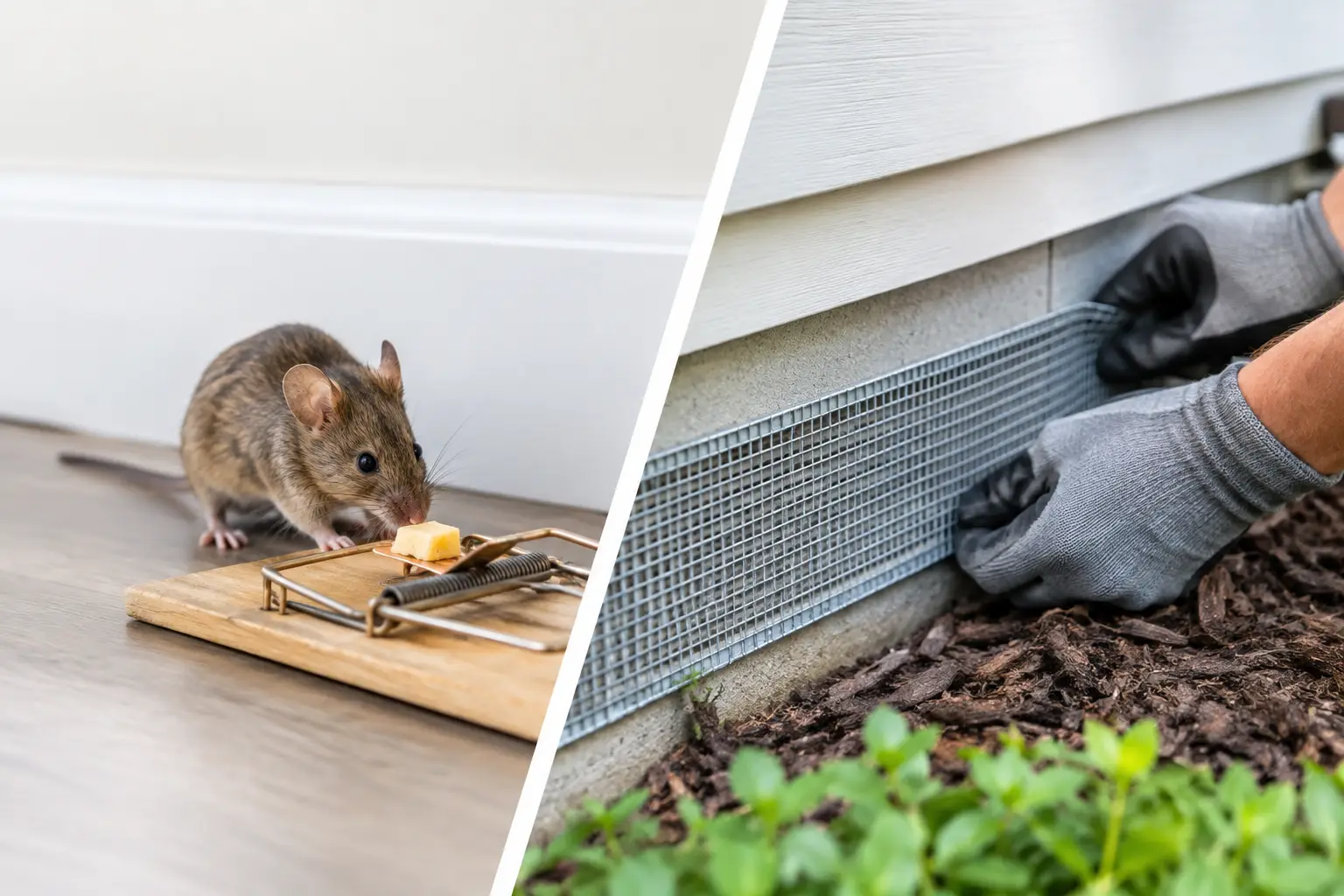
A mouse caught in a kitchen trap can feel like the problem is over. Then another appears near the pantry, utility room, or drop ceiling a few days later. That is the central issue in rodent trapping versus exclusion: trapping removes rodents that are already inside, while exclusion closes the routes that allow the next ones to enter. For lasting relief, most homes and commercial facilities need both.
Rodents are persistent because buildings offer exactly what they need: warmth, shelter, water, and food. In Ohio, activity often becomes more noticeable when cooler weather drives mice and rats indoors, but an accessible property can support rodent activity throughout the year. A proven plan identifies the species, removes active rodents, and corrects the structural and sanitation conditions that make reinfestation possible.
Rodent Trapping Versus Exclusion: The Core Difference
Trapping is an active population-reduction method. A trained technician places the right type and number of traps in areas rodents travel, feed, nest, or hide. The goal is to capture the animals currently using the structure and verify that activity is declining.
Exclusion is prevention through physical repair. It involves finding and sealing gaps at foundations, utility penetrations, doors, rooflines, vents, soffits, and other access points. Mice can fit through openings roughly the width of a pencil, so a gap that appears insignificant to a property owner may be a reliable entry route.
Neither service replaces the other in every situation. Exclusion without removing an established indoor population can leave rodents trapped in wall voids or allow them to continue damaging stored goods and wiring. Trapping without exclusion can become an ongoing cycle, especially where a building has multiple accessible entry points.
When Trapping Is the Immediate Priority
Trapping is usually the first priority when there is clear evidence of active indoor activity: fresh droppings, gnaw marks, scratching sounds, sightings, chewed packaging, or damage in mechanical areas. It is also critical when a business needs prompt control to protect food, inventory, equipment, or audit readiness.
Professional trapping is more strategic than setting a few traps along a baseboard. Rodents tend to travel close to walls and use predictable pathways. A technician considers the type of rodent, the building layout, signs of activity, competing food sources, and risks to children, pets, customers, and employees before selecting placement and equipment.
Why one trap may not solve the problem
A single catch confirms activity, but it does not reveal the full scope of an infestation. A house may have a small mouse issue near one entry point, while a warehouse, restaurant, or multifamily property may have activity across several zones. Traps must be inspected, reset, and adjusted based on results.
This follow-up matters. If catches continue in one area, the technician can investigate nearby voids, exterior conditions, or food sources rather than guessing. If activity stops, monitoring helps confirm that control measures are working before the issue becomes a recurring surprise.
Safety and sanitation matter after capture
Rodents can contaminate food-contact areas and leave urine and droppings in cabinets, insulation, storage rooms, and equipment spaces. Dead rodents also need prompt removal. Handling droppings or nesting material improperly can create unnecessary exposure to contaminants, particularly when material is swept or vacuumed dry.
A professional service plan addresses capture and safe cleanup guidance while helping property owners understand where contamination may have occurred. For commercial facilities, documentation and routine inspection can be just as valuable as the initial response.
When Exclusion Delivers the Bigger Long-Term Benefit
Exclusion becomes essential once active rodent pressure is under control or when an inspection identifies obvious access points before a larger infestation develops. A structure does not need to be old to have vulnerabilities. Settling, weather damage, aging door sweeps, open utility lines, and gaps around additions can all create entry opportunities.
For homeowners, common problem areas include garage-door corners, dryer vents, pipe penetrations under sinks, foundation gaps, damaged screens, and openings where siding or trim meets masonry. In commercial properties, loading docks, receiving doors, roof penetrations, utility rooms, trash areas, and gaps around conduits deserve close attention.
Effective exclusion uses materials appropriate for the opening and its location. The goal is not simply to fill a hole with a temporary material that rodents can chew or weather can degrade. Repairs must preserve ventilation, drainage, access to utilities, and normal building function while denying entry.
Exclusion is not always a one-visit repair
Some openings are straightforward. Others require coordination with a property manager, maintenance team, roofer, electrician, or contractor. A facility with extensive utility infrastructure may need a phased repair plan that prioritizes high-risk points first.
That is why inspection quality matters. Sealing a visible gap while missing a nearby roofline opening or dock-door gap can create false confidence. A thorough exterior and interior assessment gives owners a practical repair roadmap rather than a vague recommendation to “seal everything.”
The Trade-Offs Property Owners Should Understand
Trapping provides faster evidence that rodents are being removed. It is measurable, adjustable, and particularly useful during an active infestation. Its limitation is simple: it does not change how rodents got inside.
Exclusion has the stronger preventive value because it reduces future access. Its limitation is that it may take more time, labor, and coordination, particularly on large, older, or complex buildings. It also cannot replace trapping when rodents are already established indoors.
Rodenticides may have a role in certain professionally managed exterior or commercial programs, but they are not automatically the best answer for every property. Improper use can create risks for children, pets, wildlife, and non-target animals, and an animal that dies in an inaccessible void can create an odor issue. An integrated plan prioritizes inspection, sanitation, trapping, monitoring, and exclusion based on the actual conditions on site.
A Better Approach: Remove, Seal, Monitor
The most dependable rodent control follows a layered sequence. First, identify the rodent and map the evidence. Second, reduce active activity with targeted trapping or other appropriate control measures. Third, seal entry points and correct conditions that support rodents. Finally, monitor to make sure the property remains protected.
Sanitation supports every step. Store food and pet food in durable containers, clean crumbs and grease, keep outdoor trash lids closed, reduce clutter along walls, and address moisture from leaks or drainage problems. These measures will not seal a foundation gap, but they make the property less rewarding to rodents that are searching for a place to settle.
For commercial operators, this process should connect to routine inspections and clear reporting. A recurring rodent issue can affect customer confidence, employee safety, product integrity, and compliance. Multi-location businesses benefit from consistent standards, trend reporting, and corrective actions that can be tracked across properties.
Signs It Is Time for Professional Rodent Control
Call for an inspection when you see repeated droppings, hear persistent activity in walls or ceilings, find chewed wires or packaging, notice an unexplained odor, or catch more than one rodent. Those signs often indicate that the issue is larger than a single accidental visitor.
Professional help is especially valuable when rodents may be entering through inaccessible areas, when activity involves a food-handling or regulated facility, or when DIY traps have produced only temporary results. A trained technician can distinguish between old and active evidence, locate likely entry points, and build a plan that fits the property instead of applying a one-size-fits-all treatment.
Apex Pest Control approaches rodent concerns with targeted removal, careful exclusion recommendations, and follow-up service designed to protect people, pets, property, and operations. The right next step is not choosing traps or repairs in isolation. It is identifying what is happening at your property now, closing the conditions that invited it, and verifying that rodents stay out.