



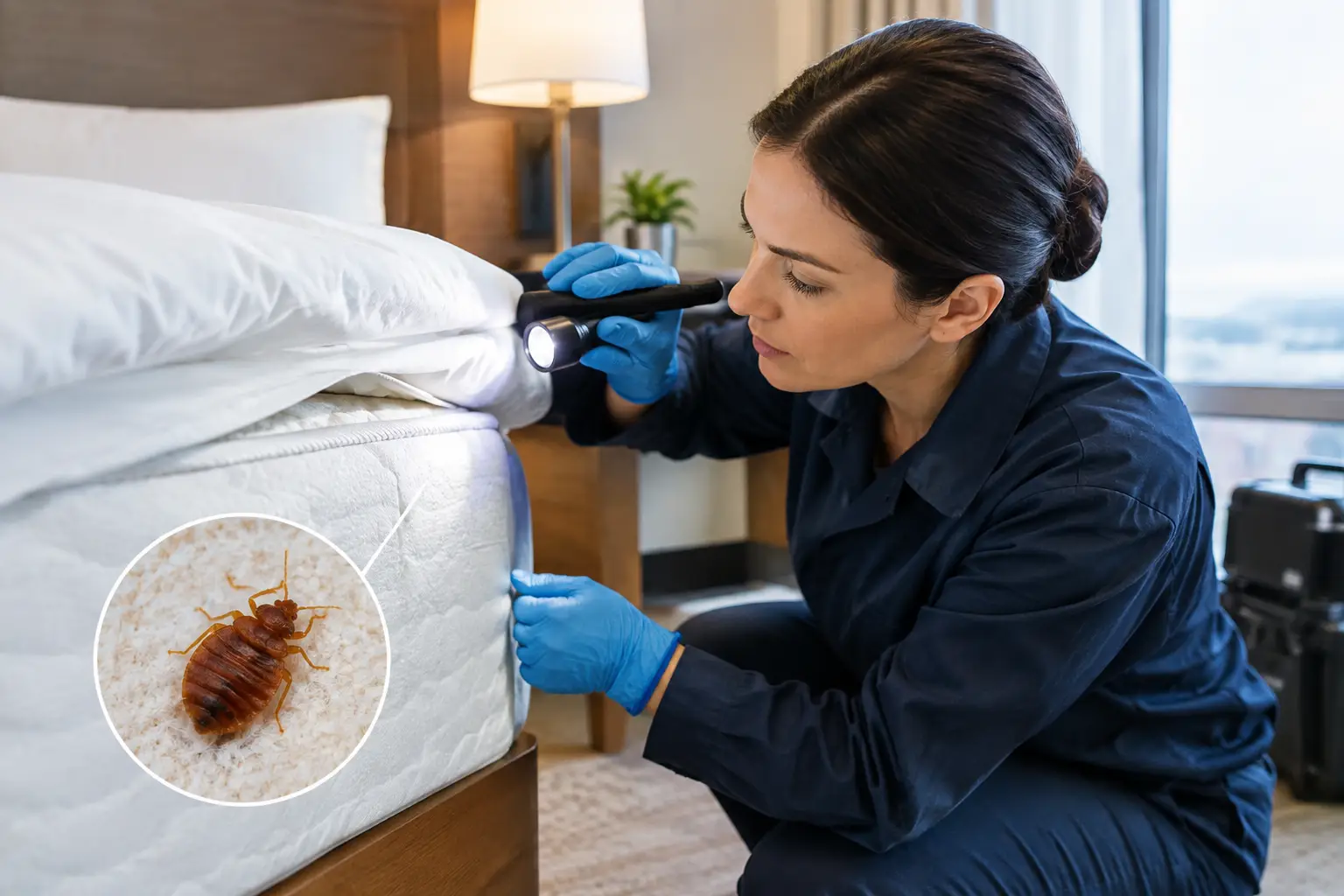
A single guest report can put a hotel team under immediate pressure. The concern is not limited to one room: it can affect guest confidence, online reviews, staff workload, and the availability of nearby rooms. This hotel bed bug case study follows a representative recovery scenario to show what effective, discreet bed bug control looks like when speed and documentation both matter.
The circumstances described are a composite based on common hospitality challenges, not a report from a specific property. The goal is practical: help hotel owners, general managers, and facilities teams understand the decisions that contain an issue before it becomes a larger operational problem.
The Situation: One Guest Report, Several Risks
A mid-sized Ohio hotel received a report from a guest who noticed small insects and bite-like marks after an overnight stay. The front desk responded professionally, moved the guest, and took the room out of service. That was the right first step, but it was only the beginning.
Bed bugs are efficient hitchhikers. They can travel in luggage, clothing, carts, laundry, and upholstered items, then remain hidden in mattress seams, headboards, bed frames, baseboards, and nearby furniture. A visual check by housekeeping may find obvious evidence, but it cannot reliably rule out low-level activity. Treating only the reported room can also leave connected risk areas unaddressed.
The hotel had three immediate priorities: protect guests and employees, determine the actual extent of activity, and return safe rooms to inventory without making assumptions. Closing an excessive number of rooms would reduce revenue unnecessarily. Closing too few could allow an infestation to spread and create repeated complaints.
Hotel Bed Bug Case Study: The Response Plan
The property engaged a professional pest management team for a prompt inspection. The response began with fact gathering, including the guest’s room number, the timing of the report, housekeeping records, recent room moves, maintenance activity, and whether adjacent rooms had any prior pest observations.
This information matters because bed bugs do not follow a simple pattern. An introduction may be isolated to one room, or activity may extend along shared walls, through furniture movement, or via housekeeping and laundry workflows. A qualified technician uses the available evidence to guide the inspection rather than treating every room identically.
Inspection focused on evidence, not guesswork
The technician inspected the reported room and the rooms directly beside, above, and below it. The inspection included mattresses, box springs, encasements, bed frames, headboards, upholstered chairs, luggage racks, curtains, wall fixtures, baseboards, and cracks around furniture. Staff were asked not to remove or relocate furnishings before the inspection, since unnecessary movement can spread insects or disturb evidence.
The reported room showed signs consistent with a limited bed bug introduction near the headboard and bed frame. No evidence was found in several surrounding rooms, but one adjacent room had a small amount of suspicious spotting that required precautionary treatment and monitoring. The inspection result was reassuring, but it was not a reason to relax the response. Early-stage bed bug activity is easy to miss without structured follow-up.
Treatment matched the room and the property’s operations
The treatment plan combined targeted application methods with detailed preparation and post-treatment instructions. Depending on the room construction, furnishings, evidence level, and hotel schedule, a professional program may use carefully applied residual products, crack-and-crevice treatment, vacuuming, steam, mattress and box-spring encasements, monitoring devices, or heat-based methods.
There is no universal “best” treatment for every hotel. Whole-room heat can be highly effective when properly planned and monitored, but it may require more coordination around heat-sensitive contents, room access, and scheduling. Targeted treatments can fit more easily into phased room turnover, but they depend on thorough follow-up and precise application. The right answer is the one that addresses confirmed activity while protecting people, property, and the hotel’s operating needs.
In this case, the hotel selected a targeted treatment approach for the two affected rooms, combined with monitoring in nearby rooms. The pest management team provided clear room-release guidance and documented each service step. The property kept the affected rooms out of service until treatment and inspection requirements were met.
Communication Protected the Guest Experience
How a hotel communicates during a pest concern can either stabilize the situation or make it worse. The front desk team did not speculate about causes, promise that a room was “definitely clear” before inspection, or discuss another guest’s experience. Instead, they apologized for the disruption, moved the guest promptly, protected privacy, and escalated the matter through the hotel’s established process.
Management also gave housekeeping and maintenance concise instructions. Staff were told what signs to report, which rooms were temporarily restricted, and who had authority to release a room back into service. This prevented well-meaning employees from moving a mattress, stripping materials into common carts, or returning a room to inventory too soon.
For commercial properties, documentation is more than paperwork. It creates accountability. Inspection notes, treatment records, room status, staff communication, and follow-up findings give management a defensible record of a measured response. That record also helps identify trends if future reports involve the same floor, furniture type, or workflow.
Follow-Up Confirmed the Result
The first treatment is not the finish line. Bed bug eggs can be difficult to eliminate with a single service, and new activity may not be immediately visible. The hotel scheduled follow-up inspections based on the treatment method and level of evidence found.
At the first follow-up, the treated rooms showed no live activity. Monitoring devices remained clear in the nearby rooms. A second follow-up confirmed that condition, and the rooms were returned to normal inventory according to the service plan. No additional guest complaints were tied to that floor during the monitoring period.
The outcome was not the product of one spray, one inspection, or one staff meeting. It came from a layered response: quick reporting, trained inspection, targeted treatment, controlled room status, and verification. That is the standard hotels should expect from a professional bed bug program.
What This Case Teaches Hotel Operators
The biggest lesson is that a report is not the same as a confirmed infestation, but every report deserves a disciplined response. Guests may mistake other insects, skin conditions, or environmental factors for bed bugs. At the same time, dismissing a report without inspection can turn a small, manageable problem into a wider disruption.
Hotels should build bed bug response procedures before a complaint occurs. Front desk personnel need to know how to document and escalate a report. Housekeeping teams need to recognize common signs without attempting to diagnose or treat the issue themselves. Maintenance teams should understand that bed frames, headboards, wall voids, and furniture condition can influence inspection and treatment success.
Prevention also depends on operational details. Regular inspection of rooms with frequent turnover, careful handling of found property, prompt repair of damaged furniture, and clear laundry and housekeeping practices all reduce opportunities for pests to spread unnoticed. For properties with multiple locations, standardized reporting and service documentation make it easier to maintain consistent quality across the portfolio.
When to Call for Professional Bed Bug Service
A hotel should request professional inspection when a guest reports suspected bed bugs, employees find dark spotting or shed skins near beds or furniture, a live insect is discovered, or recurring unexplained complaints appear in the same area. Waiting for multiple reports is rarely a sound strategy.
Apex Pest Control provides customized commercial bed bug response plans built around inspection, treatment, follow-up, and documentation. For hotels and other guest-facing facilities, the priority is clear: address the concern quickly, protect occupants, and confirm results before the issue affects more rooms or more guests.
A calm, documented response gives a hotel control when it matters most. The right partner helps turn an alarming report into a contained event, a verified solution, and a stronger prevention process for the future.