




Birds can destroy up to 50% of fruit crops in Northeast Ohio and damage your property’s exterior, costing homeowners thousands in repairs annually. Many homeowners struggle to choose between countless bird control options, unsure which methods actually work or are safe for families and pets. This guide explains proven bird control methods with research-backed evidence, helping you protect your property effectively and safely.
Table of Contents
- Understanding Bird Damage And The Challenge Of Control
- Visual And Sensory Bird Deterrents Explained
- Physical And Electronic Bird Control Methods
- How To Choose The Right Bird Control Method For Your Property
- Protect Your Ohio Property With Expert Pest Control Services
- FAQ
Key takeaways
| Point | Details |
|---|---|
| Visual deterrents work temporarily | Predator balloons and reflective tapes reduce damage by up to 55% initially but birds adapt within 1-2 weeks. |
| Physical barriers offer strong protection | Netting blocks birds effectively but requires significant installation effort and ongoing maintenance. |
| Electromagnetic systems provide lasting control | These devices deliver long-term protection with minimal upkeep and zero harm to birds or pets. |
| Combining methods yields best results | No single approach works perfectly; integrating multiple strategies prevents bird habituation and maximizes effectiveness. |
Understanding bird damage and the challenge of control
Bird predation causes significant losses in fruit crops, ranging from 5% to 50% depending on species and crop type. In Northeast Ohio, woodpeckers damage siding and trim, starlings clog gutters with nesting materials, and pigeons leave acidic droppings that corrode roofing and paint. These problems escalate quickly without intervention.
Damage severity depends heavily on bird species and your property’s location. Properties near woodlands attract woodpeckers and crows, while those near wetlands see more geese and waterfowl activity. Understanding these patterns helps you target control efforts where they matter most.
Effective bird control requires matching methods to specific bird behaviors and damage types. Consider these common damage scenarios:
- Woodpeckers drilling holes in wood siding and trim
- Pigeons roosting under eaves and on ledges
- Starlings nesting in vents and attic spaces
- Geese grazing on lawns and leaving droppings
- Sparrows building nests in gutters and downspouts
Each species responds differently to control methods, making identification your first critical step. The challenge lies in finding bird damage management strategies that balance effectiveness with safety and practicality for residential properties.
Visual and sensory bird deterrents explained
Visual deterrents work by triggering birds’ natural predator avoidance instincts. Eye-spot balloons reduce crop damage by about 55% in initial use weeks before birds habituate within 1-2 weeks. These inflatable balloons feature large eye spots resembling predator faces, creating temporary psychological deterrence.
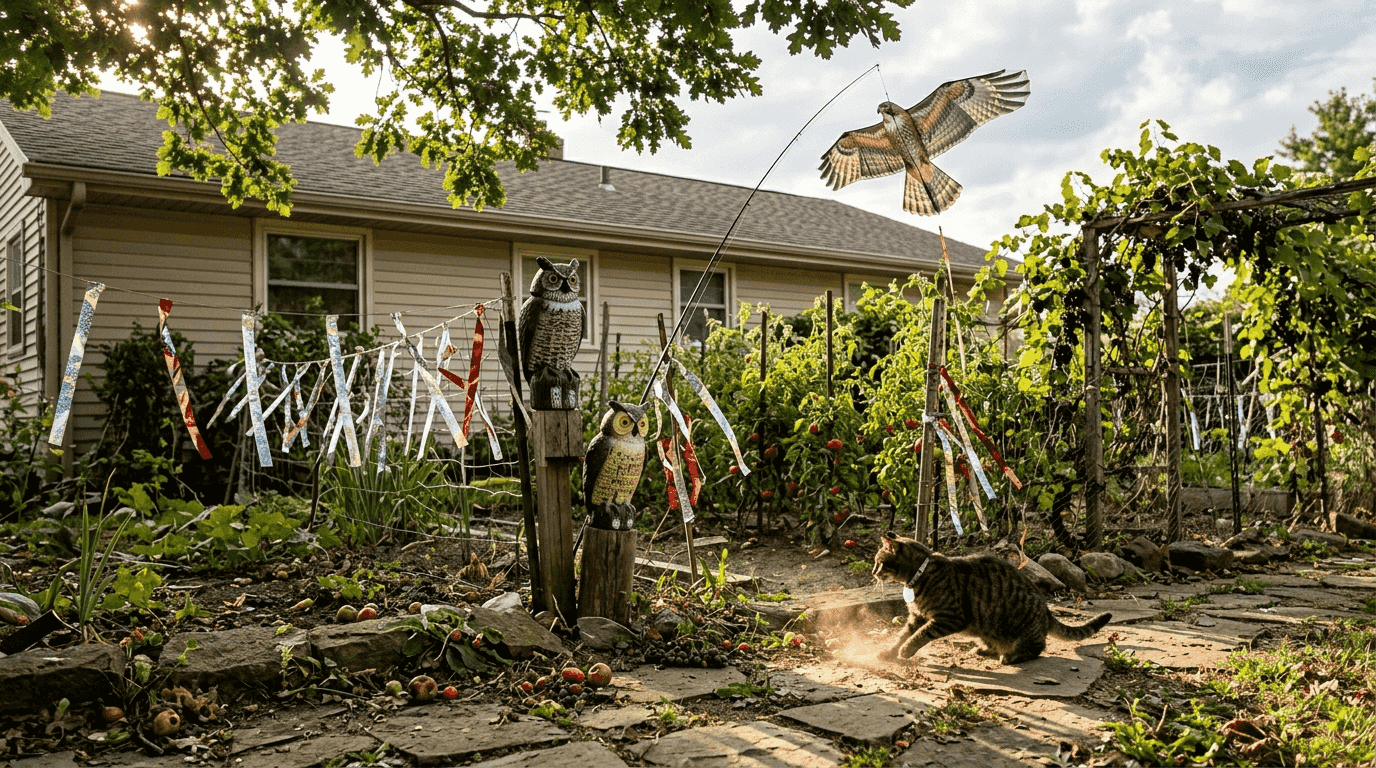
Predator kites and decoys create similar effects through movement and visual mimicry. However, birds habituate quickly to visual deterrents, requiring frequent movement and combination with other methods for sustained effects. Static decoys lose effectiveness within days as birds learn they pose no real threat.
Reflective tapes and predator kites create movement and visual cues to disrupt bird approach behaviors temporarily. The flashing light and erratic motion confuse birds and make landing uncomfortable. These work best when installed in multiple locations and repositioned weekly.
To maximize visual deterrent effectiveness, follow these proven steps:
- Install deterrents before bird activity peaks in spring
- Move balloons and kites to new positions every 3-4 days
- Combine reflective tape with decoys for layered defense
- Focus placement near high-value areas like gardens and siding
- Remove deterrents temporarily to reset bird memory patterns
Pro Tip: Rotate between different visual deterrent types every two weeks to prevent birds from recognizing patterns. Swap eye-spot balloons for predator kites, then switch to reflective streamers to keep birds guessing.
Visual methods work best as part of integrated strategies. Pairing them with safe rodent control steps and other biological pest control approaches creates comprehensive property protection. Remember that visual deterrents serve as your first line of defense, not your only solution.
Physical and electronic bird control methods
Netting effectively protects crops but is costly, labor-intensive, and challenging to maintain over large areas. Bird netting creates an impenetrable physical barrier when properly installed. It works exceptionally well for gardens, fruit trees, and enclosed spaces where complete bird exclusion is necessary. Installation requires careful measurement, sturdy support structures, and regular inspection for tears or gaps.
The primary drawback is maintenance burden. Netting collects leaves, snow, and debris, requiring frequent cleaning to prevent sagging and damage. Professional installation for larger properties can cost thousands of dollars, making it impractical for many homeowners.
Electromagnetic systems like Symterra Pulse provide long-term protection with minimal maintenance and no harm to birds. These devices emit electromagnetic pulses that disrupt birds’ navigation and communication systems, creating an uncomfortable zone they naturally avoid. Unlike physical barriers, electromagnetic systems require no visible installation and work continuously without habituation concerns.
Electric shock strips deter birds by causing slight pain, leading to avoidance, but require monitoring to maintain performance. These low-profile tracks deliver mild electric shocks when birds land on ledges, rooflines, or other surfaces. The sensation teaches birds to avoid treated areas without causing injury.
Compare these methods to find what fits your property:
| Method | Effectiveness | Maintenance | Cost | Bird Safety |
|---|---|---|---|---|
| Netting | Very High | High | High | Complete exclusion |
| Electromagnetic | High | Very Low | Medium | No harm |
| Electric Strips | High | Medium | Medium | Minor discomfort |
| Spikes | Medium | Low | Low | Physical barrier |
Electric systems need periodic inspection to ensure connections remain secure and tracks stay clean. Debris buildup reduces shock effectiveness, allowing birds to land comfortably again. Budget for annual professional checks to maintain optimal performance.
Key advantages of physical and electronic methods include:
- Longer-lasting protection compared to visual deterrents
- Less susceptibility to weather damage
- Reduced need for daily monitoring and adjustment
- Effective against multiple bird species simultaneously
Pro Tip: For large properties, integrate physical barriers at critical points like vents and chimneys with electromagnetic systems covering broader areas. This balanced approach provides targeted protection where birds cause most damage while creating property-wide deterrence zones.
Electronic deterrents pair well with other pest management strategies. Just as you protect against common problems with bees and wasps, layering bird control methods creates comprehensive property defense. The investment in quality systems pays off through reduced damage and lower long-term maintenance costs.
How to choose the right bird control method for your property
No single bird control solution works everywhere; combining multiple methods based on bird species, habitat, and damage severity works best. Your selection process should start with careful observation of which birds visit your property, when they arrive, and what attracts them. Woodpeckers require different strategies than pigeons or geese.
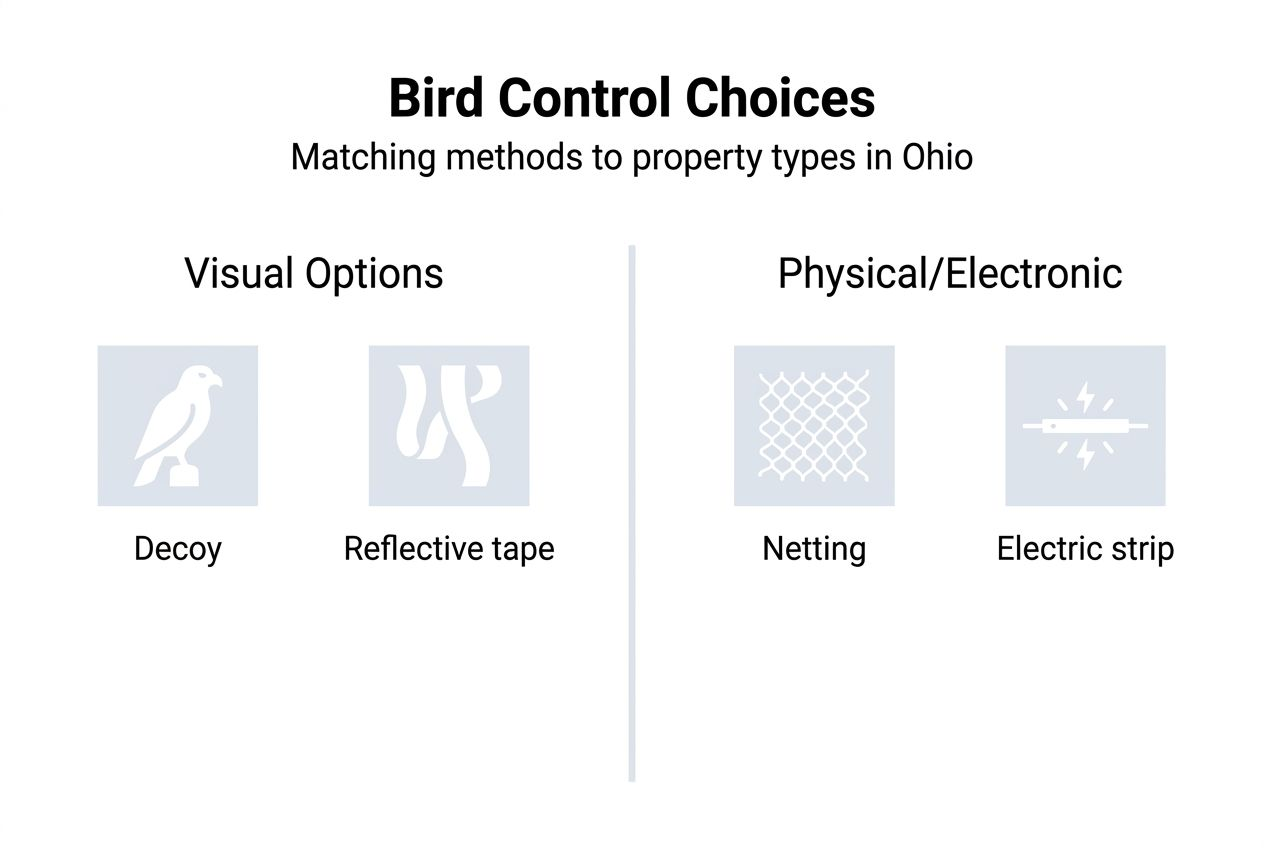
Nearby habitat type strongly influences bird damage levels and informs control strategy selection. Properties adjacent to wooded areas face persistent woodpecker challenges, while those near water bodies deal with waterfowl issues. Understanding these ecological factors helps you anticipate problems and implement proactive solutions rather than reactive fixes.
Bird behavior patterns change seasonally in Northeast Ohio. Spring brings nesting activity and territorial aggression, summer sees peak feeding, fall triggers migration movements, and winter concentrates birds around reliable food sources. Time your control method deployment to intercept birds before they establish patterns.
Follow these steps to build an effective bird control strategy:
- Identify the specific bird species causing damage through observation or photos
- Document when and where damage occurs most frequently
- Assess your property’s proximity to woods, water, or agricultural areas
- Start with visual deterrents for immediate temporary relief
- Add physical barriers at high-priority damage points like vents
- Install electromagnetic or electric systems for long-term coverage
- Rotate visual deterrent locations every few days
- Evaluate effectiveness monthly and adjust methods as needed
- Remove food sources and nesting materials to reduce attractiveness
- Seal building gaps and repair damage promptly to prevent entry
Combining approaches prevents birds from adapting to any single method. When one deterrent loses effectiveness, others continue providing protection. This redundancy ensures continuous coverage while you adjust individual components.
Budget considerations matter for homeowners. Visual deterrents offer the lowest upfront cost but require constant attention and replacement. Physical barriers demand higher initial investment but last years with minimal upkeep. Electronic systems fall between these extremes, providing excellent long-term value despite moderate initial expense.
Regular evaluation keeps your strategy effective. Monthly inspections reveal which methods work and which need adjustment. Look for signs of renewed bird activity like fresh droppings, new nest building, or increased landing attempts. Quick responses to these indicators prevent small problems from becoming major damage.
Professional safe pest control steps apply equally to bird management. The same principles of integrated pest management, regular monitoring, and strategic intervention create lasting results. Your bird control plan should evolve as you learn what works best for your specific property conditions.
Protect your Ohio property with expert pest control services
While DIY bird control helps, professional pest control services integrate multiple methods more effectively for lasting results. Apex Pest Control brings decades of experience protecting Northeast Ohio properties from nuisance birds and other pests. Our licensed technicians understand local bird species and tailor solutions to your property’s specific challenges.
We combine proven techniques from top residential pest solutions to create comprehensive protection plans. Whether you face persistent woodpecker damage, pigeon roosting problems, or seasonal waterfowl issues, we have safe, effective answers. Our family-friendly methods protect your property without harming birds or putting pets at risk.
Finding reliable top local exterminators makes the difference between temporary relief and permanent solutions. With over 200 five-star reviews, Apex Pest Control delivers the dependable service Northeast Ohio homeowners trust. We respond quickly, work efficiently, and guarantee your satisfaction. Contact us today for a free property assessment and customized bird control plan.
FAQ
What is the most effective bird control method?
No single best method exists; combination approaches tailored to bird species, habitat, and severity prove most effective. Visual deterrents provide immediate temporary relief, physical barriers offer targeted exclusion, and electromagnetic systems deliver long-term area protection. Integrating these methods prevents birds from adapting to any single strategy, maintaining effectiveness over time.
Are bird deterrent balloons safe for my property and pets?
Eye-spot balloons do not harm birds but can cause temporary behavioral avoidance, recommended only for short-term use. These visual deterrents work through psychological response rather than physical interaction, making them completely safe for pets, children, and the environment. Position balloons away from areas where pets play to avoid unnecessary distraction, but no safety concerns exist with proper placement.
How long do bird control methods remain effective?
Birds habituate quickly to many deterrents like visual and sound devices, sometimes within days to weeks. Visual deterrents typically maintain effectiveness for one to two weeks before requiring repositioning or replacement. Physical barriers last years with proper maintenance, while electromagnetic and electric systems provide consistent long-term protection. Rotating methods every two to three weeks prevents habituation and extends overall effectiveness.
Can I use multiple bird control methods together?
Absolutely, combining methods creates the most effective bird control strategy. Layer visual deterrents for immediate impact, add physical barriers at critical entry points, and install electronic systems for broad area coverage. This integrated approach prevents birds from adapting to any single method while providing redundant protection. Start with two or three complementary methods and adjust based on observed results over several weeks.
When should I call professional bird control services?
Contact professionals when DIY methods fail after consistent application for four to six weeks, when damage escalates despite your efforts, or when birds nest inside your home’s structure. Professionals have specialized equipment and expertise to handle complex situations safely and efficiently. They identify underlying attractants you might miss and implement comprehensive solutions that address root causes rather than just symptoms.