




TL;DR:
- Ohio homeowners face seasonal infestations of pests like stink bugs and lady beetles.
- Proper identification and early sealing significantly reduce indoor pest entry.
- Ongoing integrated pest management is more cost-effective and sustainable than reactive DIY treatments.
Every fall, thousands of Ohio homeowners are caught off guard when stink bugs and other seasonal invaders suddenly appear on walls, windowsills, and inside attics. These aren’t random events. Brown marmorated stink bugs swarm Ohio homes in late summer and fall as temperatures drop and they search for warmth. Most people swat a few away and move on, missing the early warning signs that could save them a serious headache later. This guide will help you identify the most common occasional pests in Ohio, understand why they show up, and take smart, expert-backed steps to keep them out for good.
Table of Contents
- What are occasional pests and why are they so common in Ohio?
- Identifying common Ohio invaders: How to spot stink bugs and more
- Preventing pests: Sealing strategies and inspection tips for Ohio homes
- Dealing with infestations: DIY versus professional pest management
- The uncomfortable truth about managing occasional pests in Ohio
- Take action: Connect with Ohio pest experts and solutions
- Frequently asked questions
Key Takeaways
| Point | Details |
|---|---|
| Seasonal pest surges | Stink bugs and other invaders peak in late summer and fall due to temperature changes and Ohio agriculture. |
| Early identification matters | Spotting clusters and pest signs early lets you prevent widespread infestations. |
| Preventative sealing is vital | Sealing gaps and entry points before pest season is the most effective defense. |
| Ongoing management saves | Integrated approaches cost 40-60% less than repeated one-off treatments in the long run. |
| Professional help for large swarms | For severe or repeat infestations, expert intervention is best to target sources and monitor effectively. |
What are occasional pests and why are they so common in Ohio?
Occasional pests are insects or critters that don’t live inside your home year-round. They invade seasonally or sporadically, usually driven by weather changes, food availability, or the need for shelter. Unlike cockroaches or bed bugs, which are persistent indoor pests, occasional invaders tend to come and go. That’s exactly what makes them confusing. You see a cluster of bugs one week, and they seem to vanish the next.
The most common occasional pests in Ohio homes include:
- Brown marmorated stink bugs (late summer through fall)
- Multicolored Asian lady beetles (similar seasonal pattern)
- Paper wasps and yellowjackets (spring through fall)
- Boxelder bugs (fall entry, spring exit)
- Ground beetles (spring and summer)
- Cluster flies (fall overwintering)
Ohio’s geography and climate create ideal conditions for these pests. Warm summers followed by sharp temperature drops in late August and September trigger mass movement in many insect species. They start looking for warm places to wait out the cold, and your home is a perfect candidate.
“Ohio’s agricultural landscape, including its soybeans and orchards, directly fuels stink bug populations and the size of fall swarms.”
That’s a critical point. If you live near farmland or orchards in central or southern Ohio, your pest pressure is measurably higher than in suburban areas farther from crops. Stink bugs feed heavily on these plants through summer, then migrate in large numbers once harvest season ends.
The south and west-facing walls of your home are the first targets. These surfaces absorb the most heat during the day, making them attractive landing zones for heat-seeking insects. Check the Ohio home pest guide for a full breakdown of what’s active in your region each season.
| Pest | Peak season | Entry point |
|---|---|---|
| Stink bug | Late summer/fall | Wall voids, windows |
| Lady beetle | Fall | Attics, soffits |
| Cluster fly | Fall | Wall cracks, attics |
| Boxelder bug | Fall/spring | Door frames, gaps |
| Paper wasp | Spring/summer | Eaves, overhangs |
Understanding the signs of pest infestation early gives you a real advantage. Catching these pests before they settle in is far easier than dealing with a full-scale overwintering colony.
Now that you know why these pests appear out of nowhere, let’s explore how homeowners can identify them effectively.
Identifying common Ohio invaders: How to spot stink bugs and more
Knowing what you’re dealing with changes everything. A lot of homeowners mistake lady beetles for ladybugs, or confuse cluster flies with houseflies. Getting the ID right means you can respond correctly instead of wasting time and money on the wrong treatment.
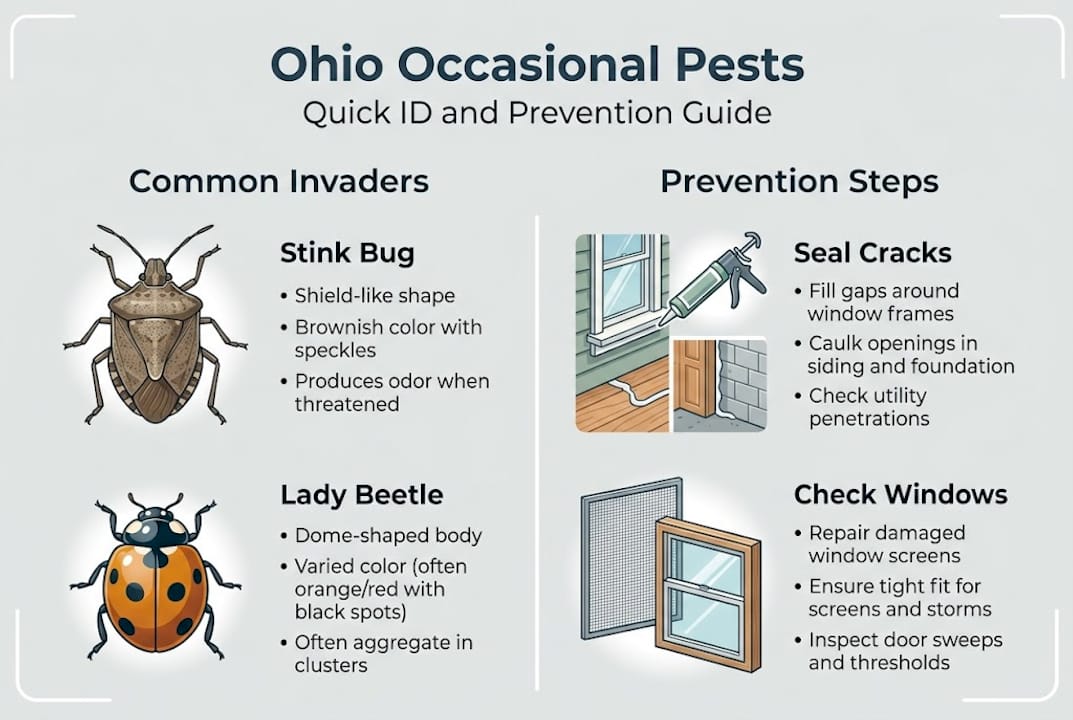
Brown marmorated stink bugs are shield-shaped, about 5/8 inch long, and brown with a mottled pattern. Their legs have alternating light and dark bands. Crush one by accident, and you’ll know immediately from the sharp, unpleasant odor. They prefer south and west walls for warmth and squeeze into wall voids to overwinter.

Multicolored Asian lady beetles look like ladybugs but vary from yellow to deep orange, with anywhere from zero to 19 spots. They bite occasionally and release a yellow, foul-smelling fluid when disturbed. Look for them in large clusters near attic vents and window frames.
Paper wasps are slender with a narrow waist and long legs that hang down in flight. They build open, umbrella-shaped nests under eaves and overhangs. Unlike yellowjackets, they’re not aggressive unless their nest is threatened.
Here’s a quick comparison to help you tell them apart:
| Pest | Shape | Color | Key sign |
|---|---|---|---|
| Stink bug | Shield | Brown/mottled | Odor when crushed |
| Lady beetle | Round/domed | Orange/yellow | Yellow fluid, biting |
| Cluster fly | Oval | Gray, golden hairs | Sluggish movement |
| Boxelder bug | Flat/oval | Black with red lines | Red markings on wings |
| Paper wasp | Slender | Brown/yellow | Open paper nest |
Where should you look? Focus on:
- Windowsills and door frames (common resting spots)
- Attic spaces (overwintering clusters)
- Wall voids near exterior walls (hidden colonies)
- Sunny south and west-facing walls (heat-seeking behavior)
Pro Tip: Walk the perimeter of your home on a warm afternoon in late August. If you see clusters of insects gathering on your siding, that’s your early warning. Acting then is far more effective than waiting until they’re inside. You can also reduce pest risk factors by trimming vegetation and removing debris near your foundation.
Once you can identify the occasional invaders, the next critical step is to keep them out before they settle in.
Preventing pests: Sealing strategies and inspection tips for Ohio homes
Prevention is where most homeowners lose the battle. They wait until they see bugs inside, then scramble to react. The smarter move is to get ahead of the problem before peak season hits.
Timing is everything. The window between late July and early September is when you need to act. Once temperatures start dropping, insects are already on the move. Preventative sealing in late summer is critical, and professional inspections often reveal hidden gaps that homeowners miss entirely.
Here’s a practical DIY sealing checklist to work through before fall:
- Caulk around window frames and door frames where gaps have formed from settling or weather damage.
- Install or replace weather stripping on all exterior doors, including the garage door.
- Check and repair window and door screens for tears or poor fits.
- Seal gaps around utility penetrations including pipes, cables, and HVAC lines entering the home.
- Cover attic vents and soffit vents with fine mesh screens (no larger than 1/16 inch openings).
- Inspect the roofline for gaps between the fascia board and siding.
- Fill cracks in the foundation with appropriate sealant.
Pro Tip: Don’t overlook the chimney. An uncapped chimney is one of the most overlooked entry points for cluster flies, wasps, and even rodents. A simple chimney cap is one of the cheapest and most effective exclusion tools available.
Professional inspections go deeper than any DIY checklist. Technicians use thermal imaging and experience to find entry points inside wall cavities, behind insulation, and under siding. Exclusion in pest management is a proven strategy that addresses the root cause rather than just the symptom.
Here’s a number worth remembering: homes that use ongoing integrated pest management spend 40 to 60% less over time compared to homeowners who only react when problems appear. Investing in pest exclusion strategies now pays off every single season going forward.
A good prevention plan is essential, but what if you’re already seeing pests indoors? Let’s break down your management options.
Dealing with infestations: DIY versus professional pest management
So you’ve found bugs inside. Now what? The answer depends on how many you’re seeing, where they’re coming from, and whether this is a one-time event or a recurring pattern.
When DIY makes sense:
- A handful of stink bugs on windowsills (vacuum them up, don’t crush)
- A single wasp nest in an accessible location
- Mild lady beetle activity near one window
- First-time seasonal entry with no signs of wall void nesting
When you need a professional:
- Large swarms appearing daily over multiple weeks
- Pests emerging from inside walls (not just entering from outside)
- Repeat infestations year after year despite sealing attempts
- Wasp nests inside walls, soffits, or attic spaces
“One-time treatments work for isolated issues, but ongoing management is 40 to 60% cheaper for seasonal pests. Broad insecticides should be avoided to preserve natural predators that keep pest populations in check.”
That last point matters more than most people realize. Spraying broad-spectrum insecticides outside your home kills beneficial insects like spiders, ground beetles, and parasitic wasps that naturally suppress pest populations. You may solve the immediate problem while making future seasons worse.
| Approach | Upfront cost | Long-term cost | Best for |
|---|---|---|---|
| DIY sealing | Low | Low | Mild, first-time entry |
| DIY sprays | Low | Medium to high | Short-term relief only |
| One-time pro treatment | Medium | Medium | Isolated infestations |
| Ongoing IPM program | Medium | Low (40-60% savings) | Recurring seasonal pests |
For pest control tips for homes that go beyond spraying, focus on habitat modification, monitoring, and targeted treatments. Year-round pest protection programs are designed specifically for Ohio’s seasonal pest cycles. The professional pest services advantages include access to commercial-grade products and techniques that simply aren’t available to homeowners.
Understanding the best approach for your home, let’s explore expert perspectives on sustainable, long-term pest management.
The uncomfortable truth about managing occasional pests in Ohio
Here’s what we’ve seen after decades of working with Ohio homeowners: most people dramatically underestimate how recurring these problems are. They treat once, feel relieved, and then face the same invasion the following fall. The cycle repeats, and the costs add up quietly.
The honest reality is that occasional pests are predictable. Stink bugs will return every fall. Lady beetles will cluster every October. That predictability is actually an advantage if you use it correctly. Instead of reacting, you can prepare.
Ongoing IPM saves 40 to 60% over reactive treatments in homes with recurring pest issues. That’s not a minor difference. Over five years, that’s real money staying in your pocket.
The homeowners who fare best are the ones who shift their mindset from “fix it when it’s broken” to “maintain it so it doesn’t break.” Sustainable pest management isn’t just an environmental talking point. It’s a smarter financial strategy. Prioritize monitoring, early sealing, and targeted treatments over broad reactive sprays, and you’ll spend less while dealing with far fewer pests every single year.
Take action: Connect with Ohio pest experts and solutions
Ready to tackle your pest issue? Here’s how to get the most reliable help and resources in Ohio. Whether you’re dealing with a current stink bug problem or want to get ahead of next season, Apex Pest Control has been helping Ohio homeowners since 1969. Our team understands Ohio’s pest cycles, knows where the hidden entry points are, and uses environmentally responsible methods that protect your family and your home. Explore IPM examples for safer homes to see how integrated strategies work in practice. Request a free pest quote today, or learn more about our sustainable pest management programs built specifically for Ohio’s seasonal challenges.
Frequently asked questions
What is an occasional pest in Ohio homes?
Occasional pests are insects or critters that invade homes only seasonally or sporadically, such as stink bugs, beetles, and wasps. In Ohio, brown marmorated stink bugs are among the most recognized occasional invaders, especially in fall.
When do stink bugs invade Ohio homes?
Stink bugs swarm homes in late summer and fall as temperatures drop and they search for warmth, typically becoming noticeable from August through October.
What’s the most effective way to prevent occasional pests?
Sealing entry points before peak pest season and scheduling professional inspections are the most reliable strategies. Preventative sealing in late summer is especially critical because it stops pests before they enter wall voids.
Is ongoing pest management really cheaper than one-time treatments?
Yes, ongoing IPM is 40-60% more cost-effective for homes with recurring seasonal pest issues compared to repeated one-time treatments over several years.
When should I call an Ohio pest professional instead of trying DIY?
Contact a professional if you’re facing large swarms, repeat infestations, or pests emerging from inside walls. Professionals address exterior sources and hidden entry points that DIY methods simply can’t reach.