




Many Ohio homeowners believe pests only invade dirty homes or appear in summer. The truth is that even clean, well-kept residences face infestation risks year-round due to structural gaps, moisture, clutter, and accessible food sources. Understanding the specific risk factors in your Ohio home empowers you to prevent bed bugs, rodents, ants, ticks, and other pests before they become serious problems.
Table of Contents
- Understanding Pest Risks In Ohio Homes
- Key Pest Risk Factors In Ohio Homes
- Effective Prevention Strategies For Ohio Homeowners
- Protect Your Ohio Home With Expert Pest Control
- Frequently Asked Questions
Key takeaways
| Point | Details |
|---|---|
| Ohio cities face severe pest pressures | Cleveland-Akron ranks 3rd nationally for bed bugs in 2025, and Ohio is in the top 10 for tick populations. |
| Pests exploit structural and environmental weaknesses | Tiny cracks, moisture, clutter, and accessible food allow insects and rodents to enter and thrive. |
| Seasonal and local conditions matter | Moderate climate and urban sprawl create ideal habitats for pests throughout the year. |
| Prevention requires active home maintenance | Sealing entry points, reducing clutter, controlling moisture, and practicing good hygiene dramatically lower infestation risk. |
| Professional support enhances long-term control | Early detection combined with expert treatments provides the most effective defense against persistent pests. |
Understanding pest risks in Ohio homes
Ohio homeowners contend with a diverse range of pests that exploit the state’s moderate climate and expanding urban areas. Common Ohio pest species include bed bugs, rodents, ants, spiders, centipedes, and ticks, each posing unique threats to property and health. Recent data reveals that Ohio cities including Cleveland-Akron, Columbus, Dayton, Cincinnati, Toledo, and Lakewood are experiencing high bed bug infestations, with Cleveland-Akron ranked 3rd nationally in 2025. Similarly, Ohio ranks among the top 10 states with highest tick populations and tick-borne diseases, highlighting serious health concerns for residents.
These pests find Ohio homes attractive for several reasons. The state’s moderate weather supports survival and reproduction year-round, while rodents thrive in Ohio’s moderate weather and urban sprawl creates new infestation opportunities. Urban expansion increases contact between wildlife habitats and residential properties, providing pests with easy access to food, water, and shelter. Ohio’s mix of older housing stock and new construction means many homes have structural vulnerabilities that pests readily exploit.
| City | Bed Bug Risk | Rodent Risk | Tick Risk |
|---|---|---|---|
| Cleveland-Akron | Very High (3rd nationally) | High | Very High |
| Columbus | High | Moderate | High |
| Cincinnati | High | Moderate | High |
| Toledo | High | Moderate | Moderate |
| Dayton | High | Moderate | Moderate |
Several environmental and structural factors increase pest risk in Ohio residences:
- Proximity to wooded areas or parks brings ticks and wildlife closer to homes
- Older buildings often have cracks, gaps, and damaged foundations
- Damp basements and crawl spaces create ideal conditions for moisture-loving pests
- Dense urban neighborhoods facilitate pest movement between properties
- Accumulation of outdoor debris and vegetation provides harborage sites
- Poorly sealed doors, windows, and utility penetrations offer easy entry
Recognizing these vulnerabilities prepares you to address specific risk factors inside and around your home.
Key pest risk factors in Ohio homes
Pest infestations rarely happen by chance. They result from specific environmental, structural, and behavioral conditions that make homes attractive and accessible to unwanted invaders. Understanding these risk factors helps you target prevention efforts effectively.
Environmental risks create the ideal habitat for pests. Excess moisture from leaky pipes, poor ventilation, or standing water attracts mosquitoes, centipedes, and cockroaches. Clutter in basements, attics, and storage areas provides hiding places for spiders, rodents, and insects. Easy access to food sources, whether from open trash containers, pet food left out overnight, or crumbs on counters, draws ants, rodents, and pantry pests.

Structural vulnerabilities offer pests direct entry to your home. Insects require only a tiny space to enter, making even small cracks around foundations, windows, and doors significant risks. Damaged or missing window screens allow flying insects inside. Gaps around utility lines, pipes, and vents create pathways for both insects and rodents. Unsealed garage doors and deteriorating weatherstripping eliminate barriers that should keep pests outdoors.
Human behaviors often inadvertently increase infestation risk. Poor food storage practices leave edibles accessible to pests. Delayed cleaning allows spills and crumbs to accumulate, attracting foraging insects. Ignoring signs of pest infestation such as droppings, shed skins, or unusual odors allows small problems to escalate into major infestations. Bringing infested items like used furniture or luggage into your home introduces pests directly.
Pro Tip: Regularly inspect and seal even tiny cracks, as insects can enter through minimal gaps. A quarterly walk-around of your home’s exterior helps identify and address vulnerabilities before pests exploit them.
Common rodent risk factors in Ohio homes include:
- Accessible food waste in unsecured trash bins or compost piles
- Water sources from leaking faucets, pet bowls, or condensation
- Warm shelter in attics, wall voids, and basements
- Entry points through foundation cracks, roof gaps, and utility openings
- Nesting materials from stored cardboard, paper, and fabric
The combination of these factors explains why rodents are drawn to human resources like shelter, food, and water, thriving especially in moderate weather and urban sprawl. Addressing multiple risk factors simultaneously creates the most effective defense against infestations.
Effective prevention strategies for Ohio homeowners
Preventing pest infestations requires targeted strategies for each major pest type common in Ohio homes. These practical approaches combine structural maintenance, sanitation practices, and environmental modifications to create conditions that discourage pest activity.
For ant control, elimination of attractants proves most effective. Storing food in sealed containers and cleaning spills immediately removes the food sources that draw ants indoors. Sealing entry points with caulk prevents scout ants from establishing trails into your home. Additional ant prevention in Ohio homes includes trimming vegetation away from foundations and addressing moisture issues that attract certain ant species.
Centipede prevention focuses on habitat modification. Adding dehumidifiers in damp areas and removing hiding places can deter centipedes, which thrive in moist environments. Reducing clutter in basements and crawl spaces eliminates shelter, while sealing foundation cracks prevents entry. Fixing water leaks and improving ventilation makes your home less hospitable.
Spider management involves reducing prey populations and eliminating webs. Regular vacuuming removes existing spiders and egg sacs. Installing or repairing window screens keeps flying insects out, reducing the food supply that attracts spiders. Outdoor lighting modifications, such as using yellow bulbs or moving lights away from entry points, decrease insect activity near doors and windows.
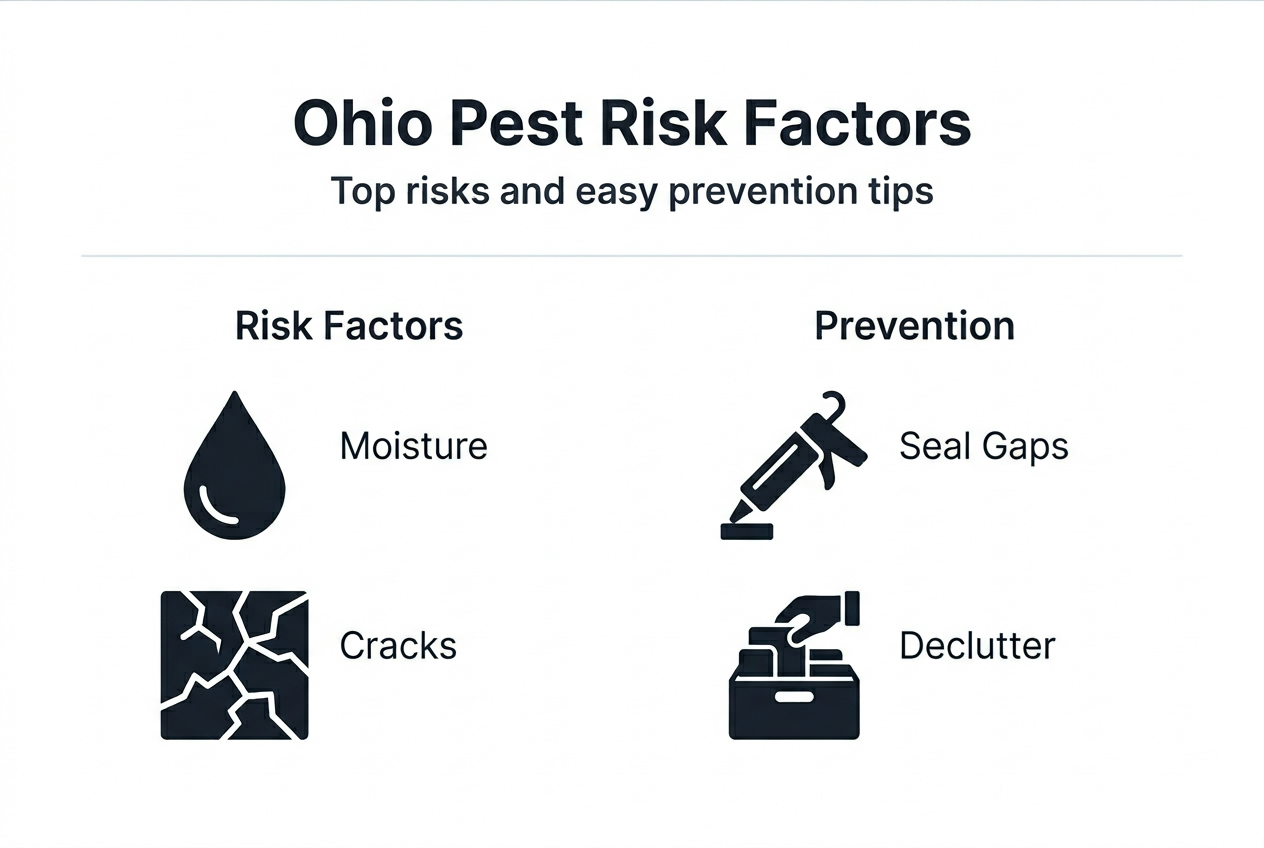
Rodent exclusion requires thorough sealing of all entry points. Mice can squeeze through openings as small as a dime, so comprehensive inspection and repair of foundation cracks, roof gaps, and utility penetrations is essential. Proper food storage in rodent-proof containers, prompt cleanup of spills, and securing trash in sealed bins eliminate food sources. Removing outdoor debris, woodpiles, and dense vegetation reduces harborage near your home.
Bed bug prevention demands vigilance, especially when traveling. Early detection, professional pest control, and diligent prevention practices are key to fighting bed bug infestations. Comprehensive bed bug control strategies include regular inspection of sleeping areas, mattress encasements, and immediate laundering of potentially infested items.
Pro Tip: When traveling, inspect hotel rooms carefully before unpacking. Keep luggage on hard surfaces away from beds, and use high-heat drying for all clothing immediately upon returning home. This simple practice kills any bed bugs that may have hitchhiked in your luggage.
Follow these sequential steps for comprehensive pest prevention:
- Conduct a thorough inspection of your home’s interior and exterior to identify cracks, gaps, moisture problems, and potential entry points.
- Seal all identified openings with appropriate materials such as caulk, weatherstripping, steel wool, or expanding foam.
- Install or repair window and door screens to create physical barriers against flying insects.
- Eliminate moisture sources by fixing leaks, improving ventilation, and using dehumidifiers in damp areas.
- Implement strict sanitation practices including immediate cleanup of spills, proper food storage, and regular trash removal.
- Reduce clutter in storage areas, basements, and attics to eliminate hiding places and make inspection easier.
- Maintain your yard by trimming vegetation away from foundations, removing debris, and managing outdoor water sources.
- Monitor for early signs of pest activity through regular inspections of common problem areas.
| Pest Type | Primary Prevention Method | Key Tools | Maintenance Frequency |
|---|---|---|---|
| Ants | Food source elimination | Sealed containers, caulk | Daily cleaning, quarterly sealing |
| Centipedes | Moisture control | Dehumidifiers, fans | Weekly checks, seasonal repairs |
| Spiders | Prey reduction | Vacuum, screens | Weekly cleaning, annual screen repair |
| Rodents | Entry point sealing | Steel wool, cement | Monthly inspection, immediate repairs |
| Bed Bugs | Travel precautions | Mattress covers, high-heat dryer | Post-travel inspection, quarterly checks |
| Ticks | Yard maintenance | Mower, trimmer | Weekly mowing, monthly perimeter care |
These DIY pest prevention tips Ohio homeowners can implement create multiple layers of defense. However, understanding when professional intervention is needed ensures you don’t allow minor issues to become major infestations.
Protect your Ohio home with expert pest control
While prevention strategies significantly reduce pest risks, persistent infestations often require professional expertise. Apex Pest Control specializes in Ohio-specific pest challenges, offering comprehensive solutions that address bed bugs, rodents, ants, ticks, and other common invaders throughout Northeast Ohio communities.
Our licensed technicians understand the unique residential pest solutions comparison and can recommend treatments tailored to your specific situation. Whether you’re dealing with a suspected infestation or want proactive protection, professional inspection identifies hidden problems and vulnerabilities you might miss. Our bed bug control guide approach combines proven treatment methods with follow-up monitoring to ensure complete elimination.
For homeowners facing rodent issues, our rodent pest extermination services provide humane, effective solutions that address both current infestations and future prevention. We use family-safe methods that protect your household while eliminating pest threats. Contact Apex Pest Control today for a free quote and discover how professional pest management complements your home maintenance efforts for lasting protection.
Frequently asked questions
What are the most common pests in Ohio homes?
Ohio homes regularly encounter bed bugs, rodents (mice and rats), ants, spiders, centipedes, and ticks. Bed bugs have become particularly problematic in urban areas, with several Ohio cities ranking nationally for infestation rates. Rodents thrive year-round due to moderate weather and accessible food sources. Common Ohio pest species also include house spiders, carpenter ants, and various tick species that pose health risks.
How can I tell if my home has a pest infestation?
Look for droppings, live insects or rodents, unexplained bites or skin irritation, and property damage such as chewed wires or gnawed wood. You might notice unusual odors, shed insect skins, or nesting materials in hidden areas. Bed bugs leave small blood spots on bedding, while rodents create grease marks along walls where they travel. Early recognition of these signs of pest infestation allows for faster treatment and less damage.
How can I prevent bed bug infestations in my Ohio home?
Preventative measures include inspecting hotel rooms, avoiding placing luggage on beds, using high-heat drying for clothing, decluttering, and vacuuming regularly with HEPA filters. Inspect secondhand furniture carefully before bringing it home, and encase mattresses and box springs in protective covers. Wash and dry bedding on high heat weekly, and immediately launder all items after travel. For comprehensive protection, review our guide to prevent bed bugs naturally in Ohio.
What makes Ohio homes attractive to rodents?
Rodents are drawn to shelter, food, and water, thriving especially in moderate weather and urban sprawl areas found in Ohio. They enter through foundation cracks, gaps around utility lines, and damaged vents seeking warmth and accessible food sources. Unsecured trash, pet food, and indoor water leaks provide everything rodents need to establish populations. Urban expansion creates pathways between properties, making it easier for rodents in Ohio homes to spread.
Are ticks a major concern for Ohio homeowners?
Ohio ranks among the top 10 states with the highest tick populations and tick-borne diseases, making them a serious health concern. Warm, humid conditions and proximity to wooded areas or tall grass increase exposure risk. Regular yard maintenance, including mowing lawns and clearing brush, reduces tick habitats near your home. After outdoor activities, check yourself, children, and pets for ticks, removing them promptly to minimize disease transmission risk. Learn more about tick control in Ohio homes for comprehensive protection strategies.