



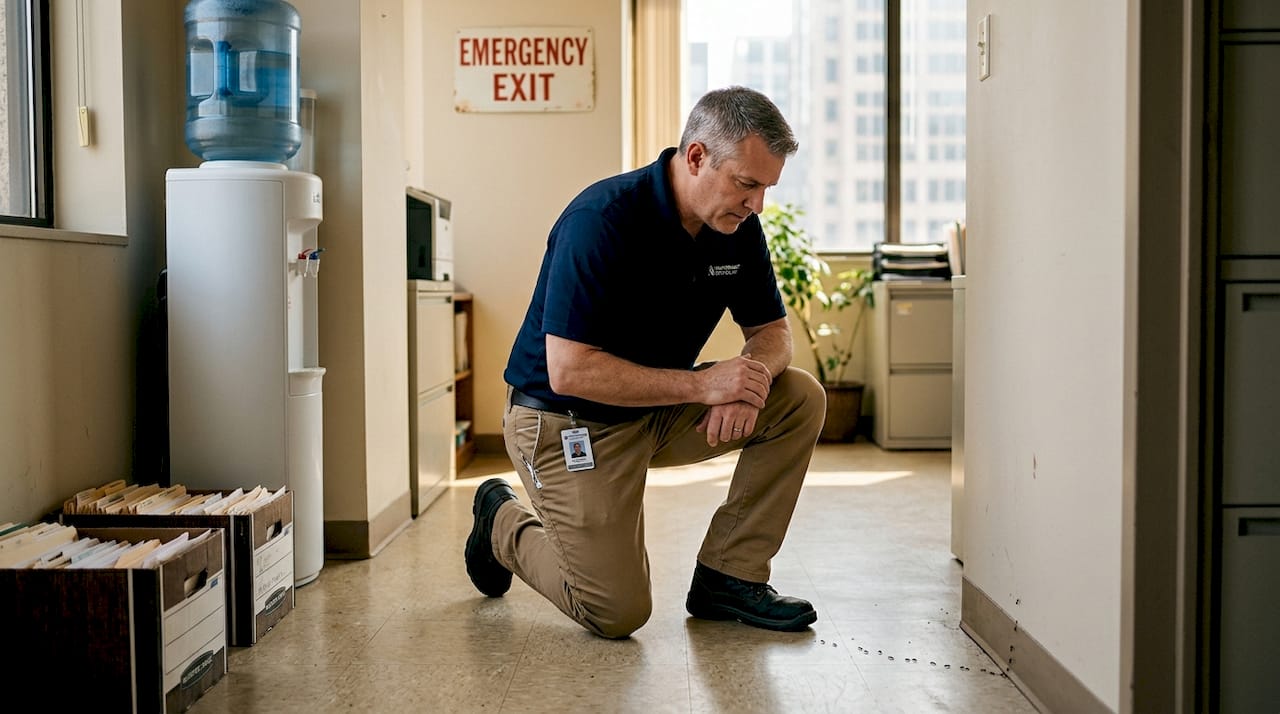
Reaching for a can of spray when you spot ants marching across your break room floor feels like the logical move. But OTC sprays miss colonies entirely, targeting only the workers you can see while the queen and thousands of nestmates keep reproducing underground. For Ohio business owners and property managers, that gap between visible ants and the actual colony is where real damage happens. Structural repairs, health code violations, and operational shutdowns are all on the table when infestations go unresolved. This guide breaks down exactly how to identify, prevent, and eliminate ant problems in commercial buildings using methods that actually work.
Table of Contents
- Spotting ant infestations in Ohio commercial buildings
- Why DIY treatments fall short in commercial settings
- Moisture and carpenter ants: A hidden threat to your property
- Integrated Pest Management: The gold standard for ant control
- Facility-wide prevention: Policies and practices that work
- Protect your business with expert commercial ant control
- Frequently asked questions
Key Takeaways
| Point | Details |
|---|---|
| DIY has limits | Homemade sprays and baits rarely eliminate the root cause of ant infestations in commercial properties. |
| Ant species matter | Identifying the specific ant invading your building is critical for effective, compliant treatment. |
| Moisture is a warning sign | Moisture problems attract carpenter ants and should be addressed promptly to avoid structural damage. |
| IPM delivers results | Integrated Pest Management offers comprehensive, long-term protection against ant problems for Ohio businesses. |
| Preventive action is best | Proactive facility policies and regular professional inspections reduce risk and ensure regulatory compliance. |
Spotting ant infestations in Ohio commercial buildings
Once you recognize that surface treatments can’t resolve root infestation issues, understanding the specifics of ant threats in Ohio buildings becomes your first real priority. Catching an infestation early saves money, protects your reputation, and keeps regulators off your back.
The most visible signs are foraging trails, usually along walls, under equipment, or near food storage. You may also notice small soil mounds near foundations, wood shavings near structural beams, or a faint musty odor in enclosed spaces. These clues point to active colonies, not just wandering scouts.
Common ants in Ohio commercial settings include carpenter ants, pharaoh ants, pavement ants, and odorous house ants, each with distinct behaviors and risks. Here’s a quick breakdown:
| Ant species | Key locations | Main risks |
|---|---|---|
| Carpenter ants | Wood structures, utility rooms | Structural damage, costly repairs |
| Pharaoh ants | Kitchens, hospitals, break rooms | Disease transmission, colony splitting |
| Pavement ants | Parking lots, foundation cracks | Entry points, nuisance infestations |
| Odorous house ants | Food storage, wall voids | Contamination, rapid colony growth |
For ant control for businesses to be effective, your staff needs to know what to look for during routine walkthroughs. Train them to check these areas regularly:
- Break rooms and kitchens: Look under appliances, inside cabinets, and around drains
- Loading docks and entry points: Check door seals, gaps in walls, and utility penetrations
- Utility and mechanical rooms: Inspect around pipes, HVAC units, and water heaters
- Restrooms: Look for trails near drains and under sinks
- Storage areas: Check cardboard boxes, pallets, and shelving units near exterior walls
Early detection by trained staff is one of the most cost-effective tools you have. A single report from a warehouse worker who noticed sawdust near a beam can prevent thousands of dollars in structural repairs.
Why DIY treatments fall short in commercial settings
Now that you can spot the warning signs and know the main ant invaders, it’s vital to understand why quick fixes can backfire in business environments. The problem isn’t effort. It’s biology.
Ant colonies operate with a division of labor. The workers you see foraging represent only a small fraction of the total population. When you spray them, the colony often interprets the chemical signal as a threat and relocates or splits. Pharaoh ants are especially notorious for this behavior, fragmenting into multiple satellite colonies when disturbed by repellent sprays.
Most DIY treatments do not address the root causes of ant infestations. Professional exterminators routinely target the entire colony, including the queen, using species-specific baiting and nest elimination strategies that over-the-counter products simply cannot replicate.
Here’s how DIY methods compare to professional treatments across the factors that matter most to your business:
| Criteria | DIY methods | Professional treatments |
|---|---|---|
| Effectiveness | Surface-level only | Full colony elimination |
| Coverage | Visible areas | Hidden nests and entry points |
| Health risk | Misapplication risk | Regulated, safe application |
| Regulatory compliance | Often non-compliant | Meets commercial standards |
| Long-term cost | Recurring purchases | One-time or scheduled service |
Understanding DIY vs. professional pest control outcomes is critical before you invest more time and money in products that won’t solve the problem.
Pro Tip: If you’ve already sprayed and the ants seem to have disappeared, don’t assume the problem is solved. Hidden nests in wall voids, ceiling spaces, or under flooring can sustain a colony for months after surface activity drops. A professional inspection is the only way to confirm elimination.
Moisture and carpenter ants: A hidden threat to your property
With DIY pitfalls clear, targeted prevention becomes possible, especially against carpenter ants that exploit overlooked building vulnerabilities. These ants don’t eat wood. They excavate it, and they prefer wood that’s already been softened by moisture.
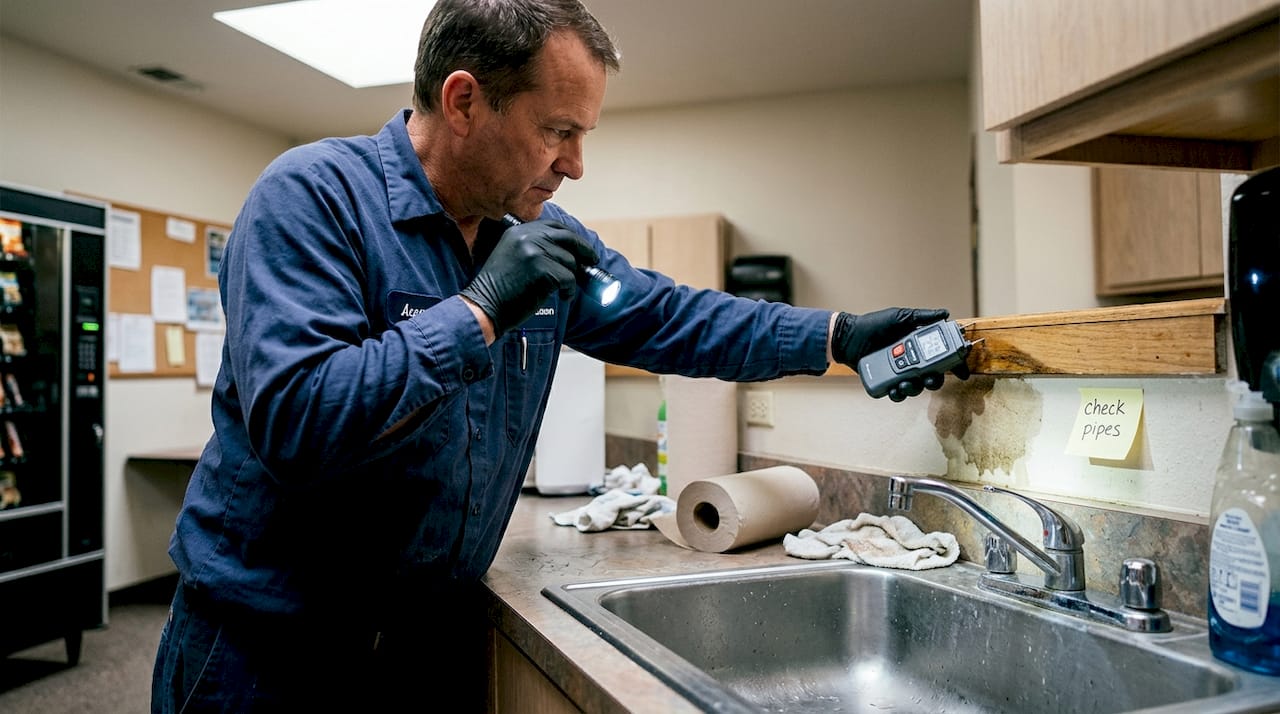
Carpenter ants indicate moisture issues in your building, and direct nest treatment is needed beyond general spraying. Finding carpenter ants is often a symptom of a bigger problem: a roof leak, a failing pipe, or condensation buildup around HVAC equipment. Treating the ants without fixing the moisture source is like mopping the floor while the faucet is still running.
Common moisture trouble spots in commercial facilities include:
- Roof penetrations and gutters: Blocked drainage causes water to pool and seep into structural wood
- HVAC systems: Condensation lines that aren’t draining properly create ideal nesting conditions
- Plumbing chases: Slow leaks inside walls go undetected for months
- Window and door frames: Failing seals allow water intrusion at the perimeter
- Basement and crawl space areas: Poor ventilation leads to chronic dampness
Coordinate with your maintenance team to add moisture checks to their regular rounds. A simple moisture meter, available at any hardware store, can flag problem areas before ants find them first. For carpenter ant infestation signs, look for frass (a mix of sawdust and insect debris) near wood beams, hollow-sounding wood when tapped, and large black ants active at night.
Pro Tip: Schedule a moisture audit of your utility and mechanical rooms every spring. Catching a slow pipe leak or HVAC drainage issue before summer heat sets in can prevent both structural decay and a full-blown carpenter ant infestation.
Integrated Pest Management: The gold standard for ant control
Securing building integrity requires strategies that go beyond quick fixes. Professional ant control in commercial buildings uses Integrated Pest Management, or IPM, which involves thorough inspection, species identification, sanitation, exclusion, targeted baiting, and residual barriers. IPM is not a single treatment. It’s a system.
Here’s what a reputable commercial ant control service should walk you through:
- Initial inspection: A licensed technician surveys the entire facility, including hidden areas, to map ant activity and identify species
- Species identification: Treatment strategy depends entirely on which ant you’re dealing with. Pharaoh ants require non-repellent baits. Carpenter ants need nest elimination.
- Sanitation recommendations: The technician identifies food and moisture sources that are sustaining the colony
- Exclusion work: Sealing entry points, caulking gaps, and addressing structural vulnerabilities that allow ants inside
- Targeted baiting and barriers: Species-specific baits are placed where workers will carry them back to the colony, and residual barriers are applied at key entry zones
- Follow-up monitoring: Scheduled return visits confirm colony elimination and catch new activity early
Comparing approaches makes the value of IPM clear:
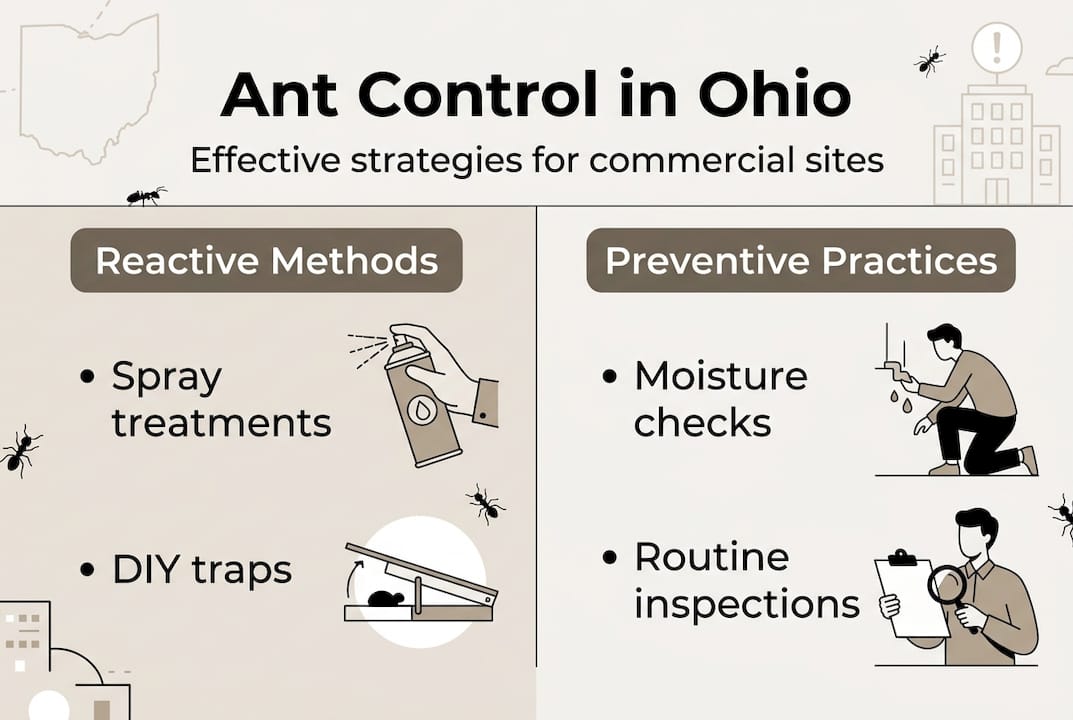
| Criteria | Reactive treatments | IPM approach |
|---|---|---|
| Speed | Fast but temporary | Slightly slower, lasting results |
| Thoroughness | Surface-level | Whole-facility, root-cause focused |
| Safety | Variable | Regulated, targeted application |
| Cost-effectiveness | High recurring cost | Lower long-term investment |
For IPM for workplaces to deliver lasting results, facility-wide cooperation is essential. Use a business pest control checklist to align your team with the program.
Pro Tip: Schedule professional pest inspections twice a year, once in spring before ant season peaks and once in fall before pests seek warmth indoors. This rhythm keeps you ahead of infestations and supports regulatory compliance year-round.
Facility-wide prevention: Policies and practices that work
Beyond one-time treatments, ongoing facility practices lock in pest resistance and support regulatory compliance. A single treatment without follow-through is just buying time.
Commercial success requires facility-wide coordination, regular inspections twice per year, and sanitation practices that meet health standards. Regulatory inspectors in Ohio consistently link poor sanitation and deferred maintenance to elevated pest risk, and a failed inspection can mean fines, temporary closure, or loss of operating licenses.
Build these prevention policies into your standard operating procedures:
- Clean break rooms daily: Wipe down surfaces, empty trash, and store food in sealed containers
- Repair leaks within 48 hours: Fast response to plumbing issues removes the moisture that attracts ants
- Schedule waste removal consistently: Overflowing dumpsters near building entrances are a direct invitation
- Review vendor pest practices: Deliveries can introduce pests. Inspect incoming shipments and require vendors to meet basic pest standards
- Assign staff reporting roles: Designate a point person in each department to log and report pest sightings immediately
Staff training is often the missing piece. Employees who know what early ant activity looks like and feel empowered to report it can cut response time dramatically. A quick 15-minute training session during onboarding goes a long way. Review your essential pest control tasks with your team at least once a year to keep everyone aligned.
Twice-annual professional reviews also give you documentation that demonstrates due diligence to health inspectors and insurance providers. That paper trail has real value beyond pest prevention.
Protect your business with expert commercial ant control
Ant infestations in commercial buildings don’t resolve on their own, and waiting costs more than acting. At Apex Pest Control, we’ve been protecting Ohio businesses since 1969 using proven IPM strategies tailored to your facility’s specific needs. Our licensed technicians identify the exact species, locate hidden nests, and apply targeted treatments that eliminate colonies at the source, not just the surface. Whether you manage a warehouse, restaurant, medical facility, or office complex, we offer same-day assessments and customized Ohio commercial ant control plans built around your operations. Explore your commercial pest management options or get a free estimate today and keep your facility compliant, protected, and running without interruption.
Frequently asked questions
What are the most common ant species found in Ohio commercial buildings?
Carpenter ants, pharaoh ants, pavement ants, and odorous house ants are the most frequent invaders in Ohio businesses, each requiring a different treatment approach.
How can I tell if carpenter ants are damaging my property?
Look for large black ants, sawdust-like frass near wood, and signs of moisture damage. Carpenter ants tunnel into damp wood and require direct nest treatment, not just surface spraying.
Why doesn’t spraying ants solve the problem in commercial buildings?
Sprays only address surface workers and miss the main colony. OTC sprays miss colonies entirely, often causing ants to relocate and expand the infestation.
What is involved in a professional ant control service for a business?
Professional ant control uses IPM with inspections, species identification, sanitation guidance, exclusion, targeted baiting, and scheduled follow-up monitoring for lasting results.
How often should commercial buildings in Ohio schedule pest inspections?
Schedule inspections twice per year, ideally in spring and fall, to stay ahead of ant season and maintain compliance with Ohio health and safety standards.