




TL;DR:
- Baits are effective for long-term colony elimination of social pests like ants and cockroaches.
- Sprays provide fast knockdown and perimeter defense but are less effective for entire colony control.
- Combining baiting and spraying, tailored to pest behavior and location, yields the best pest management results.
Grab a can of bug spray and blast the problem away. That’s the instinct most Ohio homeowners follow when they spot ants marching across the kitchen counter or cockroaches scurrying behind the stove. It feels fast, decisive, and satisfying. The problem is that sprays are not always the most effective tool, and in some cases, they can make an infestation worse by scattering pests deeper into walls. This guide breaks down the real science behind baits and sprays, explains which method wins for each pest, and helps you make a smarter decision that protects your home long term.
Table of Contents
- Understanding baits and sprays: How do they work?
- When to use baits: The science and results
- Best uses for sprays: Fast results, right context
- Making the right choice: Real-world decisions in Ohio homes
- What most guides miss: Combining control methods for lasting results
- Get help with targeted pest solutions in Ohio
- Frequently asked questions
Key Takeaways
| Point | Details |
|---|---|
| Baits eliminate nests | Slow-acting baits destroy entire colonies by reaching hidden pests like queens for long-term control. |
| Sprays offer quick results | Sprays are useful for immediate reduction of visible pests or when baits are ineffective, such as with bed bugs. |
| Ohio pests need tailored solutions | Choosing the right method depends on the pest species, infestation size, and resistance patterns. |
| Combining methods works best | Strategic combinations of baits, sprays, and physical barriers often deliver the safest, most effective pest control. |
Understanding baits and sprays: How do they work?
With the basic question on every homeowner’s mind, what do baits and sprays actually do, let’s break down the mechanics.
Baits are slow-acting pest control products that combine a food attractant with a toxin. The idea is simple but powerful. Pests find the bait, eat it, and carry it back to the nest. The toxin works gradually, giving foragers time to share it with nestmates before dying. This process, called trophallaxis (the direct transfer of food or fluids between insects), is what makes baits so effective for social insects like ants and cockroaches. Baits allow slow-acting toxins to spread via trophallaxis, reaching queens and hidden nests for true colony elimination.
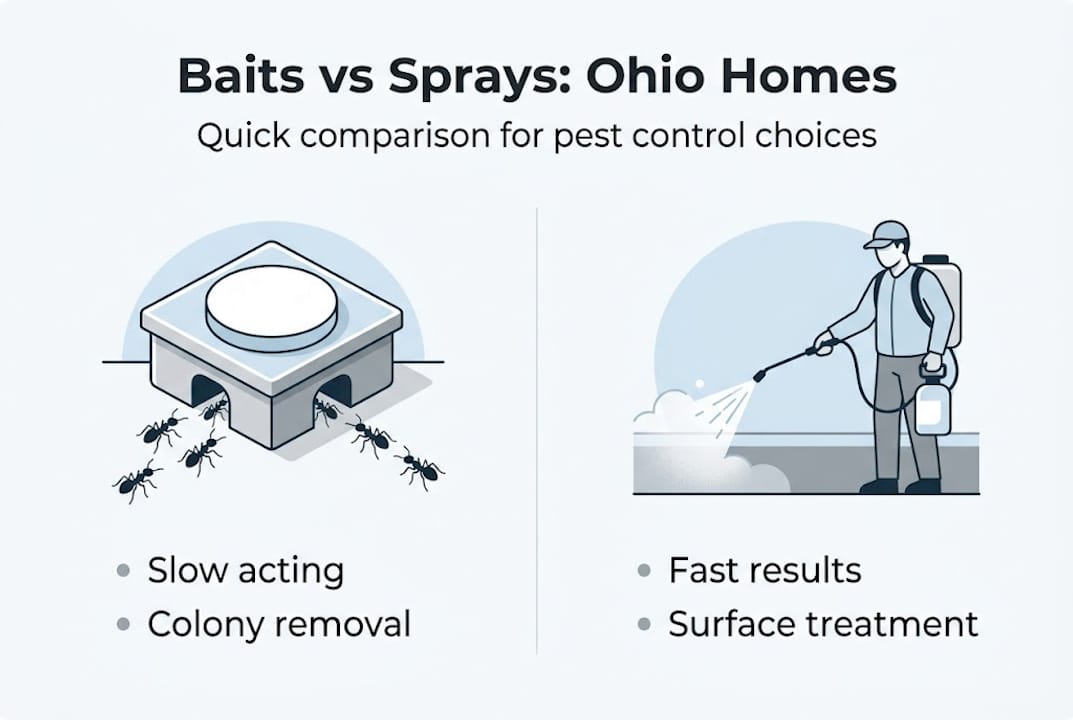
Sprays work differently. They deliver a chemical directly to a pest or surface, killing on contact or leaving a residual layer that poisons pests as they walk through treated zones. Sprays come in several forms, including liquid concentrates, aerosols, and ready-to-use bottles. Some are designed for immediate knockdown, while others leave a residue that stays active for days or weeks.
Here is a quick look at when each method tends to shine:
- Baits: Best for ants, cockroaches, and other social insects where colony elimination is the goal
- Sprays: Best for bed bugs, immediate knockdown of visible pests, and perimeter defense around the home’s exterior
- Baits: Ideal when pests are hidden in walls, under appliances, or in hard-to-reach nesting areas
- Sprays: Preferred when you need fast, visible results or when treating a specific surface
Understanding the circumstances when baits outperform sprays comes down to one key question: do you want to kill the pests you see, or eliminate the entire colony?
“The pest you see is rarely the whole problem. The queen and her thousands of hidden workers are the real target, and only baits reliably reach them.”
Pro Tip: When reading a product label, look for the active ingredient and its concentration. Slow-acting toxins like hydramethylnon, indoxacarb, or fipronil are typically found in baits. Fast-acting pyrethroids like bifenthrin or cypermethrin are common in sprays. Knowing this helps you pick the right tool before you buy.
When to use baits: The science and results
Now that you understand the mechanics behind each method, let’s look at the scenarios where baits clearly outperform sprays, backed by research findings.
For odorous house ants, pavement ants, and cockroaches, baits are the gold standard. Baits are superior for colony elimination in these species because the toxin travels through the colony before it kills. Field studies and lab research consistently show 80% or greater reduction in cockroach populations using gel baits compared to spray-only approaches. That gap is significant when you are dealing with a kitchen infestation.
Here is how baits stack up against sprays for common Ohio pests:
| Pest | Baits | Sprays |
|---|---|---|
| Odorous house ants | Excellent: reaches queen | Poor: causes budding |
| Pavement ants | Excellent: colony kill | Moderate: surface only |
| German cockroaches | Excellent: 80%+ reduction | Moderate: misses hidden pests |
| Carpenter ants | Good: combine with sprays | Good: direct nest treatment |
| Bed bugs | Not effective | Essential |
| Rodents | Good: snap traps, bait stations | Not applicable |
For long-term ant removal with baits, placement matters as much as product choice. Ants follow scent trails, so placing bait directly on or near those trails dramatically increases uptake. Avoid the urge to clean trails before baiting. Those trails are your roadmap.
Here are the steps for baiting effectively:
- Identify the pest species before choosing a bait, since different ants prefer protein-based or sugar-based attractants
- Place small amounts of bait directly on active trails or near entry points
- Do not spray near bait stations, as repellent chemicals will drive pests away from the bait
- Monitor bait consumption every 48 to 72 hours and replenish as needed
- Be patient. Full colony elimination can take 1 to 3 weeks depending on colony size
- Combine baits with natural ant elimination strategies like sealing cracks and removing food sources for lasting results
For carpenter ants, which nest inside wood rather than in soil, ant bait recommendations suggest combining baits with targeted sprays applied directly into the nest gallery for best results. Baits alone may not penetrate deep enough into structural wood.
Best uses for sprays: Fast results, right context
While baits have clear advantages in many cases, there are still vital roles for sprays, especially with certain pests or urgent situations.
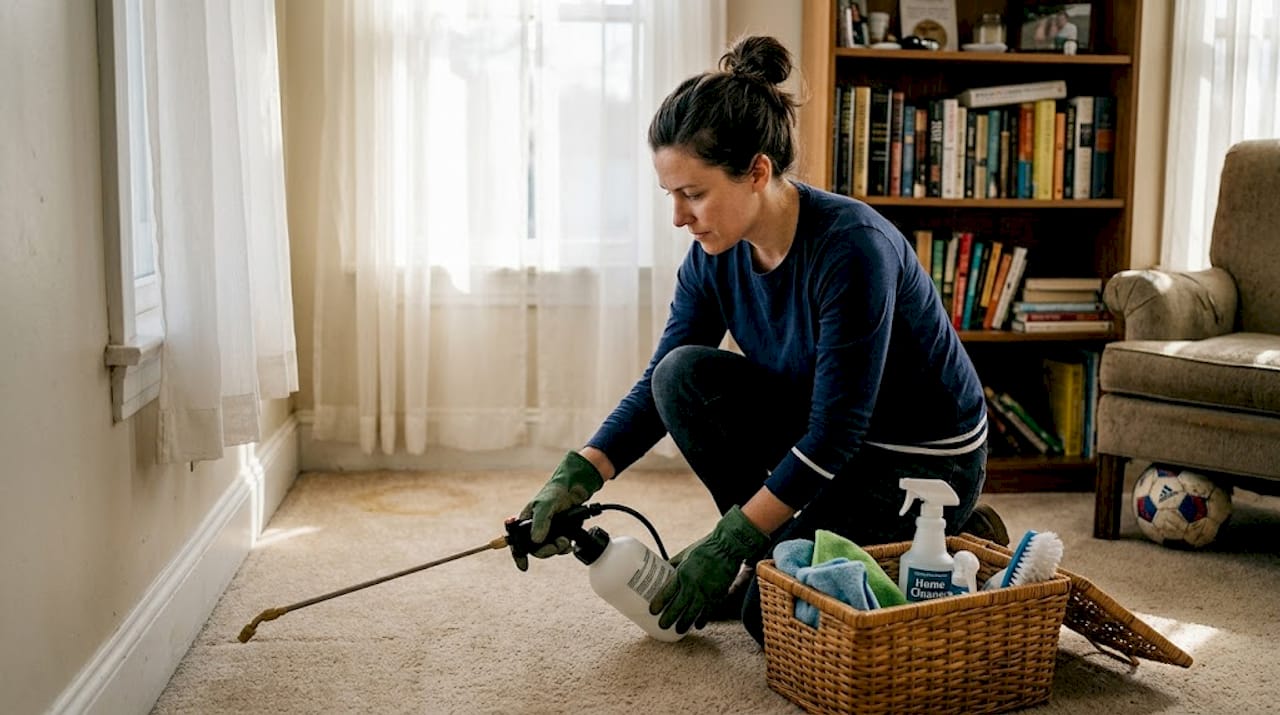
Bed bugs are the clearest example of a pest where sprays are non-negotiable. There are simply no effective baits for bed bugs. Bed bugs feed exclusively on blood, so they will never consume a food-based bait. Treatment relies on targeted sprays, desiccants, heat, and physical removal. Resistance to common spray chemicals is also well documented in bed bug populations, which is why professionals use multiple spray classes together.
The main spray types used for bed bugs include:
- Pyrethroids: Fast knockdown but resistance is widespread in Ohio bed bug populations
- Neonicotinoids: Different mode of action, often combined with pyrethroids to overcome resistance
- Insect growth regulators (IGRs): Prevent nymphs from reaching reproductive maturity, disrupting the population cycle
- Desiccants: Silica gel or diatomaceous earth, physically damage the bug’s outer shell and cause dehydration
For bed bug spray solutions, residual efficacy varies by product and surface. Here is a general comparison:
| Spray type | Residual activity | Resistance risk |
|---|---|---|
| Pyrethroid | 7 to 14 days | High |
| Neonicotinoid | 14 to 21 days | Moderate |
| IGR | Up to 30 days | Low |
| Desiccant dust | 30 or more days | Very low |
Sprays are also the right call for perimeter defense. Applying a residual spray around your home’s foundation, door frames, and window sills creates a chemical barrier that stops ants and other crawling insects before they get inside. Review perimeter spray guidance for application rates and timing.
Signs you should reach for a spray instead of or alongside a bait:
- You need immediate knockdown of a large visible infestation
- You are treating bed bugs, which do not respond to baits
- You want to create a protective barrier around the home’s exterior
- The pest is a solitary species without a central colony to eliminate
- You are seeing Ohio bug spray options that match your specific pest and surface type
Making the right choice: Real-world decisions in Ohio homes
Armed with evidence on both strategies, let’s get practical. Here is how you apply the right approach for your Ohio property.
The first step is always identification. Misidentifying your pest leads to wasted money and continued infestation. Once you know what you are dealing with, work through this decision process:
- Identify the pest. Is it a social insect like an ant or cockroach, or a solitary pest like a bed bug? Social insects respond best to baits.
- Assess the location. Are pests hiding inside walls, under appliances, or in the yard? Hidden infestations need baits or dust treatments that travel to the source.
- Gauge the severity. A light ant trail near a window is different from a full German cockroach infestation behind your refrigerator. Severe cases may need both methods.
- Consider household factors. Pets and young children change what products are safe to use. Many baits are placed in enclosed stations that pets cannot access, making them safer than open spray applications.
- Check for resistance. If you have sprayed repeatedly with no lasting results, resistance may be the issue. Switching to a bait or a different spray class is smarter than reapplying the same product.
Ant baits are preferred for species like odorous house and pavement ants specifically because spraying these species can trigger budding, a survival response where the colony splits into multiple new colonies, making the problem worse. Combine perimeter sprays with interior baits for the most complete approach.
Pro Tip: If you have used a spray and the infestation keeps returning within a few weeks, do not just reapply. That is a sign the colony is intact and the spray is only killing foragers. Switch to a bait and give it at least two weeks before evaluating results.
For effective ant removal tips and ant prevention strategies that address the root causes of infestations, combining sanitation, exclusion, and targeted treatment delivers the most resilient outcome.
What most guides miss: Combining control methods for lasting results
You now have the facts for making smart choices, but here is what most guides and even many professionals often overlook.
The real world does not divide neatly into bait problems and spray problems. A German cockroach infestation in a busy Ohio kitchen may need gel baits in cracks, a residual spray along the baseboard, and an IGR to break the breeding cycle, all at the same time. Treating each method as a standalone solution is how infestations come back.
We have seen this pattern repeatedly since 1969. Homeowners apply one product, get partial results, and assume the treatment failed. In reality, the treatment was incomplete. Integrated pest management examples show that combining baits, sprays, physical barriers, and monitoring produces results that last far longer than any single method.
The uncomfortable truth is that pest control is adaptive. Pests evolve, resistance develops, and colonies relocate. A plan that worked last year may underperform this year. The best approach is to stay flexible, monitor results, and adjust your strategy based on what the pests are actually doing, not what the product label promises.
Get help with targeted pest solutions in Ohio
If you are dealing with a persistent ant trail, a recurring cockroach problem, or a bed bug situation that sprays alone have not solved, professional support makes a real difference. At Apex Pest Control, we have been helping Ohio homeowners and property managers since 1969, and we know which combinations of baits, sprays, and treatments work for the pest pressures specific to this region. Our rodent extermination experts and bed bug control solutions are backed by decades of field experience. Stop guessing and start with a plan built for your specific infestation. Get your free quote today and let us put the right tools to work for your property.
Frequently asked questions
Why are baits not effective for bed bugs?
Bed bugs feed only on blood, so they will never consume a food-based bait. Effective bed bug treatment relies on targeted sprays, desiccants, and heat instead.
Can I use both baits and sprays at the same time?
Yes, but keep them physically separated. Spraying near bait stations repels pests and prevents them from consuming the bait, which reduces its effectiveness. Combining both methods works best when baits are placed indoors and sprays are applied to exterior perimeters.
What pests are best managed with sprays?
Sprays are most effective for bed bug treatment, perimeter defense against ants, and fast knockdown of exposed cockroaches. They are essential when no bait option exists for the target pest.
How long does it take for baits to work?
Most baits take one to three weeks to fully eliminate a colony. The slow-acting toxin needs time to spread through the population via trophallaxis before reaching queens and hidden workers.