



TL;DR:
- Professional pest control significantly outperforms DIY sprays in effectiveness and long-term results.
- Finding a licensed, guarantee-backed company with IPM practices ensures safer, customized treatments.
- Addressing root causes like sealing entry points and managing moisture is key to lasting pest prevention.
Most Ohio homeowners assume a can of store-bought spray is just as good as calling a professional. It’s not even close. Professional pest control consistently outperforms consumer products in real-world conditions, and the gap is wider than most people realize. This guide walks you through how to find trusted local bug sprayers in Ohio, why professional approaches deliver better results, and what actually matters for keeping your home safe and pest-free year-round. You’ll also learn which spray methods are safest for families, how Ohio’s seasons affect your pest risk, and what questions to ask before hiring anyone.
Table of Contents
- Why professional bug sprayers outperform DIY solutions
- How to find reliable bug sprayers near you in Ohio
- Choosing the safest and most effective spray methods
- Seasonal pest spraying: What Ohio homeowners need to know
- The truth most homeowners miss about bug spraying in Ohio
- Local pest control services for Ohio: Get help today
- Frequently asked questions
Key Takeaways
| Point | Details |
|---|---|
| Professional beats DIY | Professional bug sprayers deliver more consistent, safer results than store-bought treatments. |
| IPM is safest | Integrated Pest Management combines targeted sprays, sealing, and sanitation for long-term pest control. |
| Seasonal vigilance matters | Ohio homes benefit from quarterly and seasonal pest control to address year-round bugs. |
| Choose reviewed providers | Top-rated local companies offer guarantees and tailored plans for Ohio homeowners. |
| Prevention is key | Simple steps like sealing and sanitation reduce pest risks before spraying is needed. |
Why professional bug sprayers outperform DIY solutions
Walk into any hardware store and you’ll find shelves of bug sprays promising fast results. The reality? Most of them offer short-term relief at best. Professional baits exceed 80% mortality in controlled evaluations, while consumer products deliver inconsistent outcomes that vary widely by pest species and application method. That’s not a minor difference. That’s the difference between solving your problem and making it worse.
Professional bug sprayers bring something store shelves can’t: customization. A trained technician identifies the specific pest species in your home, traces entry points, and designs a treatment plan around your actual conditions. Consumer sprays treat everything the same, which is exactly why they often fail. Cockroaches, ants, and bed bugs each require different active ingredients, bait placements, and follow-up schedules.
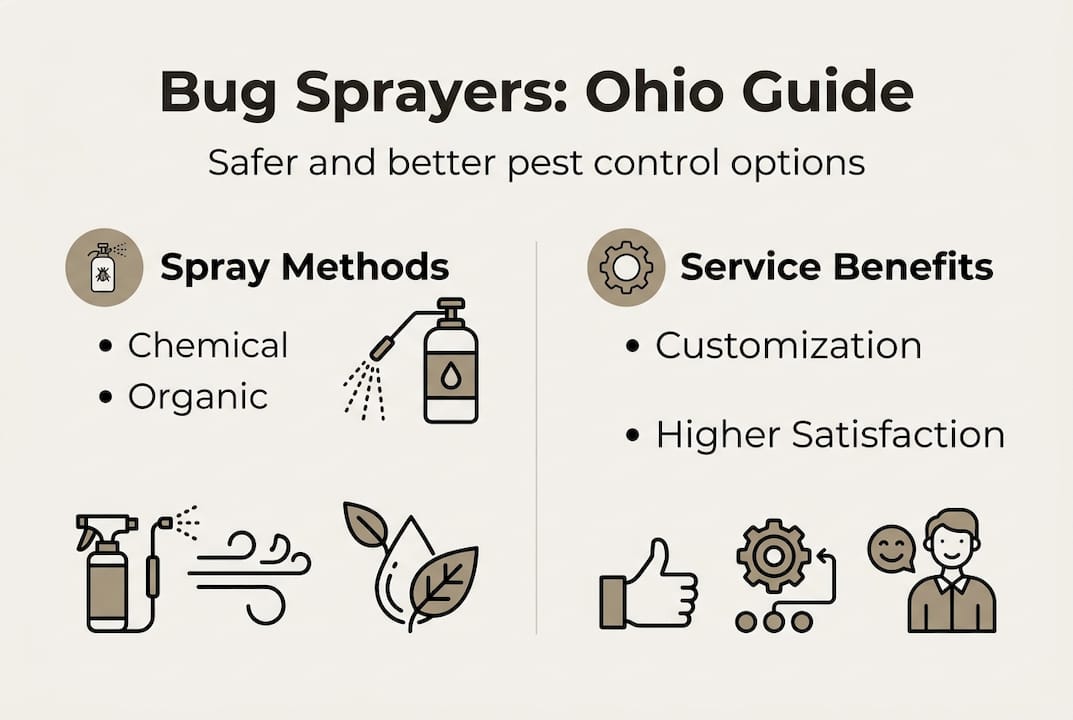
Customer satisfaction with professionals is consistently higher than with DIY approaches, largely because professional companies back their work with guarantees and free re-treatments. When a store-bought spray fails, you’re on your own. When a professional service falls short, they come back.
Here’s a quick comparison to put it in perspective:
| Feature | Professional bug sprayers | DIY store-bought sprays |
|---|---|---|
| Effectiveness rate | Over 80% mortality | Inconsistent, often below 50% |
| Customized treatment plan | Yes | No |
| Service guarantee | Yes | No |
| Free inspections | Common | Not available |
| Follow-up support | Included | None |
| Targets root causes | Yes | Rarely |
What separates the best professional services from average ones comes down to their approach. Look for these qualities when evaluating a provider:
- Uses Integrated Pest Management (IPM) principles
- Offers a written service guarantee
- Provides a free inspection before quoting
- Customizes treatment based on pest species and home layout
- Offers eco-friendly pest control options for families with children or pets
- Follows up after treatment to confirm results
Pro Tip: When you call a pest control company, ask specifically about their IPM approach. If they can’t explain it clearly, that tells you something important about how they work.
How to find reliable bug sprayers near you in Ohio
Knowing that professionals outperform DIY is one thing. Finding the right local provider is another. Ohio has no shortage of pest control companies, but quality varies significantly. Here’s how to narrow it down without wasting time or money.
Top-rated Ohio pest control companies like Orkin, Terminix, and Aptive Environmental carry strong review scores and service guarantees, with Orkin earning 4.9 out of 5 stars in Columbus and Terminix averaging 4.4 out of 5. Those numbers reflect real homeowner experiences, not marketing claims. Use them as a starting benchmark, then dig deeper into local reviews specific to your city or county.
Follow these steps to find a trustworthy provider:
- Search local review platforms for pest control companies in your specific Ohio city. Look for consistent ratings over at least 50 reviews.
- Verify licensing and insurance. Ohio requires pest control applicators to be licensed through the Ohio Department of Agriculture. Ask for proof before signing anything.
- Request a free inspection. Reputable companies offer this without obligation. It also gives you a chance to evaluate how thorough and knowledgeable the technician is.
- Ask about quarterly protection plans. One-time sprays rarely solve recurring pest problems. Seasonal or quarterly service keeps your home protected year-round.
- Compare guarantees. The best companies offer re-treatment at no charge if pests return between scheduled visits.
- Check pest control tips from local sources to understand what pests are most active in your area before speaking with providers.
- Read ant exterminator reviews specific to Ohio to see how companies perform on common local infestations.
Over 80% of homeowner reviews favor professional spraying over DIY for long-term results. That statistic reflects something real: people who try both approaches almost always prefer the professional experience, not just because it works better, but because it removes the guesswork entirely.
Pro Tip: Insist on a written guarantee before any work begins. A company confident in its results will put that confidence in writing.
Choosing the safest and most effective spray methods
Not all professional spraying is the same. Once you’ve found a provider, understanding your options helps you make a smarter choice for your family, your pets, and your home.

Chemical sprays work fast and are appropriate for severe infestations. The tradeoff is that broad-spectrum chemical treatments can pose health risks if overused or applied incorrectly. They’re a tool, not a default strategy.
Natural and organic sprays use plant-based active ingredients like essential oils or diatomaceous earth. They’re gentler on people and pets, though they may require more frequent application to maintain effectiveness. If you have young children or animals in the home, these are worth asking about specifically.
Integrated Pest Management (IPM) is the gold standard. Rather than defaulting to any single product, IPM steps combine targeted treatments with physical controls like sealing entry points, moisture management, and sanitation improvements. The result is longer-lasting protection with less chemical exposure overall.
According to Apex Pest Control’s preventive guide, IPM is the preferred approach for balancing efficacy and safety, because broad spraying risks creating resistant pest populations and triggering secondary pest problems.
“Broad sprays risk resistance and secondary pests. Targeted IPM achieves safer, lasting results.”
Here’s a comparison of the three main approaches:
| Method | Speed of results | Safety for families | Long-term effectiveness |
|---|---|---|---|
| Chemical sprays | Fast | Moderate | Moderate |
| Natural/organic sprays | Moderate | High | Moderate |
| IPM approach | Moderate to slow | High | High |
Not sure which method fits your situation? These signs can help you decide:
- Targeted spraying works best when you have a single identified pest in a specific area
- Broad chemical treatment may be necessary for severe, widespread infestations
- Organic options are ideal when children or pets are regularly in treated areas
- IPM is the right call when pests keep returning despite repeated treatments
- Explore organic pest control options if you want to minimize chemical use without sacrificing results
Seasonal pest spraying: What Ohio homeowners need to know
Ohio’s climate creates a year-round pest problem. The state’s cold winters, humid summers, and wet springs give insects and rodents plenty of opportunities to move into your home. Timing your treatments to match seasonal pest behavior makes a real difference in how effective your protection is.
Ohio’s year-round pest risks demand consistent seasonal monitoring, not just reactive spraying when you already see bugs. Here’s what to watch for each season:
- Spring: Ants, moisture-loving bugs, and overwintering insects become active as temperatures climb. This is the most important time to treat perimeter entry points and address any moisture buildup from winter.
- Summer: Mosquitoes, wasps, bees, and stinging insects peak. Outdoor living spaces need attention, and standing water becomes a breeding ground fast.
- Fall: Rodents begin moving indoors as temperatures drop. Preventative spraying combined with sealing gaps around pipes, doors, and foundations is critical before the first frost.
- Winter: Cockroaches, mice, and other warmth-seeking pests exploit any gap they can find. A protection plan that runs through winter prevents infestations from taking hold while you’re less likely to notice them.
Understanding pest risk factors specific to Ohio homes helps you stay one step ahead instead of reacting after the damage is done. Homeowners in Cleveland and other northern Ohio cities face especially harsh fall and winter pest pressure due to the lake effect climate.
Pro Tip: Schedule a professional inspection two to three weeks before each seasonal shift. That timing gives your provider enough lead time to treat before pest populations peak, not after.
The truth most homeowners miss about bug spraying in Ohio
Here’s something most pest control articles won’t tell you: spraying is often the last thing that should happen, not the first. We’ve been doing this since 1969, and the pattern we see most often is homeowners who spray repeatedly without ever addressing why the pests keep coming back.
The root causes are almost always the same: unsealed cracks around pipes and windows, excess moisture in basements or crawl spaces, and sanitation habits that give pests a reliable food source. Sealing entries and managing moisture consistently outperforms reactive spraying when it comes to long-term results. Spray without fixing those conditions and you’re just renting a solution.
“The biggest mistake? Treating symptoms. Real pest control treats the causes.”
The best pest control companies don’t just spray and leave. They inspect, identify contributing conditions, and build a plan around your specific home. That’s what IPM for Ohio homes actually looks like in practice. It’s not about how much product gets applied. It’s about how precisely the problem is understood and addressed. Homeowners who invest in that approach spend less money over time and deal with far fewer recurring infestations.
Local pest control services for Ohio: Get help today
Ready to stop guessing and start getting real results? At Apex Pest Control, we’ve been protecting Ohio homes since 1969 with treatments built around your specific pest problems, not a one-size-fits-all spray schedule. You can request a pest control quote today and get a free inspection with no obligation. Whether you’re dealing with a rodent extermination situation heading into winter or need ongoing seasonal coverage, we offer quarterly plans designed around Ohio’s unique pest calendar. For families who want to minimize chemical exposure, our organic pest control services deliver effective results with gentler ingredients. Don’t wait for a small problem to become a serious one.
Frequently asked questions
Are professional bug sprayers safer than store-bought sprays?
Yes. Professionals use targeted treatments and established safety protocols, which reduce exposure risks for your family and pets compared to broad-spectrum consumer sprays. Targeted professional plans also come with follow-up support that consumer products simply don’t offer.
How often should bug spraying be scheduled for Ohio homes?
Quarterly treatments are the standard recommendation for Ohio homes. Ohio’s year-round pest pressure means a single annual treatment rarely provides adequate protection across all four seasons.
Is Integrated Pest Management (IPM) better than chemical spraying?
For most Ohio homes, yes. IPM combines targeted treatments, entry point sealing, and sanitation improvements for results that last longer and require less chemical use. IPM provides long-term prevention that reactive spraying alone cannot match.
What should I ask when hiring a local bug sprayer?
Ask about their guarantee, licensing through the Ohio Department of Agriculture, IPM options, and whether they offer a free inspection. Established firms with local expertise and clear service commitments are your safest choice.
Can I reduce pest risks before spraying?
Absolutely. Sealing cracks around pipes and windows, reducing moisture in basements, and keeping food stored properly all reduce pest pressure significantly. Ongoing prevention combined with professional treatment delivers the best long-term outcome for Ohio homeowners.