



TL;DR:
- Stinging insects in Ohio pose serious health, structural, and liability risks requiring professional removal.
- DIY attempts often worsen infestations and increase injury risk due to incomplete treatments.
- Professional services ensure safe, thorough elimination and consider species-specific and environmental factors.
Stinging insects in Ohio are far more than a seasonal nuisance. Every year, hornets, wasps, and bees cause serious injuries, trigger life-threatening allergic reactions, and even contribute to fatalities across the United States. Many Ohio homeowners and business owners assume a quick spray from the hardware store will solve the problem. It rarely does. In fact, it often makes things worse. This guide breaks down the real risks these insects pose, why DIY removal tends to backfire, how professionals handle removal safely and permanently, and exactly when it’s time to pick up the phone.
Table of Contents
- The danger stinging insects pose in Ohio
- Why DIY insect removal can be dangerous and ineffective
- How professionals remove stinging insects safely and for good
- When relocation is necessary, and the ethical considerations
- Signs it’s time to call the pros
- The real reason professional removal matters (and what most guides don’t tell you)
- Get expert stinging insect control for your Ohio property
- Frequently asked questions
Key Takeaways
| Point | Details |
|---|---|
| DIY risks escalate | Store-bought sprays and home removal attempts often lead to injuries, incomplete nest removal, and increased danger. |
| Pros ensure safety | Professional removal uses targeted, licensed methods that protect your family, pets, and property from hidden nests and aggressive insects. |
| Not all should be exterminated | Vital pollinators like honeybees are usually relocated, not destroyed, to support Ohio’s environment. |
| Act quickly on warning signs | Fast action when nests are discovered reduces risk, damage, and costly repairs for homes and businesses. |
The danger stinging insects pose in Ohio
Ohio is home to several stinging insect species that can create serious problems for both residential and commercial properties. Yellowjackets, bald-faced hornets, paper wasps, mud daubers, and carpenter bees are among the most common, and each brings its own set of risks. Understanding what you’re dealing with is the first step toward protecting your property and the people on it.
Here’s a quick look at the main species you might encounter:
- Yellowjackets: Ground-nesting and extremely aggressive when disturbed. They can sting multiple times without dying.
- Bald-faced hornets: Build large paper nests in trees and on structures. Highly defensive of their colony.
- Paper wasps: Often nest under eaves, decks, and window frames. Less aggressive but still dangerous.
- Mud daubers: Solitary and less aggressive, but their mud nests can clog vents and damage siding.
- Carpenter bees: Bore into untreated wood, causing structural damage to decks, fences, and siding over time.
The health risks are not something to take lightly. Stinging insects cause 31% of animal-related US fatalities and account for roughly 4% of severe allergic reactions each year. For someone with an undiagnosed venom allergy, a single sting can trigger anaphylaxis, a rapid and potentially fatal immune response.
A single nest near a high-traffic area of your property is not just an inconvenience. It’s a liability.
For businesses, the stakes go even higher. If a customer, employee, or visitor is stung on your property, you could face medical claims and legal action. Restaurants with outdoor seating, warehouses with loading docks, and retail properties with landscaped areas are especially vulnerable. Explore Ohio pest insights to understand the full scope of seasonal threats in your area.
Carpenter bees deserve special attention from a structural standpoint. Their tunneling weakens wood over time, and the damage compounds with each new generation. What starts as a few small holes in your deck railing can turn into a significant repair bill within a few seasons. Reviewing the Ohio pest guide can help you spot early signs before they escalate.
Why DIY insect removal can be dangerous and ineffective
It’s tempting to grab a can of wasp spray and handle things yourself. The problem is that store-bought sprays often fail, agitate insects, and risk incomplete eradication, leaving hidden portions of the nest intact and the colony even more defensive than before.
Here are the most common ways DIY removal goes wrong:
- Partial nest destruction: Spraying the visible entrance of a nest doesn’t kill the queen or reach deeper chambers. The colony rebuilds within days.
- Provoking a swarm: Disturbing a nest without proper gear can trigger a mass defensive response. Yellowjackets, in particular, release alarm pheromones that signal the entire colony to attack.
- Missing secondary colonies: Many species establish satellite nests nearby. Removing one without finding the others means the problem returns quickly.
- Ladder and access injuries: Reaching nests in eaves, attics, or tall trees without proper equipment leads to falls, sometimes with serious consequences.
- Allergic reactions: Many people don’t know they have a venom allergy until their first severe reaction. DIY removal puts you directly in the line of fire.
As expert DIY pitfalls research confirms, the combination of incomplete removal and increased insect agitation is a recipe for repeat infestations and greater injury risk.
Trying to remove a wall nest with spray foam and a flashlight is one of the most common calls we receive after a DIY attempt goes badly wrong.
Pro Tip: If you notice a nest, resist the urge to poke, spray, or disturb it in any way before a professional arrives. Even vibrations from a lawnmower or power tool can agitate certain species.
Professionals bring inspection protocols, full protective gear, targeted chemical treatments, and knowledge of species-specific behavior that no store-bought product can replicate. For practical pest removal tips and a deeper look at why Ohio professional pest removal consistently outperforms DIY, the evidence is clear.
How professionals remove stinging insects safely and for good
Professional removal is not just about spraying a nest and walking away. It’s a structured process that accounts for species, nest location, property layout, and long-term prevention.
The process typically follows these steps:
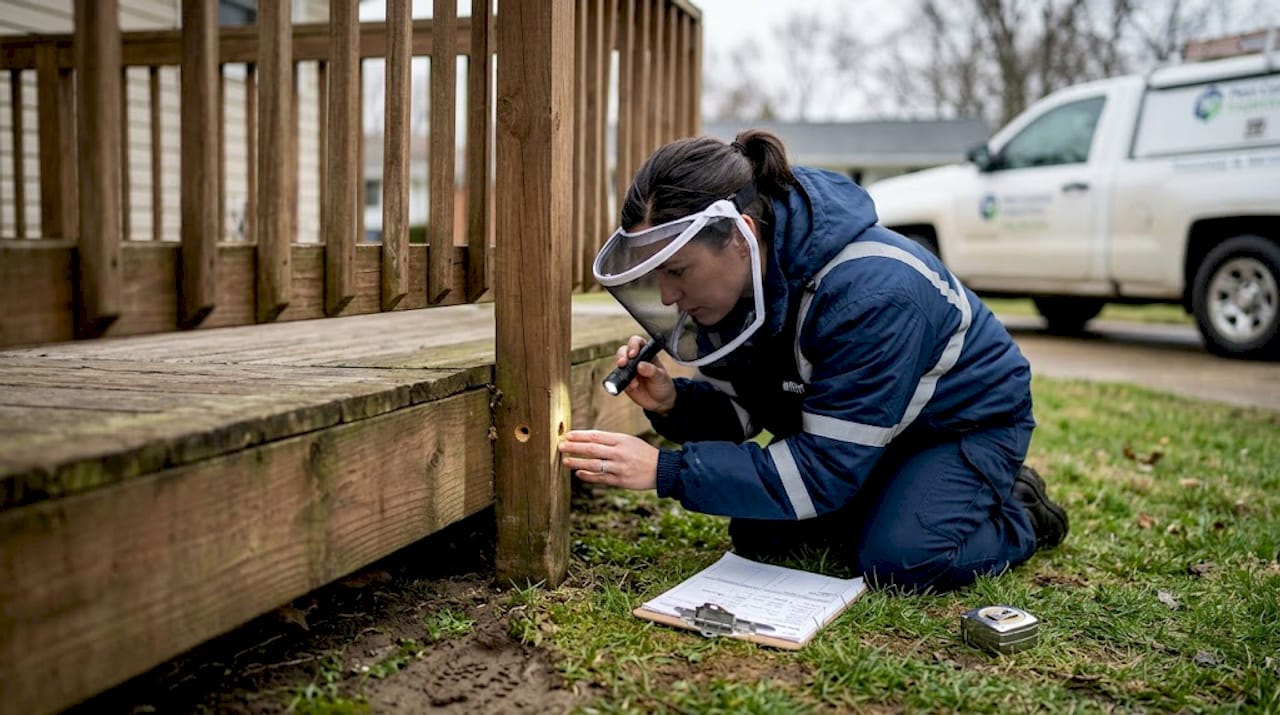
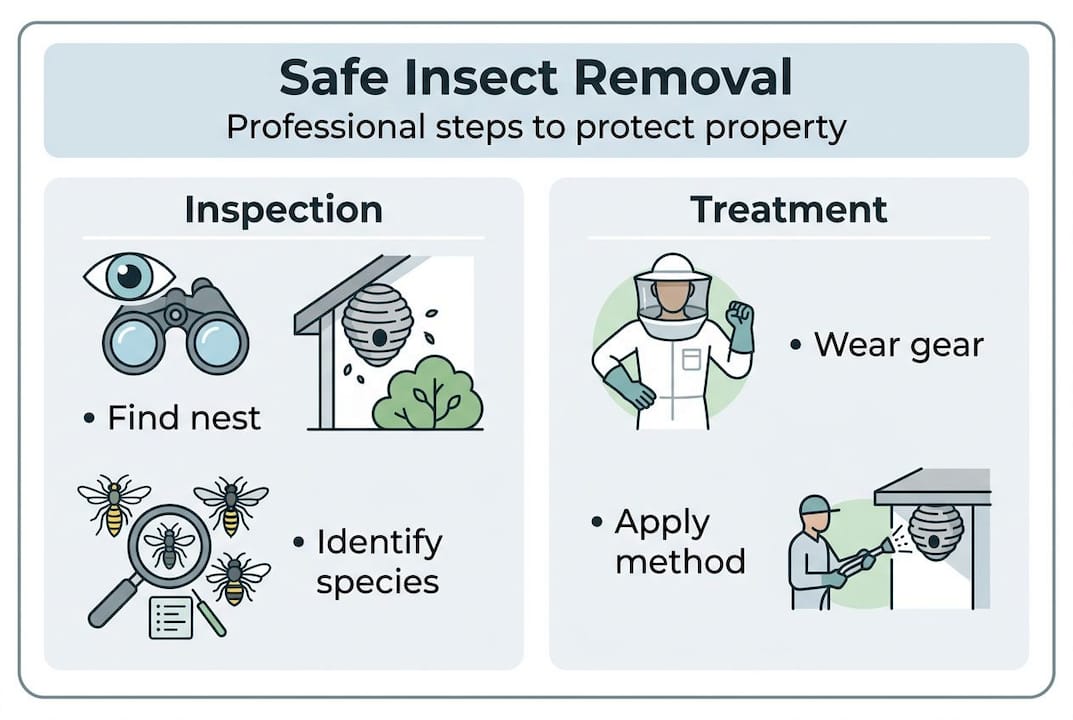
- Thorough inspection: Technicians identify the species, locate all active nests (including hidden ones inside walls or underground), and assess entry points.
- Protective gear: Full bee suits, gloves, and sealed footwear are standard. This isn’t optional equipment; it’s what makes safe removal possible.
- Targeted treatment: Professionals inspect, identify species, and apply targeted treatments suited to the nest location. Ground nests often require dust injection, while aerial nests may need foam or liquid insecticide applied directly.
- Entry point sealing: After removal, technicians seal gaps, cracks, and voids to prevent re-entry and new colony establishment.
- Follow-up visits: Many infestations require a second treatment to confirm full eradication, especially for large or mature colonies.
Here’s a comparison of treatment methods by nest type:
| Nest type | Location | Professional method |
|---|---|---|
| Aerial paper nest | Trees, eaves | Direct spray or foam treatment |
| Ground nest | Lawn, mulch beds | Dust injection into tunnel |
| Wall void nest | Inside walls | Drill-and-treat with residual dust |
| Attic nest | Roof spaces | Full inspection, foam, and sealing |
| Wood-boring damage | Decks, siding | Treatment plus wood repair guidance |
Pro Tip: Always ask your technician whether they are licensed by Ohio Dept of Natural Resources. Licensed professionals follow regulated treatment protocols that protect you, your family, and the surrounding environment.
For a full overview of what to expect, visit our professional stinging insect control page. If you’re unsure what species you’re dealing with, the Ohio pest identification resource can help narrow it down before your appointment.
When relocation is necessary, and the ethical considerations
Not every stinging insect situation calls for extermination. In fact, eliminating the wrong species can cause more harm than good, both ecologically and legally.
Honey bees and carpenter bees are often relocated rather than exterminated because of their critical role as pollinators. Honey bees support agriculture and native plant ecosystems. Destroying a colony unnecessarily is something most responsible pest professionals actively avoid.
Here’s how the decision breaks down:
| Species | Recommended action | Reason |
|---|---|---|
| Honey bees | Relocation by beekeeper | Protected pollinator, valuable colony |
| Carpenter bees | Relocation or deterrence | Pollinator role, structural damage concern |
| Yellowjackets | Elimination | Aggressive, no pollinator value |
| Bald-faced hornets | Elimination | High aggression, painful stings |
| Paper wasps | Elimination or removal | Moderate risk, limited pollinator value |
Aggressive wasps and hornets are typically eliminated due to the higher risk they pose to people and pets, while bee species are handled with preservation in mind whenever possible.
Seasonality also matters. Late summer is the peak period for stinging insect activity in Ohio, when colonies are at maximum size and food competition is high. This is when defensive behavior is most intense. Treatments are most effective at dawn or dusk, when insects are less active and more of the colony is present in the nest. Review your stinging insect treatment options to understand which approach fits your specific situation.
Signs it’s time to call the pros
Some situations are clear emergencies. Others build slowly until the problem is far bigger than it first appeared. Knowing the warning signs helps you act before the situation escalates.
Here are the most important indicators that professional removal is needed:
- You’ve found more than one nest on your property, which suggests multiple active colonies or a recurring entry point.
- You notice wood damage near your eaves, deck, or fence line, which is a strong sign of carpenter bee activity.
- You see a visible swarm or unusually high insect traffic near a specific area of your home or building.
- Children, pets, or allergic individuals are present on the property, which significantly raises the stakes of any sting.
- You can’t identify the species or locate the nest, which makes any DIY attempt genuinely dangerous.
- The infestation keeps coming back after previous removal attempts, indicating sealed entry points were missed.
Nests in attics and walls, carpenter bee damage, recurrence, and workplace liability all justify urgent professional intervention. Waiting rarely saves money. It usually costs more.
Pro Tip: If you operate a business with outdoor spaces, conduct a monthly perimeter walk during spring and summer. Catching a nest early, before it matures, makes removal faster and less disruptive to your operations.
For detailed pest removal safety tips tailored to Ohio properties, we’ve put together resources that walk you through what to watch for each season.
The real reason professional removal matters (and what most guides don’t tell you)
Most articles stop at “call a professional.” But here’s what that advice actually means in practice.
The biggest myth in stinging insect control is that a single spray treatment ends the problem. It doesn’t. Nests contain eggs, larvae, and in many cases secondary chambers that a surface treatment never reaches. The queen survives. The colony rebuilds. And the next generation is often more established than the first.
DIY attempts also carry hidden costs that rarely get discussed. Medical bills from sting reactions, structural repairs from untreated carpenter bee damage, and lost business days from a workplace incident all add up fast. The cost of a professional visit looks very different when you compare it against those outcomes.
Professional removal prioritizes safety for families and businesses, especially where allergies, children, and pets are involved. Trained technicians also spot secondary infestations and concealed entry points that most homeowners would never notice. That’s not a minor detail. It’s the difference between solving the problem once and dealing with it every season.
The professional pest control benefits go beyond the immediate removal. You get certainty, documentation, and a property that’s actually protected, not just temporarily quieter.
Get expert stinging insect control for your Ohio property
At Apex Pest Control, we’ve been protecting Ohio homes and businesses from stinging insects since 1969. Our licensed technicians handle everything from paper wasp nests under your eaves to yellowjacket colonies buried in your lawn. We offer free inspections and quotes so you know exactly what you’re dealing with before any work begins. Whether you need a one-time removal or ongoing seasonal protection, our stinging insect control services are built around your property’s specific needs. For a detailed look at what expert insect removal involves and how we approach each case, reach out today and let us take the worry off your plate.
Frequently asked questions
How fast should I get a nest removed after finding it?
Contact a professional as soon as you spot a nest near living areas. Prompt removal prevents rapid nest expansion and reduces the risk of aggressive stings from a maturing colony.
Are all stinging insects in Ohio dangerous?
Not equally. Honey bees are critical pollinators and mainly relocated, while yellowjackets and hornets are far more aggressive and typically require elimination.
Can I remove a small wasp nest myself?
DIY removal frequently fails and increases your sting risk because store-bought sprays agitate insects without fully destroying the nest or reaching the queen.
What time of year are stinging insects most active in Ohio?
Activity peaks in late summer when colonies are largest and most defensive, though nests can appear from spring through fall across Ohio.