



TL;DR:
- Ohio homes are prone to pest entry due to foundation shifting and seasonal gaps.
- Regular inspections and sealing entry points prevent larger infestations.
- Integrated pest management combines sealing, sanitation, and routine checks for effective control.
Most Ohio homeowners never notice the quarter-inch gap behind their dryer exhaust until they spot mouse droppings near the kitchen. That tiny opening is all it takes. Ohio’s freeze-thaw cycles crack foundations, shift siding, and create new gaps every single year, giving pests a constantly refreshed invitation into your home. The good news is that integrated pest management reduces both infestations and long-term costs when you address the source rather than just the symptoms. This guide walks you through exactly how to find, document, and seal the entry points pests use most.
Table of Contents
- Understanding pest entry points and their risks
- preparation: Tools and checklist for a thorough inspection
- Step-by-step guide: inspecting your home for pest entry points
- sealing and exclusion: preventing pests before they enter
- Why consistent inspections matter more than you think
- protect your home with expert pest control in Ohio
- frequently asked questions
Key Takeaways
| Point | Details |
|---|---|
| Routine inspections | Checking entry points seasonally prevents surprise infestations. |
| Seal and exclude | Simple caulking and weatherproofing block most pest intrusions. |
| Pro help for hidden issues | Professionals can spot and seal what DIY may miss with specialized tools. |
| Combine strategies | Pair exclusion with cleanliness and landscaping for maximum pest defense. |
Understanding pest entry points and their risks
A pest entry point is any gap, crack, hole, or seam in your home’s shell where an insect or rodent can squeeze through. You might picture a broken window, but the real culprits are usually smaller and harder to spot. Think about the space around a pipe coming through a basement wall, the gap where siding meets a door frame, or the crack in a poured concrete foundation that opened up over a cold winter.
Ohio’s climate makes this problem worse than in many other states. The ground heats up in summer and contracts in winter, which slowly shifts foundations over time. That movement creates new cracks and widens existing ones. Add in the humidity swings that warp wooden trim, and you have a home that is essentially working against itself every year.
Common pest entry points fall into a few predictable categories. Areas where wood meets soil, foundation cracks, and utility penetrations rank as the top vulnerabilities for Ohio homes. Here is what different pests use to get inside:
- Foundation cracks: Entry for mice, rats, ground beetles, and centipedes
- Gap at siding or trim: Common for wasps, carpenter bees, and spiders
- Open utility penetrations: Used by cockroaches, rodents, and occasionally snakes
- Door and window gaps: Moths, stink bugs, and boxelder bugs squeeze through here
- Wood-to-soil contact: Prime zone for termites and carpenter ant colonies
The real danger is that most homeowners react to a pest problem after they see bugs or evidence of rodents. By then, the infestation is already established. Good seasonal prevention starts with targeting the openings, not the critters that use them. An occasional pests guide can also help you identify which species are active in your region and when.
Pro tip: Walk around the base of your home and look for any spot where wood is touching the soil directly. That contact zone is the single biggest termite risk factor on most Ohio properties, and it is easy to fix by pulling mulch back six inches from the foundation.
preparation: Tools and checklist for a thorough inspection
Now that you know where and why pests get in, equip yourself for a thorough walkthrough. No professional experience required. What you do need is the right set of tools and a logical order to follow.
| Tool | Purpose | Cost range (approx.) |
|—|—|—|
| LED flashlight | See into dark corners and wall gaps | $10 to $25 |
| Small mirror | Check behind pipes and in tight angles | $5 to $15 |
| Work gloves | Protection from sharp edges and droppings | $8 to $20 |
| Interior/exterior caulk | On-the-spot sealing of small cracks | $6 to $14 |
| Steel wool | Block small holes before caulking | $4 to $10 |
| Phone or notepad | Document what you find | Free or low cost |
With tools in hand, follow this inspection checklist in order:
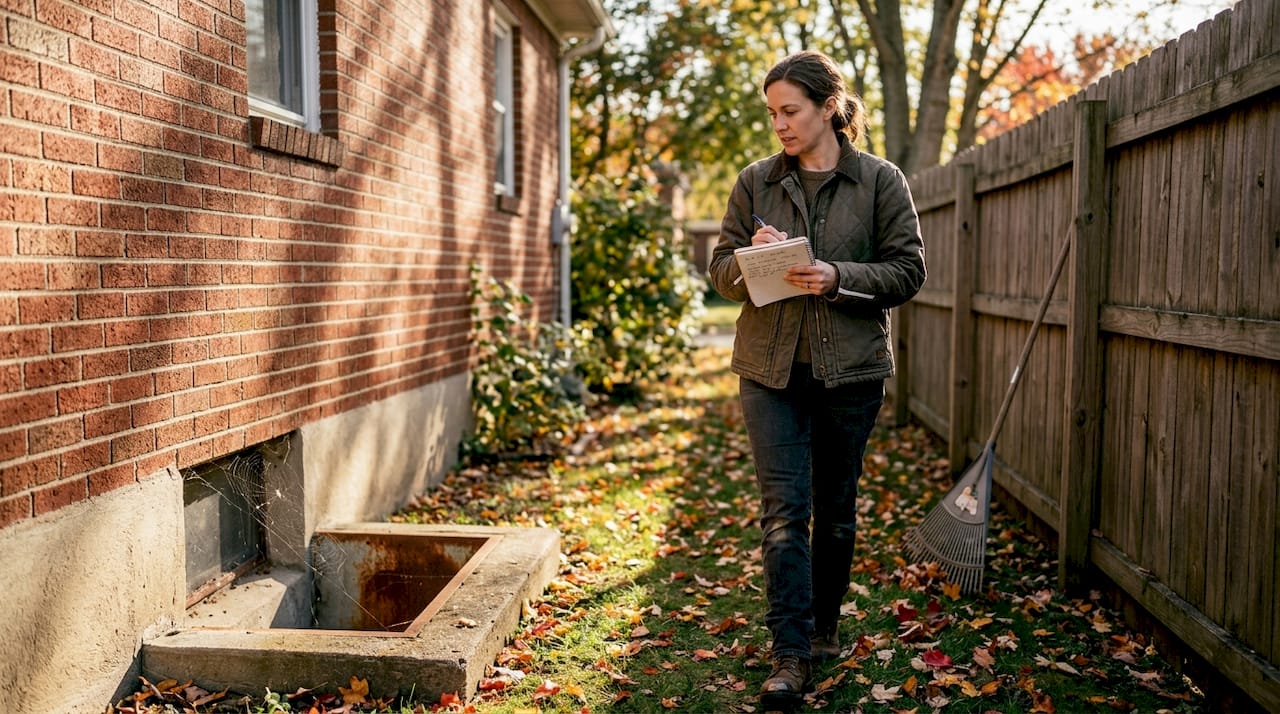
- Start at the foundation and look for cracks, gaps where pipes enter, and areas where soil is touching wood
- Move up the exterior walls checking siding seams, brick mortar, and where trim meets the wall surface
- Check all doors for gaps at the bottom, sides, and especially where the door frame meets siding
- Look at windows for gaps in weatherstripping, broken screens, and spaces in the corners of frames
- Check eaves and rooflines for missing or damaged soffit panels and gaps where fascia boards meet
- Find every utility entry: gas, electric, plumbing, cable, and dryer vents
Timing matters too. Spring and fall are the two most important seasons for inspections in Ohio. Essential pest control tips consistently point to these transition periods as the highest-risk windows for new pest entry. As reviewed exterior inspection checklists confirm, catching issues in early spring means you stop pests before they reproduce through summer.
DIY inspection works for most Ohio homes on a basic prevention level, but when you suspect hidden infestations, a professional brings tools and training that a flashlight simply cannot match.
Pro tip: Schedule your inspections for the first weekend of April and the first weekend of October. Mark them in your calendar now so they become a habit rather than an afterthought.
Step-by-step guide: inspecting your home for pest entry points
Armed with your tools and checklist, it’s time to conduct a hands-on, room-by-room inspection. Move through the home in a systematic way so nothing gets missed.
- Do an exterior walkaround first. Start from the front of the home and circle it completely, staying low to check the foundation before looking up at eaves.
- Check the foundation thoroughly. Use your flashlight to look for hairline cracks and any gaps where utilities enter the basement wall.
- Test every exterior door. Close the door and look for light coming through at the bottom or sides. If you see light, bugs can get through.
- Check windows and screens. Push on screens gently to test their tension. Look at frame corners where gaps often form as wood expands and contracts.
- Look at utility entries. Every spot where a pipe, wire, or cable enters your home should be sealed with caulk or foam. Note anything that is not sealed.
- Check the attic and basement last. These spaces often show signs of existing entry because they connect to exterior walls and the roofline.
Safety first: Always wear gloves when reaching into dark gaps or corners. Never climb onto a roof without the right equipment and a stable ladder. If any area feels unsafe to access, skip it and flag it for a professional.
Ohio homes benefit from quarterly inspections, especially after foundation movement from freeze-thaw cycles. Use a fall pest prevention guide to check off season-specific risks and a full review of seasonal pest threats to know what you are watching for each quarter.
| What DIY inspections catch | What professionals find |
|—|—|
| Surface cracks, visible gaps | Hidden voids inside walls |
| Missing weatherstripping | Entry points behind insulation |
| Open utility holes | Activity under slab or in crawl spaces |
| Sign of droppings or gnaw marks | Early-stage infestations via thermal imaging |
If you find active signs of pests during inspection, like fresh droppings, nesting material, or live insects near a gap, do not just seal the opening. Call a professional before sealing so you do not trap an active colony inside your walls.
sealing and exclusion: preventing pests before they enter
Once vulnerabilities are mapped, proactive prevention is your next smart move. This is where inspection findings turn into lasting protection.
Start with the most impactful fixes first:
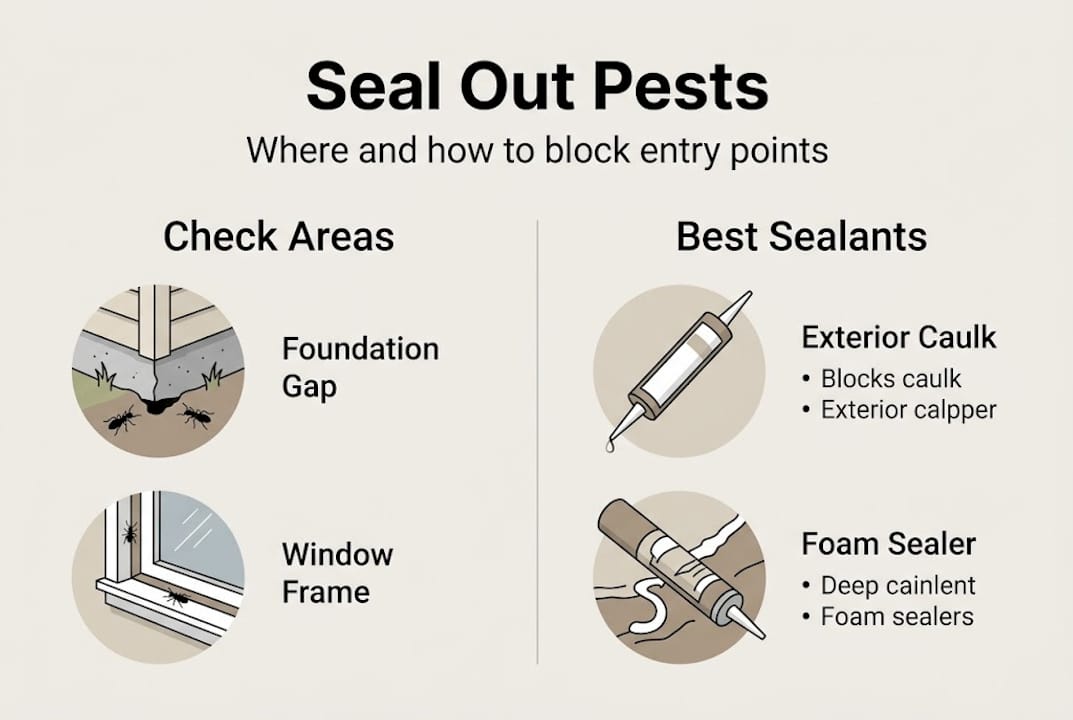
- Apply exterior-grade caulk to any crack wider than the thickness of a credit card
- Push steel wool into holes before caulking because rodents cannot chew through it
- Install door sweeps on all exterior doors, including the garage door
- Replace torn or loose weatherstripping around windows and door frames
- Cover dryer vents with a louvered cap that closes when not in use
“Physical exclusion addresses root cause more permanently than barrier sprays, and combining it with sanitation prevents recurring problems.”
The benefits of exclusion go well beyond just blocking a single pest. When you close the openings, you cut off pathways for every species at once. For landscape pest proofing, keep mulch and wood debris away from the foundation, trim shrubs so they do not touch the siding, and eliminate any standing water within 10 feet of the structure.
Sanitation and landscaping practices that pair well with sealing include:
- Store firewood at least 20 feet from the home and off the ground
- Keep trash cans sealed with lids that lock
- Use airtight containers for pet food and pantry staples
- Fix leaky outdoor faucets because moisture draws pests in fast
- Clear leaf litter from window wells and basement stairwells
For families with kids or pets, look for silicone-based caulks and foam sealers labeled as non-toxic once cured. These are widely available at hardware stores and perform just as well as traditional options. Year-round pest protection for Ohio homes depends on layering exclusion with these sanitation habits together.
Pro tip: After any major storm or temperature drop below freezing, walk the perimeter and check your seals. Cold snaps are when foundation cracks open up the most and when pests are most motivated to move indoors.
Why consistent inspections matter more than you think
Here is the uncomfortable truth about pest control in Ohio: most homeowners spend hundreds of dollars reacting to problems that a 15-minute monthly walk around the house could have prevented. We see it constantly. A homeowner calls about a rodent problem in January, and when we trace it back, the entry point has been there since the previous spring. The crack was there. The gap was visible. But nobody checked.
The common mistake is treating pest control like a one-time fix. You spray for wasps in August and think the job is done. But exclusion is not a single event. It is an ongoing relationship with your home’s exterior. A regular inspection habit beats a once-a-year blitz every time because small issues get caught before they become infestations.
Paired with IPM principles, this routine is genuinely the most cost-effective approach we know. You are not fighting pests. You are making your home an unattractive, inaccessible target. That shift in mindset is what separates homeowners who rarely need extermination services from those who call us every summer.
protect your home with expert pest control in Ohio
If your inspection turns up more than you can handle on your own, or if you want a professional set of eyes on your home’s vulnerabilities, we are here to help. At rodent pest extermination and across all pest categories, our team has been serving Ohio homeowners since 1969 with treatments built around your family’s safety. Our professional exclusion services go beyond surface fixes to find and seal the entry points that are hardest to see. Take what you learned from your own walkthrough and let us verify the rest. Get a free inspection quote today and find out exactly what your home is up against.
frequently asked questions
How often should I inspect for pest entry points in my Ohio home?
Inspect foundation, doors, and utility entries at least every season and after major weather events. Ohio’s foundation settling makes quarterly professional checks especially valuable for older homes.
Are DIY pest entry inspections effective, or should I hire a professional?
DIY catches most surface-level issues and works well for routine prevention. For complex or hidden infestations, pros handle hidden entry points that basic tools miss.
Which materials best seal pest entry points around a home?
Use exterior caulk for cracks, weatherstripping for windows, and door sweeps for all exterior doors. Physical exclusion materials are more permanent than spray treatments alone.
What signs indicate pests are already getting inside?
Look for droppings near walls, gnaw marks on trim, nesting materials in dark corners, and visible pest activity near known entry points, which all signal an established problem needing immediate action.
How does integrated pest management (IPM) help with entry prevention?
IPM combines sealing, sanitation, and routine inspections into a system that reduces infestations without over-relying on chemicals. IPM costs significantly less long-term than reactive extermination treatments.