



TL;DR:
- Effective pest control in Northfield, Ohio requires licensed professionals due to regional climate and pest biology. DIY methods suit minor issues, but persistent infestations demand expert treatment with accountability and safety standards. Choosing licensed providers ensures effective, legal, and environmentally responsible pest management for homes and businesses.
Not every pest control service delivers the same results, and in Northfield, Ohio, that difference can cost you thousands of dollars or put your family’s health at serious risk. Many homeowners and business owners assume that a can of spray from the hardware store or a quick call to any exterminator will solve the problem. The reality is far more nuanced. Ohio’s regulatory environment, regional climate patterns, and the biology of local pests all shape what effective pest management looks like here. This guide walks you through everything you need to know to make a smart, safe, and legally informed decision.
Table of Contents
- Why pest control matters in Northfield, Ohio
- Understanding regulated pest control: licensing and safety standards
- Comparing pest control options: DIY, professional, and eco-friendly approaches
- What to expect: pest control process for homes and businesses
- Our expert take: why choosing a licensed Northfield provider is non-negotiable
- Take the next step with professional pest control in Northfield
- Frequently asked questions
Key Takeaways
| Point | Details |
|---|---|
| Licensing is essential | Ohio mandates that all pest control providers be state-licensed, ensuring protection and quality for customers. |
| Know your options | Compare DIY, professional, and eco-friendly approaches to pick the pest control method that fits your needs best. |
| Choose reputable services | Always verify a pest control company’s license before hiring and prioritize firms with regulated, transparent practices. |
| Understand the process | A reputable pest control service will walk you through inspection, assessment, treatment, and follow-up. |
| Act quickly | Prompt action helps prevent minor pest problems from becoming costly infestations. |
Why pest control matters in Northfield, Ohio
Pest problems in Northfield are not just a nuisance. They carry real financial and health consequences that compound quickly when left unaddressed. A single rodent infestation can chew through electrical wiring, insulation, and structural materials, with repair bills easily reaching $3,000 to $10,000 or more. For businesses, the stakes go even higher. Restaurants, warehouses, and retail spaces face inventory loss, health code violations, and reputational damage that can drive customers away permanently.
Understanding Ohio pest infestation basics is a good starting point for any property owner in Northfield. The pests most commonly reported in this area include:
- Ants (especially carpenter ants and odorous house ants), which can invade through tiny gaps in foundations and siding
- Rodents (mice and Norway rats), particularly active during Ohio’s cold winters when they seek warmth indoors
- Bed bugs, which have resurged nationwide and spread easily in multi-unit housing and hospitality settings
- Cockroaches, which thrive in humid basements and commercial kitchens
- Stinging insects such as wasps and yellow jackets, which pose real health risks during Ohio’s warmer months
Ohio’s climate plays a significant role in pest pressure. Northfield sits in a region that experiences humid summers and cold winters. That seasonal swing forces pests like rodents and cockroaches indoors during fall and winter, while warm, wet summers accelerate ant colony growth and boost mosquito populations. These patterns are predictable, which means proactive pest management is far more cost-effective than reactive treatment.
State regulation matters. Ohio requires licensed pesticide businesses for pest control, giving consumers a legal safeguard when hiring a provider. Working with an unlicensed operator leaves you exposed with no legal recourse if something goes wrong.
When you need to find a local pest control provider in the Northfield area, start with the state’s verified directory rather than relying solely on online reviews or word of mouth.
Understanding regulated pest control: licensing and safety standards
Ohio does not leave pest control to chance. The state requires any business applying pesticides professionally to hold a valid license through the Ohio Department of Agriculture. This is not a formality. Licensing means the technician treating your home or commercial property has passed state-approved training, knows how to handle hazardous chemicals safely, and carries proper insurance coverage.
Here is what a properly licensed pest control company in Ohio must demonstrate:
- Certified applicators on staff who have passed state examinations covering pest identification, pesticide chemistry, and safe application methods
- Active business registration in the Ohio Department of Agriculture’s online directory, updated regularly
- Liability insurance to cover any accidental damage or health incidents during treatment
- Compliance with label laws, meaning every pesticide used must be applied strictly according to its federally approved label instructions
- Continuing education requirements to keep up with new pest pressures, chemical regulations, and application technology
These requirements exist because improper pesticide use creates genuine dangers. Misapplied chemicals can contaminate groundwater, harm pets, trigger asthma attacks, and leave toxic residues on surfaces where children play. A licensed provider is accountable to the state, which is a layer of protection that no unlicensed handyman or DIY approach can offer.
For property managers and landlords, Ohio’s licensing framework is especially important. Read through smart pest control tips for Ohio multi-family properties to understand how licensing requirements affect your responsibilities as a property owner.
Pro Tip: Before scheduling any service, visit the Ohio Department of Agriculture pest business search and enter the company’s name. Confirm their license is current and covers the type of pest control you need. This takes under two minutes and protects you legally.
Comparing pest control options: DIY, professional, and eco-friendly approaches
Once you understand the regulatory landscape, the next step is figuring out which type of pest control service actually fits your situation. The three main approaches each have a legitimate role, but they are not interchangeable.
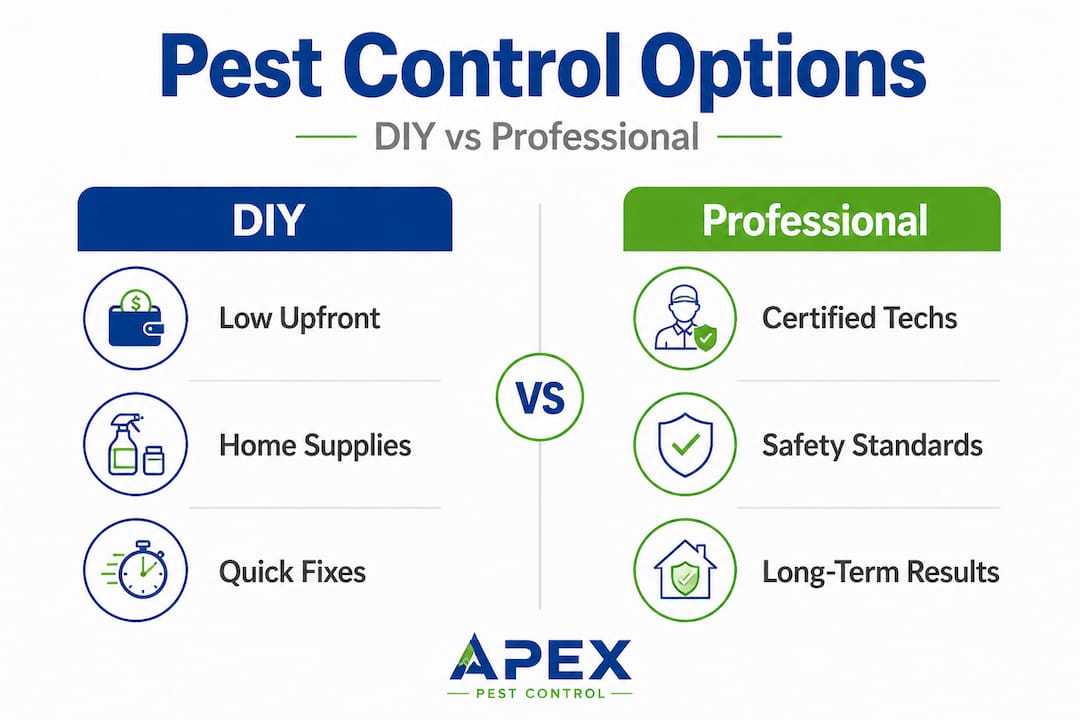
| Feature | DIY | Professional | Eco-friendly |
|---|---|---|---|
| Upfront cost | Low ($10 to $50) | Moderate to high ($100 to $500+) | Moderate ($150 to $400+) |
| Effectiveness | Low for moderate infestations | High across most pest types | Moderate to high for many pests |
| Safety for kids and pets | Variable (user dependent) | High (regulated application) | Very high (lower-toxicity products) |
| Legal compliance | Not required | State license required | State license required |
| Long-term prevention | Minimal | Strong, with follow-up programs | Strong, with habitat modification |
| Best for | Minor, isolated issues | Persistent or large infestations | Sensitive households or properties |
When DIY is enough: If you spot a handful of ants near a doorframe or find a single mouse entry point you can seal yourself, a targeted DIY response can work. Bait stations, caulk, and over-the-counter ant traps handle low-level, localized issues reasonably well.
When you need a licensed professional: Bed bug infestations, rodent colonies inside walls, or recurring cockroach problems in a commercial kitchen require professional-grade treatment. The Ohio pest business directory confirms that providers in Cuyahoga and Summit counties near Northfield must meet strict standards before treating these types of infestations. Professional services also come with follow-up visits, which are essential for pests that require multiple treatment cycles.
The case for eco-friendly options: Eco-friendly pest control in Ohio has grown significantly as homeowners with young children, pets, or allergies look for lower-toxicity alternatives. These approaches often rely on botanical insecticides, physical exclusion techniques, and habitat modification rather than synthetic chemicals. They are not always slower or less effective. For certain pest types, they outperform conventional treatments while leaving a lighter footprint.
A few situations where eco-friendly is the smarter call:
- Households with infants or toddlers who spend time on floors
- Organic farms or gardens adjacent to residential properties
- Commercial food-handling facilities where synthetic pesticide residues are a regulatory concern
- Properties near wetlands or water sources, where chemical runoff could cause environmental damage
For more tactical guidance, explore these expert pest control tips to match your specific pest problem with the right level of intervention.
What to expect: pest control process for homes and businesses
Knowing what professional pest control looks like from start to finish helps you ask better questions and hold your provider accountable. Reputable companies in Northfield follow a structured process whether they are treating a single-family home or a commercial warehouse.
Standard steps in a professional treatment:
- Initial inspection to identify pest species, entry points, nesting sites, and the scope of infestation
- Written assessment outlining findings, recommended treatments, and expected outcomes
- Treatment application using products appropriate for the pest, property type, and occupancy
- Follow-up visit to verify effectiveness, retreating if necessary
- Prevention consultation covering exclusion techniques, sanitation improvements, and monitoring strategies
The process looks somewhat different depending on whether the property is residential or commercial:
| Aspect | Residential | Commercial |
|---|---|---|
| Scheduling | Flexible, often evenings or weekends | Off-hours to minimize business disruption |
| Documentation | Basic service report | Detailed logs for health code compliance |
| Chemical selection | Family and pet-safe formulas prioritized | Industry-specific products (e.g., food-safe for restaurants) |
| Regulatory reporting | Not typically required | Often required for health inspections |
| Follow-up frequency | Quarterly or seasonally | Monthly or as required by license/inspection schedule |
Business owners in greater Cleveland can also explore Cleveland pest control options for location-specific service guidance. Providers working near Northfield are also familiar with Summit and Cuyahoga county regulations, which affect commercial treatment protocols.
Pro Tip: Before your technician arrives, clear clutter from baseboards, move furniture away from walls in problem areas, and empty under-sink cabinets. This simple prep work gives the applicator better access and significantly improves treatment results. A treatment that cannot reach nesting sites is a treatment that will not work.
Staying engaged throughout the process also helps. Ask your technician to explain what they are applying, why, and what to expect in the days after treatment. A licensed provider will answer those questions clearly and document everything.
Our expert take: why choosing a licensed Northfield provider is non-negotiable
After decades of serving Ohio homeowners and businesses, we have seen a pattern that most pest control articles skip right past. The customers who call us most frustrated are rarely dealing with an unusual pest or a complicated property. They are dealing with the aftermath of cutting corners.
The story usually sounds the same. A homeowner or business manager tried to save money by hiring someone who was not verified through the state or by treating a major infestation themselves. The pest problem either persisted, got worse, or came with a new problem such as stained surfaces, sickened pets, or chemical odors that lasted for weeks. Now they need corrective treatment on top of the original problem, which costs more than the licensed solution would have from the start.
Here is what most people miss: the price tag on a licensed service is not just for pesticides and labor. You are paying for accountability, legal standing, and decades of applied knowledge. If something goes wrong with a licensed provider, you have legal recourse. You can file a complaint with the Ohio Department of Agriculture and expect a documented response. With an unlicensed operator, you have nothing.
There is also a longer game to consider. Pests are not random. They exploit specific vulnerabilities in your property, whether that is a gap in the foundation, poor moisture control in a crawl space, or a structural flaw that attracts carpenter ants. A licensed technician identifies those vulnerabilities and gives you a prevention roadmap. That kind of advice protects your property value and your health for years, not just the week after treatment.
We built Apex Pest Control on the belief that doing the job right the first time is always less expensive than fixing someone else’s shortcuts. That has been true since 1969, and nothing in the pest control landscape has changed it.
Take the next step with professional pest control in Northfield
You now have a clear picture of what effective pest control in Northfield actually requires. The next move is putting that knowledge to work. Whether you are dealing with rodents gnawing through your walls, bed bugs spreading through a rental property, or ants that keep coming back no matter what you try, the right licensed provider makes all the difference. Learn more about how to get rid of rodents with proven removal methods, or review our residential pest control guide to understand the full scope of what professional service covers. Apex Pest Control has served Ohio homeowners and businesses since 1969 with licensed, safe, and effective solutions. Call us today for a free quote and let’s solve the problem the right way.
Frequently asked questions
Are all pest control companies in Northfield, Ohio licensed?
Not necessarily. While Ohio requires licensed pesticide businesses for all commercial pest control work, it is always smart to verify a specific company’s current status through the state directory before hiring.
What pests are most common in Northfield homes and businesses?
Ants, rodents, and bed bugs top the list in Northfield, with cockroaches and stinging insects also frequent problems, especially in commercial properties and multi-unit housing.
How do I verify a pest control business is properly licensed in Ohio?
Go directly to the Ohio Department of Agriculture’s pest business search tool and search by company name to confirm their license is active and covers your type of pest control need.
Should I choose DIY, professional, or eco-friendly pest control?
Minor, isolated pest issues can often be handled with DIY products, but persistent infestations or serious pest activity require a licensed professional. Eco-friendly services are an excellent choice for households with children, pets, or sensitivity concerns while still delivering strong results.