



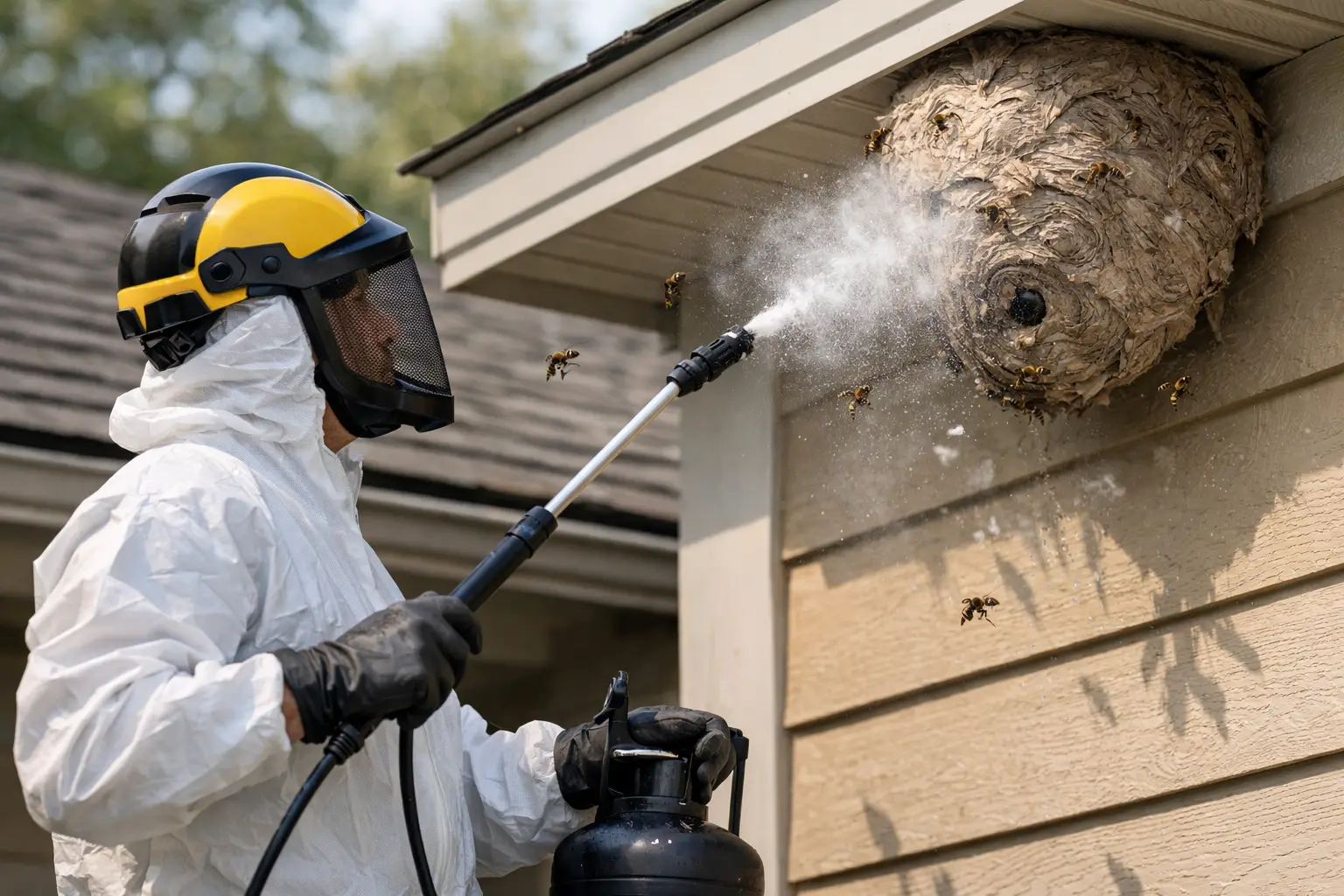
A wasp nest near a front door, loading dock, attic vent, or play area changes the day fast. What starts as an occasional insect sighting can turn into a safety problem when wasps become protective of an active nest. A professional wasp nest removal service helps control that risk quickly, with the right equipment, proper treatment methods, and a plan to reduce the chance of return.
When a wasp nest becomes a real hazard
Not every flying insect around a building means there is a nest on site, but repeated wasp traffic usually points to one nearby. You may notice wasps entering a soffit gap, gathering under eaves, circling rooflines, or moving in and out of shrubs, wall voids, sheds, or playground equipment. In commercial settings, nests often develop around dumpster enclosures, signage, exterior lighting, and roof access points.
The danger is not just the sting itself. The real issue is proximity to people and the likelihood of disturbing the colony. A nest tucked behind shutters may go unnoticed until landscaping, maintenance work, or even opening a window triggers aggressive behavior. For households with children, pets, older adults, or anyone with sting sensitivity, that risk becomes more serious. For businesses, the concern expands to employee safety, customer experience, and liability.
This is where professional treatment matters. Wasps defend nests differently than many other pests. A partial knockdown or poorly timed spray can increase activity and make the site more dangerous for anyone nearby.
Why DIY often makes the problem worse
Store-bought aerosol products can look simple, but real nest conditions are rarely simple. Some nests are fully exposed and easy to spot. Others are hidden inside walls, above ceilings, under siding, or behind fascia boards. Spraying the visible entry point does not always eliminate the colony, and if the nest is concealed, it may leave active wasps inside the structure.
Timing also matters. Wasps are less active during certain parts of the day, but treatment decisions depend on species behavior, nest location, building layout, and how close the nest is to occupied space. A technician evaluates those factors before treatment begins. That reduces the chance of scattering the colony or leaving behind active pockets of infestation.
There is also a safety issue with ladders, roof edges, and enclosed voids. Many stinging insect incidents happen when property owners try to handle nests in elevated or concealed areas without protective gear. The nest itself is one problem. Accessing it safely is another.
What a professional wasp nest removal service includes
A reliable wasp nest removal service begins with identification and inspection, not just spraying. Different stinging insects behave differently, and treatment should match the species and site conditions. Paper wasps, yellowjackets, and hornets can all be described casually as wasps, but they do not build nests in the same places or respond the same way to disturbance.
During inspection, a technician looks for flight patterns, entry points, nest size, nesting materials, and signs of multiple activity zones. That matters because some properties have more than one nest, especially during peak season. In a commercial environment, the inspection may also extend to high-traffic areas, delivery zones, outdoor seating, and utility penetrations where future nesting is likely.
Treatment usually involves direct application to the nest or targeted material placement in nesting voids, followed by removal when appropriate. In some cases, full physical removal is possible and beneficial. In others, especially when nests are in difficult structural spaces, the priority is eliminating activity safely first. The right approach depends on access, colony development, and the risk of driving insects deeper into the building envelope.
Good service does not stop at removal. It should also address why the nesting site was attractive in the first place. Gaps around siding, soffits, vents, roof intersections, and exterior penetrations often create the sheltered conditions wasps prefer. If those conditions remain, another queen may choose the same area in the next cycle.
Wasp nest removal service for homes
At a home, wasp pressure tends to become personal very quickly. Families stop using decks, kids avoid the yard, pets start chasing insects, and simple routines like taking out the trash or checking the mail feel risky. A fast response matters because nests usually do not stay small for long.
The treatment plan should fit the layout of the property. A single exposed nest under an eave calls for a different approach than recurring activity in a wall void or garage peak. Homes with mature landscaping, detached structures, or previous stinging insect problems often need a broader exterior review to locate hidden nesting sites before they become larger problems.
Safety is usually the deciding factor for homeowners. If a nest is close to a front entrance, near HVAC equipment, around attic vents, or beside an outdoor living area, it is not something to watch and wait on. Professional removal gives the home back to the people using it.
Wasp nest removal service for commercial properties
Commercial properties face a different level of exposure. A nest near a service entrance may disrupt deliveries. A nest by customer doors or outdoor seating can create complaints, injury concerns, and reputational damage. In facilities with regular inspections or compliance requirements, visible pest activity also raises operational questions.
A commercial wasp nest removal service should account for traffic flow, building use, and documentation needs. Treatment may need to be scheduled around operating hours or coordinated with site contacts to limit disruption. In larger properties, the concern is not only removing one nest but identifying recurring problem zones and building a preventive response into the broader pest management plan.
This is especially relevant for apartments, retail centers, schools, healthcare sites, warehouses, food-related facilities, and multi-building campuses. One untreated nest can affect more than one tenant, department, or access route. A scalable service model matters when the goal is not just quick elimination but ongoing control.
Signs you should call right away
Some situations should not be delayed. If wasps are entering a wall, ceiling, attic space, or other concealed void, treatment should happen before colony activity expands deeper into the structure. The same is true if people have already been stung, if the nest is close to a main entrance, or if maintenance staff cannot safely access the area.
An increase in wasp activity indoors is another warning sign. That can indicate a nest in a wall void, especially when insects appear near windows or light fixtures. At that point, do-it-yourself treatment is more likely to complicate the problem than solve it.
In Ohio, seasonal activity can escalate quickly during warmer months, and nests that seem minor early in the season can become much more defensive later. Acting early usually means a simpler, safer treatment process.
Preventing the next nest
No company can promise that stinging insects will never appear again outdoors, but prevention can reduce repeat pressure. The best results come from pairing removal with a property-specific prevention strategy.
That may include sealing likely entry gaps, correcting attractive harborage points, reducing sheltered nesting opportunities, and monitoring high-risk areas during peak season. On commercial sites, routine exterior inspection is often the difference between finding a new nest early and dealing with a larger issue after complaints start. On residential properties, seasonal service can help identify developing pest pressure before it affects daily life.
Apex Pest Control approaches stinging insect issues with that bigger picture in mind. Effective service is not just about knocking down visible activity. It is about protecting people, reducing repeat problems, and treating the property with the level of care the situation requires.
Choosing a provider with the right experience
When you are comparing providers, speed matters, but so does judgment. The right company should be able to identify the insect correctly, explain the treatment approach clearly, and handle both immediate control and practical prevention. That is especially important when nests are concealed, the property has multiple structures, or the site needs ongoing support.
Experience also shows up in how the service is delivered. Clear communication, safe application methods, trained technicians, and reliable follow-up all matter when the issue involves stinging insects around occupied spaces. The lowest-effort treatment is not always the treatment that solves the problem.
If wasps are claiming part of your home or business, the safest next step is to treat it like the urgent pest issue it is. Fast, professional action protects more than the structure. It protects the people who need to use it without second-guessing every doorway, roofline, or corner of the property.