



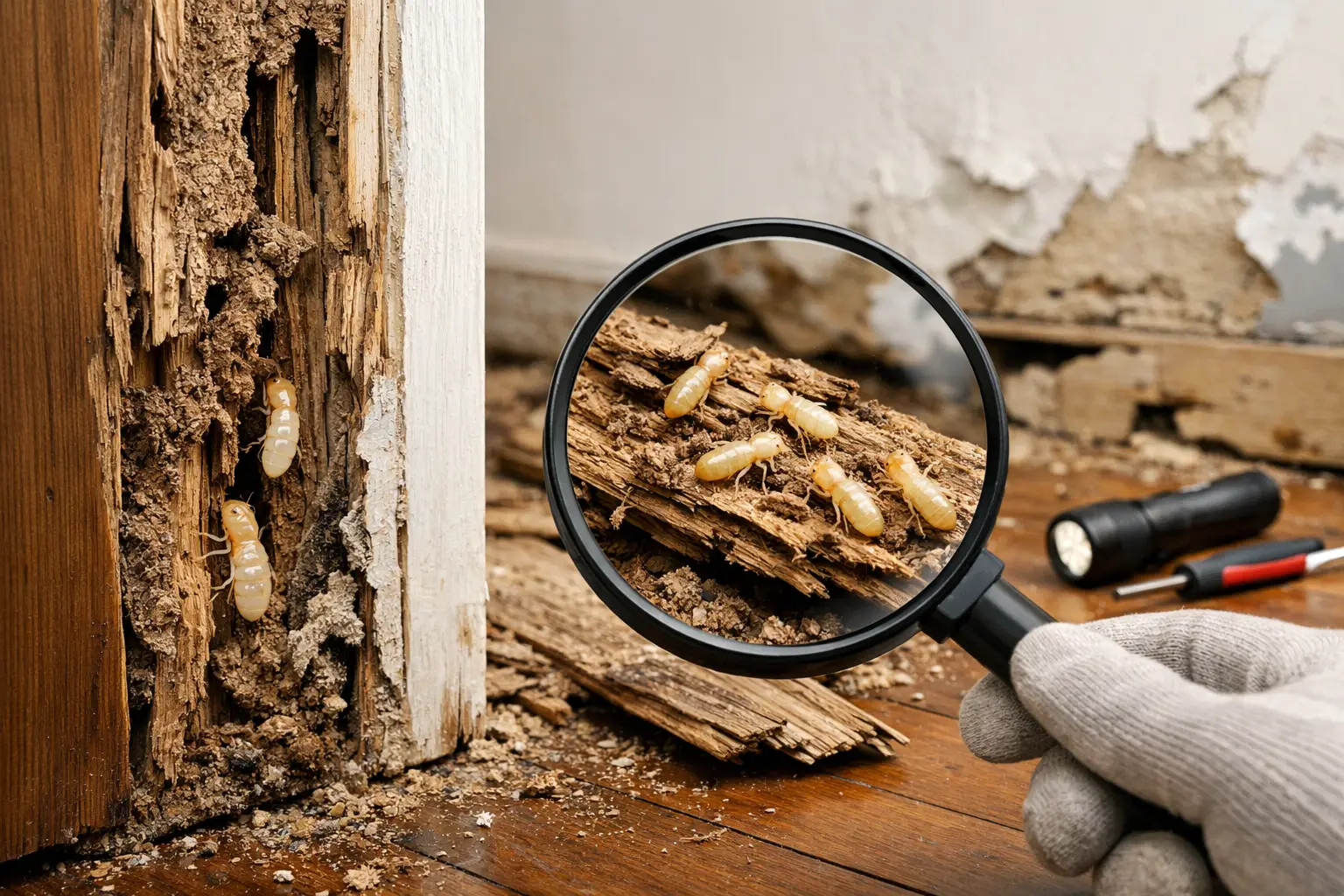
Termite problems rarely announce themselves with a dramatic moment. More often, a homeowner notices a door that suddenly sticks, paint that looks oddly bubbled, or a section of trim that sounds hollow when tapped. Those small changes are often the top signs of termite damage, and catching them early can make the difference between a targeted treatment and major structural repairs.
Termites work from the inside out. That is what makes them so costly. By the time visible damage appears, they may have been feeding behind walls, under floors, or inside support members for months. For homes and commercial properties in Ohio, that means routine attention matters, especially anywhere moisture, wood, and soil come together.
Top signs of termite damage to watch for
The most common sign is wood that sounds hollow or papery when you tap it. Termites consume wood along the grain and often leave a thin outer layer in place. From the surface, trim, baseboards, window frames, or flooring may still look intact. Underneath, the wood can be heavily compromised.
Another frequent warning sign is blistering or uneven paint. This is easy to mistake for ordinary water damage, and sometimes it is. But when termites tunnel close to the surface, they can create areas that appear swollen, bubbled, or slightly sunken. If that paint change appears alongside soft wood or small pinholes, it deserves closer inspection.
Buckling floors are another red flag. Termite activity can weaken subflooring and supports, causing sections of the floor to shift, sag, or feel unstable. In a commercial setting, this may show up as warped flooring near walls, loading areas, or utility spaces. In a home, it often appears near kitchens, bathrooms, or exterior walls where moisture is already present.
Doors and windows that suddenly become hard to open can also point to termite damage. As termites feed, they introduce moisture and weaken the surrounding wood. Frames may swell slightly or lose their shape, making a once-smooth door or window feel tight and misaligned. That symptom has many possible causes, so it should not be treated as proof by itself. Still, it is one of the more overlooked early clues.
Mud tubes, wings, and what they usually mean
Subterranean termites, which are the most common termite threat in many parts of the US, build mud tubes to travel between soil and wood while staying protected from air and light. These tubes often appear on foundation walls, crawl space supports, basement surfaces, and slab penetrations. They look like narrow brown veins made of dirt.
Mud tubes are one of the clearest signs that active termites may be present. If you break one open and see cream-colored insects inside, that is a strong indicator of ongoing activity. Even if the tube appears old or empty, it should still be inspected. Termites often rebuild and reuse travel routes.
You may also notice discarded wings near windowsills, door frames, garages, or light sources. Swarming termites shed their wings after finding a place to establish a new colony. People often confuse them with flying ants. The difference matters, but the practical takeaway is simple – if you find small piles of equal-sized wings indoors, schedule a professional inspection promptly.
Where termite damage usually shows up first
Termites do not always attack the most visible parts of a property first. They tend to enter where conditions favor concealment and moisture. That is why crawl spaces, basements, sill plates, joists, utility entry points, wooden steps, deck connections, and attached garages often deserve the closest attention.
Bathrooms, laundry rooms, and kitchens can also reveal damage sooner because plumbing moisture attracts termites and softens wood. Around commercial facilities, vulnerable areas may include storage rooms, receiving areas, utility chases, expansion joints, and landscaping that brings wood or mulch too close to the building.
Outside, inspect wood that contacts soil directly. Fence posts, porch supports, siding near grade level, and door frames near patios are common problem spots. Tree stumps, scrap lumber, and cellulose debris near the structure do not prove an infestation inside the building, but they can increase risk and should not be ignored.
Termite damage vs. water damage
One reason termite activity goes unnoticed is that it often looks like something else. Water damage and termite damage can both cause blistered paint, darkened wood, sagging surfaces, and soft spots. The difference usually comes down to patterns.
Water damage often leaves staining, visible moisture marks, or areas of rot that crumble irregularly. Termite damage is more likely to follow the grain of the wood and leave behind a layered or honeycombed interior. In many cases, both issues exist together. Moisture problems attract termites, and termites take advantage of already vulnerable wood.
That is why guessing can be expensive. Repainting over a bubbled section or replacing one board without finding the source may allow the infestation to continue hidden in adjacent materials.
What active termite damage can sound and feel like
Not every sign is visual. Sometimes a property owner notices a faint clicking in the wall, especially in quiet conditions. Soldier termites can create noise when disturbed, and large colonies may produce subtle rustling sounds as they move within wood.
More often, people notice the feel of damaged materials before they see clear evidence. A baseboard may give slightly under pressure. A wood frame may feel thin or brittle when probed. Laminate or hardwood flooring may seem spongy in one area. None of these symptoms confirm termites alone, but together they form a pattern that should not wait.
Why early action matters
Termites do not rest seasonally in the way many people assume. While swarm activity is often associated with warmer periods, colonies can remain active year-round inside protected environments. The longer they feed, the more expensive the repair path becomes.
There is also a business continuity issue for commercial properties. A termite problem can affect tenant satisfaction, maintenance budgets, renovation timelines, and audit readiness, especially in facilities where documentation and property condition matter. For homeowners, the concern is more immediate and personal – protecting structural integrity, preserving property value, and avoiding avoidable repair costs.
When to call for a professional inspection
If you see mud tubes, discarded wings, hollow-sounding wood, or unexplained blistering around wooden elements, do not wait for broader damage. A professional termite inspection should include the full structure, not just the visibly affected area. Termites often spread beyond where the first symptom appears.
This is one of those situations where a do-it-yourself approach has real limits. Store-bought products may kill visible insects, but they rarely address the colony, entry conditions, and hidden pathways that allowed the infestation to take hold. Effective termite control depends on identifying the species, the extent of activity, structural vulnerabilities, and the right treatment strategy for the property.
For Ohio property owners, seasonal moisture shifts, foundation details, and landscaping conditions can all affect termite pressure. An experienced provider can separate cosmetic issues from active risk and recommend treatment and prevention steps that fit the building, not a one-size-fits-all plan.
How to reduce the risk after treatment
After termite activity is confirmed and treated, prevention becomes the next priority. That usually means correcting excess moisture, improving drainage, keeping mulch and wood debris away from the foundation, sealing gaps around utility lines, and avoiding direct wood-to-soil contact where possible.
Ongoing inspections also matter. A structure that has had termite activity once should not be treated as problem-free forever. Conditions change. Additions, landscaping, plumbing leaks, and grading shifts can all create new access points over time. That is why many owners choose a monitored approach instead of waiting for visible damage to return.
If you are seeing subtle changes in wood, floors, trim, or wall surfaces, trust the pattern rather than any single symptom. The top signs of termite damage are often quiet, but they are not harmless. Fast inspection and targeted treatment protect the structure, limit repair costs, and restore peace of mind before the damage spreads further.