



Worried about crawling insects turning up in your Bedford Heights or Solon home? The truth is, confusing ants and termites can lead to the wrong treatment—and that mistake could cost you thousands. Spotting the right pest by looking at their physical bodies helps you act quickly and protect your greatest investment. This guide explains the visual differences you need to check so you always know whether to DIY or call in a professional.
Table of Contents
- What Distinguishes Ants From Termites
- Common Ant and Termite Species in Ohio
- Key Signs of Ant and Termite Infestations
- Property Risks Posed by Each Pest
- Choosing Safe Pest Control Solutions
Key Takeaways
| Point | Details |
|---|---|
| Physical Differences Matter | Ants have elbowed antennae, a pinched waist, and unequal wing sizes, whereas termites have straight antennae, uniform waists, and equal wing lengths. Correct identification can determine the treatment approach needed. |
| Detection is Crucial | Look for signs like mud tubes for termites and coarse sawdust for carpenter ants. Early detection helps mitigate costly repairs and extensive damage. |
| Professional Help is Often Necessary | While some ant infestations can be handled DIY, termite infestations usually require professional treatment due to their destructive nature. |
| Preventive Measures are Effective | Regular inspections and moisture control can prevent future infestations, saving homeowners from costly repairs and risks associated with damage. |
What Distinguishes Ants From Termites
You might think all small bugs crawling around your Ohio home are the same. They’re not. Ants and termites look similar at first glance, but they’re completely different insects that require entirely different treatment approaches.
The most obvious differences show up in their physical bodies. Ants have elbowed antennae that bend sharply, while termites have straight antennae. Ants also have a pinched waist that makes them look like tiny hourglasses. Termites don’t have this constriction—their bodies are wider and more uniform from front to back.
Wing structure tells you even more. When you spot winged insects in your home, pay close attention. Ants have front wings that are noticeably longer than their hind wings. Termites have front and hind wings of equal length, and those wings are often twice as long as their body. This is a dead giveaway.
Key Physical Differences:
- Antennae: Ants have bent antennae; termites have straight antennae
- Waist: Ants have a narrow pinched waist; termites have straight waists
- Wing size: Ants have unequal wing length; termites have equal length wings
- Coloration: Ants are typically darker; termites are lighter (pale tan or white)
Why does this matter? Because the differences in their bodies reflect completely different behaviors and threats. Understanding the distinctive features of termite vs. ant behavior helps you understand what you’re actually dealing with in your Bedford Heights or Solon home.
Termites eat wood from the inside out—they’re silent destroyers that can cost thousands in structural damage if left untreated. Ants forage for food and are usually just annoying rather than dangerous to your home’s integrity.
Correct identification is the difference between a DIY fix and calling a professional immediately—misidentifying termites as ants could cost you serious money.
Season matters too in Northeast Ohio. Spring brings winged termites (called swarmers) looking to establish new colonies. You might see them near lights or windows. Ants swarm too, but their behavior and body structure are distinctly different when you know what to look for.
If you spot insects and aren’t sure which ones you’re dealing with, capture one in a clear container. Look at the antennae shape first—that’s your quickest clue. Check the waist next. Then look at the wings if they’re present. These three checks will give you your answer in seconds.
Here’s how ant and termite identification steps compare:
| Step | Ants | Termites |
|---|---|---|
| Antennae shape | Elbowed, sharply bent | Straight, bead-like |
| Waist profile | Narrow, pinched | Broad, uniform |
| Wing shape (if present) | Front wings longer than hind | All wings equal length |
| Common body color | Brown or black | Pale tan or white |
| First clue for ID | Check antennae | Check wings and waist |
Pro tip: Take a clear photo of any suspicious insects and text it to your local pest control company—they can often identify the pest in minutes and advise whether you need professional treatment.
Common Ant and Termite Species in Ohio
Ohio homes face two main pest problems: ants and termites. Knowing which species you’re dealing with helps you choose the right response. Both can invade your Solon or Bedford Heights home, but they behave very differently.
Carpenter ants are the most destructive ant species in Ohio. They don’t eat wood like termites do—they hollow it out to build nests. You might see sawdust near wooden structures, which is a telltale sign. They’re large, usually black, and very aggressive when defending their colony.
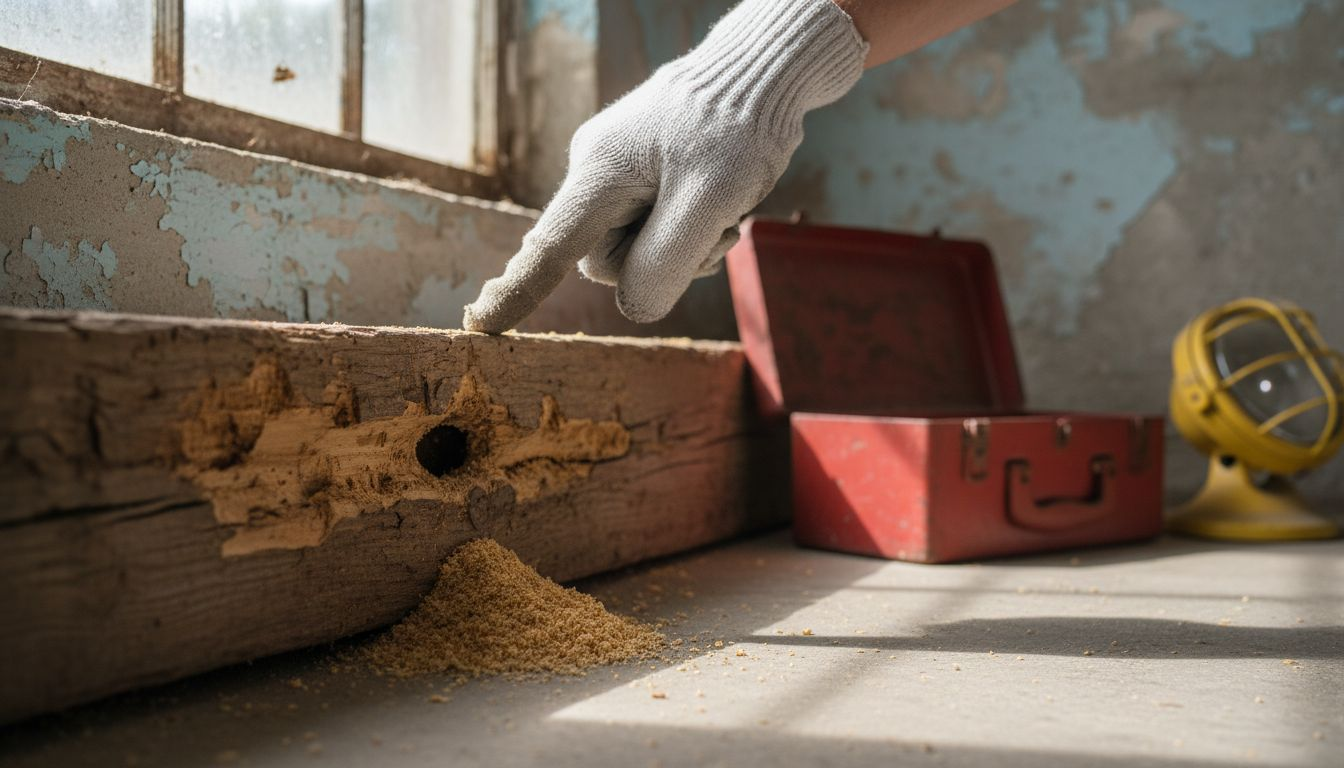
Pavement ants are another common Ohio species. These smaller ants nest under sidewalks, driveways, and building foundations. They forage indoors for food and can become annoying household pests. You’ll often see them marching in lines across your kitchen.
When it comes to termites, subterranean termites dominate Ohio. These are the species responsible for termite damage in Ohio homes. They live in soil and build mud tubes to reach wooden structures. This behavior protects them from dry air while they feed on your home’s wood frame.
Species Comparison:
- Carpenter ants: Large, black, hollow wood for nesting, visible sawdust
- Pavement ants: Small, brown or black, nest under pavement, forage indoors
- Subterranean termites: Small, pale, build mud tubes, eat wood completely
Why this matters: Carpenter ants can be controlled with targeted treatments, but termites require professional intervention. Subterranean termites cause structural damage that spreads rapidly if untreated. The mud tubes they build are your first warning sign—that’s when you call a professional.
Spring and early summer bring the most activity in Northeast Ohio. Carpenter ants emerge from winter, and termite swarmers appear looking for new colony sites. This is when infestations become visible and problems start.
Identifying the exact species in your home determines whether you need professional help immediately or can handle it yourself—getting this wrong wastes time and money.
Both ant and termite colonies can be massive. A single carpenter ant colony might contain hundreds of workers. Termite colonies number in the thousands or even millions. This scale explains why professional treatment is often necessary.
Pro tip: Keep a magnifying glass and a clear container handy during spring and summer—when you spot suspicious insects, capture one and examine the antennae, waist, and wings against the identification features you learned earlier.
Key Signs of Ant and Termite Infestations
Catching an infestation early saves you thousands in repair costs. The trick is knowing what signs to look for in your Ohio home. Ants and termites leave very different clues, and recognizing them quickly makes all the difference.
Termite signs are the most urgent. Look for mud tubes on foundation walls, crawl spaces, or wooden structures. These tubes are termites’ highways—they protect the colony while workers travel to feed. If you see them, call a professional immediately.
Damaged wood is another red flag. Termite wood damage appears hollow or blistered because termites eat from the inside out. The wood might look fine on the surface but crumble when you press it. This hidden damage spreads quickly and costs serious money to repair.
Winged termites called swarmers appear in spring. You might find their discarded wings near lights or windowsills. This means a colony is established somewhere in or near your home—they’re looking to start new colonies.
Ant signs tell a different story. Carpenter ant sawdust (called frass) appears near infested wood. It looks coarser than regular dust and often contains ant body parts. You’ll find it in attics, wall voids, or basement areas where ants hollow out nesting galleries.
Worker ants trailing in lines are the most visible sign. They’re foraging for food, leaving scent trails for others to follow. If you see them regularly, a nest is likely nearby—often in your walls, foundation, or yard.
Quick Identification Guide:
- Mud tubes on wood or foundation: Termites
- Hollow or damaged wood with no outer signs: Termites
- Winged insects or discarded wings: Possible termites
- Coarse sawdust piles near wood: Carpenter ants
- Worker ants marching in organized lines: Ants
- Smooth galleries or tunnels in wood: Carpenter ants
Timing matters in Northeast Ohio. Spring brings visible activity from both pests after winter dormancy. Summer is peak season for carpenter ants and termite swarmers. Fall activity slows, but damage continues invisibly.
Finding even one sign of termites requires professional inspection—the damage spreading inside your walls might be far worse than what you can see.
Don’t wait for obvious destruction. Small infestations grow exponentially. A handful of carpenter ants becomes hundreds within months. Termite colonies number in the thousands and spread rapidly through wood.
Pro tip: Inspect your basement, crawl space, and foundation annually during spring and fall—use a flashlight to check for mud tubes, and press suspicious wood with a screwdriver to test for hollow spots.
Property Risks Posed by Each Pest
Termites and ants damage your home in completely different ways. Understanding these differences helps you grasp why some infestations demand immediate action while others can wait. Your wallet depends on getting this right.
Termites are structural threats. They consume cellulose in wood, eating through the material itself. This creates hidden damage that spreads rapidly inside walls, foundations, and support beams. By the time you see obvious signs, the damage is often extensive and expensive.
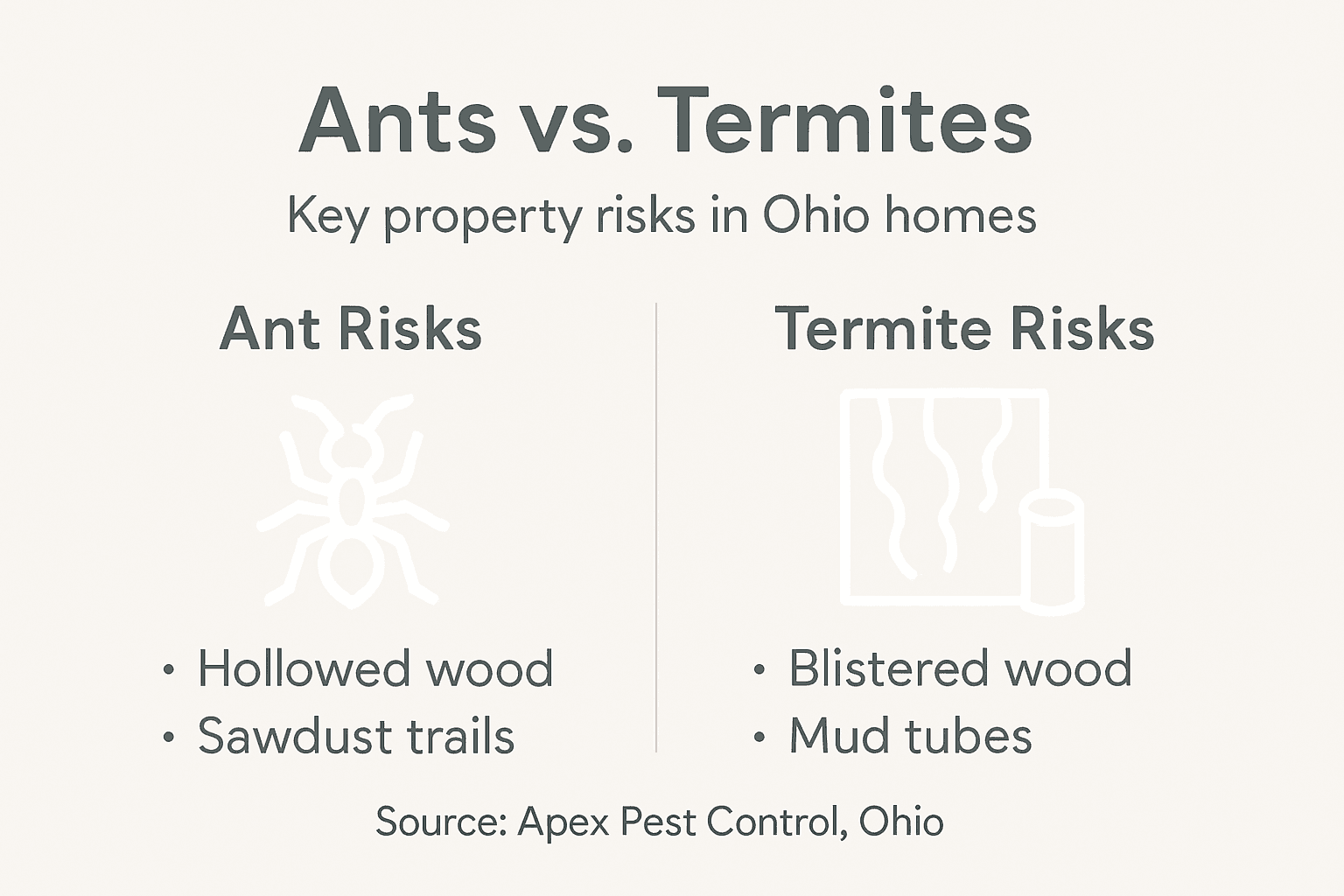
A single termite colony can cause costly structural damage requiring professional repair. Homeowners in Ohio have reported repair bills exceeding $10,000 for infestations discovered late. The worst part? The damage happens invisibly. You might have thousands of dollars worth of destruction happening behind your walls right now.
Carpenter ants damage differently. They hollow out wood to create nesting galleries but don’t actually eat the wood. This causes less extensive damage than termites, but it’s still serious. Weakened structural wood, damaged support beams, and compromised building integrity can result from large carpenter ant colonies.
Ants create aesthetic and functional problems. Hollowed wood becomes weak and unreliable. Support beams lose strength. Wooden structures that looked solid crumble under pressure. While less catastrophic than termite damage, it still requires professional repair.
Damage Comparison:
- Termites: Consume wood completely, cause hidden structural damage, spread rapidly
- Carpenter ants: Hollow wood for nesting, cause localized damage, spread more slowly
- Termites: Can cost $5,000-$15,000+ in repairs
- Carpenter ants: Typically cost $1,000-$5,000 in repairs
Timing matters enormously. Termite colonies number in the thousands. They multiply quickly and expand their feeding territory constantly. An infestation discovered six months late is exponentially worse than one caught early. Carpenter ant colonies grow more slowly but still escalate from dozens to hundreds to thousands of workers.
Here’s a quick reference for the risks and urgency of control:
| Pest | Typical Damage | Repair Cost Range | Urgency of Treatment |
|---|---|---|---|
| Subterranean Termite | Structural, hidden | $5,000-$15,000+ | Immediate professional help |
| Carpenter Ant | Localized wood voids | $1,000-$5,000 | Targeted, soon as spotted |
| Pavement Ant | Minimal, nuisance | $100-$300 | Low, DIY often sufficient |
Your property value is at stake. Serious pest damage discovered during a home inspection tanks your selling price. Buyers require termite inspections and will walk away from properties with known infestations or previous damage. This affects your equity and future sale potential in the Solon and Bedford Heights markets.
Termite damage compounds monthly—waiting even a few weeks to address an infestation means accepting thousands more in future repair costs.
Secondary damage compounds the problem. Water intrusion follows structural damage. Mold develops in weakened areas. What started as a pest problem becomes a mold and moisture issue requiring expensive remediation.
Neglecting carpenter ants in walls leads to electrical hazards and fire risks. Damaged wood around electrical wiring creates dangerous conditions. What seemed like a minor infestation becomes a safety liability.
Pro tip: Get a professional termite inspection annually and after any signs appear—the $150-$300 inspection cost is negligible compared to the $10,000+ repair bills you’ll avoid by catching infestations early.
Choosing Safe Pest Control Solutions
You have options when dealing with ants or termites in your Ohio home. Not all approaches are equal, and some are far safer for your family and pets than others. The key is understanding what works best for each pest type.
DIY approaches work for some ant infestations. If you’re dealing with pavement ants or small carpenter ant colonies, targeted treatments might be sufficient. Basic sanitation removes food sources that attract ants. Sealing entry points prevents new workers from entering. These low-chemical strategies work well for minor problems.
But termites demand professional intervention. The damage happens invisibly and spreads rapidly. DIY treatments rarely eliminate entire colonies, leaving you with hidden destruction continuing behind your walls. This is where professional expertise becomes non-negotiable.
Integrated pest management (IPM) combines multiple safe strategies. Accurate pest identification, sanitation practices, and targeted treatments minimize chemical use while maximizing effectiveness. For ants, this might mean removing food sources and using bait stations. For termites, it involves professional inspection, moisture control, and removing wood-to-soil contact.
Professional treatments offer safety you can’t achieve alone. Licensed technicians apply products correctly, protect your family and pets, and target colonies directly. They understand local species and know which treatments work best in Northeast Ohio conditions.
Safe Treatment Options:
- Ant sanitation: Remove food sources, seal entry points, clean affected areas
- Ant bait stations: Target workers safely, eliminate colonies from within
- Carpenter ant removal: Professional inspection and targeted treatments
- Termite bait systems: Non-invasive monitoring and elimination
- Termite barrier treatments: Liquid termiticides applied professionally
- Exclusion methods: Seal cracks, remove wood contact with soil
Chemical safety matters. Over-the-counter pesticides can harm pets and children if misused. Professional treatments follow strict safety guidelines and use products approved for residential use. The technician knows exactly where to apply, how much to use, and how to protect your family.
Timing your treatment affects results. Spring and early summer require faster action because pest activity peaks. Fall treatments prevent winter nesting. Professional services schedule treatments strategically based on pest biology and your location.
Professional pest control costs far less than repairs from untreated infestations—and keeps your family safer from chemical exposure.
Moisture control prevents future infestations. Fix leaking pipes, improve drainage, and reduce humidity in crawl spaces. Termites need moisture to survive. Removing that environment stops infestations before they start. Ants forage less aggressively in dry homes.
Monitoring continues after treatment. Professional companies often provide follow-up inspections to confirm elimination and prevent re-infestation. This ongoing protection gives you peace of mind.
Pro tip: When choosing a pest control company, verify they’re licensed, insured, and offer guarantees on their work—reputable companies like Apex Pest Control stand behind treatments with written promises of results.
Protect Your Ohio Home from Costly Ant and Termite Damage Today
Struggling to tell if those insects in your home are ants or termites can be overwhelming and risky. The article highlights how important it is to recognize key differences like antenna shape, waist profile, and wing size to avoid costly mistakes. Whether it’s the silent destruction of subterranean termites or the nesting damage caused by carpenter ants, each pest demands a unique, expert approach to keep your property safe and sound.
At Apex Pest Control, our licensed technicians specialize in rapid, family-safe solutions tailored for Ohio homes. We use eco-friendly methods and thorough inspections to accurately identify your pest problem and provide targeted treatments for ant control and termite inspections. Don’t wait for hidden damage to escalate; expert care now saves thousands later. Get peace of mind from a trusted local company with over 200 five-star reviews by requesting a free quote today.
Take action on early signs like mud tubes or sawdust piles with professional help you can trust. Visit Apex Pest Control now to protect your Ohio home and end your pest worries the right way.
Frequently Asked Questions
What are the main physical differences between ants and termites?
Ants have elbowed antennae, a pinched waist, and front wings that are longer than their hind wings. Termites have straight antennae, a uniform body shape without a pinched waist, and their front and hind wings are equal in length.
How can I identify signs of a termite infestation in my home?
Look for mud tubes on foundation walls, damaged wood that appears hollow or blistered, and discarded wings from swarmers near lights or windows. These signs indicate that termites are present and need immediate attention.
What damage do carpenter ants cause compared to termites?
Carpenter ants hollow out wood to create nests, which can weaken the structural integrity but do not eat the wood. Termites consume the wood itself, leading to hidden structural damage that can be extensive and costly to repair.
When is the best time to identify pest problems related to ants and termites?
Spring and early summer are peak times for spotting both ants and termite swarmers. Performing regular inspections during this time helps catch infestations early before they escalate into serious problems.