



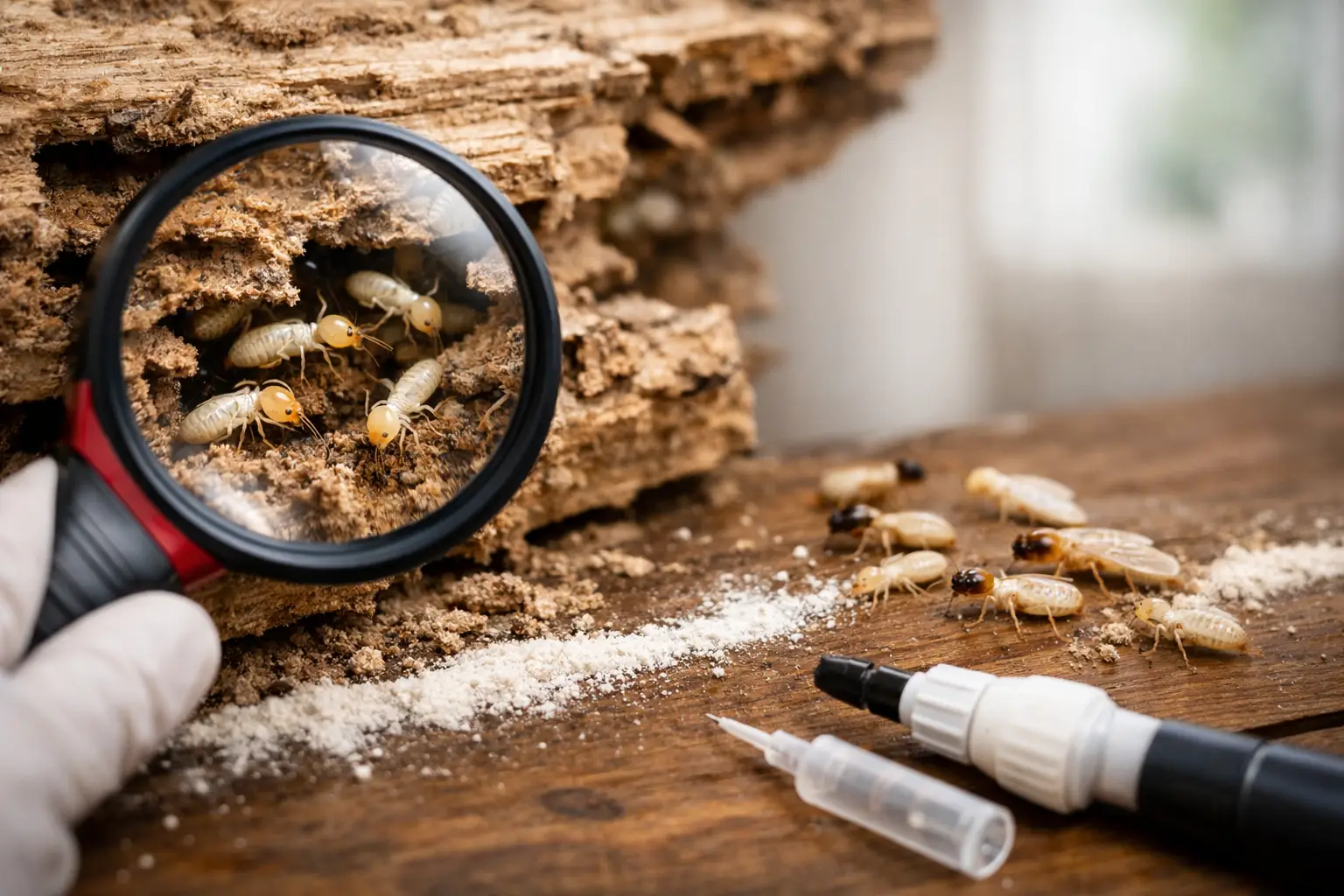
You usually do not see termites when the problem starts getting worse. You see the damage after they have already moved into another wall, another beam, or another part of the structure. That is why learning how to stop termites spreading matters early. The goal is not just to kill a few visible insects. It is to cut off the colony’s path, protect sound wood, and stop a localized issue from becoming a structural repair project.
Termites spread for one reason – they are always searching for food, moisture, and protected routes. If those conditions stay in place, they keep expanding. In homes and commercial buildings, that expansion often happens quietly through crawl spaces, wall voids, sill plates, floor joists, and foundation cracks. By the time mud tubes or damaged wood appear, the colony may already be well established.
How to stop termites spreading in a building
The first step is to avoid disturbing the area too much. It is a common mistake to rip out damaged wood, spray household insect killer, or knock down mud tubes and assume the problem is handled. That can make the infestation harder to track. It may kill a few workers, but it rarely reaches the colony itself. In some cases, disturbed termites simply reroute and continue feeding elsewhere.
What works better is a controlled response. Confirm the activity, limit the conditions that help termites move, and put a real treatment plan in place. If you have winged swarmers indoors, fresh mud tubes, blistered paint, hollow-sounding wood, or unexplained wood damage, treat it as an active issue until proven otherwise.
For most properties, stopping spread comes down to three priorities at once. You need to reduce moisture, remove wood-to-soil contact, and establish a treatment barrier or colony elimination method. Miss one of those, and the infestation may continue even after part of the problem looks better.
Control moisture first
Moisture is one of the biggest reasons termites expand from one area to another. Leaking spigots, clogged gutters, poor grading, wet crawl spaces, condensation around plumbing, and chronic basement dampness all create favorable conditions. Subterranean termites, which are the most common structural termite threat in many areas, depend heavily on moisture and protected access.
Fix leaks promptly. Make sure downspouts discharge away from the foundation. Ventilate crawl spaces where appropriate, and correct standing water issues around the building. If mulch is piled too high against the foundation or soil stays wet next to exterior walls, reduce that moisture pressure. These steps alone do not eliminate termites, but they make the property less supportive of spread.
Remove easy access points
Termites do not need a wide opening. Small gaps around utility lines, expansion joints, cracks in the foundation, and untreated wood close to soil can all become travel routes. Firewood stacked against the home, wooden lattice in direct contact with the ground, buried scrap lumber, and mulch touching siding can help termites stay hidden while they move.
Create separation where you can. Keep firewood off the ground and away from the structure. Remove old stumps, scrap wood, and cellulose debris near the foundation. Maintain visible clearance between soil or mulch and siding. If structural wood or trim is already in contact with soil, that should be corrected as part of the long-term fix.
Do not rely on store-bought sprays
This is where many infestations keep spreading. Over-the-counter products may kill visible termites, but termites live in organized colonies with workers moving behind walls and below ground. Surface treatments rarely reach the nest or eliminate all active routes. A partial kill can leave the larger colony intact and still feeding.
Professional termite control is designed to address the source, not just the symptom. Depending on the structure, construction type, and level of activity, that may involve soil-applied termiticides, targeted void applications, baiting systems, or a combination approach. The right method depends on access, infestation pattern, and whether the goal is immediate structural protection, colony elimination, or both.
Why termites keep spreading after DIY efforts
Homeowners are often told to look for sawdust, but termites do not behave like carpenter ants. You may not get obvious piles of debris. Instead, termites can stay concealed inside wood and travel through mud tubes built to maintain moisture. That hidden behavior is why a small visible sign can point to a much broader problem.
DIY efforts often fail because they treat the place where termites were noticed, not the places they are moving next. If termites are active in one baseboard, they may also be feeding below a door frame, under flooring, or along a foundation wall on the opposite side of the room. In commercial settings, the challenge can be even greater because activity may spread through utility corridors, storage areas, or multiple connected units.
Another issue is misidentification. Flying ants and termite swarmers are often confused, and the treatment is not the same. If the pest is identified incorrectly, time is lost while the actual colony continues growing.
How to stop termites spreading with professional treatment
A proper termite plan begins with inspection, not guesswork. An experienced technician looks at the evidence, identifies the termite type, maps active and vulnerable areas, and recommends treatment based on the building itself. Slab construction, basements, crawl spaces, additions, attached garages, and prior repairs all affect how termites travel and how treatment should be performed.
For active subterranean termites, soil treatment is often one of the most effective ways to stop spread because it creates a treated zone around the structure. When applied correctly, modern non-repellent products allow termites to move through treated areas and transfer the active ingredient within the colony. That is very different from a quick knockdown spray.
Bait systems can also be effective, particularly for ongoing monitoring and colony reduction. They are not always the fastest answer for every heavy infestation, but they can play an important role in long-term protection. In some cases, localized wood treatment or wall void treatment is added where activity is concentrated.
The best results usually come from matching the method to the structure rather than forcing the same treatment onto every property. That is especially true for older homes, buildings with previous termite history, and commercial facilities where access limitations or compliance needs affect the treatment plan.
Preventing termites from coming back
If you want to know how to stop termites spreading for good, think beyond the first treatment. Termite control is strongest when elimination and prevention work together. Once active termites are addressed, the property still needs conditions managed so new colonies do not find the same easy opportunities.
Annual inspections are one of the smartest investments, especially in areas where termite pressure is a recurring concern. A trained eye can catch new mud tubes, subtle moisture issues, or vulnerable wood conditions long before major damage develops. For businesses, regular inspections also support documentation and risk management.
Prevention also means keeping repair work tight. Replace damaged wood correctly, but only after the infestation is addressed. Seal utility penetrations where practical. Keep gutters clean, maintain drainage, and avoid landscaping that traps moisture against the structure. If your property has had termites once, that history alone is a reason to stay proactive.
Warning signs that need fast action
Some signs should move you from concern to immediate action. Swarmers indoors, especially near windows or light sources, can indicate an active colony inside the structure. Fresh mud tubes on foundation walls, support piers, or interior surfaces point to current travel routes. Soft, blistered, or hollow wood suggests feeding damage, even if the surface still looks mostly intact.
If you see these signs, do not wait for more proof. Termites do not resolve on their own, and the cost of delay is often paid in repairs.
When to call for expert help
If you are seeing repeated signs, if damage is already visible, or if you tried DIY treatment and activity returned, it is time for professional help. The same is true if you manage a commercial property, rental portfolio, or multi-unit building where spread can affect more than one occupied space. In those environments, speed and documentation matter as much as treatment.
A company with deep experience in termite management can inspect the structure, confirm where activity is occurring, and build a treatment plan that fits the risk level and construction type. For Ohio property owners dealing with termite pressure, that kind of expert response protects more than wood. It protects safety, budget, and peace of mind. Apex Pest Control approaches termite problems that way – with proven treatment, careful inspection, and long-term prevention in view.
The sooner you act, the more options you usually have. Stop the moisture, stop the access, and get the infestation treated at the colony level before termites turn one affected area into a much larger problem.