



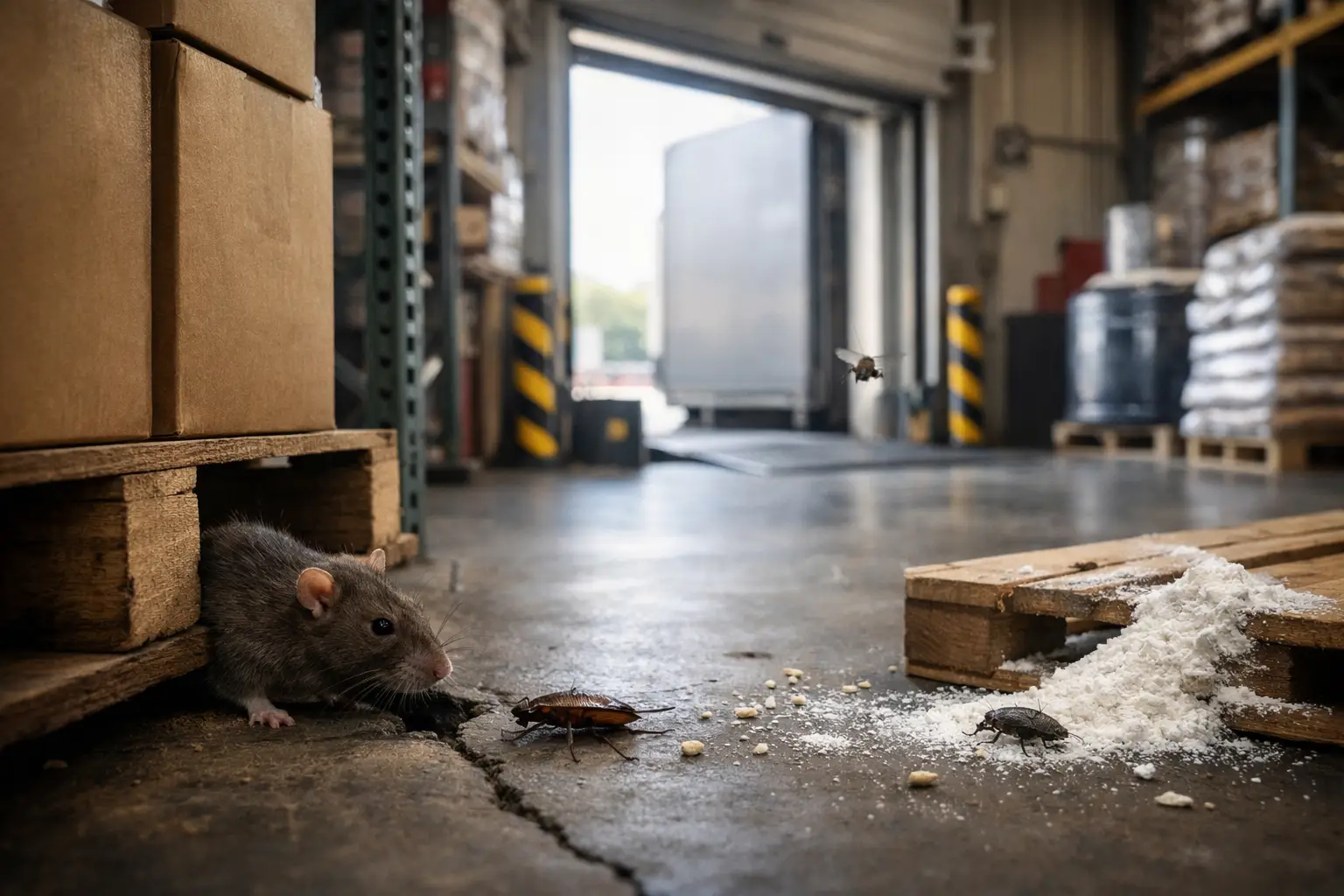
A single torn dock seal, a neglected floor drain, or a pallet held too long in a quiet corner can become the starting point for a costly warehouse pest problem. The top warehouse pest risk areas are rarely random. They are the places where pests find food, water, shelter, or an easy route inside – often outside the normal flow of daily operations.
For warehouse managers, pest control is not simply a housekeeping task. Rodents can damage packaging and wiring. Flies can compromise sanitation. Stored product pests can spread through inventory before anyone sees an adult insect. A documented, prevention-focused inspection routine helps protect products, employees, customer confidence, and audit readiness.
Loading Docks and Receiving Doors
Loading docks are one of the highest-risk zones in almost every warehouse. Doors open repeatedly, trucks move in and out, and products arrive from many suppliers and regions. That activity gives rodents, flies, birds, cockroaches, and occasional invaders a direct path into the building.
Inspect dock door sweeps, seals, brush guards, and leveler gaps closely. A mouse can enter through an opening roughly the width of a pencil, so a door that looks mostly sealed may still be a pest entry point. Dock shelters also deserve attention. Torn fabric, gaps around the frame, and accumulated debris create hiding places and access routes.
Receiving teams should inspect incoming pallets, corrugated boxes, and reusable containers before they enter storage. This matters especially for food, pet food, seed, grain, paper products, textiles, and other goods that can carry stored product pests. A pest issue introduced on one shipment can become a facility-wide inventory concern if it is moved directly into racking without inspection.
Exterior Perimeter and Building Penetrations
Pest prevention starts outside the warehouse walls. Exterior conditions determine how much pest pressure reaches the facility in the first place. Overgrown vegetation, standing water, unsealed utility penetrations, clutter near the foundation, and poorly maintained dumpsters all make the building more attractive.
Walk the entire perimeter regularly, including areas behind trailers, equipment yards, and less-used sides of the property. Look for rodent burrows, gnaw marks, droppings, bird activity, damaged siding, gaps around conduits, and cracks at the foundation line. Pay particular attention to where pipes, cables, and drainage lines enter the structure. These small openings can become dependable pest highways.
Vegetation should be maintained so it does not touch the building or conceal activity along the foundation. Keep stored materials, unused pallets, and scrap equipment elevated and away from exterior walls when possible. These items create protected harborage for rodents and insects, then give them a short route indoors.
Dumpster and compactor areas require their own standards. Waste should be contained, pickup schedules should match the facility’s volume, and spills should be cleaned promptly. Leaking dumpsters attract flies, cockroaches, rodents, and wildlife. The problem does not stay outside when a nearby receiving door opens all day.
Floor Drains, Break Rooms, and Moisture Sources
Water changes the pest risk inside a warehouse. Even facilities without food production can develop fly or cockroach activity around moisture sources. Floor drains, mop sinks, leaking pipes, condensation around refrigeration equipment, and stagnant water in rarely used areas provide the conditions pests need to survive.
Inspect floor drains for organic buildup and ensure they are cleaned on a schedule that matches facility use. Drain flies and other small flies can breed in the film that develops inside neglected drains. If flies are appearing in one area, treating the visible adults alone will not solve the issue. The breeding source must be identified and corrected.
Break rooms and vending areas also deserve consistent attention. Crumbs under appliances, open food containers, overflowing trash, and uncleaned beverage spills can support ants, cockroaches, and rodents. A warehouse may have excellent sanitation in its storage aisles but still experience pest activity because food is available in employee areas.
Leaks should be treated as a pest-control issue as well as a maintenance issue. A slow drip behind a sink or beneath a water line can provide enough moisture for pests to remain active long after food has been removed.
Top Warehouse Pest Risk Areas in Storage Racks
High-bay storage racks can hide pest activity for weeks or months. Pallets are often moved by forklift, but lower corners, top rack levels, wall-adjacent slots, and long-term storage locations may receive limited visual inspection. That makes them ideal for rodents seeking cover and stored product pests developing within infested goods.
Focus inspections on slow-moving inventory, damaged cartons, partial pallets, returned goods, and products stored close to walls. Watch for webbing, insect fragments, larvae, cast skins, powdery residue, gnawing, droppings, or unusual odors. Insect activity can be highly product-specific, so the risk depends on what your warehouse stores. Facilities handling grain-based goods, spices, nuts, dried foods, animal feed, and birdseed need particularly close stored product pest monitoring.
First-in, first-out inventory practices reduce risk by preventing products from sitting undisturbed beyond their intended storage period. However, rotation alone is not enough. Damaged packaging needs prompt isolation, evaluation, and removal because exposed products can attract pests and allow an infestation to spread to nearby inventory.
Mezzanines, Utility Rooms, and Other Quiet Spaces
The least-traveled spaces in a warehouse are often the most revealing. Mezzanines, electrical rooms, janitorial closets, mechanical areas, ceiling voids, and under-stair spaces may offer warmth, darkness, and limited disturbance. Rodents can nest in insulation, stored paper, fabric, or abandoned materials, while cockroaches may remain near warm equipment and moisture.
These areas should not be excluded from routine inspections simply because they do not hold sellable inventory. Signs such as droppings, rub marks along walls, nesting material, gnawed cables, or insect harborages can reveal a developing problem before it reaches production or storage areas.
Keep utility rooms organized and avoid using them as long-term storage for cardboard, unused supplies, or personal items. Cardboard is especially attractive because it provides protected harborage and can hold food residue, insect eggs, or pests brought in with shipments.
Trailer Staging, Returns, and Damaged Goods
Trailers create a separate layer of risk. A trailer that sits on-site for days can attract rodents or insects, especially if it contains food products, packaging, or residual spills. Before unloading, employees should look for droppings, gnaw marks, insect activity, damaged packaging, and odors that could indicate a problem.
Returns and damaged goods should be handled under a clear process. They should not be allowed to accumulate beside receiving doors or in an unmonitored corner of the warehouse. Quarantine questionable items away from clean inventory until they can be inspected. This protects the rest of the facility and creates a clear record of how potential pest risks were managed.
Build Inspections Into Daily Operations
The most effective warehouse pest programs combine professional service with employee awareness. Technicians can identify patterns, place and monitor devices, seal entry points, and recommend corrective actions. Warehouse employees provide the daily observations that make fast response possible.
Train staff to report signs early rather than waiting for a confirmed infestation. A single rodent dropping near a rack, repeated fly activity at a drain, or a torn dock seal may seem minor, but each can point to a condition that needs correction. Maintain clear sight lines, clean spills quickly, keep doors closed when not in active use, and document corrective actions.
For facilities subject to customer audits or food-safety requirements, documentation is as valuable as the physical inspection. Service reports, device maps, trend data, sanitation findings, and exclusion recommendations demonstrate that pest management is being actively controlled rather than addressed after a complaint.
Apex Pest Control develops customized commercial pest management programs built around the actual pressure points in your facility, from receiving docks to high-bay storage and exterior exclusion. When your team knows where to look and acts on early warning signs, pest prevention becomes a dependable part of warehouse operations – not an emergency that interrupts them.