



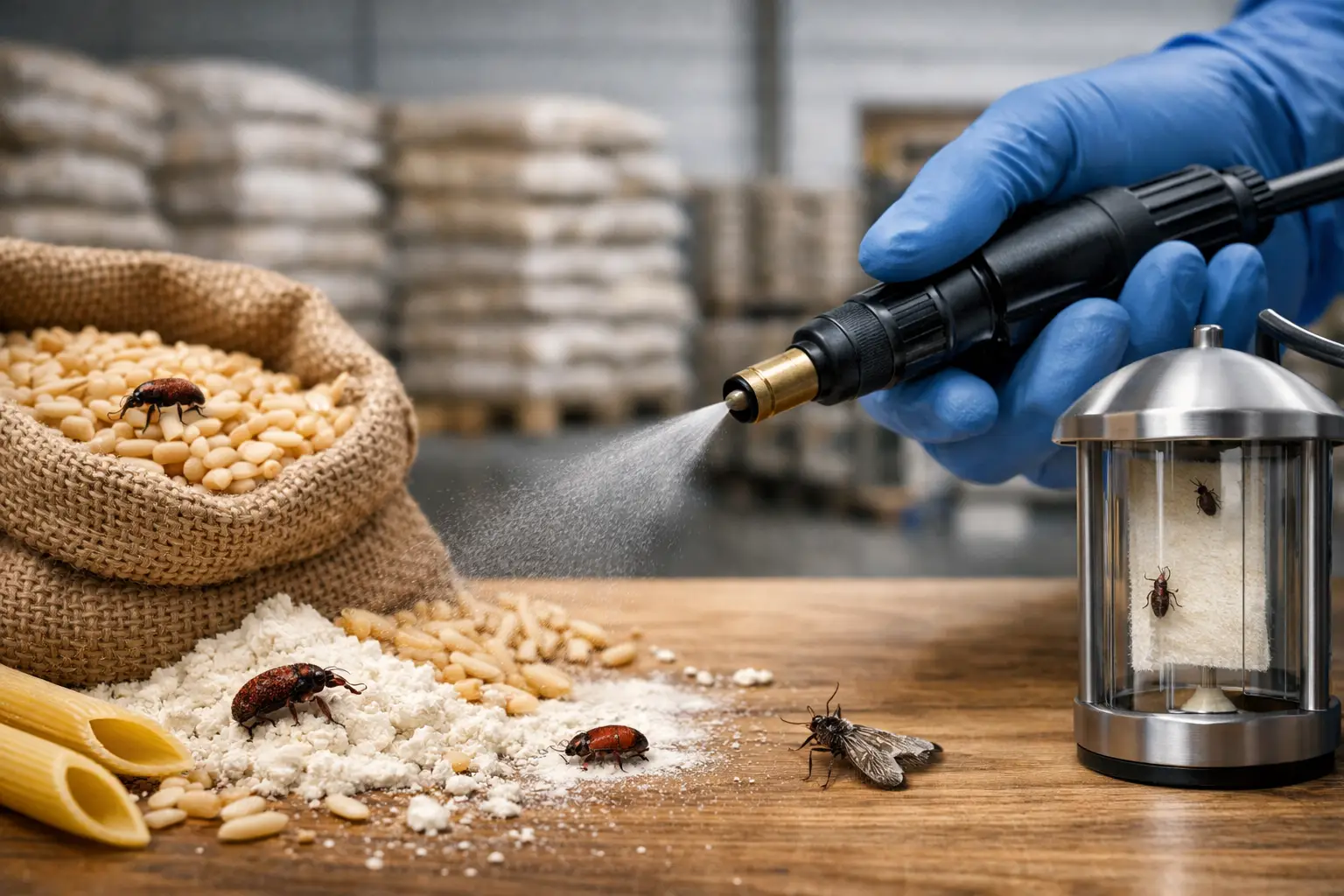
A few webbed kernels in a grain bin, moths near packaged goods, beetles turning up in a warehouse aisle – that is often how a much bigger problem announces itself. Stored product pest control is not just about killing visible insects. It is about protecting food quality, preventing contamination, avoiding product loss, and keeping homes and facilities from dealing with a recurring infestation that spreads quietly through dry goods, ingredients, and packaging.
What stored product pests are really targeting
Stored product pests infest food that has been harvested, processed, packaged, or stored. In homes, that usually means pantry staples such as flour, cereal, rice, pasta, pet food, bird seed, nuts, and spices. In commercial settings, the risk extends to raw ingredients, finished goods, warehouse inventory, animal feed, and product residue that builds up in hard-to-clean areas.
The most common offenders include Indian meal moths, flour beetles, sawtoothed grain beetles, cigarette beetles, and weevils. Some attack whole grains. Others prefer processed foods or residue left behind in equipment, shelving cracks, and floor joints. That difference matters because the source of activity is not always the most obvious bag or box on the shelf.
A light infestation can become widespread faster than many people expect. Adult insects may be the first thing you see, but larvae inside packaging, hidden product buildup, and overlooked stock often keep the population going.
Why stored product pest control is different from general pest service
This category requires a more targeted approach than routine crawling insect treatment. The challenge is not only the pest itself. It is the infested product, the breeding site, and the environmental conditions that allow reinfestation.
For a homeowner, that may mean one bad bag of pet food in the pantry or garage has seeded activity into nearby items. For a commercial operation, the issue may involve incoming shipments, sanitation gaps, product spillage under equipment, or inventory rotation problems. In both cases, if the source remains in place, spraying alone will not solve it.
That is why effective stored product pest control usually combines inspection, product identification, removal of infested material, sanitation guidance, and targeted treatment where appropriate. In commercial accounts, it may also include monitoring, documentation, and audit-focused prevention steps.
Signs you may have a stored product pest problem
The early signs are easy to dismiss. You may notice small moths fluttering near kitchen lights, beetles on shelves, clumped grains, webbing in food products, or unusual fine dust inside packaging. In a warehouse or food-related facility, signs may include insects in light traps, activity around storage racks, contamination complaints, or repeat sightings in one processing area.
It also depends on the species. Pantry moths are often noticed when adults start flying, while beetles may remain hidden in products for longer. A facility manager may not see many insects at all but still fail an inspection because of evidence in product zones or residue in difficult access points.
The key is to respond early. By the time flying adults appear in multiple rooms or sections of a building, the source may already be established in more than one location.
The biggest mistake: treating the symptom, not the source
Many infestations continue because people focus on what they can see. Killing flying moths or vacuuming up a few beetles may provide temporary relief, but it rarely addresses the infested food or hidden breeding area.
In homes, the source is often a forgotten item in the back of a cabinet, a torn bag of bird seed in the basement, or bulk dry goods stored too long. In commercial properties, the source may be older stock, ingredient dust under machinery, spillage behind pallet racking, or a recurring issue tied to receiving practices.
This is where experience matters. A trained professional does not just look for insect activity. They look for why the activity is happening, where the life cycle is being supported, and what conditions will keep it going unless corrected.
How professional stored product pest control works
A proper service starts with inspection and identification. Different stored product pests behave differently, so guessing can waste time. Technicians examine affected products, shelving, cracks and crevices, storage practices, and any adjacent areas where material may have collected.
Once the source is identified, the first step is usually removal and disposal of infested products. In many cases, that is non-negotiable. Saving contaminated material often leads to ongoing activity. After that, the surrounding area should be thoroughly cleaned. Vacuuming shelf seams, removing residue, and addressing overlooked debris are often just as important as any treatment product.
Targeted treatments may be used in cracks, crevices, voids, or non-food-contact areas where pests harbor. In some environments, insect growth regulators or monitoring devices may also play a role. In commercial accounts, treatment decisions have to fit the operation, product sensitivity, sanitation schedules, and compliance requirements. There is no one-size-fits-all answer.
That is one reason many facilities rely on a customized program instead of isolated service calls. A single cleanup may address the current issue, but if receiving, storage, sanitation, and monitoring are not tightened up, the problem can return.
Prevention matters as much as extermination
The strongest results come from combining eradication with prevention. At home, that means storing dry goods in sealed containers, checking pantry items before bringing them inside, rotating older products first, and avoiding long-term storage of opened pet food or bird seed in thin packaging.
For businesses, prevention is more operational. Inventory rotation, incoming goods inspection, sanitation under and around equipment, regular monitoring, and prompt correction of spills all reduce risk. So does paying attention to structural details such as gaps, inaccessible voids, and storage conditions that make cleaning difficult.
Temperature, humidity, and product type can also affect pressure. Some pests thrive faster in warm storage areas. Others are introduced repeatedly through shipments. That is why two buildings with similar products may need different control plans.
When DIY works – and when it usually does not
For a very small, isolated pantry issue, a homeowner may be able to resolve the problem by discarding infested products, deep cleaning shelves, and monitoring for lingering activity. If the infestation is caught early and the source is obvious, that can be enough.
But DIY methods tend to fall short when the infestation has spread, the source is unclear, or activity keeps returning. Foggers and over-the-counter sprays are especially unreliable for stored product pests because they often miss the real breeding site and can create safety concerns around food storage areas.
In commercial spaces, DIY is usually the wrong move. Product protection, customer confidence, and inspection readiness leave less room for trial and error. Facilities need clear documentation, accurate pest identification, and treatment methods that fit both safety standards and operational demands.
Why commercial facilities need a tighter strategy
Stored product pests are a serious issue for warehouses, food processing spaces, distribution centers, grocery environments, and any facility handling edible goods or ingredients. The risk is not limited to product loss. There are audit concerns, reputation concerns, and the operational disruption that follows a contamination event.
A strong commercial program usually includes routine inspections, trend tracking, device monitoring, sanitation feedback, and fast response when activity appears. It also helps to have a provider that understands how to coordinate with managers, line supervisors, and quality teams. The service side matters, but so does communication.
For Ohio businesses managing one location or multiple facilities, consistency becomes a major advantage. The same issue that starts in one receiving area can appear elsewhere if procedures are not aligned. A coordinated pest management plan helps close that gap.
What to look for in a pest control partner
Stored product pests can be stubborn, so the right provider should offer more than a basic treatment. Look for a company that can identify the pest accurately, inspect beyond the obvious, and build a plan around your environment instead of applying a generic service.
For homeowners, that means practical guidance, safe treatment recommendations, and clear next steps that protect children, pets, and food storage areas. For commercial customers, it means documentation, responsiveness, and technicians who understand prevention as well as extermination.
Apex Pest Control approaches these issues with customized service, experienced professionals, and a focus on long-term control, not short-term appearances. That is especially important when product integrity and peace of mind are both on the line.
If you are seeing moths in the pantry, beetles in stored goods, or signs of contamination in a facility, the best next step is to act before a small issue becomes an expensive one. The right plan can stop current activity and make the space much harder for stored product pests to reclaim.