



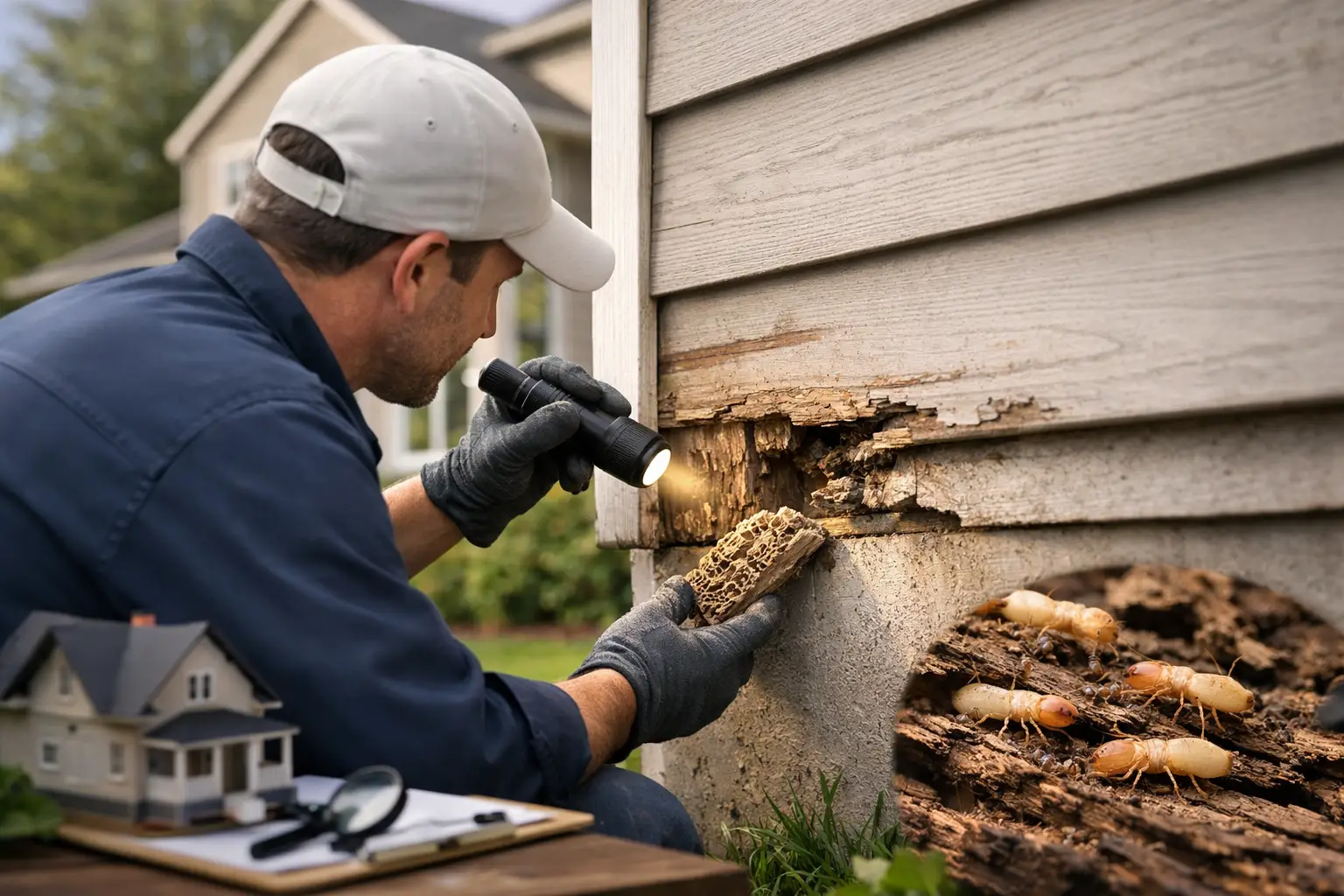
Termites do not need a dramatic entry point to create a serious problem. They can work quietly behind finished walls, beneath flooring, and around structural wood for months before visible damage appears. An Akron termite inspection company provides the trained assessment homeowners need to identify evidence early, understand the actual risk, and take action before a small colony becomes an expensive repair.
For property owners, the value of an inspection is not simply hearing whether termites are present. It is receiving a clear, professional evaluation of the home, the conditions that may attract termites, and the practical steps needed to protect the structure going forward.
What a Professional Termite Inspection Looks For
Termite inspections are detailed visual evaluations of accessible areas inside and outside a property. Certified technicians look for active termites, signs of previous activity, conditions that support an infestation, and areas where inspection is limited by construction or stored materials.
In Northeast Ohio, subterranean termites are the primary concern. These termites live in the soil and travel through protected mud tubes to reach wood in a home. Because they need moisture, activity is often found near foundations, crawl spaces, basements, utility penetrations, porches, garages, and areas with poor drainage.
A thorough inspection commonly includes the foundation perimeter, accessible sill plates and floor joists, basement walls, crawl spaces, attached structures, window and door frames, decks, and wooden elements that contact or sit close to soil. Inside, a technician may inspect areas where moisture or soft wood is more likely, including bathrooms, kitchens, laundry rooms, and unfinished storage spaces.
The goal is to separate confirmed termite evidence from other issues that can look similar. Water damage, carpenter ants, wood-boring beetles, settling, and aging materials can all leave marks on wood. A qualified inspector knows what evidence supports a termite finding and what requires a different solution.
Signs Homeowners Should Not Ignore
Termites are often active long before homeowners notice them. Still, several warning signs deserve a prompt inspection. Mud tubes along a foundation, basement wall, plumbing line, or support pier are one of the clearest signs of subterranean termite travel. These narrow, soil-colored tubes help termites retain moisture while moving between the ground and a food source.
Other signs include wood that sounds hollow when tapped, blistered or buckling paint, doors and windows that suddenly bind, or trim that feels soft or damaged. These symptoms are not proof on their own, but they justify a closer look.
Homeowners may also see winged insects indoors, especially in spring. Swarming termites are reproductive adults leaving a mature colony to establish new ones. Their discarded wings are often found near windowsills, light fixtures, or doors. Flying ants can be mistaken for termites, so identification matters before anyone chooses a treatment.
Do not wait for visible structural damage to request help. By the time wood has noticeably weakened, termites may have already been feeding in less visible sections of the home.
Why Local Inspection Experience Matters
A termite inspection is not a one-size-fits-all walkthrough. Akron homes vary widely in age, foundation design, drainage patterns, building additions, and access points. A century home with a stone foundation and a newer home with a finished basement present different inspection challenges. So do houses with decks, mulch-heavy landscaping, firewood storage, or grading that directs water toward the foundation.
An experienced Akron termite inspection company considers these conditions rather than relying on a quick visual check. The inspection should explain where termites could gain access, what evidence was found, whether the evidence appears active, and which areas could not be fully evaluated.
That local perspective also helps homeowners avoid overreacting. Not every moisture issue means termites are present, and not every old mark indicates an active infestation. The right recommendation depends on the evidence, the construction of the property, and the level of exposure.
What Happens If Termites Are Found
A confirmed termite finding calls for a treatment plan tailored to the property. The proper approach depends on the location and extent of activity, the home’s construction, soil conditions, and whether there are areas that cannot be accessed directly.
Professional termite control may involve a liquid soil treatment, a baiting system, or a combination of methods. Liquid treatments establish a protective zone in the soil around vulnerable areas. Bait systems are designed to be monitored over time and can help target termite colonies through their natural foraging behavior. Neither option should be treated as automatic. Each has advantages, and the recommendation should match the conditions found during inspection.
For example, a home with accessible foundation areas may be a strong candidate for one type of treatment, while a property with complex landscaping, finished basement walls, or difficult access may require a different strategy. A dependable provider will explain why a specific method is recommended, what preparation is needed, and what follow-up service is included.
Termite treatment should also address contributing conditions. Fixing leaking plumbing, extending downspouts, improving drainage, removing wood debris, and reducing soil-to-wood contact can reduce future risk. Treatment eliminates the current threat; prevention helps protect the home after service is complete.
Questions to Ask Before Choosing a Termite Inspector
The lowest inspection price is not always the best value, especially when a home’s structure is at stake. Before scheduling service, ask whether the company uses trained, certified technicians and whether its inspection reports clearly identify evidence, risk conditions, and inaccessible areas.
It is also reasonable to ask how treatment recommendations are determined, whether follow-up inspections or monitoring are available, and how the company protects people, pets, landscaping, and the property itself. Clear answers matter. A termite issue can be stressful, but the service process should not be confusing.
For commercial property managers, the questions expand to documentation, scheduling, reporting consistency, and the ability to coordinate service across occupied buildings or multiple locations. Termite activity can affect tenant confidence, maintenance planning, and property value. A professional inspection program helps managers act before damage interrupts operations.
When to Schedule a Termite Inspection
A termite inspection is wise any time a homeowner sees suspicious signs, discovers moisture damage, or has concerns about wood near the foundation. It is also a smart part of routine property care, particularly for older homes, homes with prior termite history, and properties with crawl spaces or recurring drainage concerns.
Real estate transactions are another common reason to schedule an inspection. Buyers need a credible assessment before taking responsibility for a home, and sellers benefit from identifying issues early rather than facing last-minute surprises. An inspection does not guarantee that termites can never appear, but it provides a documented view of visible conditions at the time of service.
Spring is a common time for termite activity to become noticeable, yet inspections remain valuable throughout the year. Termites can remain active below ground and inside protected areas even when outdoor temperatures drop. If there is evidence of activity, waiting for a particular season is rarely the right move.
Protect the Structure Before Damage Spreads
Termites are persistent, but they are not a problem homeowners need to manage alone. A professional inspection replaces uncertainty with clear findings and a practical path forward. It also gives families confidence that the people evaluating their home understand both the pest and the building conditions that allow it to thrive.
Apex Pest Control has provided proven pest management services since 1969, with experienced professionals who focus on thorough inspections, effective treatment options, and prevention that supports long-term peace of mind. If you suspect termite activity or want to evaluate your property’s risk, schedule an inspection promptly. Early action is one of the most reliable ways to protect the home you have worked hard to maintain.