



TL;DR:
- Simply spraying more product frequently does not solve recurring pest problems in multi-tenant buildings.
- Effective control requires a systematic Integrated Pest Management approach focusing on inspection, monitoring, and targeted treatments.
Spraying more product more often sounds like the logical answer when pests keep showing up in your building. It isn’t. In fact, the “spray everything” approach is one of the most common reasons property managers find themselves trapped in a cycle of recurring cockroach complaints, rodent sightings, and frustrated tenants who start looking at other housing options. Multi-tenant buildings in Ohio have unique structural and social dynamics that make pest control genuinely harder than single-family homes, and cookie-cutter reactive treatments simply aren’t built for those conditions.
Table of Contents
- Why multi-tenant properties face unique pest pressures
- How Integrated Pest Management (IPM) works in multi-tenant buildings
- Prevention beats reaction: Why proactive pest management saves money and headaches
- Roles, responsibilities, and compliance for property managers and tenants
- Proven practices and real-world tools for Ohio property managers
- What most pest management articles won’t tell you: The real key to multi-tenant success
- Get expert support for stress-free pest management
- Frequently asked questions
Key Takeaways
| Point | Details |
|---|---|
| IPM delivers lasting results | Integrated Pest Management focuses on prevention and targeted action for reliable multi-tenant pest control. |
| Prevention is more cost-effective | A proactive strategy reduces infestation rates and saves time and money over the long term. |
| Resident collaboration is essential | Educating and involving tenants is the number one factor in preventing recurring pest problems. |
| Compliance demands good records | Documenting pest control actions and notices protects managers and ensures regulatory compliance. |
| Local resources can make the difference | Using Ohio-focused checklists and expert support bridges the gap between plan and practice. |
Why multi-tenant properties face unique pest pressures
Managing pests in a 50-unit apartment building or a mixed-use commercial property is nothing like treating a single house. The sheer number of entry points, shared walls, interconnected plumbing chases, and common areas create pathways that pests exploit easily. A cockroach problem starting in Unit 101 can travel through wall voids to Units 102 and 201 within days. Rodents follow pipe runs from one floor to another. The apartment pest control challenges in multi-tenant Ohio buildings are multiplied by high resident turnover, which constantly introduces new risk factors such as infested furniture, poor sanitation habits, and unreported sightings.
Traditional reactive spraying fails in these environments because it addresses what you can see while ignoring the conditions that keep pests coming back. Spray a unit today, and the surviving population from adjacent units simply repopulates it within weeks. Understanding why property managers need pest control as a systematic program, rather than an emergency response, is the first step toward breaking that cycle.
The multifamily pest management best practices widely accepted across the industry center on structural intervention, resident cooperation, and consistent monitoring rather than volume of pesticide applied. Integrated Pest Management is the standard methodology for multi-tenant pest control, endorsed by the EPA and HUD (the U.S. Department of Housing and Urban Development), prioritizing monitoring, exclusion, sanitation, and targeted treatments over blanket spraying.
“In multi-tenant housing, pest management is a community issue. A single untreated unit can undo weeks of professional work in surrounding units.” This is the reality that separates properties with chronic pest problems from those that achieve lasting results.
Key factors that increase pest risk in multi-tenant buildings include:
- Shared walls and utility corridors that allow pests to move freely between units
- High resident turnover introducing infested personal belongings or new sanitation gaps
- Variable sanitation standards across dozens or hundreds of tenants
- Delayed or unreported pest sightings by tenants reluctant to notify management
- Common areas and garbage rooms that act as feeding and harborage sites if not properly managed
How Integrated Pest Management (IPM) works in multi-tenant buildings
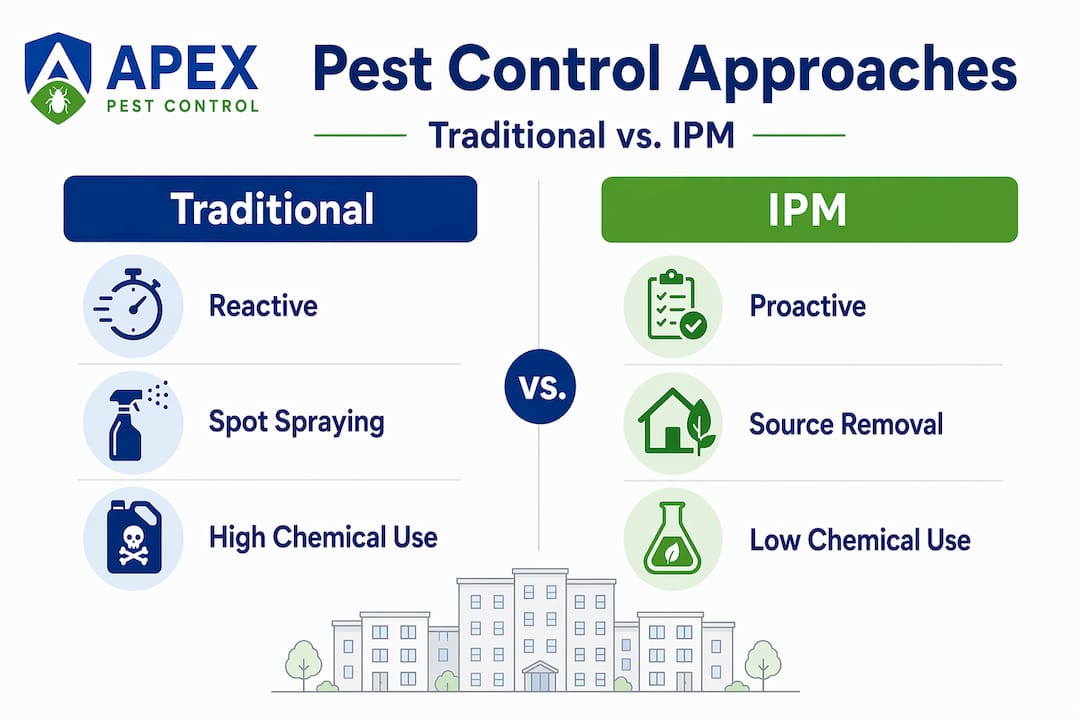
IPM is not a single treatment. It is a structured process that addresses pest problems at every level, from the conditions that invite pests in, to the specific treatments used to eliminate them. For multi-tenant buildings, the IPM process includes inspection, monitoring, prevention, and targeted treatments, such as gel baits or heat, applied only when pest populations exceed a defined threshold.
Here is how a proper IPM program unfolds in a multifamily or commercial building:
- Inspection. A licensed pest professional inspects individual units, common areas, utility rooms, laundry facilities, and the building exterior to identify active pests, entry points, and conditions that favor infestation.
- Monitoring. Sticky traps, glue boards, and bait stations are placed in strategic locations to track pest activity over time. This data drives decisions rather than assumptions.
- Prevention and exclusion. Gaps around pipes are sealed, door sweeps are installed or replaced, and sanitation recommendations are provided to both management and tenants.
- Threshold-based treatment. When monitoring shows pest populations at or above a defined threshold, targeted treatments are applied. Gel baits for cockroaches, tamper-resistant bait stations for rodents, and spot treatments for specific insects are used rather than broad chemical applications.
- Follow-up evaluation. After treatment, monitoring continues to measure effectiveness and catch any resurgence before it spreads.
For IPM explained for Ohio homes and commercial settings, the core advantage is precision. You use less product, in smarter ways, with far better long-term results. And you build a paper trail that matters when tenant complaints or legal questions arise.
IPM vs. traditional pest control: A direct comparison
| Factor | Reactive (traditional) | IPM (prevention-focused) |
|---|---|---|
| Treatment trigger | Visible infestation complaint | Monitoring threshold reached |
| Chemical use | Broad, frequent applications | Targeted, minimal applications |
| Long-term effectiveness | Low, recurring infestations common | High, infestations resolved at root cause |
| Documentation | Minimal | Detailed logs required |
| Cost over time | Higher due to repeat calls | Lower through prevention |
| Tenant satisfaction | Inconsistent | Consistently higher |
| Regulatory alignment | Variable | EPA and HUD endorsed |
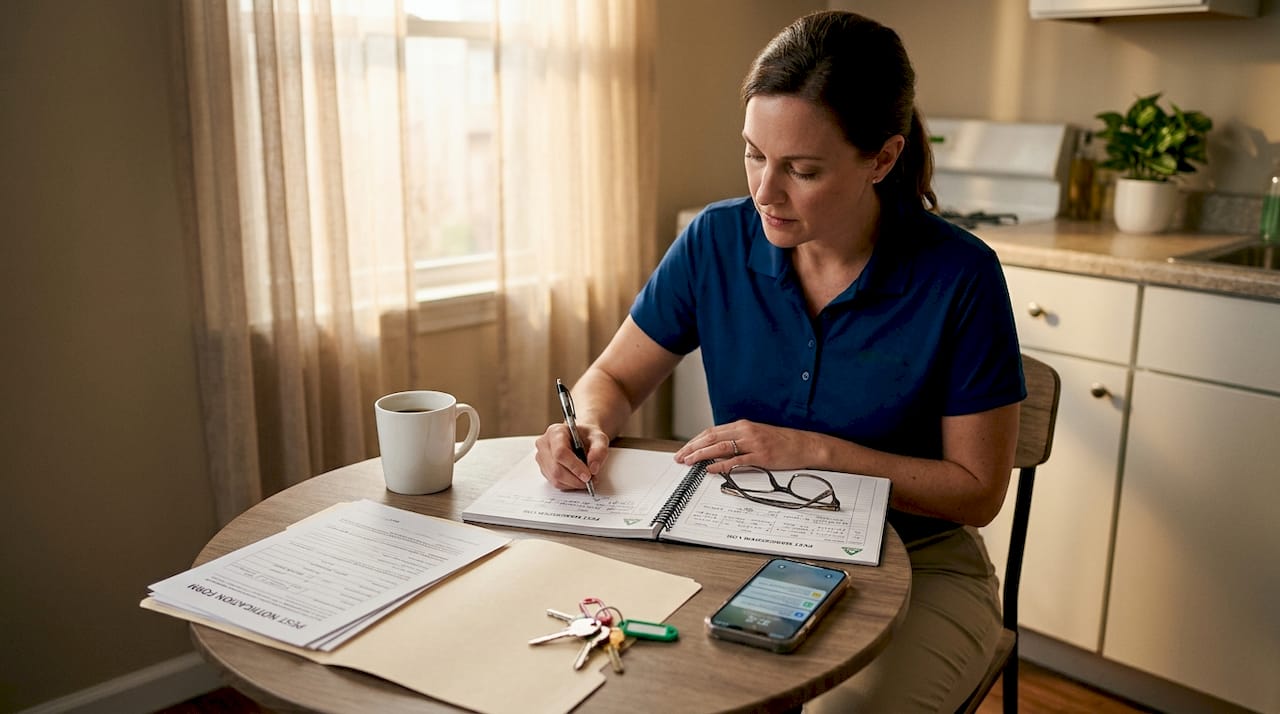
Pro Tip: Keep a pest management log for every unit and common area. Record inspection dates, trap counts, treatments applied, and resident notifications. This documentation protects you legally, helps your pest professional fine-tune the program, and demonstrates due diligence to regulators or prospective tenants.
You can also review smart pest control tips developed specifically for Ohio multi-family properties to see how IPM principles translate into day-to-day operations.
Prevention beats reaction: Why proactive pest management saves money and headaches
Here is an uncomfortable truth most property managers learn the hard way: the majority of persistent pest problems in multi-tenant buildings are not caused by new invasions. They are caused by unresolved, ongoing conditions that were never properly addressed. Pipes that drip. Gaps that were never sealed. Garbage rooms cleaned only when someone complains. Reactive treatments frequently fail with recurring infestations, while preventive IPM reduces long-term costs and pest pressure significantly.
The financial case for prevention is compelling. A single emergency pest treatment call can cost significantly more than a scheduled maintenance visit. When you multiply reactive treatments across dozens of units over the course of a year, the cost grows fast. Add tenant turnover driven by pest-related complaints, the cost of preparing a vacated unit, and the reputational damage that affects future occupancy rates, and the math becomes very clear.
Performance comparison: Proactive vs. reactive pest management
| Metric | Reactive approach | Proactive IPM approach |
|---|---|---|
| Average re-treatment rate | High (monthly or more) | Low (quarterly or less) |
| Tenant complaint rate | Elevated and growing | Declining over time |
| Annual pest control cost | Higher and unpredictable | Lower and budgetable |
| Property reputation impact | Negative reviews common | Neutral to positive |
| Lease renewal rate related to pests | Reduced | Maintained or improved |
Proactive steps every Ohio property manager can take right now:
- Schedule professional inspections quarterly, not only when complaints arrive
- Establish a written pest reporting system for tenants with a guaranteed response window
- Conduct annual exterior exclusion audits to seal gaps, cracks, and utility penetrations
- Partner with your pest control provider to offer tenant education materials on sanitation
- Use eco-friendly cleaning practices in common areas that also reduce pest harborage conditions
For deeper guidance, IPM examples for safer homes and a practical monthly pest maintenance guide can help you build a schedule that fits your property’s size and risk level.
Roles, responsibilities, and compliance for property managers and tenants
Effective pest management in multi-tenant buildings depends on clear roles. When everyone assumes someone else is handling it, nothing gets handled consistently. Property managers carry the primary legal and operational responsibility, but tenants play an indispensable role in daily prevention.
Here is a practical breakdown of responsibilities:
- Property manager. Hire and manage licensed pest control providers. Establish and maintain a written pest management plan. Notify tenants before treatments with appropriate lead time. Keep records of all services, inspections, and tenant communications.
- Pest control provider. Conduct thorough inspections and provide written reports. Apply targeted treatments based on monitoring data. Provide documentation of products used, areas treated, and follow-up recommendations.
- Tenants. Report pest sightings promptly. Maintain sanitation standards in their units. Allow access for scheduled inspections and treatments. Avoid behaviors that create harborage conditions, such as storing cardboard boxes against walls or leaving food unsecured.
Service contracts should include quarterly exterior treatments and as-needed interior visits, with 24 to 48 hours of notice provided to residents before any interior access. Documentation is essential for compliance with Ohio landlord-tenant law and any applicable federal guidelines for subsidized housing.
Documentation essentials for compliance include:
- Written service agreements with your pest control provider
- Treatment logs showing dates, products, application locations, and technician information
- Tenant notification records (written, with dates)
- Inspection reports for individual units and common areas
- Any correspondence related to tenant pest complaints and how they were resolved
For guidance on compliant unit cleanouts between tenants, the property manager cleanout guide covers practical steps that also reduce pest introduction risk.
Pro Tip: Build pest management education into your lease onboarding process. A simple one-page guide explaining tenant responsibilities for sanitation, how to report sightings, and what to expect during inspections dramatically increases cooperation. When tenants understand why these steps matter, they follow through. Refer to strategies for boosting success through client cooperation to strengthen this process.
Proven practices and real-world tools for Ohio property managers
Ohio’s climate creates specific pest pressure patterns that matter for your planning. Milder winters in recent years have extended the active season for pests like German cockroaches, mice, and bed bugs. Spring and fall bring rodent pressure as animals seek indoor harborage. Summer accelerates ant and stinging insect activity around building perimeters. Your pest management program needs to account for these seasonal rhythms, not just respond to whatever complaint arrives that week.
A practical Ohio-focused implementation checklist:
- January through March: Interior rodent monitoring, inspection of attic and basement access points, review of tenant reporting logs from the prior year
- April through June: Perimeter treatments, exterior exclusion repairs, ant and stinging insect baiting around common areas
- July through September: Heightened monitoring for German cockroaches in laundry and kitchen areas, bed bug awareness reminders to residents near high-turnover periods
- October through December: Rodent exclusion reinforcement before winter, exterior bait station checks, review of annual pest management documentation
Resident education on sanitation and clutter reduction is the number one prevention tool in multifamily settings, and shared responsibility between management and tenants is the foundation of any effective program. This is not a slogan. It reflects what experienced pest professionals see in buildings that consistently outperform their peers on pest outcomes.
Use a commercial pest control checklist to standardize inspections across your property and make sure nothing is overlooked during routine visits. Pair it with the smart pest control strategies for Ohio multi-family properties to keep your program calibrated to local conditions.
What most pest management articles won’t tell you: The real key to multi-tenant success
After more than 50 years of working on Ohio properties, we have seen every product, every spray schedule, and every trendy treatment method come and go. Here is what actually determines whether a multi-tenant pest management program works long term: property culture.
The buildings that consistently achieve low pest pressure are not necessarily the ones with the most aggressive treatment schedules. They are the ones where management communicates clearly, responds to tenant reports within a predictable time frame, holds vendors accountable to documented outcomes, and treats pest management as an ongoing operational priority rather than a crisis response.
Tenants talk. When word spreads that management takes pest complaints seriously and follows through, residents start reporting problems earlier. Early reporting means smaller infestations, which means faster resolution and lower costs. That feedback loop, built on trust and communication, does more for long-term pest control outcomes than any single product or chemical.
Documentation also matters more than most property managers expect. Detailed records of every inspection, treatment, and tenant notification give you leverage in legal disputes, support insurance claims, and help your pest control provider identify patterns that predict future problems before they escalate. The property managers who treat documentation as a burden tend to repeat the same pest problems year after year. Those who treat it as a management tool see steady improvement.
Culture change at the property level sounds abstract, but it comes down to specific behaviors: a clear reporting channel, consistent technician access, and routine resident education. Maximizing pest control outcomes through client cooperation is a concrete approach to building that culture in your building, and it is worth reading before your next lease cycle starts.
Get expert support for stress-free pest management
Building an effective pest management program for a multi-tenant property in Ohio takes knowledge, consistency, and the right professional partner. At Apex Pest Control, we have been solving these exact problems for Ohio property managers since 1969, covering everything from cockroach control to rodent elimination in residential and commercial buildings across the state. Whether you manage a six-unit apartment building or a large commercial complex, our team builds programs tailored to your property’s specific risk profile. Explore our best commercial pest control services, learn about our rodent extermination services, and get a free pest management quote to see what a professionally managed program looks like for your property.
Frequently asked questions
What is Integrated Pest Management (IPM) and why is it recommended for apartments?
IPM combines monitoring, sanitation, exclusion, and targeted treatments to resolve pest problems at their source rather than just suppressing visible activity. It is endorsed by the EPA and HUD specifically because it delivers better long-term results in multi-tenant settings.
How often should pest control services be scheduled in multi-tenant buildings?
Most professional programs follow a schedule of quarterly exterior treatments and as-needed interior visits, with 24 to 48 hours of notice given to residents before any interior access and full documentation maintained throughout.
What is the main cause of recurring pest problems in multifamily buildings?
Recurring pests almost always trace back to reactive “spot spraying” without addressing the underlying conditions, and preventive IPM significantly reduces both long-term costs and the frequency of infestations compared to reactive treatment cycles.
Who is responsible for pest management tasks in a multi-tenant building?
Property managers handle service contracts, resident notifications, and treatment access, while tenants are responsible for sanitation and prompt reporting. Resident education on sanitation is widely recognized as the single most effective prevention tool in multifamily buildings.
What documentation do Ohio property managers need for pest control compliance?
Managers should maintain detailed records of all service visits, products applied, locations treated, and written notices provided to residents. Documentation is essential for compliance with Ohio landlord-tenant law and any applicable federal housing regulations, and it protects the property owner in disputes.