


A scratching sound in the attic at 2 a.m., droppings along a basement wall, or a raccoon tearing into a dumpster is more than an inconvenience. Wildlife removal addresses the animal you can see, the entry points you cannot, and the conditions that invite the problem to return. For Ohio homeowners and property managers, that complete approach is the difference between a short-lived fix and lasting peace of mind.
Wild animals look for the same things people do: shelter, warmth, food, and a safe place to raise young. Homes, apartment buildings, warehouses, restaurants, and offices can provide all four. Once an animal establishes a nesting area in an attic, crawl space, chimney, wall void, or exterior structure, the risk of property damage and contamination can increase quickly.
When Wildlife Removal Is Needed
Not every animal sighting requires professional service. A squirrel passing through the yard or a rabbit under a shrub is part of normal outdoor life. The concern begins when wildlife enters a structure, damages building materials, threatens people or pets, contaminates an area, or repeatedly returns to the property.
Common warning signs include noises in walls or ceilings, greasy rub marks near gaps, scattered insulation, damaged vents, chewed wiring, animal droppings, unusual odors, and visible holes around rooflines or foundations. On commercial properties, torn dumpster lids, damage near loading docks, nesting materials around equipment, and bird activity above entrances can also signal a developing issue.
Timing matters. A raccoon in an attic, a bat in a living space, or a skunk beneath a deck should not be treated as a wait-and-see problem. Wildlife can cause direct damage, but the secondary issues can be just as disruptive. Soiled insulation, parasite concerns, odors, damaged inventory, and interrupted operations can all follow an unchecked animal entry.
Why Trapping Alone Is Not Wildlife Removal
Removing an animal without solving the entry problem often creates a frustrating cycle. A homeowner may see one squirrel leave, only to hear another in the same attic days later. A facility may relocate birds from a loading area while food sources and nesting ledges remain available.
Effective wildlife service begins with inspection. A trained technician identifies the animal involved, reviews likely entry routes, looks for active nesting or young animals, and assesses the conditions that made the property attractive. The treatment plan should account for the structure, the season, the species, and the level of activity.
The best solution usually combines humane removal or exclusion with repair recommendations and prevention. Depending on the situation, this may include securing roof vents, screening chimney openings, sealing gaps around utility lines, repairing soffits, reinforcing vulnerable access points, or improving trash and food-storage practices. The exact method depends on the animal and the property. What works for squirrels may not be appropriate for bats, birds, groundhogs, or raccoons.
Exclusion Prevents Repeat Entry
Exclusion means making the building inaccessible without trapping an animal inside. It is one of the most important parts of professional wildlife control. Technicians may use durable materials and carefully placed one-way devices that allow an animal to exit while preventing re-entry.
This work requires precision. Sealing a primary opening before confirming that all animals are out can leave wildlife trapped inside a wall or attic. Sealing only the most obvious hole can leave secondary access points open. A thorough inspection considers the entire exterior, including roof intersections, eaves, vents, chimneys, siding transitions, foundation gaps, garage areas, and utility penetrations.
Young Animals Change the Plan
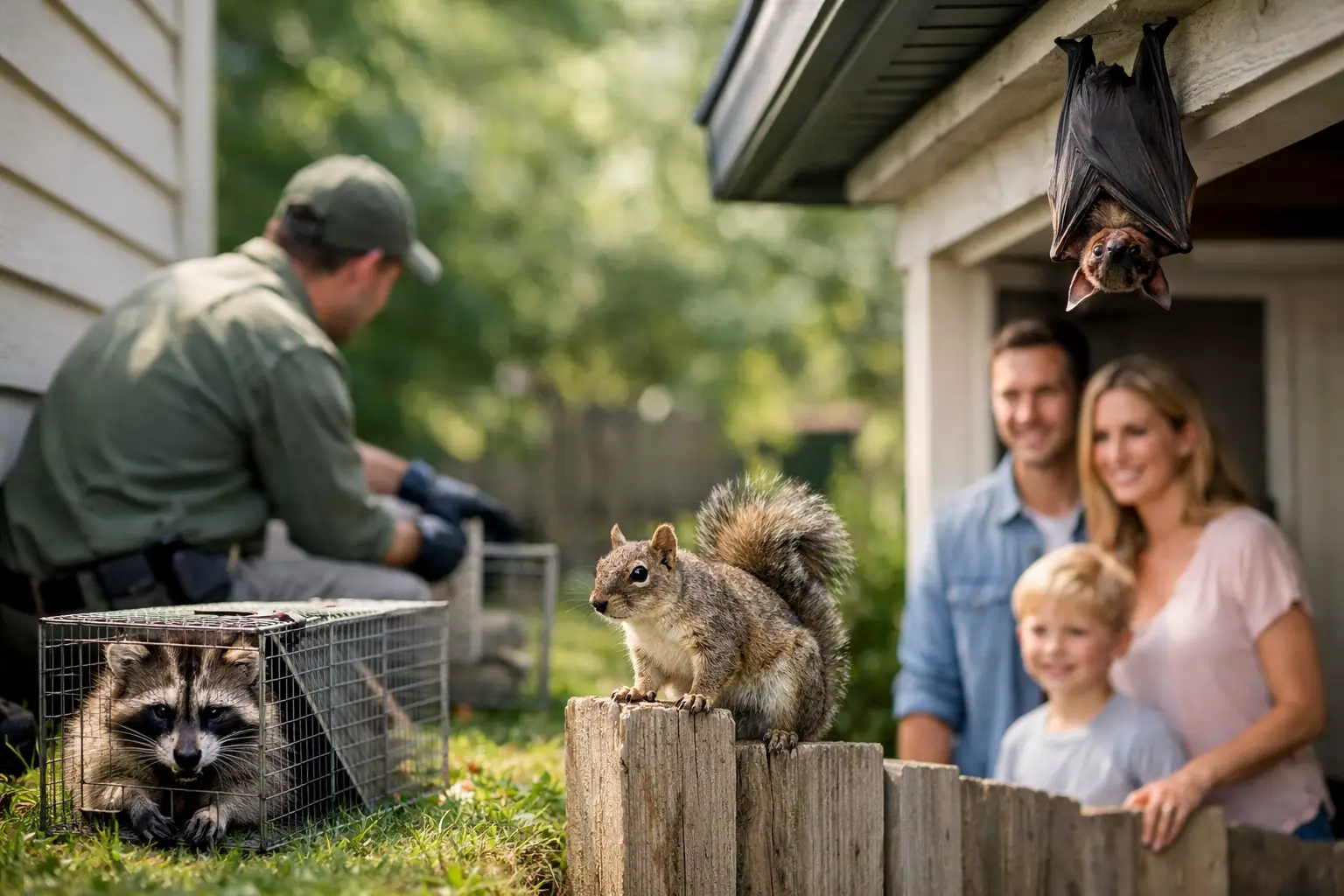
Spring and early summer can be especially complicated because many animals are raising young. A mother raccoon, squirrel, or other animal may be entering and leaving to feed babies that cannot yet leave the nest. Removing or blocking the adult without a proper plan can create a humane concern and a serious odor problem inside the structure.
Professional service should account for the breeding cycle and use methods appropriate for the situation. The goal is to resolve the issue safely while minimizing unnecessary harm and avoiding damage to the property.
Wildlife Problems Can Affect Health, Safety, and Property
Wildlife activity is not always a health emergency, but it should be handled carefully. Droppings and urine can contaminate insulation, stored items, work areas, and surfaces. Animals may carry parasites, and defensive behavior is possible when an animal feels cornered, injured, or protective of its young.
Bats deserve particular caution. If a bat is found in a room where someone may have been sleeping, or where a child or pet was unattended, avoid handling it and seek guidance from local health authorities or a medical professional. Bat removal also requires attention to timing and applicable wildlife rules. A qualified professional can help determine the appropriate path forward while protecting the building and its occupants.
Property damage can be expensive as well. Squirrels and rodents may chew electrical wiring. Raccoons can tear shingles, soffits, and ductwork apart to expand an opening. Birds can block vents and create slippery, unsanitary buildup around entrances and equipment. Skunks under a porch can turn a simple outdoor area into a place the family avoids.
For commercial facilities, wildlife concerns can affect more than maintenance budgets. Food-service businesses, healthcare properties, warehouses, multifamily communities, and manufacturing sites may face sanitation concerns, tenant complaints, operational interruptions, and audit questions. Documented inspections, corrective actions, and ongoing monitoring help facilities stay prepared rather than reacting after a visible problem escalates.
What to Do Before Help Arrives
The safest first step is to give the animal space. Do not try to catch, feed, poison, or corner wildlife. Avoid sealing a hole if you are unsure whether animals are still inside. If the animal is indoors, keep children and pets away, close interior doors when possible, and avoid direct contact.
Outside, reduce attractants without putting yourself at risk. Secure garbage containers, clean up fallen fruit, store pet food indoors, and keep birdseed from accumulating near the building. If you have a suspected attic or crawl-space problem, avoid disturbing the nesting area. Walking through contaminated insulation or pulling apart a nest can spread debris and make the situation harder to assess.
If you see an injured, aggressive, or potentially sick animal, contact the appropriate local animal or wildlife authority. For an active structural infestation, prompt professional inspection is the practical next step.
A Reliable Wildlife Removal Process
A professional plan should be clear from the beginning. First comes an inspection to identify the animal, active areas, entry routes, damage, and contributing conditions. Next comes a tailored removal or exclusion strategy designed for the property and season.
After activity is resolved, the focus shifts to prevention. That can include closing entry points, addressing food and waste conditions, recommending repairs, and setting follow-up checks where ongoing pressure is likely. Attic cleanup or insulation replacement may also be appropriate if contamination or damage is extensive.
Apex Pest Control approaches wildlife concerns with the same customer-protective standards used across its pest management services: trained professionals, responsive scheduling, individualized recommendations, and careful attention to the safety of people, pets, property, and the surrounding environment. Since 1969, the company has helped Ohio homes and businesses move from stressful pest activity to proven, practical prevention.
Preventing Future Wildlife Entry
Prevention is ongoing property care, not a one-time chore. Seasonal exterior inspections are especially useful after storms, roof work, tree trimming, or construction changes. Small gaps can become large access points when animals pull at weak materials or repeatedly test an opening.
Keep tree branches trimmed away from rooflines where practical, maintain screens and vent covers, repair damaged siding and soffits, and inspect doors for gaps at the bottom and sides. Commercial operators should also review dumpster placement, waste handling, exterior lighting, door discipline at loading areas, and landscape conditions around the building.
No prevention plan can guarantee that wildlife will never visit your property. Ohio’s changing weather naturally pushes animals toward shelter. But a well-maintained structure with fewer food sources, fewer hiding places, and properly secured access points is much less likely to become a nesting site.
When wildlife has crossed from the outdoors into your home or facility, act before damage and contamination spread. A careful inspection and a complete removal-and-exclusion plan can restore control of the property and help keep it that way.