



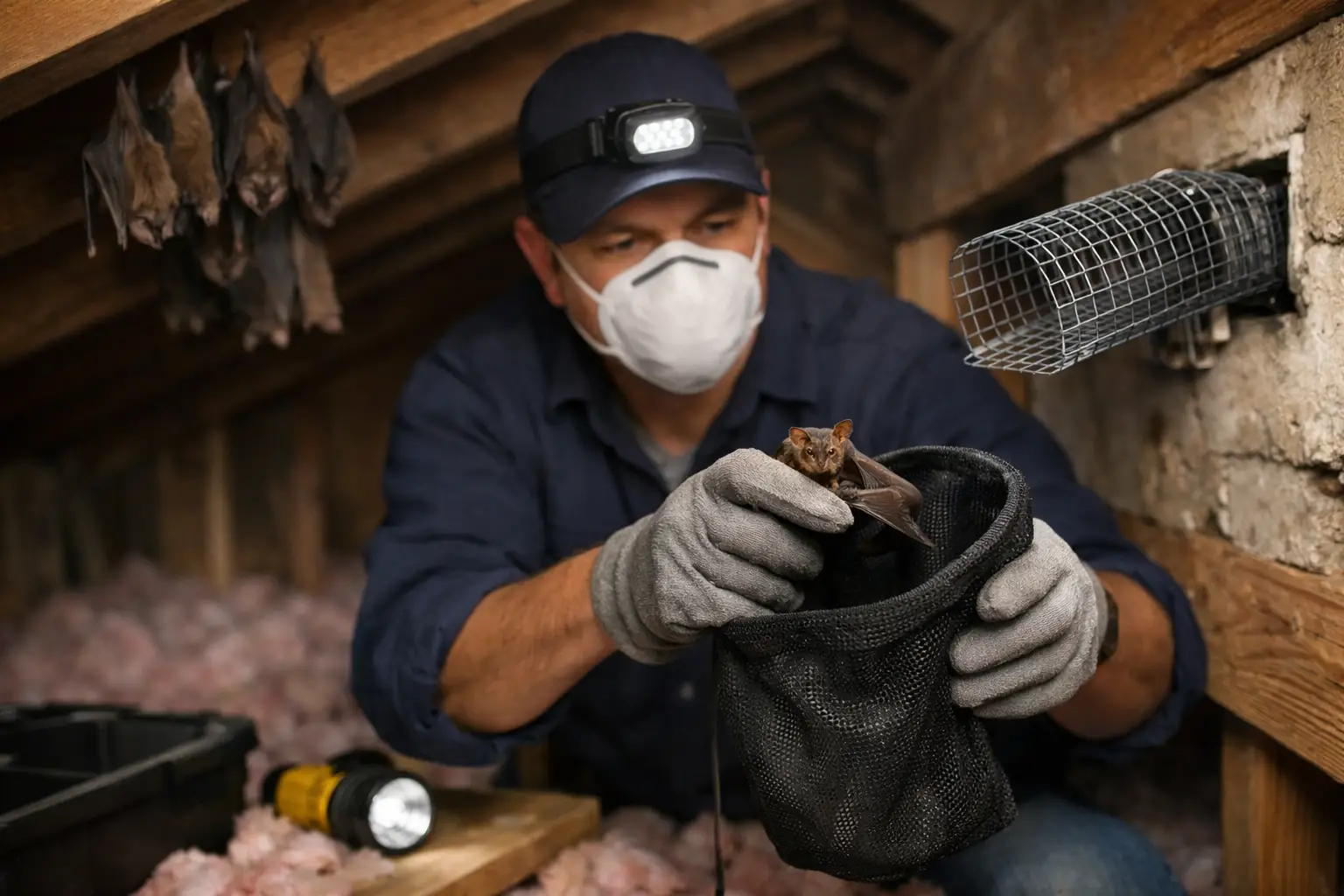
You usually do not find out you have bats at a convenient time. It is often a scratching sound above the ceiling at dusk, a faint chirping near a vent, or dark staining around an attic gap you never noticed before. When bat removal from attic spaces becomes necessary, speed matters – but so does doing the job legally, safely, and completely.
Bats are not like mice or squirrels. They can squeeze through very small openings, return to the same roost site repeatedly, and create serious cleanup issues when guano and urine build up. They are also protected in many situations, which means timing and method matter. A rushed or do-it-yourself approach can leave you with trapped animals, stronger odors, and a much bigger problem a few weeks later.
Why bat removal from attic work needs a different approach
The biggest mistake property owners make is treating bats like any other nuisance wildlife. With rodents, the focus is often trapping or baiting. With bats, the proven solution is exclusion – allowing them to leave and preventing them from getting back inside.
That distinction matters because bats often leave the attic at night to feed and return before dawn. If the entry point is simply sealed while bats are still inside, you can end up with dead animals in the structure or bats moving deeper into walls and living spaces. If nothing is sealed at all, the colony keeps using the attic as a roost.
There is also the health side of the issue. Bat guano can support fungal growth, and large accumulations can damage insulation, stain building materials, and create persistent odor. In commercial settings, the stakes can be even higher because contamination, sanitation, and facility image all come into play.
Signs you may have bats in the attic
Some infestations are obvious. Others start small and grow quietly over time. The most common signs include scratching or fluttering sounds at dusk and dawn, droppings that collect below entry points, and strong ammonia-like odor from guano and urine.
You may also notice rub marks or brown staining near rooflines, soffits, vents, fascia boards, or gaps where construction materials meet. Outside the home, bats may be seen exiting from the same point just after sunset. Inside the attic, technicians often find clustered droppings, compressed insulation, and evidence of repeated roosting near warmer protected areas.
It depends on the building, though. Older homes with complex rooflines often offer more hidden access points. Commercial buildings can have expansion joints, roof penetrations, and service voids that give bats multiple routes in and out.
Why DIY bat control often fails
Homeowners are often tempted to spray repellents, set traps, or block the hole they found and hope for the best. Those methods usually fail because they do not address the full structure.
Repellents rarely solve an active bat infestation for long. Trapping is not a reliable whole-colony solution in attic settings. Sealing a single visible gap without identifying all secondary entry points can force bats into another part of the structure. And if young bats are present during maternity season, improper removal can separate them from the adults and create a much more serious animal and odor problem.
There is also a safety concern. Any direct contact with a bat should be handled carefully, especially if a bat is found in a room where people were sleeping or where children or pets were present. In those situations, professional guidance is the safest next step.
How professional attic bat removal works
A proper service starts with inspection, not guesswork. The goal is to identify the species activity, locate the main exit points, find all potential secondary gaps, and determine whether seasonal restrictions affect the removal plan.
Full inspection and access-point mapping
A trained technician inspects the attic and the exterior of the structure together. That matters because the indoor mess does not always line up perfectly with the outdoor access point. Roof edges, gable vents, ridge vents, chimney intersections, dormers, and construction gaps all need to be checked.
The inspection also helps determine the scale of the infestation. A few bats roosting temporarily is different from an established colony that has been active for multiple seasons. The cleanup and exclusion scope changes accordingly.
Exclusion instead of trapping
Once timing allows, one-way exclusion devices are installed at the primary bat exit points. These devices let bats leave but prevent them from reentering. At the same time, all other likely access gaps are sealed so the colony cannot shift to another opening.
This is the part that has to be exact. If even a small secondary gap is missed, the problem may continue. If exclusion is done at the wrong time of year, flightless young may remain inside. Professional bat work is as much about timing and structure knowledge as it is about tools.
Sealing the structure
After the bats have exited, the remaining openings are sealed with durable materials suited to the construction type. This step is what turns a short-term removal into long-term prevention.
Cheap patchwork usually does not last. Entry points around roofing materials, vents, trim, and utility penetrations need repairs that hold up to weather and normal building movement. Otherwise, the same colony – or a new one – may return.
Attic cleanup is not optional
Removing the bats is only part of the job. If guano and contaminated insulation are left behind, the attic can still smell, draw insects, and remain unsanitary.
Guano and contaminated material removal
Professional cleanup may include removal of droppings, soiled insulation, and contaminated debris. The right protective equipment and containment practices are important because sweeping or disturbing droppings improperly can spread particulates into the air.
The amount of cleanup depends on how long the colony was present. A minor issue may require localized sanitation. A heavy infestation may call for insulation replacement and deeper restoration work.
Sanitizing and odor control
After physical removal of contaminated material, sanitation treatments help reduce odor and improve attic conditions. This does not replace exclusion or cleanup, but it supports a more complete recovery of the space.
For homeowners, that means fewer lingering smells and less risk of hidden contamination remaining overhead. For commercial properties, it supports a cleaner, more defensible environment.
The timing issue many property owners do not know about
Bat work is not always a same-day seal-and-solve situation. In many areas, exclusion must be timed around maternity season, when young bats may be unable to fly. If removal is attempted during that period, it can create legal, ethical, and practical problems.
That does not mean you wait and do nothing. It means a professional develops the right plan for your structure and season. In some cases, monitoring, scheduling, and pre-sealing of non-active gaps can begin right away so the full exclusion can be completed as soon as conditions allow.
This is one reason experienced local service matters in Ohio. Seasonal wildlife patterns, home construction styles, and weather exposure all influence how bat problems are handled correctly.
What good bat prevention looks like
The best result is not just getting bats out. It is making the attic less vulnerable going forward.
That usually means sealing structural gaps, addressing vent screening issues, repairing worn roofline components, and correcting entry points around flashing or trim. In some cases, insulation damage or moisture conditions also need attention because neglected attics tend to attract repeat problems.
For residential properties, prevention protects the living space and reduces the chance of another urgent wildlife issue. For commercial properties, it helps protect operations, reputation, and compliance standards.
When to call for professional help
If you are hearing movement overhead at dusk, seeing droppings in the attic, or noticing bats exiting the roofline, this is the point to bring in a qualified pest and wildlife professional. The longer a colony remains, the more contamination and structural impact you may be dealing with.
A company with proven experience in wildlife exclusion, sanitation, and building repair coordination can save you time, repeat costs, and unnecessary risk. That is especially true when children, pets, tenants, employees, or sensitive facility conditions are involved.
Apex Pest Control approaches bat issues with the same priorities that matter most to property owners – fast response, safe service, thorough exclusion, and prevention that lasts.
If bats have turned your attic into a roost, the right move is not the fastest patch you can find. It is a careful removal plan that protects the people inside, clears the contamination above them, and closes the door on the problem for good.