



Every week, American offices lose thousands of productive hours due to hidden bed bug infestations that disrupt daily operations. For office managers in Ohio, this problem is more than an inconvenience. Bed bugs not only undermine professional reputations but also threaten employee health and workplace hygiene. This guide uncovers the signs, risks, and most effective solutions so you can confidently protect your team and maintain a safe commercial environment.
Table of Contents
- Bed Bug Infestations In Commercial Workplaces
- How Bed Bugs Spread And Hide In Offices
- Common Signs And Misconceptions About Bed Bugs
- Health Risks And Legal Concerns For Employers
- Effective Detection, Prevention, And Remediation Strategies
- Choosing Safe And Professional Pest Control Solutions
Key Takeaways
| Point | Details |
|---|---|
| Bed Bug Transmission | Bed bugs spread rapidly in workplaces through personal belongings and shared spaces, making detection challenging. |
| Economic and Psychological Impact | Infestations can lead to significant productivity losses and reputational damage, highlighting the need for proactive management. |
| Effective Management Strategies | Implementing regular inspections and employee education is crucial for detection and prevention of bed bugs. |
| Professional Pest Control | Hiring licensed pest control professionals ensures effective treatment and long-term prevention of infestations. |
Bed Bug Infestations in Commercial Workplaces
Bed bug infestations represent a serious and growing challenge for Ohio’s commercial workplaces, transforming seemingly safe professional environments into potential pest hotspots. Unlike residential settings, office spaces present unique complications for bed bug management. Bed bug populations can rapidly spread through workplaces before management even recognizes the problem, creating significant risks for employee health and workplace productivity.
Commercial environments like offices provide multiple pathways for bed bug transmission. Employees can unknowingly transport these insects through personal belongings such as bags, coats, and briefcases. Hot desking, shared workspaces, and frequent inter-office movement dramatically increase transmission opportunities. Small crevices in office furniture, electrical outlets, and carpet edges become prime hiding spots where bed bugs can establish undetected colonies.
The economic and psychological impact of workplace bed bug infestations extends far beyond simple pest control. Productivity losses, potential worker compensation claims, and potential reputational damage can result from unaddressed infestations. Organizations must implement proactive detection and prevention strategies that include regular professional inspections, employee education, and swift response protocols.
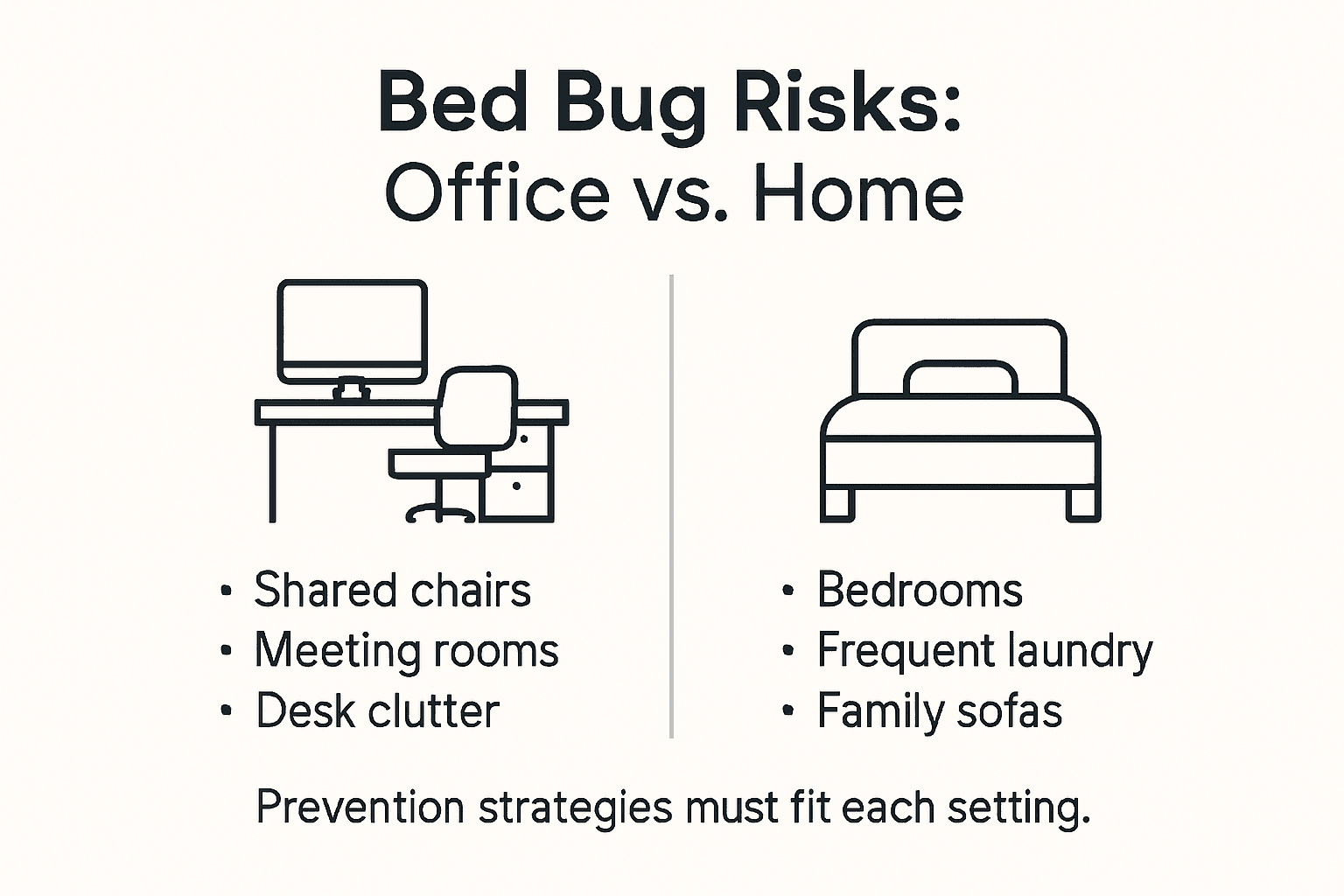
Here’s a quick overview of how bed bugs impact workplaces compared to residential settings:
| Factor | Workplaces | Residential Spaces |
|---|---|---|
| Main transmission route | Personal belongings, shared areas | Luggage, visitors, furniture |
| Common hiding spots | Office chairs, outlets, partitions | Beds, sofas, mattress seams |
| Detection difficulty | High due to movement | Moderate, fewer hiding spots |
| Impact | Productivity, reputation, legal risks | Sleep disruption, home stress |
| Response urgency | Immediate, large scale | Gradual, household scope |
Professional Tip: Conduct quarterly professional pest inspections and establish clear reporting mechanisms for employees to quickly alert management about potential bed bug sightings.
How Bed Bugs Spread and Hide in Offices
Bed bugs are masters of stealth and transmission, especially in complex commercial environments like modern offices. These tiny insects expertly hitchhike on personal belongings, transforming seemingly clean workspaces into potential breeding grounds. Employees, visitors, and vendors unknowingly become carriers, transporting bed bugs through bags, clothing, briefcases, and other personal items that move between home and workplace environments.
Unlike residential settings, office spaces present unique challenges for bed bug detection and control. These insects can crawl into minuscule cracks in furniture, electrical outlets, carpet edges, and between cubicle walls, creating intricate networks of hidden colonies. Hot desking, shared workstations, and frequent movement of personnel dramatically increase transmission opportunities. Bed bugs can survive for months without feeding, making them particularly challenging to identify and eliminate in dynamic workplace settings.

The transmission mechanisms in office environments are complex and multifaceted. Soft furnishings like upholstered chairs, fabric-covered partitions, and carpeted areas provide ideal habitats for bed bugs to establish themselves. Conference room furniture, break room seating, and collaborative workspace equipment can become unexpected vectors for infestation. Organizations must recognize that bed bug spread is not just about individual hygiene but about understanding complex environmental factors that facilitate their movement and survival.
Professional Tip: Implement a strict inspection protocol for office furniture and equipment, especially after purchasing used items or following employee travel periods.
Common Signs and Misconceptions About Bed Bugs
Bed bug identification requires careful observation and understanding beyond popular myths. Many people misunderstand the fundamental characteristics of these elusive insects, leading to ineffective prevention and control strategies. Contrary to widespread belief, bed bugs are not indicators of poor personal hygiene or unclean environments. These tiny parasites are opportunistic travelers that can infiltrate even the most meticulously maintained spaces, hitching rides through luggage, clothing, and shared furniture.
Recognizing bed bug infestations demands knowledge of specific visual and physical indicators. Telltale signs include clustered itchy bite marks, typically appearing in linear patterns on exposed skin, rusty or reddish stains on bedding from crushed insects, dark excrement spots, abandoned exoskeletons, and a distinctive sweet, musty odor. These insects are masters of concealment, frequently hiding in minute cracks and crevices near human resting areas, emerging primarily during nighttime to feed on carbon dioxide and body heat.
A critical misconception is that bed bugs pose significant health risks by transmitting diseases. Scientific research consistently confirms that while bed bug bites can cause significant discomfort, itching, and potential allergic reactions, these insects do not directly spread infectious diseases to humans. Their primary impact is psychological and economic, causing stress, sleep disruption, and potential workplace productivity losses. Understanding these nuanced characteristics helps organizations develop more effective, targeted strategies for bed bug management and prevention.
Professional Tip: Conduct monthly comprehensive inspections of office furniture, especially in shared and high-traffic areas, using bright flashlights to detect early signs of potential bed bug activity.
Health Risks and Legal Concerns for Employers
Bed bug infestations in workplace environments present complex legal and health challenges that extend far beyond simple pest control. Employers bear significant responsibilities in managing potential bed bug exposure risks, requiring comprehensive strategies that balance employee safety, privacy, and organizational liability. These obligations encompass developing clear pest management protocols, ensuring professional inspections, and maintaining transparent communication about potential infestations.
The health implications of workplace bed bug exposure are multifaceted, primarily manifesting through psychological stress, potential allergic reactions, and indirect productivity impacts. While bed bugs do not transmit infectious diseases, their presence can trigger significant anxiety, sleep disruption, and potential dermatological responses among employees. Organizations must recognize these risks as legitimate workplace health concerns, implementing proactive measures that demonstrate commitment to employee well-being and create supportive reporting mechanisms for potential infestations.
Legal considerations surrounding bed bug management are intricate and demand careful navigation. Employers must balance compliance with health and safety regulations, workers’ compensation guidelines, and privacy protections. Potential legal risks include negligence claims if an organization fails to address known infestations, potential workers’ compensation claims for stress-related or allergic reaction treatments, and potential violations of workplace safety standards. Developing comprehensive, documented pest management strategies becomes crucial in mitigating these potential legal vulnerabilities and demonstrating responsible organizational leadership.
Professional Tip: Develop a written bed bug response protocol that outlines specific reporting procedures, inspection processes, and clear steps for managing potential workplace infestations.
Effective Detection, Prevention, and Remediation Strategies
Bed bug management demands a comprehensive, multifaceted approach that combines scientific precision with strategic implementation. Integrated Pest Management techniques provide the most effective framework for addressing workplace bed bug challenges, requiring meticulous identification, systematic monitoring, and sophisticated intervention strategies. Organizations must develop robust protocols that address detection, prevention, and targeted remediation across multiple operational dimensions.
Detection strategies involve rigorous, systematic inspection protocols targeting potential bed bug harborages. Critical examination areas include furniture seams, electrical outlets, carpet edges, cubicle partitions, and shared workplace equipment. Specialized tools like high-powered flashlights, magnifying glasses, and professional monitoring devices can help identify early infestation signs such as rusty excrement spots, shed exoskeletons, and live insect evidence. Regular, scheduled inspections by trained professionals become crucial in maintaining proactive surveillance and preventing widespread proliferation.
Prevention requires a holistic approach combining environmental management, employee education, and strict organizational protocols. Recommended strategies include reducing workplace clutter, implementing strict secondhand furniture inspection procedures, establishing clear reporting mechanisms, and creating designated quarantine protocols for potentially contaminated items. Organizations should develop comprehensive training programs educating employees about bed bug identification, transmission risks, and appropriate response procedures. Technological solutions like mattress encasements, heat treatments, and targeted chemical interventions can provide additional layers of protection against potential infestations.
Professional Tip: Establish a confidential reporting system that encourages employees to immediately notify management of potential bed bug sightings without fear of stigma or professional repercussions.
Choosing Safe and Professional Pest Control Solutions
Professional pest control represents the most strategic approach to addressing bed bug challenges in workplace environments. Hiring licensed pest management professionals offers the most effective and comprehensive solution for bed bug eradication, ensuring targeted treatments that minimize risks and maximize long-term prevention. Unlike DIY approaches, professional services combine sophisticated techniques including advanced heat treatments, precise chemical applications, and comprehensive inspection protocols.
Selecting the right pest control provider requires careful evaluation of several critical factors. Organizations should prioritize licensed professionals with specialized bed bug expertise, verifiable track records, and comprehensive treatment methodologies. Key selection criteria include professional certifications, demonstrated experience in commercial settings, transparent safety protocols, and ability to provide detailed treatment plans tailored to specific workplace environments. Requesting comprehensive safety documentation, understanding treatment approaches, and confirming insurance coverage becomes essential in making informed decisions.
Below is a summary of professional pest control selection criteria for organizations:
| Criterion | Why It Matters | Example Question |
|---|---|---|
| Licensing & Certification | Ensures legal compliance and expertise | Is the provider state-licensed? |
| Commercial Experience | Demonstrates handling of workplace challenges | Have you treated offices before? |
| Comprehensive Documentation | Supports accountability and traceability | Do you offer treatment records? |
| Insurance Coverage | Reduces company liability during treatment | Are you fully insured? |
| Follow-Up Protocols | Ensures long-term effectiveness | Do you schedule follow-up visits? |
A comprehensive bed bug treatment strategy extends beyond initial eradication efforts. Professional pest control services should offer integrated management approaches that include thorough initial inspections, targeted treatment protocols, follow-up monitoring, and preventative recommendations. This holistic approach helps organizations not only eliminate existing infestations but also implement sustainable strategies that reduce future transmission risks. Effective professionals will collaborate closely with workplace management, providing education, clear communication, and ongoing support throughout the remediation process.
Professional Tip: Request detailed treatment documentation and follow-up inspection schedules from pest control providers to ensure comprehensive and accountable bed bug management.
Protect Your Ohio Workplace from Bed Bug Risks with Expert Support
Bed bugs in office environments create serious challenges that affect employee well-being and business reputation. This article highlights key issues such as difficult detection, rapid transmission via personal belongings, and potential legal and productivity impacts. If you are concerned about safeguarding your workplace against these hidden pests, you are not alone. Organizations need expert guidance to implement effective detection, prevention, and remediation strategies that comply with legal responsibilities and prioritize employee health.
At Apex Pest Control, we are committed to eliminating bed bug infestations professionally and safely across Ohio’s commercial spaces. Our comprehensive pest management services include customized commercial programs designed to address complex factors like office furniture infestations, shared workspaces, and employee education. Discover how our licensed professionals use advanced techniques tailored for workplaces to protect your office environment from persistent bed bug threats.
Don’t wait for a minor issue to become a costly problem. Visit our Uncategorized Archives – Apex Pest Control to learn about our pest control expertise and take the first step toward a pest-free workplace. Reach out for a free quote today and safeguard your business with solutions that prioritize people, pets, and the environment. Act now to maintain a healthy and productive office atmosphere with Apex Pest Control.
Frequently Asked Questions
What are the signs of a bed bug infestation in an office?
Signs of a bed bug infestation in an office include itchy bite marks in linear patterns on the skin, rusty or reddish stains on furniture, dark excrement spots, abandoned exoskeletons, and a distinct musty odor.
How can bed bugs be effectively prevented in commercial workplaces?
Preventing bed bugs in commercial workplaces involves reducing clutter, implementing strict inspection protocols for secondhand furniture, educating employees about bed bug identification and reporting mechanisms, and using protective encasements for furniture.
What should employers do if they suspect a bed bug infestation?
Employers should immediately implement their pest management protocol, conduct professional inspections, communicate transparently with employees about potential infestations, and establish clear reporting procedures for sightings.
Are bed bugs a health risk in the workplace?
While bed bugs do not transmit diseases, their presence can lead to psychological stress, sleep disruption, and allergic reactions among employees. Addressing infestations promptly is crucial for maintaining workplace morale and productivity.