


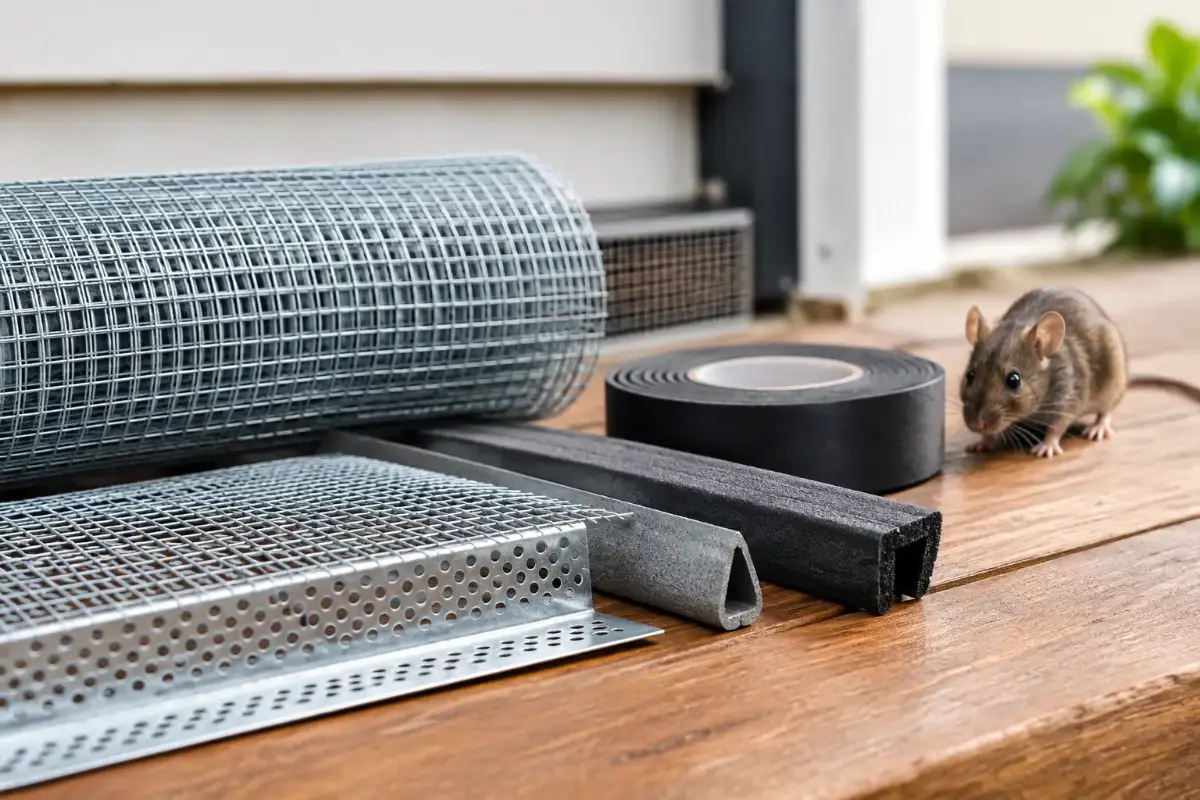
A mouse can fit through an opening about the width of a pencil. That means a gap beneath a utility line, a split door sweep, or a damaged vent cover can become an entry point long before you see droppings in the pantry. The best rodent proofing materials do more than cover a hole temporarily. They stand up to gnawing, weather, movement, and repeated pressure from rodents looking for shelter.
For homeowners and facility managers, exclusion is one of the most dependable ways to prevent recurring rodent activity. Traps and treatment can address rodents already inside, but durable repairs help stop the next mouse or rat from replacing them. The right material depends on the size and location of the opening, the building surface, moisture exposure, and whether the area must remain ventilated.
What Makes a Material Rodent-Proof?
Rodents are persistent chewers. Mice can damage foam, plastic, wood, rubber, and poorly installed caulk. Rats can enlarge weak openings quickly, especially around foundations, loading areas, garages, and utility penetrations. A successful repair needs a material rodents cannot easily chew through, pull aside, or squeeze around.
Durability matters just as much. Ohio’s freeze-thaw cycles can crack mortar, shift siding, and widen gaps around pipes. A material that works in a dry interior wall may fail at a damp foundation or exterior roofline. Professional rodent exclusion often combines a chew-resistant barrier with a sealant, mortar, or mechanical fastener that keeps it firmly in place.
Best Rodent Proofing Materials for Common Openings
Galvanized Hardware Cloth
Galvanized hardware cloth is one of the most versatile exclusion materials available. This welded wire mesh works well over foundation vents, crawlspace openings, soffit gaps, damaged screens, and larger holes around sheds or utility areas. For mouse prevention, use mesh with openings no larger than 1/4 inch. Larger mesh may keep out bigger animals while still allowing mice access.
Choose a sturdy gauge and secure it with exterior-rated screws, washers, or appropriate masonry anchors. Simply pressing mesh into an opening is rarely enough. At commercial properties, hardware cloth can also protect vulnerable vents and service openings without blocking necessary airflow when correctly installed.
Copper Mesh and Stainless Steel Mesh
Copper mesh is useful for irregular cracks and small gaps around pipes, conduit, siding edges, and utility penetrations. It is flexible enough to pack tightly into uneven spaces, yet rodents have difficulty chewing through it. For a lasting seal, it should be paired with a high-quality exterior sealant or mortar where appropriate.
Stainless steel mesh offers excellent resistance to corrosion and is often a better long-term option in damp locations. It costs more than copper mesh, but it can be worthwhile near wet foundations, plumbing openings, or exterior areas exposed to road salt and moisture. Neither material should be used loosely. Rodents may pull out poorly secured mesh and reopen the gap.
Sheet Metal and Metal Flashing
For larger gaps, damaged wood, door corners, and areas where rodents have already chewed through building materials, sheet metal or metal flashing provides a durable physical barrier. It is especially effective along the bottom of doors, garage trim, wall penetrations, and vulnerable exterior corners.
Metal flashing must extend beyond the damaged area so rodents cannot simply chew around its edge. Fasten it securely and avoid sharp exposed edges that could create a safety concern. Aluminum flashing can work for light-duty repairs, while heavier galvanized steel generally provides better protection where rats or repeated rodent pressure are a concern.
Mortar, Cement, and Concrete Repair Materials
Openings in brick, block, stone, and concrete foundations need a masonry-compatible repair, not foam alone. Mortar or cement-based patching material can close cracks and missing sections around foundations, basement walls, and exterior penetrations. When the void is deep or irregular, technicians may first install metal mesh as backing before applying the repair material.
The trade-off is that rigid masonry repairs can crack if the underlying structure moves. Proper surface preparation and using a material intended for the existing substrate improves the repair’s life span. Foundation gaps should also be evaluated for water intrusion, since moisture damage can create conditions that attract pests and weaken building materials.
Door Sweeps, Thresholds, and Weatherstripping
A secure exterior door is one of the most overlooked parts of rodent prevention. A visible gap beneath a side door, garage pedestrian door, storage-room door, or loading door is an open invitation for mice. Install durable door sweeps with reinforced metal or heavy rubber components, and make sure the sweep contacts the threshold across the full width of the door.
Weatherstripping helps seal gaps along the sides and top, while a properly adjusted threshold closes the space below. In commercial settings, brush seals and dock-door seals may be needed around loading areas. These repairs also reduce drafts and moisture entry, making them a practical investment beyond pest prevention.
Vent Covers and Chimney Caps
Unprotected vents provide direct access to attics, crawlspaces, wall voids, and utility rooms. Rodent-resistant vent covers should use securely fastened metal mesh that does not restrict the purpose of the vent. Dryer vents deserve particular care. Use a pest-resistant cover designed for dryer exhaust, and inspect it regularly for lint buildup that could restrict airflow or create a fire hazard.
Chimney caps and screened roof vents can prevent rodents from entering upper areas of a structure. Installation must preserve ventilation and drainage while accounting for local building requirements. Roofline work can be hazardous, so this is often a job better handled by a trained professional.
Materials That Should Not Be Used Alone
Expanding foam is often marketed as a quick way to close gaps, but standard foam is not rodent-proof. Mice can chew through it, and exterior foam can degrade in sunlight and weather. It can be useful as a supplementary filler when backed by metal mesh or another chew-resistant barrier, but it should not be the only line of defense.
Wood patches, plastic screens, thin vinyl, and ordinary window screening are also weak choices for active rodent entry points. Steel wool may provide a short-term plug indoors, but it can rust, deteriorate, and become loose. A permanent exclusion repair calls for a material selected for the location, fastened correctly, and inspected over time.
Match the Repair to the Entry Point
Effective rodent proofing begins with a full inspection, not a shopping list. Look closely at utility lines, foundation cracks, crawlspace vents, garage corners, roof intersections, door gaps, pipe penetrations, and areas behind exterior equipment. Mice commonly enter low to the ground, but they can also climb siding, pipes, and vegetation to reach upper openings.
For a small irregular pipe gap, copper or stainless steel mesh sealed in place may be the right answer. For a damaged foundation vent, 1/4-inch galvanized hardware cloth is typically more appropriate. For chewed wood at a garage door or wall corner, sheet metal can provide the necessary protection. The best repair is the one that fits the exact vulnerability without obstructing drainage, ventilation, or access for maintenance.
Commercial facilities require an even wider view. Loading docks, trash areas, warehouse doors, rooftop penetrations, employee entrances, and utility rooms can all create access points. Documented inspections and repair priorities help facilities maintain pest prevention standards while supporting audit readiness and day-to-day operations.
Proofing Works Best With Sanitation and Monitoring
Exclusion reduces access, but rodents may remain if food, water, and harborage are readily available. Store food in sealed containers, clean spills promptly, manage outdoor trash, and keep vegetation from touching exterior walls. In warehouses and food-handling environments, product storage practices and waste handling are central to rodent prevention.
After sealing entry points, monitor for fresh droppings, gnaw marks, rub marks, and new sounds in walls or ceilings. Do not seal a building blindly if rodents may be trapped inside. A professional inspection can identify active entry points, determine whether removal is needed first, and create a repair plan that protects people, pets, and the property.
Apex Pest Control has provided proven rodent control and exclusion support since 1969. When a recurring rodent issue points to hidden gaps or structural vulnerabilities, an expert inspection can turn scattered DIY repairs into a clear, durable prevention plan.