



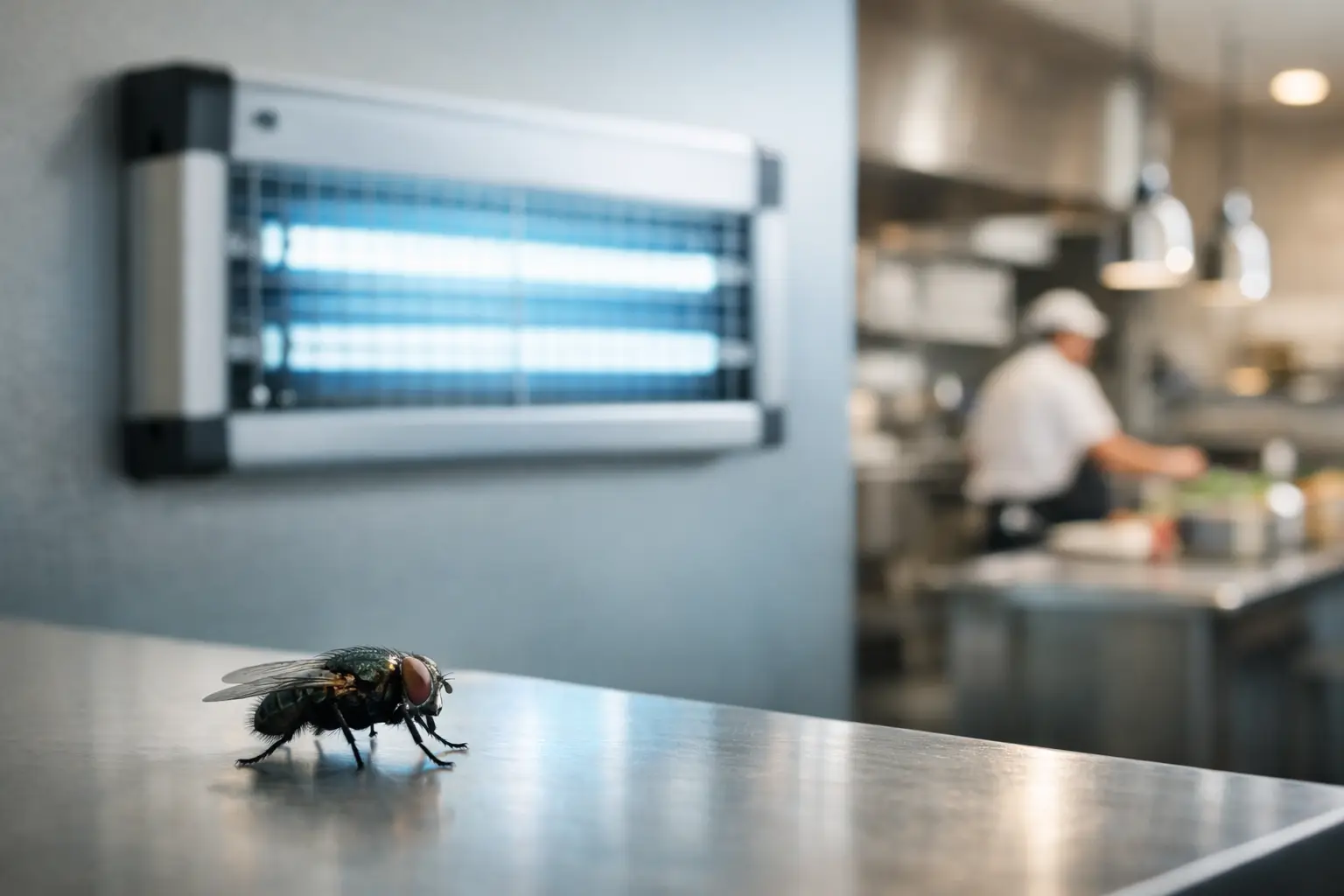
A fly landing near a prep line, loading dock, or customer table is not a minor nuisance. It can quickly become a food safety concern, a failed inspection finding, or a reason for customers to question your standards. This commercial fly control guide explains how facilities can identify the source of fly activity, reduce conditions that support breeding, and maintain dependable long-term prevention.
Flies are persistent because many commercial properties provide exactly what they need: moisture, food residue, organic waste, warmth, and protected breeding areas. Effective control requires more than placing a few traps near the problem. It requires a documented, facility-wide plan that addresses sanitation, exclusion, monitoring, and professional treatment.
Why Commercial Fly Problems Need Fast Action
Flies can move between refuse areas, drains, animal waste, spoiled food, and interior workspaces. In restaurants, grocery stores, healthcare facilities, schools, warehouses, and multifamily properties, that movement creates an obvious sanitation concern. Even when the risk of disease transmission is difficult to measure in a single incident, visible fly activity can damage customer confidence and put compliance teams on alert.
The type of fly matters. House flies often develop in garbage, manure, and decaying organic material. Fruit flies are usually tied to fermenting produce, beverage residue, recycling, and overlooked spills. Drain flies breed in the organic film inside drains and floor sinks. Fungus gnats may indicate persistently wet soil around interior plants or moisture issues near building materials.
A treatment that works for one fly type may have little effect on another. That is why identification is the first step. Removing adult flies without eliminating their breeding source can produce short-lived results and repeated frustration.
Start With a Thorough Fly Inspection
A reliable commercial fly control program begins with inspection, not assumptions. A trained technician should assess where flies are active, what species are present, where they may be breeding, and how they are entering the building. The goal is to trace activity back to the conditions sustaining it.
Inside the facility, inspect food preparation areas, bars, dish rooms, floor drains, mop sinks, restrooms, break rooms, trash rooms, recycling stations, receiving areas, and maintenance closets. Outdoors, focus on dumpsters, compactors, grease areas, dock doors, standing water, landscaping debris, and exterior lighting near entrances.
Inspection should also account for the building’s operating schedule. A fly issue that seems minor during a morning walkthrough may become significant after lunch service, during waste pickup delays, or when dock doors remain open for deliveries. Facilities with multiple shifts need monitoring that reflects real operating conditions.
Find the Breeding Source, Not Just the Flies
Adult flies are the visible symptom. Breeding sites are the underlying problem. Fruit fly activity around a bar may be caused by residue beneath equipment, leaking soda lines, uncleaned bottle returns, or a drain that looks clean at the surface but contains organic buildup below.
Drain flies require special attention because pouring a chemical product into a drain is rarely a complete solution. The gelatinous film lining the pipe is where larvae develop. Mechanical cleaning and proper drain maintenance are often necessary to remove that material. If moisture persists because of a leak, poor drainage, or an unused floor drain, the problem can return.
Build Sanitation Into Daily Operations
Sanitation is the foundation of commercial fly prevention. It does not mean a facility is poorly managed if flies appear. It means routine cleaning procedures must account for areas where organic residue accumulates out of sight.
Food-service teams should promptly remove spills, clean beneath and behind equipment, empty interior waste before it overflows, and keep food stored in sealed containers. Recycling requires the same attention as garbage, especially where bottles, cans, and food containers retain sugary residue.
Waste handling deserves a clear ownership plan. Dumpster lids should remain closed, bags should be sealed, and the area around containers should be cleaned regularly. Leaking bags, loose cardboard, and standing liquid near a compactor can create a strong fly attractant. If collection frequency does not match the volume of waste produced, operational adjustments may be needed.
For properties with drains, establish cleaning procedures that remove buildup rather than simply mask odors. In healthcare, hospitality, and food environments, cleaning crews, maintenance staff, and operations leaders should understand which drains need regular attention and how that work will be documented.
Exclude Flies Before They Enter
Commercial fly control is more dependable when buildings make entry difficult. A single propped-open back door can undermine otherwise strong sanitation efforts, particularly near trash areas or receiving docks.
Inspect door sweeps, weather stripping, window screens, utility penetrations, and gaps around pipes or conduits. Repair damaged screens promptly. Keep exterior doors closed when not in use, and consider air curtains or properly fitted strip doors where frequent deliveries make open doors unavoidable.
Exterior lighting can also influence activity. Bright fixtures positioned directly over doors may attract flying insects toward an entrance. In some settings, relocating lights farther from entry points or using appropriate lighting choices can reduce pressure at doors. The right approach depends on the facility layout, security needs, and local conditions.
Use Monitoring Devices Correctly
Fly light traps and other monitoring devices can be valuable tools, but placement determines whether they help or hurt. Units should generally be positioned to intercept flies after they enter, not where they can draw insects toward a customer-facing entrance or food-preparation area.
A professional program uses monitoring records to identify trends. Are captures increasing near a specific dock? Is a particular drain producing recurring activity? Are fruit flies appearing after weekend closures? These details help the facility correct the source rather than rely on constant reactive service.
Devices also need routine maintenance. Full glue boards, burned-out bulbs, poorly placed units, and neglected traps can weaken a program and create an unfavorable impression during an audit. Records should show service dates, findings, corrective actions, and any recommendations assigned to facility staff.
Apply Targeted Treatments When They Are Needed
Sanitation and exclusion do most of the long-term work, but targeted treatment may be necessary when fly populations are established. Professional options can include residual applications in appropriate non-food areas, insect growth regulators, drain treatments, baiting programs, and carefully selected adult fly control measures.
Treatment decisions should reflect the fly species, the location, the level of activity, and the facility’s regulatory requirements. A food plant, restaurant, school, and warehouse do not face the same constraints. Applying products broadly without correcting sanitation or moisture issues can waste time and may not provide lasting relief.
Safety matters at every stage. Treatments should be selected and applied by trained professionals who understand label requirements, sensitive areas, food-handling procedures, and the need to protect employees, customers, pets, and the environment.
Make Fly Control Audit-Ready
For compliance-driven facilities, documentation is part of the service. A strong fly management program should provide clear inspection findings, pest activity records, device maps where applicable, service reports, corrective-action recommendations, and trend analysis. This information helps managers show that fly prevention is being actively managed rather than addressed only after a complaint.
Accountability works best when responsibilities are shared. Your pest management provider can inspect, monitor, identify conditions, and treat as needed. Facility teams must complete sanitation repairs, maintenance corrections, and operational changes that remove the conditions flies depend on. When those actions are tracked, repeat problems become easier to prevent.
When to Call a Commercial Fly Control Professional
Call for professional service when flies are repeatedly appearing despite routine cleaning, when activity is concentrated around drains or food areas, when employees or customers are reporting sightings, or when your facility needs formal documentation for inspections and audits. Fast action is especially important when flies are found in sensitive environments such as food production, healthcare, schools, and hospitality.
Apex Pest Control develops customized commercial programs built around the specific conditions of each property. Our trained technicians look beyond the adult flies to identify breeding sources, entry points, sanitation gaps, and the practical corrections needed for proven results.
A facility does not need to accept recurring fly activity as part of doing business. With consistent sanitation, effective exclusion, meaningful monitoring, and expert support, you can protect your operation, preserve customer trust, and keep small fly problems from becoming larger operational disruptions.