



Every Ohio facilities manager knows that keeping commercial spaces free from pests is much more involved than just booking routine spray treatments. Stricter health codes and the complexities of commercial environments demand a smarter, more sustainable approach. Adopting an integrated pest management strategy means looking beyond chemicals and focusing on ecosystem balance, careful monitoring, and long-term prevention to ensure regulatory compliance and safeguard your clients’ environments.
Table of Contents
- Defining Commercial Pest Protocols And Misconceptions
- Types Of Pests And Protocols In Commercial Settings
- Steps In Effective Pest Management Processes
- Legal And Health Compliance Requirements For Ohio Facilities
- Risks Of Poor Pest Control And Best Practices
Key Takeaways
| Point | Details |
|---|---|
| Holistic Approach to Pest Management | Commercial pest control must integrate various techniques for proactive prevention, focusing on ecosystem interactions and human safety. |
| Critical Components of Protocols | Effective management includes comprehensive assessments, specific management plans, and ongoing monitoring for regulatory compliance. |
| Legal Compliance Essentials | Businesses must navigate specific licensing and documentation requirements to ensure safe practices and avoid legal liabilities. |
| Risks of Poor Management | Ineffective pest control can lead to serious health risks, structural damage, and negative impacts on public perception and regulatory standards. |
Defining Commercial Pest Protocols and Misconceptions
Commercial pest management represents a strategic approach to preventing, monitoring, and controlling pest populations within professional environments. Unlike residential treatments, commercial pest protocols demand comprehensive, systematic strategies that address complex ecosystem interactions and regulatory compliance. Integrated pest management strategies focus on long-term prevention through multiple coordinated techniques.
Most facility managers misunderstand commercial pest control as simply applying chemical treatments. However, modern protocols emphasize a holistic approach that balances ecosystem preservation with human safety. The core philosophy involves understanding pest behaviors, identifying root environmental conditions that attract pests, and implementing preventative measures before intervention becomes necessary. This approach requires detailed surveillance, strategic habitat modification, and targeted interventions that minimize environmental impact.
Effective commercial pest protocols incorporate several critical components: comprehensive site assessments, species-specific management plans, ongoing monitoring systems, documentation for regulatory compliance, and adaptive response strategies. By treating pest management as a dynamic process rather than a one-time solution, organizations can develop resilient frameworks that protect their infrastructure, reputation, and occupant health. Sustainable pest control principles underscore the importance of understanding pest biology and ecosystem interactions.
Pro tip: Develop a standardized pest management documentation system that tracks inspection dates, identified risks, interventions, and follow-up actions to demonstrate proactive management and maintain regulatory compliance.
Types of Pests and Protocols in Commercial Settings
Commercial environments encounter diverse pest challenges that require specialized management strategies tailored to specific industry contexts. Common urban pest identification reveals critical variations in pest behaviors across different commercial sectors, including food service, healthcare, manufacturing, and retail spaces. Each environment presents unique vulnerabilities that demand precise, targeted intervention protocols.
The primary pest categories in commercial settings include rodents, insects, and occasional invaders. Rodents like rats and mice pose significant risks in food processing facilities, warehouses, and restaurants, potentially contaminating products and compromising health standards. Insect populations such as cockroaches, ants, and bed bugs represent persistent challenges across multiple industries, requiring sophisticated monitoring and elimination techniques. These pests not only threaten health and safety but can also damage infrastructure, compromise regulatory compliance, and harm organizational reputation.
Here is a comparison of pest categories commonly faced by commercial facilities and their unique challenges:
| Pest Category | Typical Environments | Main Risks | Management Challenge |
|---|---|---|---|
| Rodents | Food processing, warehouses | Product contamination, disease | Entry prevention, rapid breeding |
| Insects | Healthcare, retail, restaurants | Infrastructure damage, asthma triggers | Monitoring, resistance to treatment |
| Occasional Invaders | Office buildings, hotels | Temporary infestation, reputation damage | Identification, timely response |
Effective commercial pest management demands a multifaceted approach integrating comprehensive pest control strategies. This involves systematic surveillance, preventative infrastructure modifications, targeted treatment protocols, and continuous documentation. Successful implementations recognize that each pest species requires a unique management approach, considering factors like breeding cycles, environmental preferences, entry points, and potential resistance mechanisms. Advanced protocols leverage biological, mechanical, and chemical interventions strategically combined to minimize environmental impact while maximizing pest elimination effectiveness.
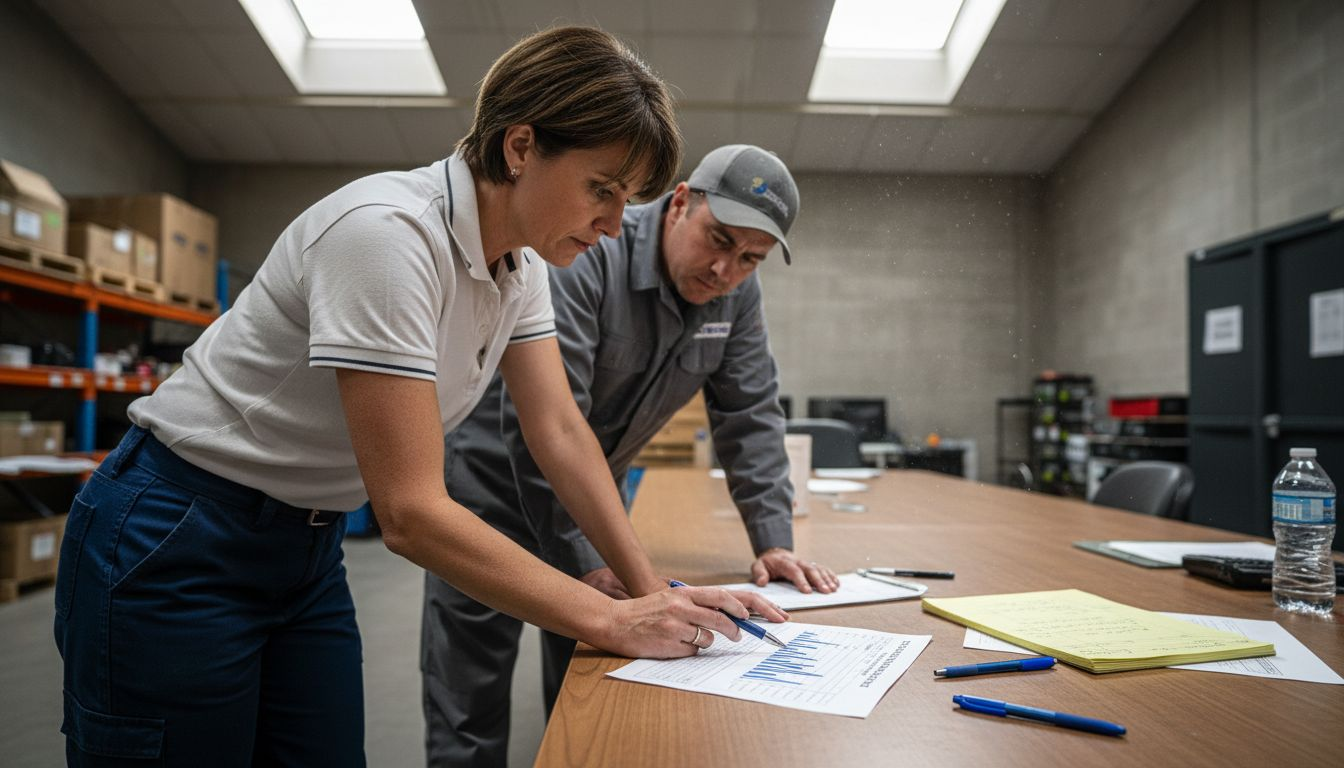
Pro tip: Develop a comprehensive digital tracking system that maps pest activity, intervention methods, and regulatory compliance across different facility zones to enable proactive and data-driven pest management.
Steps in Effective Pest Management Processes
Establishing a comprehensive pest management strategy requires a systematic, scientifically grounded approach that goes beyond simple reactive treatments. Integrated Pest Management Action Plan provides a structured framework for organizations seeking sustainable pest control solutions. The process begins with meticulous planning, which involves understanding the specific environmental context, potential pest vulnerabilities, and organizational risk tolerance.
The core steps of effective pest management include initial site assessment, detailed pest identification, population monitoring, and strategic intervention. Facility managers must conduct comprehensive environmental evaluations, identifying potential entry points, breeding grounds, and conditions that might attract pests. This requires a holistic approach that examines structural integrity, sanitation practices, moisture levels, and potential food sources. Ecological pest control strategies emphasize understanding pest behaviors and ecosystem interactions rather than relying solely on chemical interventions.
Successful pest management protocols demand continuous adaptation and documentation. Organizations should establish clear thresholds for pest presence, develop targeted intervention strategies, and maintain rigorous record-keeping systems. This involves creating detailed maps of pest activity, tracking intervention methods, and regularly reassessing the effectiveness of implemented strategies. Advanced approaches integrate biological controls, mechanical exclusion techniques, and minimal chemical treatments, prioritizing ecological balance and long-term prevention over immediate eradication.
Pro tip: Create a standardized digital tracking system that logs pest activity, intervention details, and compliance metrics to enable data-driven decision-making and continuous improvement in pest management protocols.
Legal and Health Compliance Requirements for Ohio Facilities
Navigation of legal and health compliance requirements for pest management in Ohio demands a comprehensive understanding of state-specific regulations and professional standards. Pesticide Business Licensing represents a critical component of regulatory compliance for commercial facilities, requiring businesses to meet stringent operational guidelines. Commercial entities must ensure they have licensed professionals who understand the nuanced legal framework governing pest control interventions.
Ohio’s regulatory environment mandates specific certification processes for pest management professionals. Commercial applicators must obtain specialized licenses, pass rigorous examinations, and maintain ongoing education requirements. These regulations extend beyond simple documentation, encompassing comprehensive training in pesticide application techniques, safety protocols, and environmental considerations. Each licensed professional must demonstrate profound understanding of chemical interactions, potential health risks, and precise application methods that minimize potential hazards to human and environmental health.
Facilities must maintain meticulous documentation of pest management activities, including Commercial Pesticide Applicator Regulations. This involves detailed record-keeping of pest identification, treatment strategies, chemical usage, and intervention outcomes. Documentation serves multiple critical purposes: demonstrating regulatory compliance, tracking intervention effectiveness, and providing transparent evidence of proactive pest management practices. Special attention must be given to specific industry sectors with heightened health standards, such as food processing, healthcare, and hospitality, where pest control directly impacts public safety.
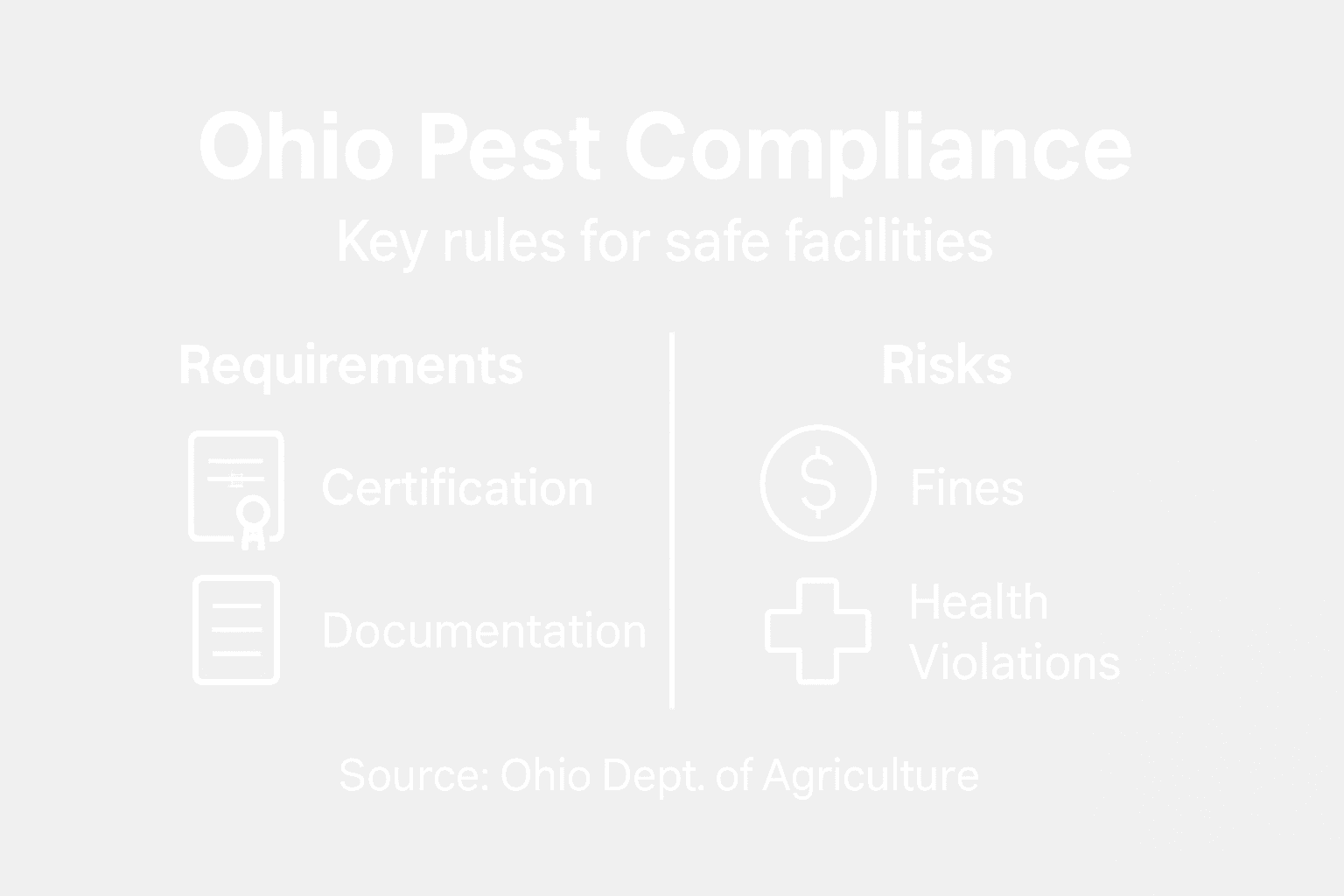
This summary outlines key compliance requirements for Ohio commercial pest management:
| Compliance Area | Requirement | Business Impact | Sector Focus |
|---|---|---|---|
| Professional Licensing | Certified commercial applicators | Ensures safe practices, legal operation | All sectors |
| Documentation | Detailed treatment records | Demonstrates compliance, aids audits | Food, healthcare, hospitality |
| Ongoing Education | Annual training updates | Maintains knowledge, reduces risks | Licensed professionals |
Pro tip: Develop a digital compliance management system that automatically tracks licensing renewals, certification requirements, and documentation standards to ensure seamless regulatory adherence.
Risks of Poor Pest Control and Best Practices
Poor pest control represents a significant threat to organizational health, safety, and operational integrity. Public health risks from pests extend far beyond simple inconvenience, potentially exposing facilities to serious disease transmission, environmental contamination, and substantial financial liability. Commercial environments must recognize that inadequate pest management can trigger cascading negative consequences affecting employee wellness, customer perceptions, and regulatory compliance.
Specific risks associated with ineffective pest control include widespread disease transmission, structural damage, and compromised sanitation standards. Rodents, cockroaches, and other urban pests can introduce dangerous pathogens, trigger respiratory conditions like asthma, and create significant contamination risks in sensitive environments such as food processing, healthcare, and hospitality sectors. Integrated pest management techniques provide a comprehensive approach to mitigating these risks through systematic prevention, monitoring, and targeted intervention strategies.
Best practices in pest control demand a proactive, holistic approach that goes beyond reactive chemical treatments. Successful strategies incorporate comprehensive site assessments, detailed documentation, ongoing monitoring, and adaptive intervention protocols. Organizations must develop robust prevention frameworks that address root environmental conditions attracting pests, implement strategic exclusion techniques, maintain rigorous sanitation standards, and utilize minimal, targeted chemical interventions when absolutely necessary. This approach not only minimizes health risks but also demonstrates a commitment to responsible facility management.
Pro tip: Create a comprehensive pest vulnerability assessment that maps potential entry points, identifies specific risk factors, and establishes a prioritized mitigation strategy for your facility.
Strengthen Your Commercial Pest Protocols Today
Managing pests in commercial spaces requires more than reactive treatments. The article highlights how effective pest protocols involve comprehensive site assessments, ongoing monitoring, and strict regulatory compliance to protect your business, employees, and customers. If you want to eliminate risks like contamination, structural damage, and reputation loss, a proactive and scientifically grounded approach is essential.
At Apex Pest Control, we specialize in delivering customized commercial pest management solutions that align with the standards discussed in this article. Our expert team understands the importance of documentation, integrated pest management strategies, and state licensing requirements to keep your facility safe and compliant. Whether you manage a food processing center, healthcare facility, or office building, we help implement sustainable, effective control that minimizes environmental impact.
Explore our Uncategorized Archives for insights and visit our free quote page now to take the first step toward a pest-free, compliant commercial environment. Don’t wait for pests to threaten your business. Act now to secure expert service tailored to your needs.
Frequently Asked Questions
What are commercial pest management protocols?
Commercial pest management protocols are strategic approaches designed to prevent, monitor, and control pest populations in professional environments through systematic, integrated techniques.
Why is understanding pest behavior important in commercial pest management?
Understanding pest behavior is crucial as it helps identify root environmental conditions that attract pests, allowing for effective preventative measures and targeted interventions.
How can facilities ensure compliance with pest management regulations?
Facilities can ensure compliance with pest management regulations by maintaining detailed documentation, employing certified pest management professionals, and adhering to state-specific licensing and training requirements.
What are the risks of ineffective pest control in commercial settings?
Ineffective pest control can lead to significant public health risks, including disease transmission, structural damage, and compromised sanitation, potentially affecting employee wellness and organizational reputation.
Recommended
- 7 Must-Have Steps for Your Commercial Pest Control Checklist
- Safe Pest Control for Pets – Protecting Home and Animals
- Organic Pest Control Methods for Safe Pest Management
- Pest Control Process Explained: Complete Guide Ohio
- Security Compliance for Door Hardware: Meeting Safety Laws – A To Z Locksmith Inc