



Every homeowner in Oakwood and Maple Heights knows that protecting family health starts with the choices made inside the home. With rising concerns about harsh chemicals and their impact on well-being, eco-friendly pest management has become a higher priority for Northeast Ohio residents. Embracing LEED pest management means prioritizing prevention, healthier air, and responsible methods that safeguard both your living space and the local environment.
Table of Contents
- LEED Pest Management Defined For Homeowners
- LEED-Compliant Pest Control Methods Explained
- Certification Standards And Compliance Requirements
- Benefits Of LEED Pest Strategies In Ohio Homes
- Common Mistakes In LEED Pest Management
Key Takeaways
| Point | Details |
|---|---|
| LEED Pest Management Approach | Focuses on eco-friendly strategies that prioritize human health and environmental safety in pest control. |
| Integrated Pest Management (IPM) | Serves as the foundation, emphasizing preventative measures and least-toxic interventions to manage pests effectively. |
| Certification Requirements | Achieving LEED certification necessitates rigorous documentation and adherence to sustainable pest management practices. |
| Common Mistakes | Homeowners should avoid overreliance on chemicals and ensure comprehensive documentation to maintain LEED compliance. |
LEED Pest Management Defined for Homeowners
LEED pest management represents an innovative approach to protecting Ohio homes while prioritizing environmental safety and human health. Residential green building standards emphasize proactive pest control strategies that minimize chemical exposure and promote sustainable living practices.
At its core, LEED pest management integrates several key principles designed to create healthier residential environments:
- Utilizing least-toxic pest control methods
- Prioritizing prevention over chemical intervention
- Minimizing environmental and occupant health risks
- Implementing systematic monitoring and management strategies
The Integrated Pest Management (IPM) framework serves as the foundation for these eco-friendly approaches. This strategy focuses on understanding pest behaviors, identifying root causes of infestations, and implementing targeted interventions that reduce reliance on harmful chemical treatments.
LEED certification ensures third-party verification of green building commitments, including pest management practices.
Homeowners implementing LEED-aligned pest management can expect comprehensive protection that goes beyond traditional extermination methods. Least-toxic pesticide protocols rank treatment options based on environmental and health hazard levels, ensuring safer residential ecosystems.
Here’s a quick comparison of traditional pest control versus LEED-compliant approaches for Ohio homes:
| Aspect | Traditional Pest Control | LEED-Compliant Pest Management |
|---|---|---|
| Chemical Use | Frequent, broad-spectrum | Selective, least-toxic only |
| Prevention Focus | Reactive treatments | Proactive prevention measures |
| Documentation | Minimal records | Comprehensive intervention logs |
| Impact on Ecosystem | Often disruptive | Prioritizes ecosystem health |
Pro tip: Request detailed IPM documentation from pest control providers to ensure they follow LEED-compatible environmental standards.
LEED-Compliant Pest Control Methods Explained
LEED-compliant pest control methods represent a sophisticated approach to managing pest populations while minimizing environmental impact and protecting human health. Integrated ecosystem approaches prioritize prevention, biological controls, and targeted interventions that go far beyond traditional chemical treatments.
The Integrated Pest Management (IPM) framework forms the cornerstone of these environmentally responsible strategies, emphasizing a multi-dimensional approach to pest control:
- Comprehensive pest behavior analysis
- Ecosystem-based prevention techniques
- Selective and minimal chemical interventions
- Continuous monitoring and adaptive management
Key components of LEED-compliant pest management include understanding local ecological systems and implementing proactive strategies that disrupt pest habitats before chemical treatments become necessary. This means identifying potential entry points, removing attractants, and creating environments that naturally discourage pest proliferation.
LEED-compliant methods focus on holistic pest suppression that protects both human health and environmental integrity.
Professional pest management under LEED standards requires strategic pest suppression techniques that prioritize biological controls, habitat modification, and targeted interventions. By employing methods such as crop rotation, introducing beneficial predators, and using selective pesticides only as a last resort, these approaches create sustainable pest management solutions.
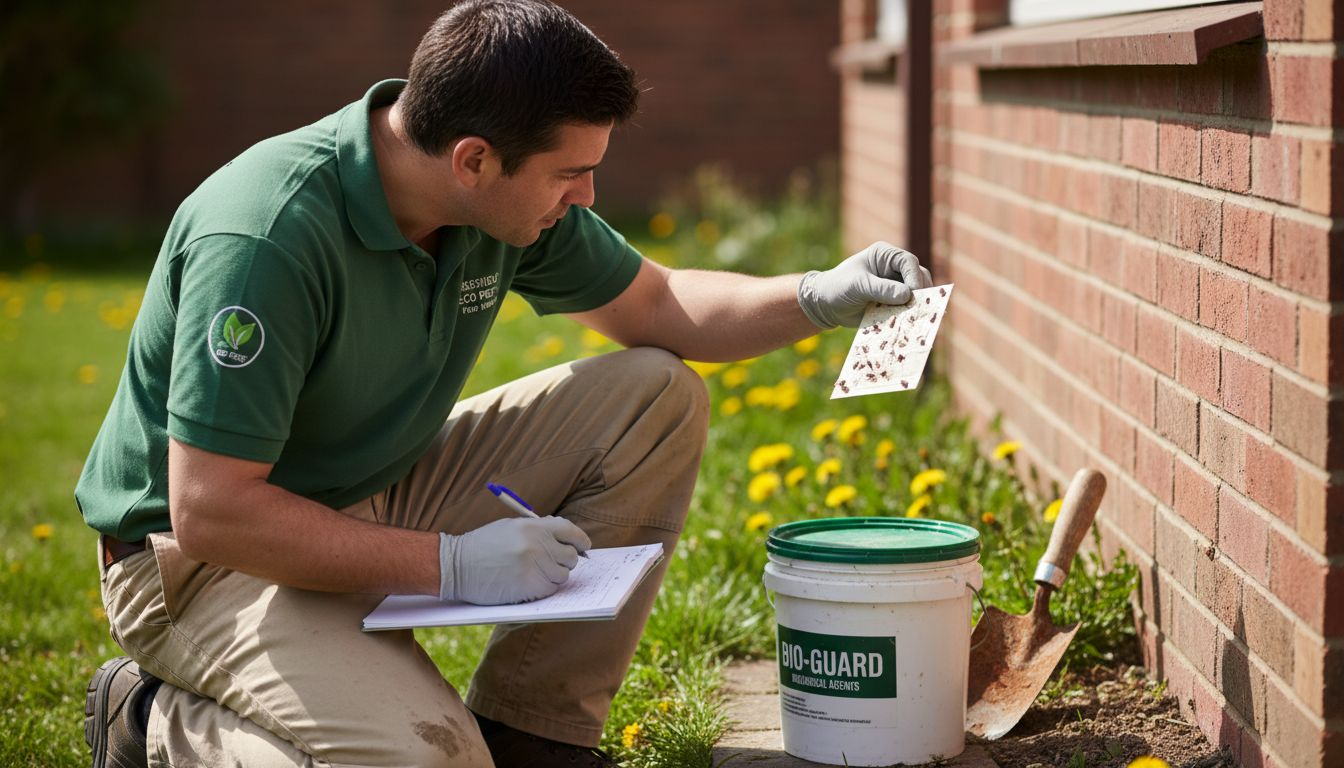
Pro tip: Request a comprehensive IPM plan from your pest control provider that details prevention, monitoring, and intervention strategies aligned with LEED environmental standards.
This table summarizes key components of a LEED Integrated Pest Management (IPM) plan:
| Component | Purpose | Common Implementation |
|---|---|---|
| Monitoring | Track pest activity and trends | Scheduled inspections |
| Prevention | Reduce pest access and food | Seal entry points, remove debris |
| Biological Controls | Natural pest suppression | Introduce beneficial species |
| Targeted Interventions | Minimize chemical exposure | Spot treat infestations only |
Certification Standards and Compliance Requirements
LEED certification for pest management requires strict adherence to comprehensive environmental standards that go far beyond traditional pest control practices. Minimum Program Requirements establish a rigorous framework for ensuring sustainable and responsible pest management approaches across residential and commercial environments.
To achieve LEED certification, pest management programs must meet multiple critical compliance standards:
- Comprehensive documentation of pest control strategies
- Detailed environmental impact assessments
- Verification of least-toxic intervention methods
- Regular third-party performance evaluations
- Consistent monitoring and adaptive management protocols
The certification process involves a systematic review of pest management practices, examining everything from chemical usage to ecological intervention strategies. Sustainable pest control means demonstrating a holistic approach that prioritizes ecosystem health, human safety, and long-term environmental preservation.
LEED certification is not just a credential, but a commitment to responsible environmental stewardship in pest management.
Understanding the nuanced requirements demands a comprehensive approach that integrates scientific methodology with environmental consciousness. Pest management professionals must provide detailed documentation proving their interventions minimize ecological disruption while effectively addressing pest challenges in Ohio’s unique residential landscapes.
Pro tip: Maintain meticulous records of all pest management interventions, including prevention strategies, chemical usage, and ecological impact assessments to support potential LEED certification efforts.
Benefits of LEED Pest Strategies in Ohio Homes
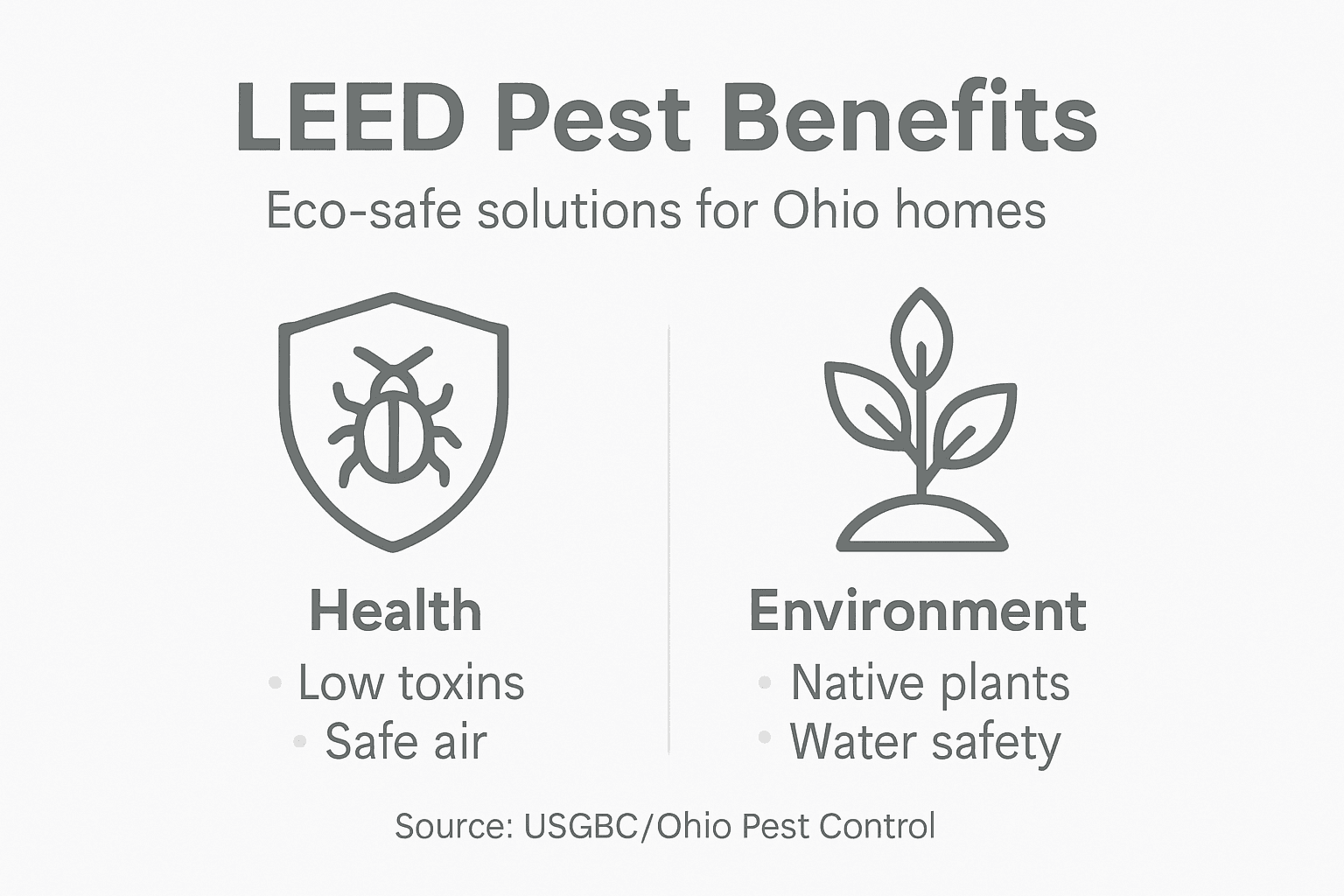
LEED residential strategies offer Ohio homeowners a comprehensive approach to pest management that extends far beyond traditional extermination methods. These environmentally conscious techniques prioritize holistic protection, focusing on creating healthier living environments while minimizing ecological disruption.
The key benefits of implementing LEED pest strategies in Ohio homes include:
- Significantly improved indoor air quality
- Reduced exposure to harmful chemical treatments
- Lower long-term pest management costs
- Enhanced environmental sustainability
- Proactive prevention of pest-related structural damage
Understanding the unique challenges of Ohio’s residential ecosystems, LEED pest strategies provide targeted solutions that address specific regional pest concerns. By integrating biological controls, strategic habitat modifications, and minimal chemical interventions, these approaches create resilient home environments that naturally resist pest infestations.
LEED pest management transforms pest control from a reactive process to a sustainable, preventative system.
Sustainable building practices in Ohio demonstrate that effective pest management is not just about eliminating pests, but about creating holistic living spaces that support both human and ecological health. These strategies consider everything from moisture control to structural integrity, ensuring comprehensive protection for Ohio homeowners.
Pro tip: Consult with LEED-certified pest management professionals who understand Ohio’s specific environmental conditions and can develop tailored, eco-friendly pest prevention strategies for your home.
Common Mistakes in LEED Pest Management
Least-toxic pesticide protocols reveal numerous critical errors that compromise LEED pest management effectiveness in Ohio homes. Homeowners and pest management professionals often inadvertently undermine sustainable pest control strategies by overlooking key environmental and health considerations.
The most prevalent mistakes in LEED-aligned pest management include:
- Overreliance on chemical treatments
- Inadequate documentation of pest control interventions
- Failing to implement comprehensive Integrated Pest Management (IPM) strategies
- Neglecting preventative habitat modification techniques
- Improper pest identification and monitoring
Understanding these common pitfalls is crucial for maintaining the integrity of environmentally responsible pest management. Systematic documentation plays a critical role in verifying and maintaining LEED compliance, requiring meticulous tracking of all pest control interventions and their environmental impact.
LEED pest management demands a holistic approach that prioritizes prevention over reactive chemical treatments.
Verification processes in green building projects frequently expose gaps in pest management strategies that can potentially compromise certification. These errors often stem from a narrow understanding of pest control, which fails to consider the broader ecosystem and long-term sustainability goals.
Pro tip: Develop a comprehensive pest management log that tracks all interventions, chemical use, and preventative measures to ensure full transparency and LEED compliance.
Protect Your Ohio Home with Trusted LEED-Compliant Pest Solutions
Managing pests the eco-safe way starts with understanding the importance of Integrated Pest Management and least-toxic methods emphasized in LEED pest management standards. Ohio homeowners face the challenge of preventing pests while safeguarding their families and the environment. Apex Pest Control is here to help you meet these goals by delivering expert pest control services that prioritize safety, sustainability, and effectiveness. Our team specializes in family-safe techniques designed to minimize chemical use and enhance your home’s ecosystem health.
Discover how our LEED-aligned pest control strategies can give you peace of mind and lasting protection. Explore insights from our Uncategorized Archives – Apex Pest Control to learn more about eco-friendly pest management. Ready to take action for a healthier home environment in Northeast Ohio? Request your free, no-obligation quote today at Apex Pest Control and see how our licensed technicians deliver proven results that align with LEED principles. Don’t wait — protect your family and property with reliable, eco-conscious pest control now.
Frequently Asked Questions
What is LEED pest management?
LEED pest management refers to an eco-friendly approach to pest control that prioritizes environmental safety and human health. It emphasizes proactive prevention strategies, the use of least-toxic methods, and systematic monitoring within the framework of Integrated Pest Management (IPM).
How does LEED pest management differ from traditional pest control?
LEED pest management focuses on prevention and reducing chemical exposure, while traditional pest control often relies on reactive treatments with greater chemical usage. LEED practices prioritize ecological health and detailed documentation of interventions.
Why is documentation important in LEED pest management?
Documentation is critical in LEED pest management as it verifies compliance with environmental standards, tracks pest management interventions, and ensures that all strategies minimize ecological disruption while effectively addressing pest challenges.
What are the benefits of implementing LEED pest strategies in my home?
Implementing LEED pest strategies can lead to improved indoor air quality, reduced exposure to harmful chemicals, lower long-term pest management costs, enhanced environmental sustainability, and proactive prevention of structural damage due to pests.