



TL;DR:
- Pest conducive conditions are structural and environmental factors that support pests’ survival, reproduction, and entry into buildings. In Oakwood, older homes, clutter, and neighboring units increase risks, especially during Ohio’s warm seasons when indoor temperatures favor bed bugs. Removing these conditions through inspection, sealing cracks, and proper luggage protocols is key to long-term prevention and control.
Pests don’t show up by accident. When bed bugs appear in an Oakwood, Ohio home or apartment building, it’s rarely random luck. Defining pest conducive conditions is the first step toward understanding why some properties attract infestations repeatedly while neighboring buildings stay clear. These conditions are the specific environmental and structural factors that make a space comfortable for pests to survive, reproduce, and spread. Oakwood’s mix of older residential neighborhoods, multi-family housing, and Ohio’s variable climate creates a particular set of risks that every homeowner and property manager here should recognize.
Table of Contents
- Key takeaways
- Defining pest conducive conditions: what they are and why they matter
- Common attractants and infestation triggers in Oakwood properties
- How Ohio’s seasons shape bed bug conducive conditions
- Comparing bed bug conditions to other Ohio pests
- Practical steps to reduce bed bug conducive conditions
- My take on why environment management changes everything
- How Apexpestcontrol helps Oakwood homeowners eliminate bed bug conditions
- FAQ
Key takeaways
| Point | Details |
|---|---|
| Conducive conditions drive infestations | Bed bugs thrive where temperature, clutter, and shelter combine to support survival. |
| Oakwood’s housing adds specific risks | Older homes with cracks and aging construction give bed bugs ready harborage. |
| Ohio’s seasons shift pest behavior | Bed bug activity and survival rates change significantly across Ohio’s warm and cold months. |
| Human habits are often the trigger | Secondhand furniture and untreated luggage introduce bed bugs more often than structural issues alone. |
| Prevention beats treatment | Removing conducive conditions through IPM strategies reduces infestations before chemicals are ever needed. |
Defining pest conducive conditions: what they are and why they matter
A pest conducive condition is any environmental or structural factor that provides a pest with food, water, shelter, or a pathway into a building. For bed bugs specifically, the list is different from what most people expect. Bed bugs don’t need standing water or crumbs on the floor. They need warmth, darkness, clutter to hide in, and proximity to a sleeping human.
Building deficiencies like cracks and clutter provide pest entry and harborage, and this is where Oakwood properties face a real challenge. Much of the residential stock in the area includes older construction built before modern sealing and insulation standards. That means more gaps around baseboards, more voids behind walls, and more opportunities for bed bugs to establish before they’re detected.
The core conditions that support bed bug colonization include:
- Temperature between 70°F and 82°F, which describes most heated indoor spaces across Ohio from late spring through early fall
- Clutter and upholstered furniture, which provide dozens of tight harborage spaces where bed bugs hide and lay eggs
- Low foot traffic areas like guest bedrooms, storage rooms, or seasonal spaces that aren’t inspected regularly
- Shared walls and ventilation systems common in multi-family buildings and older Oakwood duplexes
- High occupant turnover, particularly in rental units near commercial corridors in Oakwood
The misconception most people carry is that a clean home is a protected home. That’s not how bed bugs work. They don’t care about cleanliness. They care about access to a host. Clutter helps them hide, but even a minimalist apartment can become infested if the environmental conditions and entry opportunities are present.
Understanding conditions for pest growth means looking beyond hygiene to the physical structure and habits that create opportunity. Once you see a space through that lens, you start noticing conducive factors that were always there.
Common attractants and infestation triggers in Oakwood properties
What actually pulls bed bugs into a building? In Oakwood, the most common pest infestation triggers break down into two categories: physical conditions in the property and human behaviors that introduce or sustain the insects.
Oakwood has a notable concentration of multi-family housing, particularly along streets near Far Hills Avenue and properties close to the Kettering border. Shared walls between units mean that a single infestation in one apartment can move laterally into adjacent units through electrical conduits, plumbing chases, and wall voids. Property managers overseeing these buildings often discover infestations only after they’ve already spread to two or three units.

Homeowners often overlook hidden entry points like luggage or secondhand furniture, which are the primary sources of introduction in residential settings. A piece of furniture picked up at an estate sale on the south end of Oakwood can carry a viable bed bug population. A suitcase brought back from a hotel stay and stored in a bedroom closet can do the same.
The typical conducive factors you can identify yourself in an Oakwood home or rental unit include:
- Mattresses and box springs placed directly against walls or on the floor
- Secondhand upholstered furniture without inspection or treatment history
- Clothing stored on the floor or in open piles near sleeping areas
- Luggage stored under beds between trips
- Box spring covers that are torn or absent entirely
- Clutter accumulation under beds, in closet floors, and around baseboards
- Infrequent vacuuming of mattress seams, headboards, and bed frames
Pro Tip: After any hotel stay, inspect your luggage in a garage or exterior space before bringing it inside. Placing luggage in a sealed plastic bag and leaving it in a hot car on a warm Ohio summer day can reach temperatures lethal to bed bugs before your bags ever enter the house.
The role of human behavior in what attracts pests is underappreciated. Structural factors create opportunity. Behavior is what pulls the pest across the threshold.
How Ohio’s seasons shape bed bug conducive conditions
Ohio’s climate creates a shifting pest environment that directly affects how bed bugs behave and survive. Understanding this seasonal pattern helps Oakwood homeowners and property managers time their inspections and prevention efforts correctly.
Bed bugs survive best between 70°F and 82°F, a range that matches the interior of most heated Ohio homes year-round. Even during Oakwood’s cold winters, indoor environments maintain temperatures well above the threshold where bed bug development slows. Outdoors, they cannot survive Ohio winters. Indoors, the season makes almost no difference to their comfort.
Where seasons do matter is in humidity. Bed bug mortality increases at high heat with low humidity, meaning Ohio’s hot, humid summers actually give bed bugs more favorable survival conditions than the dry heat that would kill them faster.
| Season | Ohio conditions | Impact on bed bugs |
|---|---|---|
| Spring | Warming temperatures, moderate humidity | Increased activity and reproduction begin |
| Summer | High heat with high humidity | Active reproduction, harder to kill with heat alone |
| Fall | Cooling outdoors, warm indoors | Peak travel season increases introduction risk |
| Winter | Cold outdoors, heated indoors | Indoor conditions remain fully conducive year-round |
Seasonal pest management strategies should reflect this reality. The fall travel season, when residents return from summer vacations and students move into rental housing near Oakwood’s residential areas, represents the highest introduction risk. Scheduling inspections in October and early November catches introductions before they establish.
Pro Tip: Run a dehumidifier in bedrooms during Ohio’s humid summer months. It won’t eliminate a bed bug population, but reducing humidity makes the environment slightly less favorable and supports any heat treatment you or a professional might apply.
Comparing bed bug conditions to other Ohio pests
Bed bug habitat factors are specific in ways that set them apart from other common Oakwood pests. Understanding those differences helps you recognize why a single prevention strategy rarely covers all pests equally.
Standing water, wood-to-soil contact, and poor ventilation are the core triggers for termites and moisture-loving insects. These overlap with moisture conditions that also support cockroach populations. Bed bugs share almost none of these triggers. They need none of these environmental factors to thrive.
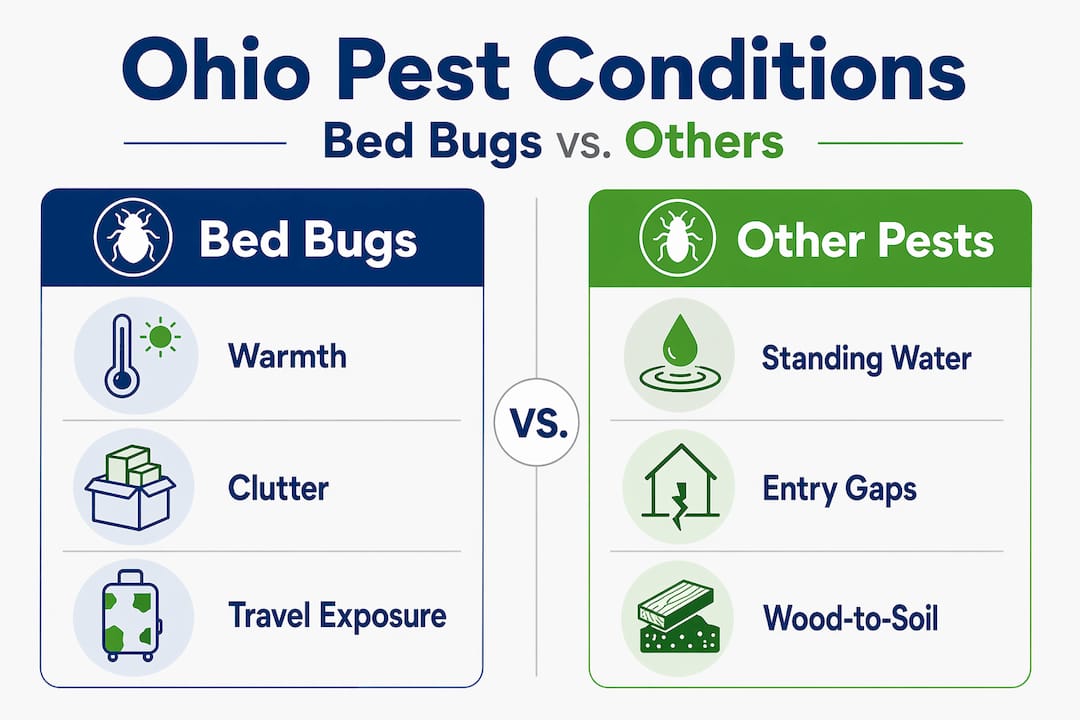
Rodents gravitate toward overgrown landscaping, open garbage, and entry gaps around foundations. Bed bugs don’t use outdoor entry pathways at all. They arrive exclusively via human activity: travel, secondhand items, or movement between units.
| Pest | Key conducive conditions | Primary entry method |
|---|---|---|
| Bed bugs | Warmth, clutter, proximity to sleeping areas | Luggage, furniture, shared walls |
| Rodents | Overgrown landscaping, open food, foundation gaps | Cracks in foundation, open doors |
| Termites | Wood-to-soil contact, moisture, poor ventilation | Soil contact, wood entry points |
| Cockroaches | Leaky pipes, food debris, poor ventilation | Drains, cracks, grocery bags |
| Ants | Sweet food sources, moisture, exterior gaps | Door frames, window sills, utility lines |
The overlap worth noting is clutter. Clutter benefits bed bugs, cockroaches, and rodents alike by providing harborage. Reducing clutter is one of the few structural changes that lowers environmental pest risks across multiple species simultaneously. Leaky pipes and poor ventilation make a property more hospitable to cockroaches and termites, and they often signal general maintenance neglect that allows bed bugs to go unnoticed longer.
Targeted approaches matter because each pest requires a different intervention. Treating an Oakwood home for moisture won’t address bed bugs. But a general audit of conducive conditions will reveal multiple vulnerabilities at once.
Practical steps to reduce bed bug conducive conditions
Removing the conditions that support bed bugs is not complicated, but it requires consistency. The following steps follow Integrated Pest Management principles that prioritize prevention through environment management before reaching for chemical controls.
-
Inspect every used item before it enters the building. Examine seams, joints, and fabric folds on any secondhand furniture. Check the underside of drawers and the back of headboards. If you can’t confirm the item is clean, treat it before bringing it inside.
-
Encase mattresses and box springs. Zippered encasements eliminate the seams and crevices bed bugs prefer. This doesn’t prevent introduction but removes one of their primary harborage sites and makes future inspections significantly faster.
-
Reduce floor-level clutter in bedrooms and storage areas. Bed bugs prefer tight spaces close to their host. The fewer objects within two to three feet of a bed, the fewer places they can establish.
-
Seal cracks in baseboards, walls, and around electrical outlets. Older Oakwood homes with structural deficiencies give bed bugs easy movement between rooms and units. Caulking baseboards and outlet covers slows lateral spread.
-
Vacuum mattress seams, headboards, and bed frames monthly. Empty the vacuum canister outside immediately. This won’t eliminate an active infestation but removes eggs and stragglers that haven’t yet established.
-
Establish a luggage protocol after travel. Inspect bags in a non-bedroom space. Wash all clothing on high heat within 24 hours of returning. Store clean luggage in sealed plastic bags between trips.
Pro Tip: Property managers overseeing multi-unit buildings in Oakwood should conduct annual unit inspections specifically targeting bed bug harborage, not just general maintenance checks. Catching a single-unit infestation before it spreads is dramatically cheaper than treating an entire floor.
You can find a structured monthly prevention schedule that integrates these steps into a manageable routine for Ohio homeowners and managers.
My take on why environment management changes everything
I’ve walked through a lot of Oakwood homes where the homeowner was genuinely baffled by a recurring bed bug problem. The property was clean. The carpets were vacuumed. The bedding was washed. And yet the bed bugs kept coming back after each treatment.
In almost every case, the structural or behavioral conducive condition was still in place. The crack behind the baseboard was never sealed. The secondhand dresser from the garage sale was still in the bedroom. The college student’s luggage was stored under the bed between semesters.
What I’ve learned working in Ohio pest control is that chemical treatments address the symptom. Environment management addresses the cause. An exclusion-first approach to pest control consistently outperforms chemical-only strategies when measured over six to twelve months, especially in multi-family housing where re-introduction pressure is constant.
The homeowners I’ve seen succeed long-term are the ones who treat pest control as an ongoing property management practice, not a one-time emergency response. They inspect, they seal, they adjust habits, and they call a professional before the problem is visible rather than after it’s undeniable.
That shift in thinking, from reactive to preventive, is what defining pest conducive conditions is really about. Once you know what creates a hospitable environment, you can take it away.
— Dushan
How Apexpestcontrol helps Oakwood homeowners eliminate bed bug conditions
Knowing what conditions attract bed bugs is one thing. Removing them efficiently and permanently is where professional support makes a real difference. Apexpestcontrol has served Ohio homeowners and property managers since 1969, and the team brings specific knowledge of Oakwood’s housing stock, seasonal patterns, and common infestation pathways to every inspection.
Apexpestcontrol’s approach begins with a thorough property assessment that identifies every conducive condition present, not just visible bed bug evidence. From there, treatment plans are built around IPM-aligned methods that address root causes rather than surface symptoms. For homeowners, the best bed bug treatments available today combine heat treatment, targeted application, and structural recommendations that prevent re-infestation.
Commercial property managers can explore business-specific bed bug treatment options designed for multi-unit buildings and high-turnover environments. Request a free quote from Apexpestcontrol to schedule a property assessment and take the first concrete step toward a pest-free building.
FAQ
What are pest conducive conditions?
Pest conducive conditions are environmental or structural factors that provide pests with food, water, shelter, or access to a building. For bed bugs, these include warmth, clutter, cracks in walls, and untreated secondhand furniture.
Do bed bugs survive Ohio winters?
Outdoors, bed bugs cannot survive Ohio winter temperatures. Indoors, heated spaces remain well within the optimal temperature range of 70°F to 82°F year-round, making interior environments fully conducive regardless of the season.
What attracts bed bugs to a home?
Bed bugs are attracted to body heat and carbon dioxide from sleeping humans. Conditions that support their presence include clutter near sleeping areas, cracks in baseboards, and introduction of infested items like luggage or secondhand furniture.
How do I know if my Oakwood home has conducive conditions?
Inspect for clutter within three feet of beds, unsealed cracks in baseboards and walls, unencased mattresses, and any secondhand upholstered furniture that wasn’t inspected before entering the home. These are the most common conducive factors found in Oakwood residential properties.
Does cleaning my home prevent bed bugs?
Cleaning reduces clutter, which helps, but cleanliness alone does not prevent bed bugs. They don’t need food scraps or moisture to survive. Structural exclusion, luggage protocols, and routine inspections are more effective prevention strategies than cleaning alone.