



No homeowner in Bedford Heights or Solon wants to discover telltale droppings or gnaw marks in their basement. Rodents can slip through openings as small as 1/4 inch, so a small crack or gap can invite unwanted guests into your living space. With a careful combination of thorough inspections, safe sealing techniques, and eco-friendly deterrents, you can protect your home while making environmentally responsible choices. Thorough DIY rodent-proofing gives your property lasting peace of mind without harsh chemicals.
Table of Contents
- Step 1: Inspect Entry Points Around Your Bedford Home
- Step 2: Seal Gaps And Cracks With Safe, Durable Materials
- Step 3: Eliminate Food And Water Sources Inside And Out
- Step 4: Install And Maintain Eco-Friendly Deterrents
- Step 5: Verify Your Rodent Proofing Success
Quick Summary
| Key Point | Explanation |
|---|---|
| 1. Inspect Your Home Thoroughly | Identify potential rodent entry points by inspecting the exterior and hidden areas like crawl spaces and attics. |
| 2. Seal Gaps with Durable Materials | Use resistant materials like steel wool, hardware cloth, or concrete to effectively seal off any identified entry points. |
| 3. Eliminate Food and Water Sources | Clean and store food in airtight containers, and remove outdoor debris to discourage mice from accessing your home. |
| 4. Install Eco-Friendly Deterrents | Utilize non-chemical methods like ultrasonic devices and natural predators to deter rodent activity in your property. |
| 5. Regularly Verify Rodent Prevention Efforts | Conduct weekly inspections to check for signs of rodent activity and ensure your prevention strategies remain effective. |
Step 1: Inspect entry points around your Bedford home
Rodent prevention in Bedford starts with a thorough home inspection to identify potential mouse entry points. Mice can squeeze through incredibly tiny spaces, so a comprehensive walkthrough is critical for protecting your home.
Begin your inspection by examining your home’s exterior carefully. Look for any openings larger than a quarter-inch around foundations, windows, doors, and utility lines. Potential rodent access points include areas near:
- Pipe and cable entry points
- Vents and utility connections
- Window and door frames
- Foundation cracks
- Spaces around garage doors
Pay special attention to hidden areas like crawl spaces, attics, and basement corners. Mice are excellent climbers and can enter through surprisingly small gaps. Use a bright flashlight to illuminate dark corners and look for signs of potential entry such as:
Here’s a summary of common rodent entry points and their recommended inspection tools:
| Entry Point Location | Common Signs of Mice | Best Inspection Tool |
|---|---|---|
| Foundation cracks | Gnaw marks, rub marks | Bright flashlight |
| Garage door edges | Droppings, scratches | Inspection mirror |
| Utility line entry | Visible gaps, marks | Telescopic camera |
| Crawl spaces & attics | Faint sounds, droppings | Headlamp, phone camera |
- Small gnaw marks
- Greasy rub marks along walls
- Tiny droppings near potential entry points
- Visible cracks or holes in walls
Even a 1/4 inch opening can serve as an entry point for mice, making thorough inspection crucial.
By carefully examining these areas, you’ll create a comprehensive map of potential rodent access points in your Bedford home, setting the stage for effective sealing and prevention.
Pro tip: Keep a notebook or digital photos during your inspection to track and prioritize areas that need immediate attention.
Step 2: Seal gaps and cracks with safe, durable materials
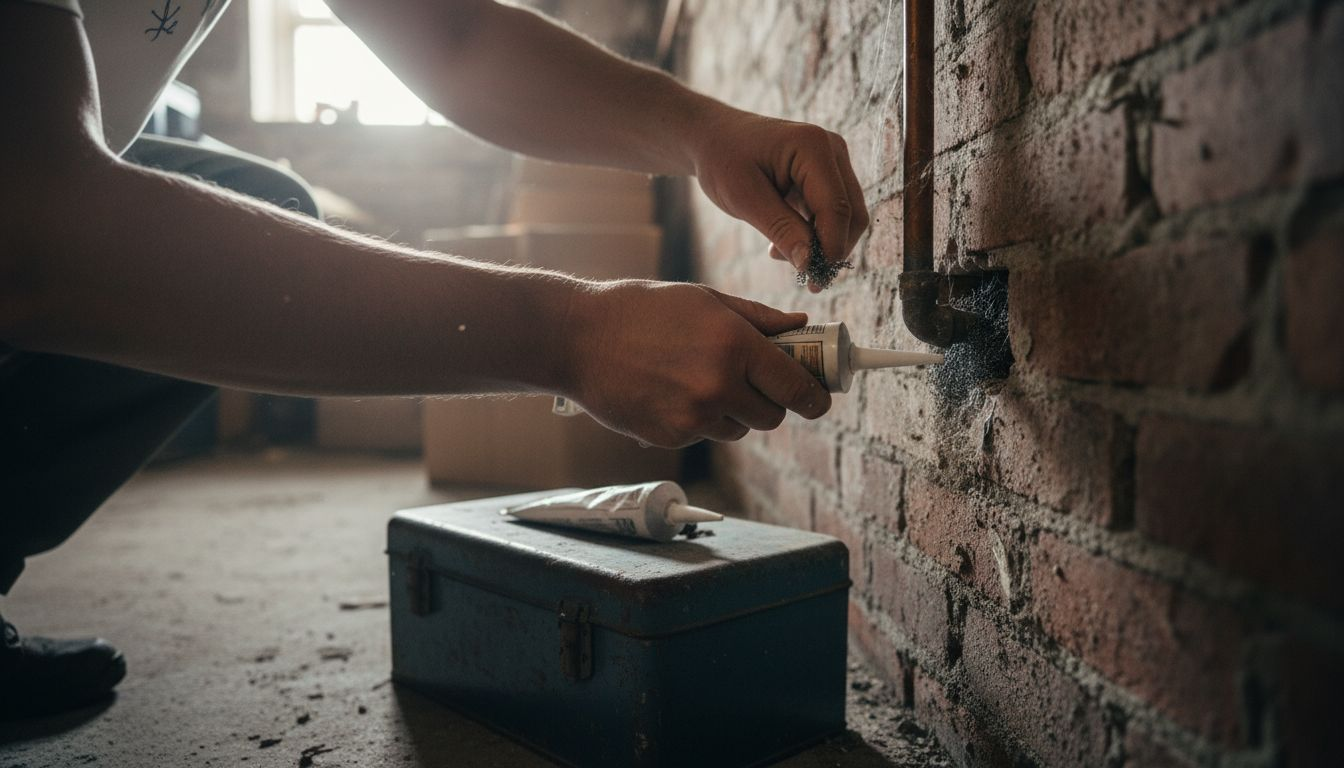
Now that you’ve identified potential entry points in your Bedford home, the next critical step is sealing those gaps and cracks with materials mice cannot penetrate. Rodent-proof construction techniques require strategic material selection to prevent future invasions.
Choose materials that are both durable and mouse-resistant. Your best options include:
- Steel wool: Effective for small gaps and difficult to chew through
- Hardware cloth: Metal mesh with tiny openings
- Sheet metal: Provides a solid, impenetrable barrier
- Concrete or mortar: Permanent solution for larger openings
When sealing gaps, follow these specific steps:
- Clean the area thoroughly before applying any material
- Cut materials to fit precisely around pipes, vents, and foundation cracks
- Use caulk or expanding foam for initial filling
- Apply chosen rodent-resistant material over the initial seal
- Press firmly to ensure complete coverage
Even the smallest gap can become a mouse highway if not properly sealed.
Pay extra attention to areas around utility lines, window frames, and basement foundations. These are common entry points that require meticulous sealing to prevent rodent access.
The table below highlights pros and cons of popular rodent-proofing materials:
| Material | Advantages | Disadvantages |
|---|---|---|
| Steel wool | Inexpensive, easy to apply | Corrodes, needs replacement |
| Hardware cloth | Durable, versatile use | Higher cost, cuts hands |
| Sheet metal | Impenetrable by mice | Harder to install, expensive |
| Concrete/mortar | Permanent, weather resistant | Labor-intensive, cures slowly |
Pro tip: Combine multiple sealing techniques for maximum protection and regularly inspect your work to catch any new potential entry points.
Step 3: Eliminate food and water sources inside and out
Removing attractive food and water sources is crucial in preventing mice from invading your Bedford home. Rodent sanitation strategies focus on making your property as uninviting as possible to these persistent pests.
Inside your home, take these critical steps to eliminate potential food sources:
- Seal food containers tightly in plastic or metal containers
- Clean up crumbs and spills immediately
- Store pet food in sealed containers
- Remove garbage daily
- Keep kitchen surfaces clean and free of food residue
Outdoors, create a mouse-unfriendly environment by:
- Picking up fallen fruits and nuts
- Keeping garbage bins sealed
- Removing standing water sources
- Clearing debris and woodpiles away from your home
- Maintaining a clean yard without overgrown vegetation
Mice can survive on surprisingly little food and water, so comprehensive elimination is key.
Pay special attention to potential hidden food sources like bird feeders, compost bins, and pet feeding areas. These can attract mice from surrounding areas if not managed carefully.
Pro tip: Use metal containers with tight-fitting lids for all food storage, both inside and outside your home, to create the most effective barrier against rodent access.
Step 4: Install and maintain eco-friendly deterrents
Protecting your Bedford home from mice requires strategic, environmentally conscious approaches that go beyond traditional pest control methods. Non-chemical rodent deterrent strategies offer safe and effective alternatives to harsh chemicals.
Consider these eco-friendly deterrent techniques:
- Ultrasonic sound devices: Emit high-frequency sounds mice dislike
- Natural predator encouragement: Create habitats for owls and hawks
- Physical barriers: Install mesh screens and metal flashing
- Motion-activated sprinklers: Startle and discourage rodent activity
When implementing deterrents, focus on these key maintenance steps:
- Check ultrasonic devices for proper functioning monthly
- Clean and replace deterrent materials regularly
- Inspect physical barriers for damage or gaps
- Rotate deterrent locations to prevent mice adaptation
- Monitor effectiveness and adjust strategies accordingly
Consistent maintenance is crucial for long-term rodent prevention success.
The goal is creating a comprehensive, layered defense that makes your property unattractive to mice while preserving the local ecosystem. Combine multiple deterrent methods for maximum effectiveness.
Pro tip: Rotate and vary your deterrent techniques every few months to prevent mice from becoming accustomed to any single method.
Step 5: Verify your rodent proofing success
After implementing your DIY rodent prevention strategy, confirming the effectiveness of your efforts becomes crucial. Ongoing rodent monitoring techniques help ensure your Bedford home remains mouse-free.
Conduct a comprehensive inspection using these key verification methods:
- Look for droppings: Fresh or old evidence indicates active infestation
- Check for gnaw marks: Recent damage suggests continued rodent activity
- Listen for unusual sounds: Scratching or scurrying in walls or attics
- Inspect sealed entry points: Verify no new breaches have occurred
- Monitor bait stations: Track changes in rodent activity
Perform these verification steps systematically:
- Conduct weekly visual inspections
- Document any new signs of rodent presence
- Review and update your prevention strategies
- Clean and reset deterrent devices
- Photograph areas of previous concern for comparison
Consistent monitoring is your best defense against potential rodent reinfestation.
Remember that rodent control is an ongoing process. No single inspection guarantees permanent protection, so remain vigilant and adaptive in your approach.
Pro tip: Create a detailed inspection log to track changes and identify patterns in potential rodent activity around your home.
Secure Your Bedford Home from Mice with Expert Help
Dealing with hidden mouse entry points and sealing them properly can feel overwhelming. The challenge to stop mice from invading your Bedford home requires not only identification but also durable, precise rodent-proofing methods. If you want to go beyond DIY inspections and ensure your property stays rodent-free, Apex Pest Control offers trusted solutions tailored for local homeowners in Bedford and Northeast Ohio. Our licensed technicians specialize in rodent removal using family-safe, eco-friendly approaches that protect your home and peace of mind.
Stop worrying about mouse damage and unwanted guests today. Visit our Uncategorized Archives – Apex Pest Control to learn about our pest control strategies or take the first step now by requesting a no-obligation free quote. Protect your home efficiently with proven methods from a team Ohio homeowners trust.
Frequently Asked Questions
How can I identify potential mouse entry points in my Bedford home?
To identify potential mouse entry points, conduct a thorough exterior inspection of your home. Look for openings larger than a quarter-inch around foundations, windows, doors, and utility lines, particularly in hidden areas like crawl spaces and attics.
What materials are best for sealing gaps and cracks against mice?
Durable and mouse-resistant materials are essential for sealing gaps. Effective options include steel wool for small gaps, hardware cloth for ventilation areas, and concrete or mortar for larger openings; ensure that any materials used are pressed firmly for proper coverage.
What food sources should I eliminate to prevent mice in my home?
To prevent mice, remove potential food and water sources by sealing food containers tightly and cleaning up crumbs and spills immediately. Store pet food in sealed containers and keep garbage bins sealed to eliminate attractants effectively.
What eco-friendly deterrents can I use to keep mice away?
You can use eco-friendly deterrents like ultrasonic sound devices, which emit high-frequency sounds that mice dislike, or encourage natural predators such as owls. Additionally, consider installing physical barriers and motion-activated sprinklers to further deter rodent activity.
How do I verify if my rodent-proofing efforts have been successful?
To verify your success in rodent-proofing, regularly check for signs of mice, including droppings and gnaw marks. Conduct weekly inspections and document any new signs to ensure your Bedford home remains mouse-free and adjust your strategies as needed.