



Every year, termites cause over 5 billion dollars in property damage across american homes, often before owners realize there is a problem. Protecting your investment starts with understanding the signs and steps needed for a thorough inspection. Whether you are facing your first termite scare or want to avoid costly repairs, you will find clear guidance on how to prepare, inspect, and document every stage while using the right tools and safety measures along the way.
Table of Contents
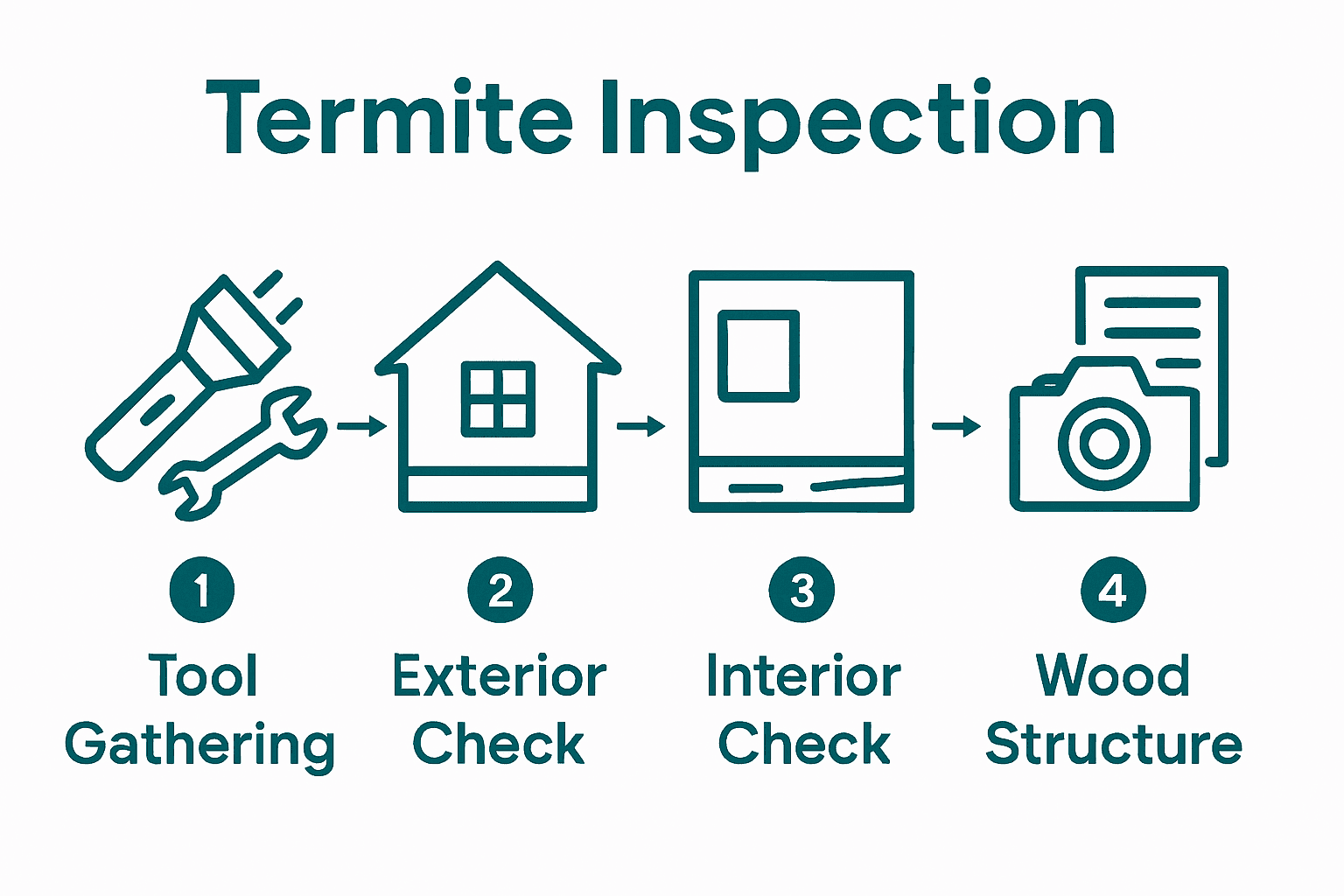
- Step 1: Gather Necessary Tools And Safety Gear
- Step 2: Inspect Exterior Foundations And Perimeter
- Step 3: Examine Interior Walls And Basement Areas
- Step 4: Check Wood Structures For Damage Or Mud Tubes
- Step 5: Document Findings And Plan Next Actions
Quick Summary
| Key Insight | Explanation |
|---|---|
| 1. Assemble inspection tools | Ensure you have a flashlight, screwdriver, and camera to document findings. |
| 2. Inspect exterior perimeter | Look for mud tubes and damaged wood at foundation where termites enter. |
| 3. Check interior structures | Examine walls and basements for mud tubes, frass, and damaged wood surfaces. |
| 4. Document findings thoroughly | Take clear photos and note specific locations of any termite indicators. |
| 5. Seek professional help if needed | Contact pest control for significant damage or multiple signs of infestation. |
Step 1: Gather Necessary Tools and Safety Gear
Before diving into your termite inspection, you’ll need the right equipment to conduct a thorough and safe assessment of your property. According to termitesigns.com, proper preparation is key to an effective termite search.
Start by assembling your essential toolkit. You’ll want a bright LED flashlight to illuminate dark corners and hidden spaces where termites often lurk. A flathead screwdriver or probe tool is critical for checking wood integrity by tapping and probing suspect areas. Make sure to grab your smartphone or digital camera to document any potential findings – visual evidence can be incredibly helpful when consulting with pest control professionals later.
Protective gear is equally important. Put on a pair of sturdy work gloves to shield your hands from debris and potential wood splinters. Safety glasses will protect your eyes from dust and small particles you might encounter during the inspection. Wear comfortable clothing that allows you to move easily and inspect tight spaces without restriction. Pro tip: Avoid wearing your best outfit – this inspection might get a bit messy.
With your tools and safety gear ready, you’re now prepared to start your systematic termite investigation. Remember that while this DIY approach can help you identify potential issues, professional assistance is always recommended for comprehensive termite assessment.
Step 2: Inspect Exterior Foundations and Perimeter
Your exterior foundation is the front line of defense against termite invasions. According to termitesigns.com, carefully examining this area can reveal critical signs of potential termite activity before they infiltrate your home.
Begin by walking the entire perimeter of your property, paying close attention to where your foundation meets the ground. Look for distinctive mud tubes along foundation walls these are telltale signs of subterranean termite movement. These thin, brown tunnels typically appear about the width of a pencil and provide termites safe passage between soil and wood structures. Check areas where wood meets soil especially carefully these are prime entry points for termites.
Watch for specific warning signs like buckling or blistered wood surfaces, which might indicate underlying termite damage. Moisture is another key factor termites are attracted to damp environments, so ensure your foundation has proper drainage and no standing water near the base. Pro tip: Keep vegetation trimmed at least 12 inches away from your foundation to reduce potential termite highways.
With The Essential Guide to Exterior Pest Maintenance, you can develop a more comprehensive understanding of protecting your property. Remember that while this inspection helps, professional assessment remains the most reliable method for comprehensive termite detection.
Step 3: Examine Interior Walls and Basement Areas
Your interior walls and basement represent critical zones for termite detection. According to termitesigns.com, carefully examining these spaces can reveal hidden signs of termite activity that might otherwise go unnoticed.
Start by grabbing your flashlight and systematically checking interior walls, focusing on window frames, door frames, and baseboards. Look for distinctive mud tubes thin, brown tunnels that termites create for safe travel. Watch for frass small, pellet-like droppings that indicate active termite presence. Pay special attention to wood surfaces with unusual characteristics like bubbling paint, uneven texture, or slight surface damage these can be subtle signs of underlying termite destruction.
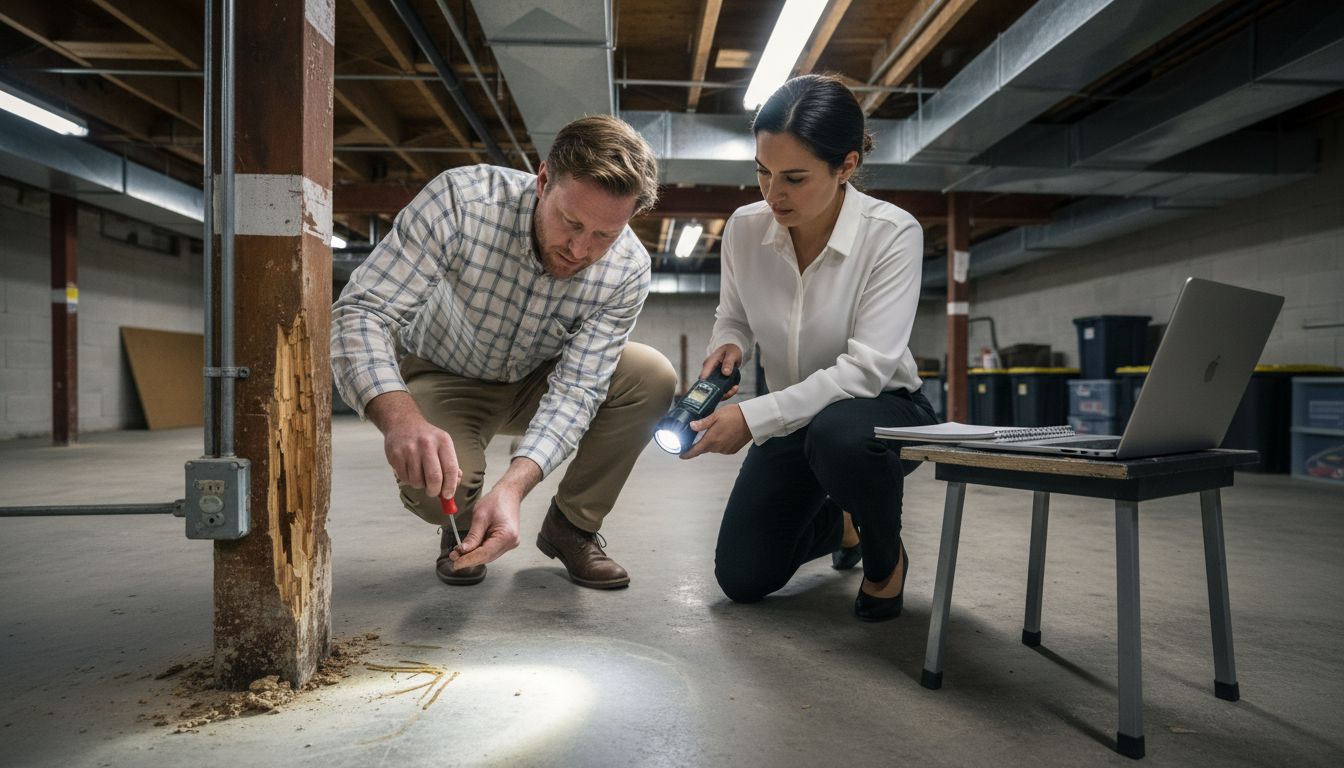
Basement areas require extra scrutiny. Check wooden support structures, floor joists, and any exposed wood carefully. Tap surfaces gently with your screwdriver wood that sounds hollow could signal termite damage. Moisture is a major attractant for termites, so inspect for any signs of water damage or excessive humidity. Pro tip: Keep basement areas well ventilated and fix any water leaks immediately to reduce termite risk.
For a deeper understanding of protecting your property, explore The Essential Guide to Exterior Pest Maintenance. While this inspection provides valuable insights, remember that professional pest control experts can offer the most comprehensive termite assessment.
Step 4: Check Wood Structures for Damage or Mud Tubes
Identifying termite damage early can save you thousands in potential repairs. According to termitesigns.com, carefully examining wooden structures is crucial for detecting subtle signs of termite activity before significant destruction occurs.
Systematically inspect every wooden structure in your home wooden beams, joists, furniture, and structural supports. Your screwdriver will be your primary detective tool gently probe surfaces and listen for telltale sounds. Hollow or soft wood indicates potential termite damage. Look specifically for mud tubes thin, brown tunnels running along wood surfaces that termites create for moisture protection and safe travel. These tubes typically appear about the width of a pencil and can be found on both interior and exterior wooden surfaces.
Pay extra attention to areas with previous water damage wooden structures that have experienced moisture are particularly attractive to termites. Use your smartphone to photograph any suspicious areas this documentation can help professionals assess potential infestations. Pro tip: Wooden structures near ground level or in consistently damp environments are most at risk. If you tap wood and hear a hollow sound or notice significant softness, consider this a red flag that warrants professional investigation.
For more comprehensive guidance on protecting your property, explore The Essential Guide to Exterior Pest Maintenance. While this inspection provides valuable insights, remember that professional termite experts can offer the most thorough assessment of potential risks.
Step 5: Document Findings and Plan Next Actions
Your termite inspection is complete, but the most critical part begins now documenting your findings and determining the best course of action. According to termitesigns.com, meticulously recording your observations can be the key to preventing extensive and expensive damage.
Create a comprehensive inspection report that includes detailed photographs of every suspicious area. Capture clear images of mud tubes, wood damage, frass, and any other potential termite indicators. Note the specific locations precise details matter. Mark the exact spots where you discovered potential signs of infestation, including measurements and the extent of damage. Consider creating a simple diagram or map of your property highlighting these critical zones this visual reference can be incredibly helpful for professional pest control experts.
Assess the severity of your findings and determine your next steps. Minor signs might require preventive treatments, while extensive damage demands immediate professional intervention. Pro tip: If you discover more than three areas of significant wood damage or multiple mud tubes, its strongly recommended to contact a licensed pest control professional immediately. Your documentation will serve as a crucial baseline for their assessment.
For additional guidance on protecting your property, explore The Essential Guide to Exterior Pest Maintenance. Remember that while this DIY inspection provides valuable insights, professional termite experts can offer the most comprehensive evaluation and targeted treatment strategy.
Protect Your Ohio Home with Expert Termite Inspection and Treatment
Termites can silently damage your home or business causing costly repairs and safety concerns. This DIY termite inspection guide highlights common signs like mud tubes frass and wood damage that you should never ignore. If your inspection reveals these troubling indications it’s crucial to act quickly and prevent further infestation.
Apex Pest Control understands the urgent challenges Ohio property owners face. We offer tailored residential and commercial termite control solutions designed to stop these destructive pests before they cause irreversible harm. Don’t wait until damage worsens count on our professional team to provide thorough inspections and effective treatments that protect your property and peace of mind.
Get started today by exploring our Uncategorized Archives – Apex Pest Control to learn about pest control options suited for your needs. Ready for expert help now Request your personalized service with a free quote and take the first step toward a termite-free home.
Frequently Asked Questions
How do I prepare for a DIY termite inspection in my home or business?
To prepare for a DIY termite inspection, gather essential tools like a bright LED flashlight, a flathead screwdriver or probe tool, and a smartphone or camera for documentation. Put on sturdy gloves and safety glasses to protect yourself while inspecting.
What areas should I focus on during a termite inspection?
During a termite inspection, focus on the exterior foundations and perimeter, interior walls, basements, and any wooden structures. Pay special attention to where wood meets soil, window frames, door frames, and areas with moisture.
What signs should I look for that indicate termite presence?
Look for mud tubes, which are thin brown tunnels, frass (pellet-like droppings), and signs of wood damage like bubbling paint or hollow sounds when tapping. Document any suspicious areas, as these can help identify the extent of the infestation.
How do I document my findings after the inspection?
Create a comprehensive inspection report that includes detailed photographs and notes of potential termite indicators. Mark the locations of your findings and consider making a simple diagram to visualize the affected areas.
When should I consider contacting a professional for termite treatment?
Contact a professional if you discover multiple mud tubes, significant wood damage, or if you’re uncertain about the severity of your findings.
 Immediate intervention is crucial if you find extensive damage to prevent further issues.
What preventive measures can I take to reduce the risk of termites?
To reduce the risk of termites, maintain proper drainage around your foundation and keep vegetation trimmed at least 12 inches away from it. Assess your property for moisture issues and repair any leaks promptly to create an inhospitable environment for termites.