



TL;DR:
- Most Ohio homes face hidden pest entry points caused by foundation shifts and weather damage. Sealing these vulnerabilities with durable materials like copper mesh and silicone caulk significantly reduces infestations. Regular inspection, maintenance, and professional exclusion are key to long-term rodent control and prevention.
Most Ohio homeowners assume pests walk in through obvious holes. The reality is far more unsettling. Explaining pest entry points means confronting the fact that a mouse needs only a gap the size of a dime to enter your home, and a rat needs just a quarter-inch opening. Ohio’s freeze-thaw winters quietly crack foundations and shift sill plates every season, creating fresh access points you never notice until something is already living in your walls. This guide walks you through how pests enter homes, where to look, and exactly how to seal those vulnerabilities before an infestation forces a much more expensive solution.
Table of Contents
- Understanding why pest entry points matter in Ohio homes
- Common rodent entry points in Ohio homes and how to find them
- How to effectively seal and secure rodent entry points
- Preventive pest control planning: integrating inspection and maintenance
- Navigating rodent challenges unique to Oakwood, Ohio homes
- Why most homeowners miss the key to long-term rodent control
- How Apex Pest Control helps Oakwood homeowners seal rodent entry points
- Frequently asked questions
Key Takeaways
| Point | Details |
|---|---|
| Rodents enter through tiny gaps | Even openings as small as a quarter inch can let rodents inside Ohio homes. |
| Sealing entry points prevents infestations | Blocking common access points stops 80% of pest problems before chemical treatments are needed. |
| Regular inspections are essential | Seasonal checks after freeze-thaw cycles catch new gaps early to maintain exclusion. |
| Copper mesh plus caulk is effective | This combination is durable and resistant to rodent chewing, ideal for foundation and utility gaps. |
| Professional pest exclusion saves money | Hiring experts ensures thorough sealing and lasting pest prevention beyond DIY fixes. |
Understanding why pest entry points matter in Ohio homes
To understand how to stop pests, first grasp why these tiny entry points are critical weaknesses in Ohio homes.
Ohio’s climate is uniquely punishing on building structures. Each winter, ground moisture freezes and expands, then thaws and contracts. That repeated cycle shifts foundations, gaps sill plates, and opens cracks in masonry that simply were not there the previous spring. Those changes are invisible from across the yard but are exactly the kind of access points rodents are hunting for every fall.
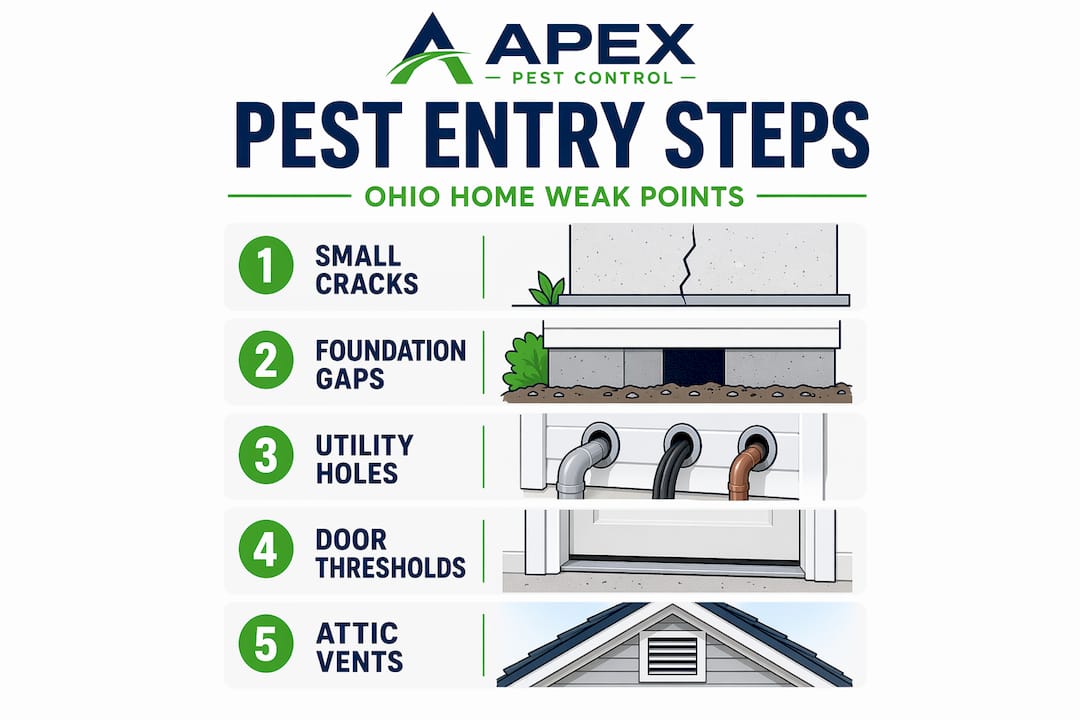
The good news is that exclusion works. Sealing gaps prevents infestations in roughly 80% of cases before any chemical treatment is even necessary, according to EPA integrated pest management principles. That number matters because it flips the usual homeowner response: most people reach for a trap or a spray first, when the most effective move is blocking entry.
Without exclusion, reactive treatments keep failing. A technician can eliminate every rodent inside your home today, but if the gap under your garage door seal stays open, new animals will move in within weeks. This is why the role of exclusion in pest management is treated as the foundation of any serious prevention program, not an optional add-on.
Here is what makes entry points so dangerous in Ohio specifically:
- Freeze-thaw cycles expand and contract concrete, creating new foundation gaps yearly
- Older Ohio housing stock, especially pre-1980 builds, often lacks modern weatherstripping standards
- Brick veneer construction, common across central and southern Ohio, includes weep holes that connect directly to wall cavities
- Utility upgrades over decades leave unsealed penetrations where original contractors never anticipated future pipes or wiring
- Attached garages create a warm, sheltered transition zone that rodents use as a staging point before entering living spaces
“The most reliable pest control starts not with chemicals but with closing the door. Exclusion removes the root problem rather than managing its symptoms.”
Common rodent entry points in Ohio homes and how to find them
With awareness of why exclusion matters, let’s identify where rodents sneak in around your Ohio home.
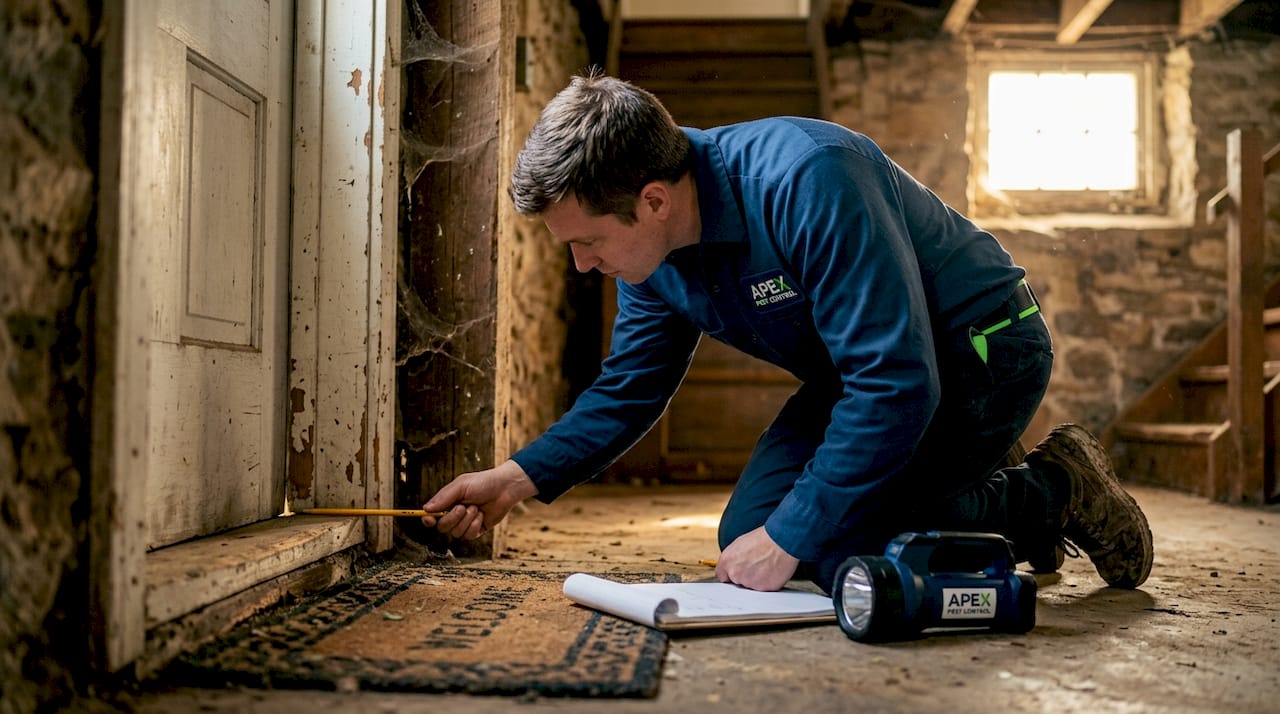
Most people scan their home’s exterior and feel confident nothing looks wrong. But visual checks miss most entry points. Gaps at the bottom corners of doors, worn garage seals, and the space where a dryer vent exits your wall are not dramatic enough to catch the eye, yet they are among the most-used access routes rodents rely on. Knowing the specific examples of pest entry points most common in Ohio homes is the only way to inspect reliably.
Here is a systematic approach for detecting pest entry:
- Start at the garage door. Get down and look at both bottom corners where the rubber seal meets the concrete. Seals degrade and curl, leaving triangular gaps on each side. Even a minor warp lets mice pass freely.
- Check every exterior door sweep. Worn or missing door sweeps are among the most common pest entry points in older Ohio homes. Feel for drafts at floor level or do a light test: shine a flashlight outside at night and see if light bleeds under the door from inside.
- Trace every utility penetration. Anywhere a pipe, wire, or conduit enters your home’s exterior wall almost always has a gap around it. Cable TV lines, gas meters, HVAC refrigerant lines, and outdoor spigots are all worth checking.
- Inspect weep holes in brick homes. These small openings in brick courses exist for moisture drainage, but they also open directly into wall cavities. Rodents know this. Check for gnawing or debris near weep holes as signs of use.
- Go inside and inspect under sinks and behind appliances. The holes cut for plumbing in your cabinets are almost always larger than the pipes running through them. That extra space is a direct highway from your crawl space or basement into your kitchen.
- Check your basement sill plate. This is the wooden board that sits on top of your foundation wall. In Ohio homes, this junction is a prime spot for gaps caused by settling.
Light gap testing identifies hidden issues that standard visual checks completely miss, especially along the bottom corners of doors.
Pro Tip: Use a standard pencil to probe around utility penetrations and door frames. If the pencil fits into a gap, so does a mouse. It is a faster, more reliable field test than eyeballing it.
After inspecting outside, walk your monthly pest maintenance guide checklist to make sure no interior access points get skipped, especially around basement utility entries.
How to effectively seal and secure rodent entry points
Now that entry points are located, here are the best ways to seal them effectively for lasting rodent prevention.
Not all sealing materials perform equally, and in Ohio’s climate, the wrong material fails fast. Expandable foam is the most common DIY mistake. It fills gaps quickly, looks clean, and feels like a solution, but rodents chew through it in hours. Ohio winters also cause foam to crack as temperatures swing.
Sealing utility openings properly with the right materials prevents the majority of household pest entries when combined with weatherstripping. Here is what actually works:
- Copper mesh and caulk for foundation and sill plate gaps. Stuff the gap with copper mesh first, then seal over it with silicone caulk. Rodents will not chew through copper, and the caulk prevents drafts and moisture. Professionals in freeze-thaw climates use this combination specifically because foam fails fast in Ohio’s temperature swings.
- Silicone caulk for cracks around windows and doors. Acrylic latex caulk works for interior gaps, but for exterior use, silicone holds up against Ohio weather far longer.
- Reinforced door sweeps. Standard aluminum sweeps bend over time. Look for heavy-duty models with a stainless steel or aluminum housing and a dense rubber seal designed to resist chewing.
- Stainless steel or copper mesh for weep holes. Mesh inserts allow moisture to drain normally while physically blocking rodent entry. This is the only solution that doesn’t compromise the drainage function of the weep hole.
- Hardware cloth over larger gaps. For openings around crawl space vents or foundation gaps wider than an inch, 1/4-inch hardware cloth stapled securely and then caulked around the edges provides durable coverage.
| Entry point | Wrong material | Right material |
|---|---|---|
| Foundation sill plate gap | Expandable foam | Copper mesh plus silicone caulk |
| Weep holes in brick | Solid plug or foam | Stainless steel or copper mesh insert |
| Utility pipe penetrations | Foam only | Copper mesh packed first, then caulk |
| Door bottom corners | Standard rubber sweep | Heavy-duty reinforced door sweep |
| Window frame cracks | Paintable latex caulk | Exterior-grade silicone caulk |
Pro Tip: Do not seal once and forget it. Ohio’s freeze-thaw cycle means sealed points need inspection every spring. A seal that held all summer can crack open between October and March.
For further reading on what materials and methods hold up in Ohio conditions, the pest exclusion strategies breakdown covers specific regional considerations in detail.
Preventive pest control planning: integrating inspection and maintenance
Securing entry points is essential, but integrating it into regular prevention creates lasting protection.
Sealing your home once is not a permanent solution. It is a starting point. Ohio homes shift, weatherstripping wears, and screens develop tears. Pests are patient and consistent. Effective pest entry prevention requires a routine, not a one-time repair.
Preventive programs with inspection and exclusion consistently reduce infestation recurrence and long-term costs compared to treating active infestations. Here is how to build that routine:
- Schedule a full exterior inspection every spring, after the freeze-thaw cycle finishes. Look for new cracks, shifted sill plates, and any weatherstripping that pulled away over winter.
- Check interior utility penetrations twice yearly, once in spring and again in fall before rodent season peaks.
- Set monitoring stations in key areas like the basement, garage, and crawl space. Glue boards or snap traps near known entry zones catch activity early before it becomes an infestation.
- Address sanitation alongside sealing. Accessible food and clutter near entry zones attract pests even after gaps are sealed. Eliminate harborage.
- Log what you find and fix. Keeping simple notes about where you sealed gaps lets you prioritize rechecks and spot patterns over time.
| Approach | Cost over 3 years | Infestation risk | Long-term outcome |
|---|---|---|---|
| Reactive only (treat when you see pests) | High | Recurring | Pests return regularly |
| Preventive (seal, monitor, maintain) | Lower | Minimal | Stable, long-term protection |
| Professional exclusion plus maintenance | Moderate upfront, low ongoing | Very low | Best long-term outcome |
“Think of home exclusion the way you think of maintaining gutters. Skip it one season and the damage compounds. Stay on schedule and the problem never starts.”
Use the seasonal pest control checklist to track your inspection and maintenance schedule across all four Ohio seasons.
Navigating rodent challenges unique to Oakwood, Ohio homes
Understanding general Ohio challenges helps, but here is what Oakwood homeowners specifically should watch for.
Oakwood has a distinctive housing profile that shapes its pest vulnerabilities. Many homes here were built in the mid-20th century with slab foundations or full basements, and decades of settling have created entry gaps that simply were not present at original construction. Ohio foundations develop sill plate gaps from settling that require copper mesh and caulk for secure, lasting seals.
Oakwood-specific considerations every homeowner should address:
- Brick and stone veneer homes are common in Oakwood. Every one of them has weep holes, and most go unprotected. Rodents know exactly where they lead.
- Mature tree canopy. Oakwood’s established trees are beautiful, but branches that overhang or touch rooflines give squirrels and roof rats a direct bridge to your attic vents and soffits. Trim branches at least six feet away from the roofline.
- Fall pest pressure is significant as temperatures drop after summer. Mice and rats begin actively seeking warm interior spaces in September and October. Starting your sealing work in August gets ahead of that surge.
- Post-winter inspections are non-negotiable. Every freeze-thaw cycle opens new cracks. What looked sealed in November may have shifted by March.
- Garage-to-home transitions deserve extra attention. In Oakwood’s attached garage homes, the door between the garage and living space is often under-sealed. Treat it the same as an exterior door.
The fall pest prevention steps outline exactly how to prepare before rodent season peaks, and the safe rodent control steps cover what to do if you find evidence of entry before you finish exclusion work.
Why most homeowners miss the key to long-term rodent control
Here is the perspective many pest control pros wish homeowners understood.
After decades of working in Ohio homes, the pattern is hard to miss. A homeowner finds droppings, calls for treatment, the problem disappears for two months, then it is back. They call again. The cycle repeats for years. The frustration is real, but the cause is almost always the same: the entry points were never closed.
Reactive pest control fails over 70% of the time without sealing, because new pests move in immediately after treatment eliminates the current population. Treating without excluding is like bailing out a boat without plugging the hole.
Here is what makes this pattern so persistent: sealing entry points is unglamorous work. There is no dramatic before-and-after. No visible pest to photograph and feel satisfied about. Homeowners skip it because they do not see the result directly. But the homes that never call back for a second treatment are almost always the ones where exclusion pest management was taken seriously alongside treatment.
The other overlooked reality is cost. One professional exclusion service costs a fraction of what two or three years of recurring reactive treatments add up to. Done right, sealing entry points stops the problem at its source rather than managing its consequences indefinitely.
Pro Tip: Every October, take 20 minutes to do a pencil-and-flashlight walkthrough of your exterior before rodent season peaks. It takes less time than most homeowners expect and catches the gaps that opened over summer.
The homeowners who struggle most with rodent recurrence are not unlucky. They are skipping the step that matters most.
How Apex Pest Control helps Oakwood homeowners seal rodent entry points
Having explored why exclusion is critical, here is how Apex Pest Control partners with Oakwood residents for effective rodent prevention.
Since 1969, Apex Pest Control has helped Ohio homeowners stop pests at the source rather than chasing them with treatments that only work until the next rodent finds the same gap. Our technicians conduct thorough inspections to identify every entry point in your home, including the ones most homeowners miss. We use proven materials like copper mesh, reinforced door sweeps, and exterior-grade sealants built to hold up against Ohio’s climate. Our rodent pest extermination services include tailored exclusion work, not just population control. Combined with our pest entry point inspection guide and monthly maintenance planning, we give Oakwood homeowners a plan that holds season after season. Call us for a free quote and stop treating the symptom.
Frequently asked questions
What size gap allows rodents to enter Ohio homes?
Mice can enter through openings as small as a quarter inch, meaning even minor cracks in your foundation or sill plate are serious entry risks worth sealing immediately.
How can I detect hidden rodent entry points under doors?
Have someone shine a flashlight outside at night while you look at the base of the door from inside. Light gap testing identifies hidden issues at door corners that you will not catch with a standard visual check.
Why isn’t expanding foam enough to seal rodent entry points?
Rodents chew through foam easily and quickly, so foam alone provides almost no lasting protection. Always pack the gap with copper mesh first and use caulk or foam only as a secondary seal over it.
How often should I inspect my home for new pest entry points?
Inspect at least every spring and fall. Seasonal inspections catch new openings created by Ohio’s freeze-thaw cycles before rodents find them first.
Can I cover weep holes without causing water damage?
Yes. Weep holes covered with mesh made from stainless steel or copper allow full drainage while physically blocking rodents from entering the wall cavity behind the brick.