



Spotting mouse droppings near your garage or hearing unexplained scratching sounds at night raises alarm for many Ohio homeowners. Rodent infestations go beyond simple annoyance and can quickly threaten your family’s health and property. Comprehensive exterior rodent programs offer more than quick fixes, combining ongoing management, expert assessment, and strategic exclusion techniques to break the cycle of reinfestation and protect your home. Discover reliable ways to address vulnerabilities and keep rodents at bay year-round.
Table of Contents
- Defining Exterior Rodent Programs And Misconceptions
- Types Of Exterior Rodent Control Solutions
- How Exterior Rodent Programs Work
- Requirements For Effective Rodent Prevention
- Risks, Costs, And Legal Considerations For Homeowners
Key Takeaways
| Point | Details |
|---|---|
| Ongoing Management is Essential | Effective rodent control requires continuous monitoring and proactive strategies, not just one-time treatments. |
| Holistic Prevention Approaches | Homeowners should focus on structural integrity and environmental management to create uninviting habitats for rodents. |
| Understanding Health and Financial Risks | Rodent infestations can lead to serious health issues and significant property damage, making early intervention crucial. |
| Professional Assessments are Beneficial | Investing in expert inspections can identify vulnerabilities and guide effective rodent exclusion and prevention measures. |
Defining Exterior Rodent Programs and Misconceptions
Exterior rodent programs are comprehensive strategies designed to prevent, monitor, and manage rodent populations around residential properties in Ohio. These programs go far beyond simple pest control, focusing on creating comprehensive barriers that protect homes from potential rodent invasions.
At their core, exterior rodent programs involve several critical components:
- Systematic property inspection and assessment
- Identifying potential entry points and vulnerabilities
- Implementing physical barriers and exclusion techniques
- Ongoing monitoring and population management
Contrary to popular belief, rodent control requires ongoing management, not just one-time interventions. Homeowners often mistakenly assume that a single treatment will permanently eliminate rodent risks. However, professional exterior rodent programs recognize that rodents are persistent and adaptive creatures that require continuous strategic approaches.
Most exterior rodent programs focus on understanding rodent behavior and biology. This means analyzing potential food sources, identifying hidden entry points, and understanding how local environmental factors in Ohio contribute to rodent population dynamics. Rodent exclusion techniques involve sealing potential access points, managing landscaping to reduce shelter opportunities, and creating environments that are systematically less attractive to rodent populations.
Common Misconceptions About Rodent Control:
Here’s a comparison of common homeowner misconceptions versus professional rodent program realities:
| Misconception | Professional Reality |
|---|---|
| One-time treatments are enough | Ongoing management is essential |
| Clean homes are immune to rodents | All homes can be at risk |
| Poisoning is a complete solution | Integrated approaches work best |
| Small holes don’t matter | Even tiny gaps allow entry |
| DIY is as effective as professionals | Expert assessment achieves better results |
- Poisoning alone solves rodent problems
- Only dirty homes attract rodents
- Rodent control is a one-time event
- Small holes aren’t significant entry points
- DIY methods are as effective as professional programs
Pro tip: Conduct a thorough property perimeter walk-through every season, carefully examining your home’s foundation, roof line, and potential entry points to stay ahead of potential rodent vulnerabilities.
Types of Exterior Rodent Control Solutions
Exterior rodent control solutions encompass a comprehensive range of strategic approaches designed to protect residential properties from rodent invasions. Effective rodent management techniques go beyond simple pest elimination, focusing on prevention, exclusion, and long-term habitat modification.
The primary types of exterior rodent control solutions include:
- Physical Exclusion Methods
- Sealing potential entry points
- Installing metal screens and barriers
- Using durable building materials
- Habitat Modification Strategies
- Removing potential food sources
- Managing landscaping to reduce shelter opportunities
- Eliminating standing water and debris
- Non-Chemical Control Techniques
- Strategic trapping
- Population monitoring
- Sanitation management
Non-chemical approaches are particularly important for Ohio homeowners seeking environmentally responsible rodent management. These methods minimize risks associated with chemical treatments and avoid potential secondary poisoning of non-target species. Professional exterior rodent control programs carefully assess property vulnerabilities, identifying and addressing specific environmental factors that might attract rodents.
Rodent Exclusion Techniques require a multifaceted approach that combines physical barriers with strategic environmental management. This involves detailed property inspections, identifying potential entry points, and implementing comprehensive prevention strategies that make homes less attractive to rodent populations.
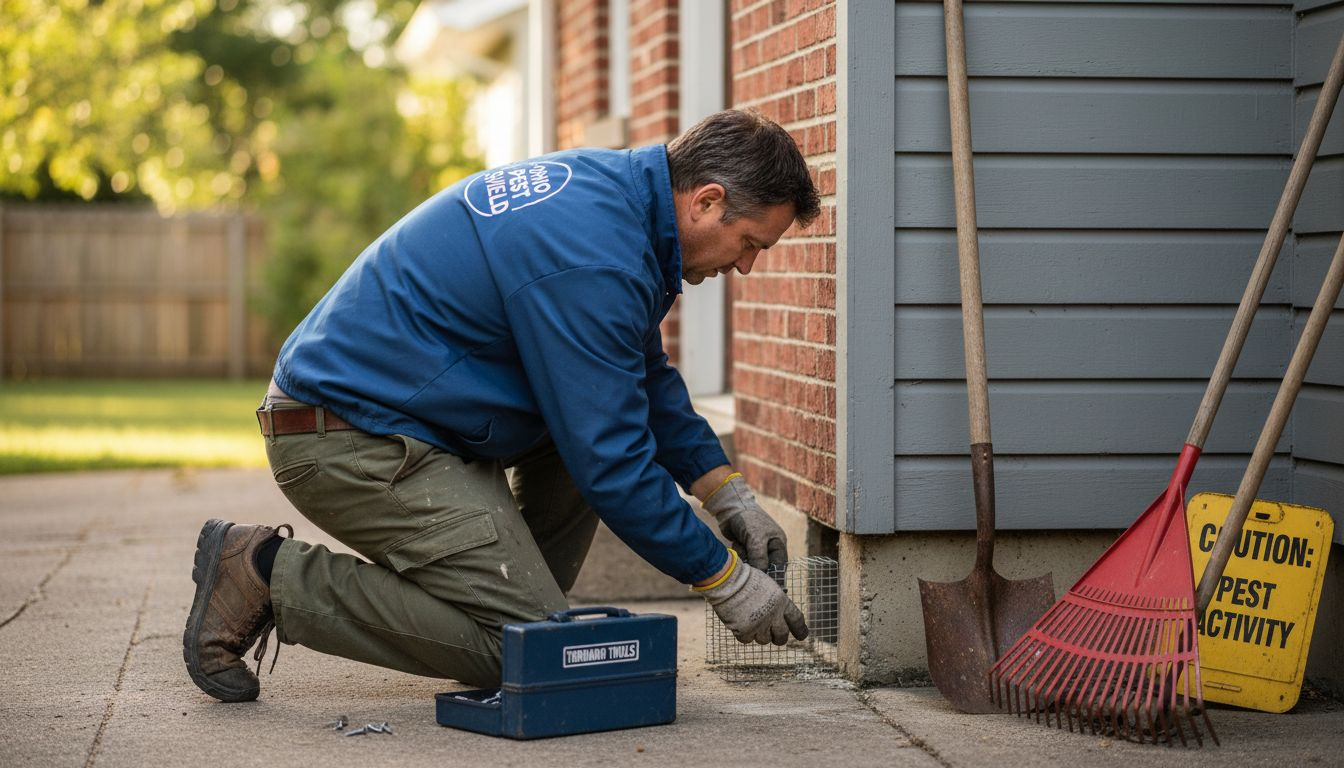
Pro tip: Invest in professional inspections that provide a comprehensive assessment of your property’s unique rodent vulnerability points, focusing on foundation gaps, roof lines, and potential hidden entry routes.
How Exterior Rodent Programs Work
Exterior rodent programs represent a sophisticated, multi-layered approach to managing rodent populations in residential environments. Integrated pest management strategies combine scientific understanding with practical techniques to prevent and control rodent infestations effectively.
The core operational components of exterior rodent programs include:
- Initial Property Assessment
- Comprehensive site inspection
- Identification of potential entry points
- Evaluation of environmental risk factors
- Structural Modification
- Sealing potential rodent access routes
- Reinforcing vulnerable building structures
- Installing protective barriers
- Ongoing Monitoring
- Regular property inspections
- Population tracking
- Adaptive control strategies
Professional rodent control programs go beyond simple elimination, focusing on understanding and disrupting rodent behavior patterns. This approach involves analyzing local environmental conditions, identifying specific attractants, and implementing targeted strategies that make properties less hospitable to rodent populations.
Prevention Techniques play a critical role in exterior rodent management. These include maintaining clean surroundings, removing potential food sources, managing landscaping to reduce shelter opportunities, and creating physical barriers that prevent rodent entry. Successful programs recognize that consistent, proactive measures are more effective than reactive treatments.
Pro tip: Develop a seasonal maintenance schedule that includes thorough property inspections, focusing on potential entry points and addressing environmental conditions that might attract rodents.
Requirements for Effective Rodent Prevention
Rodent-proof construction techniques form the foundation of comprehensive exterior rodent prevention in Ohio homes. These strategies go beyond simple barriers, creating integrated systems that make properties fundamentally inhospitable to rodent populations.
Key requirements for effective rodent prevention include:
- Structural Integrity
- Using rodent-resistant building materials
- Sealing potential entry points
- Maintaining building structure integrity
- Environmental Management
- Eliminating food and water sources
- Reducing potential shelter areas
- Managing landscaping to discourage rodent habitation
- Regular Monitoring
- Conducting routine property inspections
- Tracking potential rodent activity
- Implementing proactive control measures
Professional rodent prevention requires a holistic approach that combines architectural design, ongoing maintenance, and strategic environmental management. This means understanding local rodent behavior, identifying specific vulnerabilities in residential structures, and creating multilayered defense mechanisms that prevent rodent entry and survival.
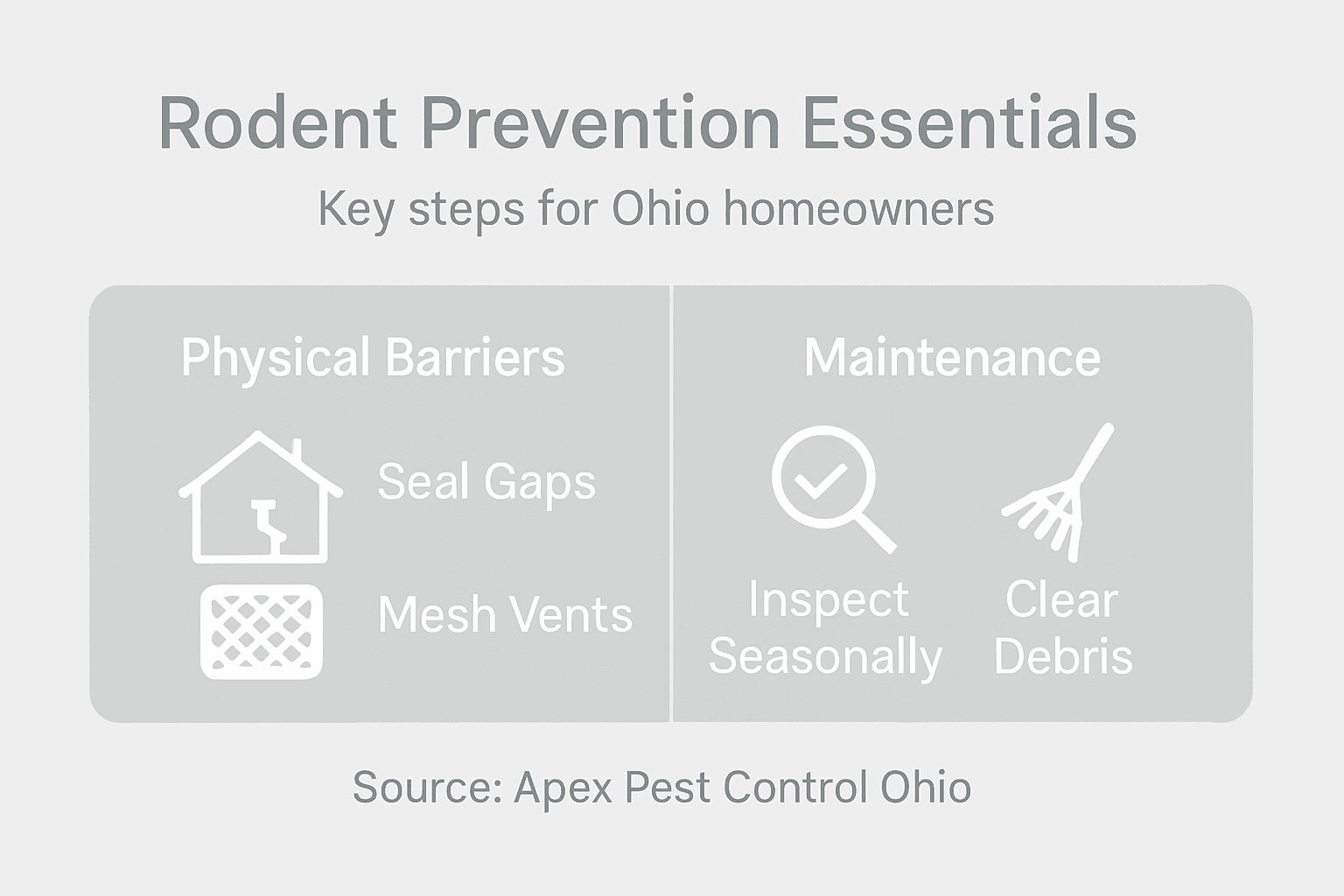
Preventive Strategies demand collaborative efforts between homeowners, pest control professionals, and building maintenance experts. Successful rodent prevention is not about creating impenetrable fortresses, but designing smart, adaptive systems that continuously reduce rodent attraction and access opportunities.
Pro tip: Perform a comprehensive property perimeter check every change of season, paying special attention to foundation gaps, roof lines, and potential hidden entry routes that rodents might exploit.
Risks, Costs, and Legal Considerations for Homeowners
Rodent infestation risks extend far beyond simple pest control, presenting significant financial and health challenges for Ohio homeowners. Understanding these comprehensive risks is crucial for developing effective prevention and management strategies.
Key risks and potential costs associated with rodent infestations include:
- Health Risks
- Disease transmission
- Allergic reactions
- Potential respiratory complications
- Property Damage
- Structural deterioration
- Electrical system damage
- Insulation destruction
- Financial Implications
- Repair and restoration expenses
- Ongoing pest control treatments
- Potential home value reduction
Homeowners must recognize that rodent-related damages can quickly escalate from minor nuisances to substantial financial burdens. Electrical wiring damage, for instance, represents a critical concern, potentially creating fire hazards that compromise home safety and lead to expensive repairs.
Legal Considerations involve compliance with local building codes and public health regulations. Many municipalities have specific requirements for pest management, and homeowners may be held liable for infestations that spread to neighboring properties. Professional documentation and proactive prevention can help mitigate potential legal complications.
Below is a summary highlighting the main risks, potential costs, and legal considerations for Ohio homeowners regarding rodent infestations:
| Risk Category | Example Issue | Potential Consequence |
|---|---|---|
| Health | Disease transmission | Illness or allergic reactions |
| Property Damage | Electrical wiring chewed | Risk of fire or power loss |
| Financial | Ongoing treatments | Increased long-term expenses |
| Legal | Failure to manage infestation | Liability for neighbor damages |
| Compliance | Ignoring local codes | Fines or insurance issues |
Pro tip: Maintain comprehensive documentation of all pest control efforts, including professional inspections and treatment records, to protect yourself from potential legal disputes and demonstrate responsible property management.
Protect Your Ohio Home with Expert Exterior Rodent Programs
Rodents can silently threaten your home’s safety and comfort by exploiting tiny entry points and hidden vulnerabilities. The article highlights the critical importance of ongoing management, thorough property inspections, and integrated exclusion techniques to keep these persistent pests out. At Apex Pest Control, we understand these challenges and offer customized exterior rodent control solutions tailored to your property’s unique needs. Our professional team focuses on sealing entry points, modifying habitats, and monitoring rodent activity to create a comprehensive barrier that protects your home year-round.
Don’t wait until rodent damage impacts your health or finances. Explore our Uncategorized Archives – Apex Pest Control to learn more about our pest management approach. Ready to safeguard your home with a proven prevention program? Visit Apex Pest Control Free Quote today and take the first step toward a pest-free living environment. Professional care starts with a simple click—act now and protect your family and property from the costly risks of rodent infestations.
Frequently Asked Questions
What are exterior rodent programs?
Exterior rodent programs are comprehensive strategies designed to prevent, monitor, and manage rodent populations around residential properties, focusing on creating barriers to protect homes from invasions.
How do I know if my home is vulnerable to rodent infestations?
Conduct a thorough property inspection to identify potential entry points, vulnerabilities, and environmental factors that could attract rodents, such as food sources or shelter opportunities.
What techniques are used in exterior rodent control solutions?
Exterior rodent control solutions include physical exclusion methods (like sealing entry points), habitat modification strategies (removing food sources), and non-chemical control techniques (such as trapping and sanitation management).
Why is ongoing management important for rodent control?
Rodents are persistent and adaptive creatures. Ongoing management is essential because a single treatment is often not enough to eliminate the risk; continuous monitoring and prevention strategies are necessary for effective long-term control.