



TL;DR:
- Ohio’s increasing tick population affects pets year-round, as fleas and ticks remain active above 40°F and indoors. Effective prevention combines pet treatments, environmental management, and yard habits, tailored to species, safety, and seasonality, with professional help advised for persistent infestations. Regular pet checks, consistent use of veterinary-approved products, and yard hygiene are essential to protect pets and homes in Ohio.
Ohio’s tick population has been climbing steadily, and Oakwood pet owners are feeling it. Whether your dog runs through the grassy areas near Patterson Park or your cat sneaks into the backyard, the risk of fleas and ticks is real year-round. Many pet owners assume winter gives them a break, but ticks stay active above 40°F, and fleas survive indoors regardless of the season. This article covers the most practical flea and tick prevention tips available for Ohio households, from the right products to yard habits that actually make a difference.
Table of Contents
- Key takeaways
- 1. Understand what makes flea and tick prevention work
- 2. Oral medications: how they work and what to watch for
- 3. Topical treatments and flea collars
- 4. Tick prevention tips for cats
- 5. Home and yard management to cut exposure at the source
- 6. Comparing prevention methods for Ohio households
- My honest take on flea and tick prevention in Ohio
- Protect your Oakwood home with professional-grade pest control
- FAQ
Key takeaways
| Point | Details |
|---|---|
| Year-round prevention matters | Fleas survive indoors all winter and ticks remain active in Ohio temps above 40°F. |
| Match product to your pet’s needs | Oral medications, topicals, and collars each work differently and suit different household situations. |
| Treat your home and yard too | Vacuuming, hot washing bedding, and clearing brush reduce infestation risk significantly. |
| Always inspect after outdoor time | Even pets on preventives can carry ticks indoors temporarily, so regular checks remain critical. |
| Combine methods for best results | No single product covers every angle. Layering pet treatment with environmental control works best. |
1. Understand what makes flea and tick prevention work
Ectoparasite control is the formal term for managing external parasites like fleas and ticks. Before you choose a product, you need a clear framework for evaluating your options. Not every method works the same way, and the right fit depends on your pet, your home, and how much time your animals spend outdoors.
Here are the key criteria to weigh:
- Effectiveness across the life cycle: Fleas reproduce fast. A product that kills adult fleas but ignores eggs and larvae will not solve a real infestation.
- Safety for your household: If you have young children or a pet with a seizure history, certain products require extra caution.
- Ease of use: Oral medications work well for dogs that resist topical applications. Cats often do better with specific collar options.
- Duration of protection: Monthly products demand consistency. Longer-interval treatments like 12-week oral doses reduce the margin for error.
- Cost and vet guidance: What works for your neighbor’s dog may not be right for yours. Veterinary recommendations tailored to your pet’s weight, age, and health history matter.
Pro Tip: Ask your vet specifically which products cover both fleas and ticks for your region. Ohio has several tick species, including the blacklegged tick that carries Lyme disease, so broad-spectrum coverage matters.
2. Oral medications: how they work and what to watch for
Oral flea and tick preventives have become one of the most popular choices for dog owners in Oakwood. Products like NexGard and Bravecto work systemically. Your dog takes the medication, it enters the bloodstream, and when a flea or tick bites, it ingests the active compound and dies. Oral medications kill parasites after biting, which means some brief attachment occurs, but the parasite dies before it can transmit disease in most cases.
Bravecto delivers 12 weeks of flea protection from a single dose, which is a meaningful advantage for busy households. Missing a monthly dose during Ohio’s spring or fall tick surge can open up a serious gap in coverage. With a 12-week product, there are fewer opportunities to fall behind.
A few things to keep in mind:
- Only use products approved for your pet’s species. Several flea and tick medications labeled for dogs are toxic to cats.
- Follow weight dosing carefully. Under-dosing reduces effectiveness; over-dosing creates safety risks.
- Oral isoxazoline-class medications carry a label warning about neurologic side effects in susceptible dogs, including muscle tremors. Most dogs tolerate them well, but pets with a known seizure history need a vet conversation first.
- Puppies must meet minimum age and weight requirements before starting most oral preventives.
Pro Tip: Note the exact date you give each dose on your phone’s calendar with a reminder set three days before the next dose is due. Missed or delayed doses are the top reason preventives fail during Ohio’s active tick season.
3. Topical treatments and flea collars
Topical treatments are applied directly to the skin, typically between the shoulder blades where your pet cannot lick it off. Unlike oral medications, some topical formulations kill parasites on contact without requiring a bite. That distinction matters if you are trying to prevent any tick attachment at all, particularly in a neighborhood like Oakwood where dogs may move through thick grass borders near older residential properties.
Key points about topical flea treatment for dogs and cats:
- Apply to dry skin and keep other pets from grooming the treated animal for at least 24 hours.
- Avoid bathing your pet for 48 hours after application to let the product spread through the skin’s oil layer.
- Ohio’s humid summers can affect how quickly some topicals absorb. Apply on a low-humidity day when possible.
- Reapply on schedule. Monthly products that are applied six weeks apart offer only spotty protection during the peak April through October tick window.
Collars like Seresto provide continuous protection for up to eight months and release active ingredients across the skin. They are a solid option for dogs that resist monthly applications. Fit matters: you should be able to slip two fingers under the collar. Too loose and it loses contact with the skin; too tight creates discomfort and skin irritation.
Pro Tip: If you have small children who frequently cuddle with your dog, check the specific collar’s label for handling guidance. Some collars require hand washing after touching the treated pet, particularly during the first few weeks of use.
4. Tick prevention tips for cats
Cats require entirely separate products. This point is not overstated. Permethrin, found in many dog topicals, is highly toxic to cats and can cause severe neurologic reactions. If you have both dogs and cats in your Oakwood home, keep the treated dog away from the cat until the topical has fully dried.
For tick prevention in cats, veterinarian-approved options include:
- Bravecto Plus for cats, which covers fleas and certain tick species via topical application
- Revolution Plus, which provides multi-parasite coverage including ticks, fleas, and ear mites
- Seresto collar for cats, designed with a separate formulation from the dog version
Indoor cats still face flea risk. Fleas can hitchhike indoors on clothing and shoes, not just on pets. Even a cat that never leaves the house can develop a flea problem if you have regular outdoor exposure yourself.
5. Home and yard management to cut exposure at the source
No pet treatment works perfectly in isolation. If your yard is a tick habitat and your carpets hold flea eggs, you are fighting with one hand tied behind your back. Environmental control is the piece most Oakwood pet owners underestimate.
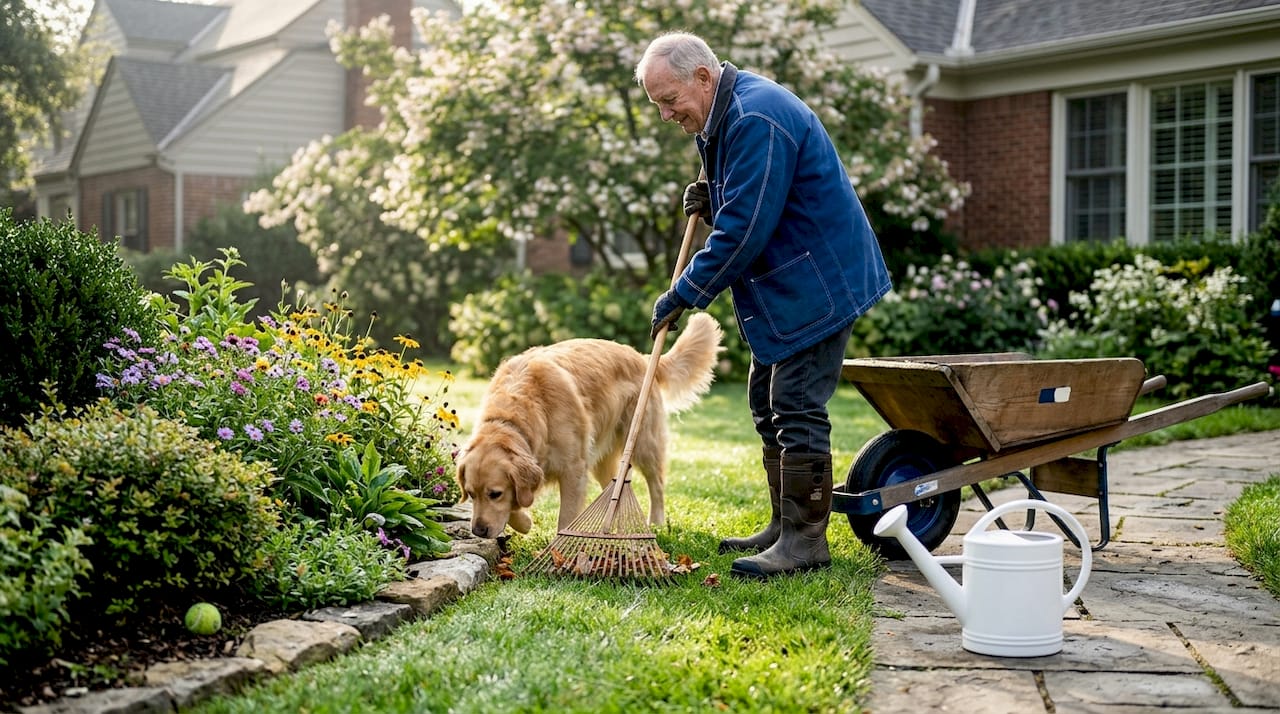
Yard habits that reduce risk:
Ticks thrive in moisture and shade. Remove leaf litter, tall grass, and brush around your lawn edges and along fence lines. This single habit cuts tick habitat near the areas where your pets spend the most time. Ohio health officials advise keeping to the center of trails during walks to avoid brushy borders where ticks wait on grass blades for a passing host.
Indoor flea control that disrupts the life cycle:
Flea eggs and larvae live deep in carpet fibers and upholstery, not on your pet. That is why treating only the animal leaves the infestation cycling. A few practices that actually break it:
- Vacuum carpets daily during an active infestation, paying extra attention to baseboards and under furniture.
- Wash pet bedding in hot water weekly. Hot water kills eggs and larvae that cold washing misses.
- Dispose of vacuum bags outside immediately after use. Flea larvae can crawl back out of a bag left indoors.
- Use a flea-safe household spray on upholstered furniture and carpets when managing an active outbreak.
For additional guidance on keeping your Oakwood home clean after a parasite problem, the Ohio seasonal pest checklist from Apexpestcontrol covers timing and technique for each season.
| Area | Action | Frequency |
|---|---|---|
| Carpets and rugs | Vacuum thoroughly including edges | Daily during infestation, weekly otherwise |
| Pet bedding | Hot water wash | Weekly |
| Yard edges and fence lines | Mow and clear brush | Every 1 to 2 weeks in spring and summer |
| Outdoor pet areas | Check for standing moisture and leaf buildup | Monthly |
6. Comparing prevention methods for Ohio households
No single approach handles every situation. Here is how the main options stack up for Oakwood residents:
| Method | Best for | Duration | Key limitation |
|---|---|---|---|
| Oral medication | Dogs; pets resistant to topicals | 1 to 12 weeks | Requires bite before killing parasite |
| Topical treatment | Dogs and cats; multi-species households | 4 weeks | Requires drying period; application technique matters |
| Flea collar | Pets needing low-maintenance option | Up to 8 months | Fit and consistent contact critical |
| Environmental control | All households | Ongoing | Labor-intensive; must be done consistently |
A few situational recommendations for Ohio pet owners:
- Multi-pet households: Use oral medication for dogs and a cat-specific topical for cats. Never cross-apply products.
- High outdoor activity: Combine oral or topical medication with post-walk tick checks. Regular inspection stays critical even when your pet is on a preventive.
- Families with young children: Opt for oral medications over topicals or collars to reduce children’s skin contact with chemical residues.
- Puppies and kittens: Always verify minimum age requirements. Most products are not safe below 8 to 12 weeks.
When you do find a tick on your pet or yourself, use fine-tipped tweezers, grasp close to the skin, and pull straight out with steady pressure. Do not twist. Clean the bite area and wash your hands. If the tick was engorged and has been attached for more than 36 hours, contact your vet and monitor for symptoms.
Pro Tip: Integrating at least two methods, such as an oral or topical preventive plus consistent yard management, consistently outperforms a single approach. Layering prevention methods addresses both the pet and the environment where reinfestation originates.
My honest take on flea and tick prevention in Ohio
I’ve seen too many Ohio pet owners treat this like a warm-weather problem they can put away in November. That’s the first mistake. Year-round prevention is not a product company upsell. It is the reality of how Ohio’s climate works.
The second mistake I see regularly is assuming that a quality product on your dog means the job is done. Products that kill parasites after attachment still require you to check your pet after outdoor time. That check takes two minutes. Skipping it because “they’re on a preventive” is how people end up pulling an engorged tick off their dog three days later.
What actually works in places like Oakwood, where older homes back up to tree lines and grassy common areas, is treating the animal, cleaning the home consistently, and managing the yard. None of those steps alone is enough. All three together make a real difference.
My one contrarian take: natural flea repellents like diluted essential oils get a lot of attention online, but there is no strong evidence they provide meaningful protection against ticks in Ohio’s active season. They may have a supplemental role, but building your prevention plan around them while skipping veterinary-approved products is a gamble most pet owners regret.
— Dushan
Protect your Oakwood home with professional-grade pest control
Pet treatments cover your animals, but they do not treat your home or yard. If you are dealing with a persistent flea problem or a yard with heavy tick pressure in the Oakwood area, Apexpestcontrol offers residential pest control solutions designed specifically for Ohio homes. Their team has been handling residential infestations since 1969, and their treatments are applied with your family and pets in mind. A professional inspection can identify where fleas and ticks are breeding indoors and outdoors, targeting the problem at the source rather than symptom by symptom. You can also check their pest control tips for Ohio families for more local guidance, or get a free quote today by visiting Apexpestcontrol’s website.
FAQ
How often should Ohio pet owners apply flea and tick prevention?
Most topical products require monthly reapplication, while oral options like Bravecto last up to 12 weeks. Because Ohio ticks remain active whenever temperatures rise above 40°F, year-round treatment is recommended by most veterinarians.
Are natural flea repellents effective for tick prevention?
Natural options such as diluted essential oils lack strong clinical evidence for tick control and should not replace veterinary-approved products. They may serve as a minor supplement but are unreliable as a standalone prevention method in Ohio’s active tick season.
What should I do if I find a tick on my pet?
Use fine-tipped tweezers to grasp the tick close to the skin and pull straight out with steady, even pressure without twisting. Clean the bite area, wash your hands, and contact your vet if the tick appears engorged or your pet develops symptoms within a few days.
Can indoor cats get fleas even without going outside?
Yes. Fleas can enter your home on clothing, shoes, or other pets, then infest carpets and bedding where indoor cats rest. Regular vacuuming, hot washing of pet bedding, and a vet-approved flea preventive for your cat reduce this risk substantially.
Is it safe to use dog flea products on cats?
No. Many dog products, particularly those containing permethrin, are toxic to cats and can cause severe reactions. Always use products specifically labeled for cats and keep treated dogs away from cats until any topical has fully dried.