




TL;DR:
- Effective flea prevention requires consistent pet medication and thorough environmental control to protect Oakwood homes year-round. Fleas pose serious health risks to pets and humans, making early and ongoing prevention essential. Using veterinarian-approved treatments and maintaining regular cleaning routines significantly reduces infestation durations and associated dangers.
Flea prevention is defined as the ongoing practice of protecting pets and homes from flea infestations through medication, environmental treatment, and consistent management. For Oakwood, Ohio pet owners, the importance of flea prevention goes beyond comfort. Fleas transmit diseases, trigger severe allergic reactions, and can take 2–3 months to fully eliminate once they establish in your home. Tools like isoxazoline oral medications, topical spot treatments, and environmental sprays form the core of any effective flea and tick prevention process. Oakwood’s older housing stock, tree canopy, and mild indoor heating create conditions where fleas thrive year round. Starting prevention before an infestation is always faster, cheaper, and safer than treating one after the fact.
Why is flea prevention so important for oakwood homes?
Flea prevention is the single most cost effective way to protect your pets and household from a pest that reproduces faster than most owners expect. A female flea lays up to 50 eggs per day. Those eggs fall off your pet and land in carpet, furniture, and bedding throughout your home.

95% of the flea population exists as eggs, larvae, or pupae in the environment rather than on the pet. That means treating only your dog or cat addresses just 5% of the problem. The other 95% is living in your floors, rugs, and yard.
Oakwood homes, particularly the brick colonials and ranch houses near Far Hills Avenue, often have finished basements and wall to wall carpeting. Both are ideal flea nurseries. Once juvenile stages establish in those spaces, complete control typically takes 2–3 months of combined pet treatment and environmental cleaning.
Pro Tip: Start prevention before spring, not after you spot the first flea. By the time you see adult fleas, hundreds of eggs are already in your carpet.
The flea and tick prevention process works in three stages. First, kill adult fleas on the pet. Second, interrupt juvenile stages in the environment. Third, maintain monthly prevention to stop new adults from establishing. Skipping any stage extends the infestation timeline significantly.
- Apply veterinarian approved medication to all pets in the household on the same day.
- Treat the home environment with pet safe sprays or foggers targeting carpets, baseboards, and furniture.
- Maintain monthly prevention without gaps, even in winter months.
- Recheck and retreat at the 6 week mark, since pupae can remain dormant and hatch weeks after initial treatment.
What health risks do fleas pose to pets and families?
Fleas are not just a nuisance. They are a direct health threat to every person and animal in your home. Understanding those risks is the clearest argument for consistent flea prevention methods.
For pets, the risks include:
- Flea allergy dermatitis: The most common skin condition in dogs and cats in the U.S., triggered by a single flea bite in sensitive animals.
- Anemia: Heavy infestations can cause dangerous blood loss, especially in puppies and kittens.
- Tapeworms: Pets swallow fleas while grooming, and those fleas carry tapeworm larvae. Dipylidium caninum tapeworm infections are a direct result.
- Bartonellosis: Also called cat scratch disease, transmitted through flea feces entering wounds.
For humans, the risks are equally serious. A single flea bite can transmit typhus, leading to severe illness, potential coma, and months of recovery. Children who spend time on floors and carpets face the highest exposure risk in infested homes.
“Fleas live in homes and pose a sustained risk beyond pet discomfort. Year round prevention protects the entire household, not just the animals.” — Dr. Christopher Lee, as cited in dvm360
Year round flea prevention protects pets and people by preventing sustained infestations and disease transmission. Oakwood’s indoor heating keeps home temperatures above 40°F all winter, which means fleas never face a cold season kill off inside your walls. Seasonal prevention is not enough. The health case for continuous protection is clear.
Flea and tick prevention options: topical vs. oral treatments
Experts strongly recommend year round flea and tick prevention for dogs and cats, since fleas survive indoors and ticks remain active above 40°F. Oakwood’s heated homes maintain those temperatures every month of the year. Choosing the right product type matters as much as using one consistently.
| Prevention Type | How It Works | Best For | Key Consideration |
|---|---|---|---|
| Oral isoxazolines (e.g., Bravecto, NexGard, Simparica) | Systemic; kills fleas and ticks after they bite | Dogs in multi pet homes | Requires prescription; not approved for cats in all formulas |
| Topical spot treatments (e.g., Frontline, Advantage) | Applied to skin; spreads through coat | Cats and dogs | Residue can transfer to children or other pets |
| Flea collars (e.g., Seresto) | Slow release insecticide over 8 months | Low maintenance households | Less effective in heavy infestation scenarios |
| Environmental sprays (e.g., Virbac Knockout) | Kills eggs and larvae in home | Home treatment phase | Must be reapplied per label schedule |
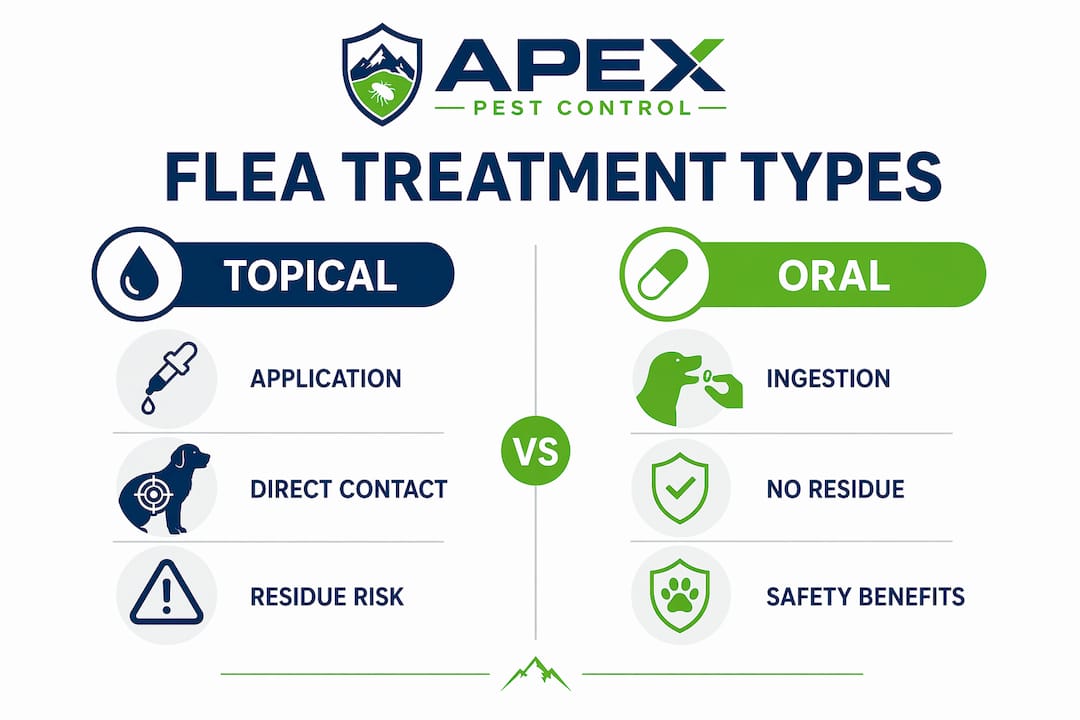
Oral medications have gained favor because they avoid pesticide residues on pet fur that may contact children or family members. Dr. Sarah Ray notes that oral preventatives have improved both compliance and safety compared to topicals, which is a meaningful shift for families with young kids.
Multi pet households in Oakwood face one critical safety rule. Products safe for dogs may be fatal to cats. Permethrin based insecticides, common in many dog spot treatments, are toxic to cats. Always check the label for each species and weight class before applying anything.
Pro Tip: Ask your Oakwood veterinarian for a written flea prevention plan that lists approved products for every pet in your home by name and weight. This removes guesswork and prevents accidental poisoning.
Your vet can also factor in your pet’s health history, age, and any known sensitivities. A personalized flea prevention plan from a professional is more reliable than choosing products based on price alone.
How do you control fleas in your home and yard?
Treating your pets without treating your home is the most common reason flea infestations persist for months. Environmental flea control is the second half of the flea and tick prevention process, and Oakwood homes require specific attention to certain areas.
Focus your environmental efforts on these high risk zones:
- Carpets and rugs: Vacuum thoroughly twice per week during active infestations. Dispose of the vacuum bag immediately after each use to prevent eggs from hatching inside the machine.
- Pet bedding: Wash all pet bedding in hot water (at least 130°F) weekly. Heat kills all flea life stages.
- Upholstered furniture: Treat with pet safe sprays labeled for indoor flea control. Pay close attention to cushion seams and under cushions.
- Baseboards and floor cracks: Flea larvae move away from light and collect in dark crevices. Spray or apply powder treatments along all baseboards.
- Garages and under porches: Oakwood homes with attached garages and covered porches give fleas a protected outdoor habitat. Treat these areas with yard sprays labeled for flea control.
Regular environmental measures like washing bedding hot, vacuuming, and yard maintenance lower the flea burden significantly. The yard piece is often overlooked. Shaded areas under decks, along fence lines, and beneath shrubs are where flea larvae concentrate outdoors.
| Environment Zone | Recommended Action | Frequency |
|---|---|---|
| Carpets and rugs | Vacuum and treat with flea spray | Twice weekly during infestation |
| Pet bedding | Hot water wash (130°F+) | Weekly |
| Yard shaded areas | Apply pet safe yard spray | Every 2–4 weeks |
| Garage and porch | Spray and remove debris | Monthly |
| Furniture and cushions | Vacuum and treat seams | Weekly |
For pet safe indoor treatment options, the step by step pet safe pest solutions guide from Apexpestcontrol covers product selection and application methods that minimize chemical exposure for your family. Combining consistent medication with thorough environmental management is the only approach that prevents reinfestation and clears an existing problem within the expected 2–3 month window.
Key takeaways
Consistent, year round flea prevention combining pet medication and environmental treatment is the only method proven to protect Oakwood households from infestation and flea borne disease.
| Point | Details |
|---|---|
| Treat the environment, not just the pet | 95% of fleas live as eggs or larvae in your home, not on your pet. |
| Year round prevention is required | Oakwood’s heated homes keep fleas active in every season, making seasonal treatment insufficient. |
| Oral medications reduce family exposure | Isoxazoline oral treatments eliminate pesticide residue risk for children and other pets. |
| Multi pet households need species specific products | Permethrin safe for dogs is toxic to cats; always verify product labels for every animal. |
| Environmental cleaning accelerates control | Hot water washing, vacuuming, and yard treatment cut infestation duration from months to weeks. |
Flea prevention in oakwood: what i’ve learned after years on the ground
I’ve seen the same pattern repeat in Oakwood homes more times than I can count. A pet owner treats their dog in spring, skips the winter months because they assume fleas die off in the cold, and then calls us in February with a full blown infestation. The misconception that Ohio winters kill fleas is one of the most expensive mistakes a pet owner can make. Oakwood’s homes stay warm. Fleas do not care what month it is.
The other pattern I see constantly is treating the pet and ignoring the house. I understand the logic. The pet is scratching, so the pet is the problem. But when you understand that the vast majority of flea populations live off the animal in juvenile stages, the approach changes completely. The carpet is the problem. The basement is the problem. The garage is the problem.
My honest recommendation for any Oakwood pet owner is this: build flea prevention into your monthly routine the same way you change your HVAC filter. Set a calendar reminder. Use a veterinarian approved oral or topical product every single month. Vacuum twice a week if you have carpet. Wash pet bedding weekly. These habits cost almost nothing compared to a professional treatment after an infestation takes hold. The year round pest protection approach is not overcautious. It is the only approach that actually works in this climate.
— Dushan
Protect your oakwood home with Apexpestcontrol
Flea control works best when pet treatment and home management work together. When an infestation is already established, professional intervention speeds up the process significantly. Apexpestcontrol has served Oakwood and the greater Ohio area since 1969, providing residential pest management that covers everything from fleas to rodents. If you are dealing with a persistent flea problem or want a professional assessment of your home’s pest risk, the team at Apexpestcontrol is ready to help. Explore residential pest extermination services or request a free pest control quote to get started with a plan built for your home.
FAQ
How long does it take to get rid of fleas in a home?
Complete flea control typically takes 2–3 months because eggs, larvae, and pupae in the environment continue hatching after initial treatment. Consistent pet medication and weekly environmental cleaning are required throughout that period.
Do i need flea prevention in winter in oakwood, ohio?
Yes. Oakwood’s heated homes maintain temperatures above 40°F year round, which allows fleas and ticks to survive indoors across all seasons. Year round prevention is strongly recommended by veterinary experts regardless of outdoor temperatures.
Can fleas make humans sick?
Yes. A single flea bite can transmit typhus, a bacterial disease that can cause serious illness and require months of recovery. Children are at higher risk due to time spent on floors and carpets in infested homes.
Are oral flea treatments safer than topical ones for families?
Oral flea medications are generally safer for households with children because they leave no pesticide residue on pet fur. Oral medications have gained favor specifically because topical treatments can transfer chemicals to anyone who touches the pet after application.
Can i use my dog’s flea treatment on my cat?
No. Products safe for dogs may be fatal to cats, particularly those containing permethrin. Always use species specific products and confirm safety with your veterinarian before applying any flea treatment in a multi pet household.