



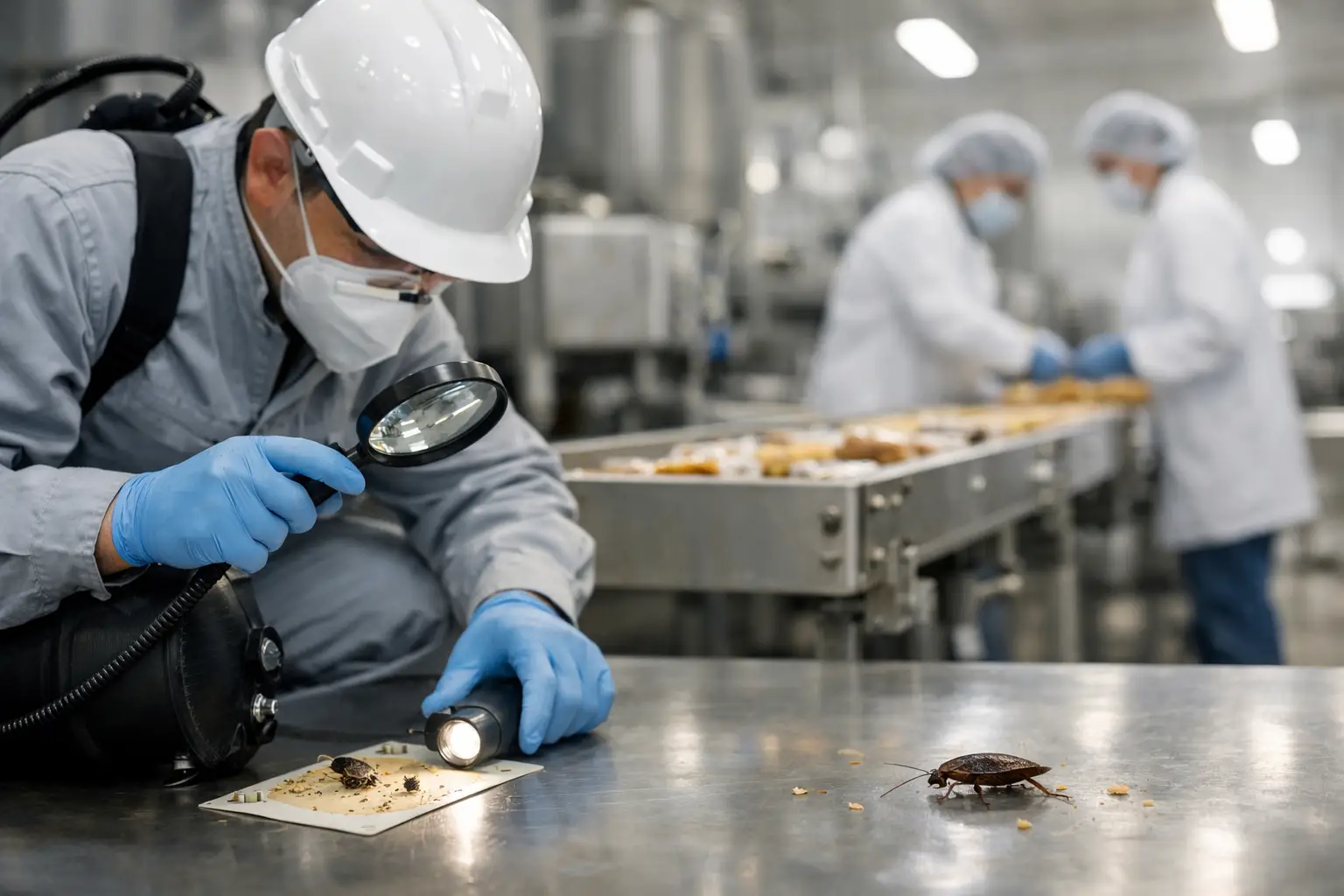
A single moth near a dry-goods storage area can become a serious operational concern when it is ignored. This food plant pest case study examines how a layered response can stop stored product pests before they threaten ingredients, finished goods, customer confidence, or an upcoming audit. It is a representative composite based on common conditions in food-processing environments, not a description of one identifiable facility.
The facility in this example was producing dry, packaged food products on a demanding schedule. Its team had a routine pest management program, but a receiving employee reported small flying insects around a pallet of incoming ingredients. There was no visible product loss at the time. That distinction mattered: early signs create an opportunity for containment, while confirmed contamination can require product holds, disposal decisions, deeper investigations, and difficult conversations with customers.
Food Plant Pest Case Study: The Initial Finding
The insects were consistent with stored product pest activity, a category that can include Indianmeal moths, warehouse beetles, cigarette beetles, and weevils. These pests are attracted to susceptible food materials such as grains, flour, spices, nuts, pet food, and other dry commodities. They may arrive in an infested shipment, develop in overlooked residue, or spread where damaged packaging and poor stock rotation give them time to establish.
A qualified technician began with a targeted inspection rather than immediately treating the entire building. The inspection covered the reported pallet, nearby inventory, floor-wall junctions, rack uprights, dock areas, ingredient transfer points, employee break areas, and waste handling locations. Pheromone monitoring devices were reviewed to identify activity patterns and determine whether the issue was isolated or developing elsewhere.
The findings pointed to three contributing conditions. First, one ingredient pallet had torn outer packaging and was held too long before inspection. Second, fine product dust had collected in a difficult-to-reach area beneath a conveyor. Third, a dock door sweep had worn down enough to leave a visible gap. None of these conditions alone proved a facility-wide infestation. Together, they created a pathway for pests to enter, feed, and remain unnoticed.
Containment Comes Before Broad Treatment
The immediate response focused on protecting product and preserving evidence. The affected pallet was placed on hold and separated from other materials pending the facility’s quality procedures. Adjacent lots were inspected, and receiving records helped trace where the shipment had been staged and which areas it had contacted.
This step can feel disruptive, especially when production deadlines are tight. Yet treating first and investigating later may allow a source to remain in place. In food environments, speed is essential, but so is control. The right response limits unnecessary disruption while making sure the facility can demonstrate why decisions were made.
The pest management team then increased monitoring near receiving, storage, and production transition points. Monitoring is not a substitute for action, but it provides a measurable baseline. Trap counts, insect identification, dates, locations, sanitation observations, and corrective actions were recorded so plant leadership could see whether activity was declining and where further attention was needed.
Correcting the Conditions That Supported Pest Activity
Sanitation was the first operational priority. The facility’s sanitation crew cleaned the identified dust accumulation and expanded the work order to include adjacent equipment bases, ledges, and inaccessible voids where residue could collect. This was more than housekeeping. Stored product pests need a food source, and even small accumulations can support activity over time.
The receiving process was also revised. Incoming dry ingredients were inspected for package damage, webbing, larvae, insects, and unusual odor before being accepted into storage. Pallets with compromised packaging were no longer allowed to wait in general inventory. They were moved immediately into a designated evaluation area, preventing a suspected issue from becoming a warehouse-wide exposure.
Exclusion work addressed the dock door gap and several smaller penetrations around utility lines. Door sweeps, seals, and screens are practical controls, but they need routine attention. A food plant can maintain excellent sanitation and still face pest pressure if insects and rodents have easy access through loading docks, wall openings, roofline gaps, or poorly sealed service penetrations.
Stock rotation received equal attention. Older materials were checked first, and inventory practices were reinforced to reduce the chance that a slow-moving item would become a concealed pest source. The appropriate rotation method depends on the product, packaging, shelf life, and facility procedures. What does not change is the need for clear dates, accessible inspection space, and prompt removal of damaged or obsolete inventory.
Why Treatment Decisions Require Care
Food facilities often expect pest control to mean a single application. Effective food plant pest management is more disciplined than that. Treatment decisions should follow inspection findings, label requirements, customer standards, and the facility’s food safety plan. In many cases, exclusion, sanitation, monitoring, and removal of infested materials do most of the immediate work.
When a treatment is warranted, it should be targeted, documented, and scheduled to protect people, product, and operations. The choice may involve crack-and-crevice applications in non-product areas, insect growth regulators, carefully placed devices, or other methods appropriate to the pest and site conditions. Broad applications can be unnecessary and may create avoidable operational complications. A trained commercial pest professional evaluates the actual risk rather than applying a one-size-fits-all response.
For this facility, focused service in identified non-product harborages was paired with enhanced monitoring and follow-up inspections. Production and quality leaders received clear service documentation identifying observations, actions taken, materials used where applicable, and recommendations requiring facility action.
Documentation Turned a Pest Sighting Into a Defensible Process
Food plant operators are judged not only on whether pests are found, but on how they respond. Audit readiness depends on being able to show a consistent process: routine inspections, trend records, corrective actions, sanitation verification, exclusion repairs, and follow-up results.
In this case, the facility created a corrective-action record tying each condition to an owner and due date. Maintenance owned the door repair. Sanitation owned the equipment-area cleaning and verification. Warehouse leadership owned the revised receiving inspection process. Pest management provided insect identification, monitoring data, inspection findings, and scheduled follow-up.
That shared ownership is critical. A pest technician can identify a gap under a door, but the gap remains a facility risk until it is repaired. Likewise, a sanitation concern cannot be solved permanently by adding more monitoring devices. Strong programs make responsibilities visible and verify completion.
Results and Ongoing Prevention
Follow-up monitoring showed activity decreasing after the compromised pallet was removed, sanitation was completed, and exclusion repairs were made. No evidence supported spread into finished product areas. The result was not luck or a single product application. It came from responding early, identifying contributing conditions, and confirming that each corrective action worked.
The facility kept the enhanced monitoring plan in place for a defined period, then adjusted device placement based on ongoing trend data. This is an area where judgment matters. Some sites need seasonal increases around receiving docks, while others need more attention in ingredient storage or employee areas. A national account may also need consistent documentation across multiple plants, even when each facility has different pest pressures.
For Ohio food plants and multi-location operators, dependable pest management should support production instead of interrupting it. Apex Pest Control develops commercial programs around the facility’s risks, audit expectations, operating hours, and safety requirements. Certified professionals, clear reporting, responsive service, and practical corrective-action support help facilities protect their products and their reputation.
The most useful time to address a food plant pest issue is when it is still a small signal: one insect, one damaged package, one missed sanitation area, or one gap at a dock door. Treat that signal as a reason to inspect, document, correct, and verify. That is how a pest sighting becomes a controlled event rather than a costly disruption.