



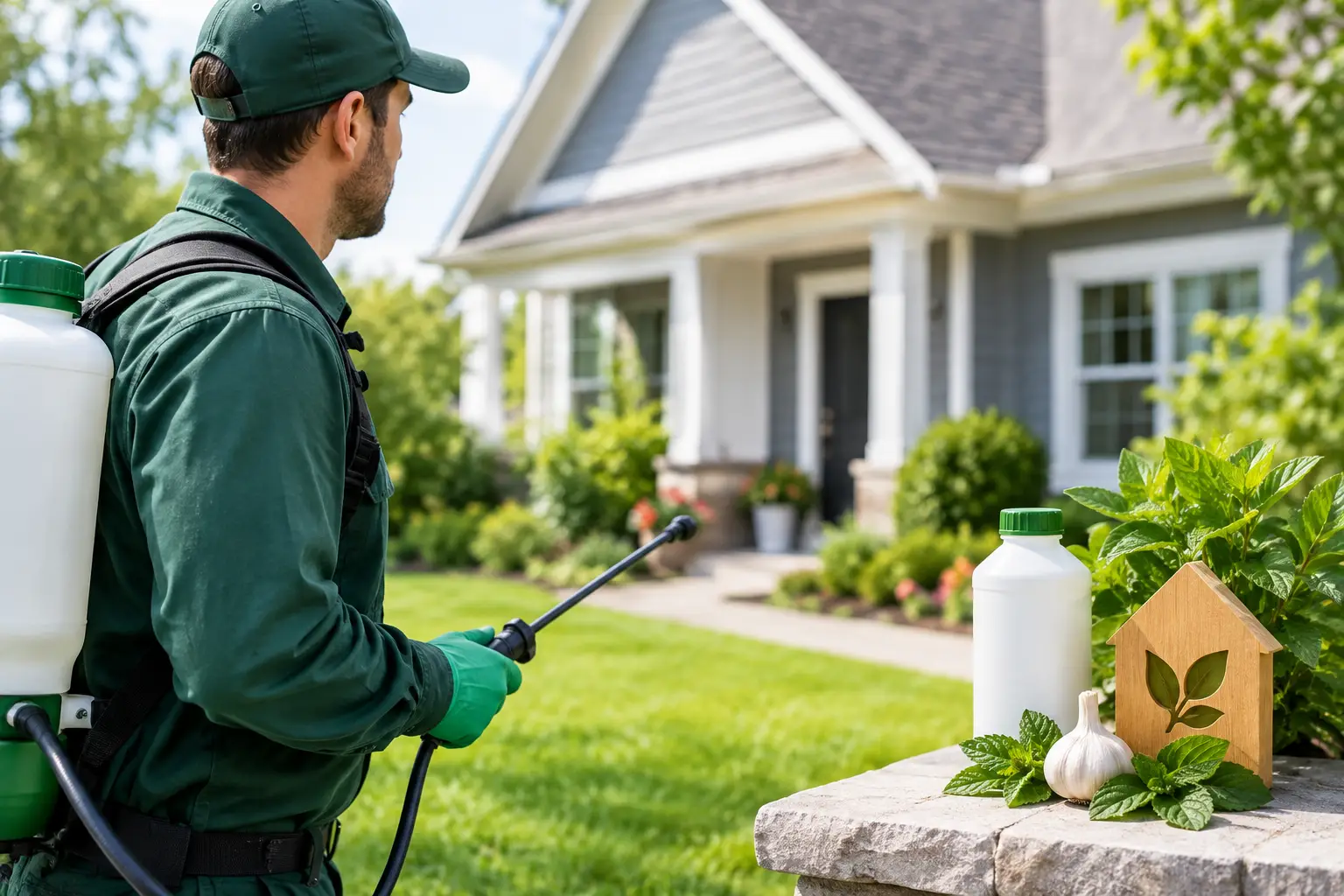
A green pest control comparison should start with a practical question: what will actually remove the pest while protecting the people, pets, products, and property in the space? A treatment labeled natural, organic, or eco-friendly may be a useful part of the answer, but those words alone do not guarantee complete control. The right program depends on the pest, the severity of activity, the conditions attracting it, and the level of protection the property requires.
For Ohio homeowners, the concern may be ants around a kitchen, mice entering before winter, or mosquitoes taking over the yard. For a commercial facility, the stakes can include food safety, tenant satisfaction, audit performance, and costly downtime. Green pest control is most effective when it is built around inspection, exclusion, sanitation, monitoring, and precisely selected treatments – not a one-size-fits-all promise.
What Green Pest Control Actually Means
Green pest control generally describes an approach that reduces unnecessary pesticide exposure and environmental impact. It does not necessarily mean that no pest control products are used. In fact, a responsible green program may include carefully selected products when they are needed to stop an active infestation or prevent a larger problem.
The foundation is integrated pest management, often called IPM. This method addresses the conditions pests need to survive: food, water, shelter, and access points. Rather than repeatedly spraying the same areas, a technician identifies the source of pressure and builds a plan to correct it.
For example, a cockroach issue may require sanitation improvements, removal of cardboard harborage, crack-and-crevice treatment, monitoring devices, and targeted bait placement. A mouse problem may require sealing entry points, reducing exterior harborage, and placing secured devices in strategic locations. The product is only one part of the work.
Green Pest Control Comparison: Main Treatment Approaches
A meaningful comparison looks beyond whether a product is labeled green. It considers speed, reliability, placement, residual control, and whether the method solves the reason pests are present.
Botanical and plant-based products
Botanical products may use ingredients derived from plants, such as essential oils or other naturally sourced compounds. These products can be appealing to families seeking alternatives to broad conventional applications, especially for light pest activity or certain indoor service needs.
Their limitation is that natural origin does not automatically mean low risk or long-lasting performance. Some botanical treatments have a short residual life, can be affected by sunlight or moisture, or work best only when applied directly to exposed pests. Strong odors may also be a concern in sensitive indoor environments. For a severe infestation, relying on a short-lived contact treatment alone can allow pests to rebound.
Baits and targeted insect control
Baits are often one of the most efficient lower-exposure options for ants, cockroaches, and certain other crawling insects. Instead of treating large surface areas, the material is placed in small, protected locations where pests feed or travel. The pest carries or consumes the active ingredient, helping reduce the source population.
Baits require patience and correct placement. Cleaning away an ant trail before treatment may make activity look better temporarily, but it can also make it harder to determine where the colony is traveling. A technician must identify the species, food preference, nesting pattern, and competing food sources for baiting to work as intended.
Physical exclusion and habitat correction
Exclusion is among the greenest and most durable forms of pest control because it prevents access without relying on a recurring chemical application. Sealing utility penetrations, repairing screens, closing gaps around doors, improving drainage, and trimming vegetation away from a structure can reduce pressure from rodents, ants, spiders, and occasional invaders.
This approach is highly effective, but it is not always an immediate answer for pests already established indoors. A rat in an attic, bed bugs in a bedroom, or German cockroaches in a commercial kitchen still require active intervention. Exclusion works best as part of treatment and long-term prevention, not as a substitute for necessary eradication.
Traps, monitoring, and mechanical removal
Traps, insect monitors, and mechanical removal provide direct evidence of pest activity. They are especially useful for rodents, stored product pests, flies, and commercial accounts that need documentation. Monitoring helps determine where activity is occurring, whether treatment is working, and when additional action is warranted.
Trapping is a strong option when pest numbers are low or when a facility needs detailed control records. It can be labor-intensive during heavy activity, however, and it will not correct a recurring entry point or sanitation issue on its own. When traps continue catching pests, the property still needs source-focused corrections.
Conventional products used with precision
A green-minded program does not reject all conventional materials. Certain infestations require products with greater residual control, faster knockdown, or specialized application methods. Termites, bed bugs, stinging insects in a wall void, and large cockroach populations are examples where treatment performance matters greatly.
The responsible distinction is precision. A trained professional can select the least intrusive effective option, apply it only where it is needed, follow label requirements, and combine it with non-chemical corrections. This can provide stronger results than repeated use of weak consumer products throughout a home or facility.
Safety Is More Than the Product Label
Many customers reasonably ask whether green treatments are safe for children and pets. The honest answer is that safety depends on the material, the dose, the application location, and whether directions are followed. Even a product marketed as natural can cause problems if misused, inhaled, ingested, or applied where it does not belong.
Professional pest management begins with a site-specific assessment. A technician should ask about children, pets, allergies, aquariums, food-preparation areas, sensitive equipment, and occupancy schedules. Those details influence product selection and treatment placement.
For example, a targeted ant bait placed in an inaccessible crack may present less exposure concern than repeated aerosol spraying across baseboards. A mosquito treatment may be appropriate around exterior resting sites, but it should be planned around pollinator activity, standing-water conditions, and the customer’s use of the yard. Good pest control protects the property without treating more than the problem requires.
When Green Options Work Best
Green methods are often highly successful for prevention, early activity, and recurring pressure caused by identifiable conditions. They are particularly valuable for routine residential pest prevention, rodent exclusion, ant management, fly reduction, and commercial sanitation-focused programs.
They are also a smart fit for facilities where documentation and operational control matter. Restaurants, warehouses, healthcare settings, multifamily properties, and food-related businesses benefit from regular inspections, trend reporting, sanitation recommendations, and strategically placed monitoring devices. These measures help prevent a small concern from becoming an audit issue or customer complaint.
The challenge is that pests do not follow marketing categories. Bed bugs can spread quickly through a home or hotel. Termites can damage structural wood out of sight. Yellowjackets can create an immediate stinging hazard near an entryway. In these situations, the best option may be a more intensive treatment paired with a clear plan to reduce future risk.
Questions to Ask During a Green Pest Control Comparison
Before choosing a provider or treatment plan, ask how the company identifies the pest, what non-chemical corrections are included, and how success will be measured. Ask whether the treatment is designed for the specific pest or simply marketed as a general green solution.
It is also reasonable to ask what products may be used, where they will be applied, what preparation is required, and whether children or pets need to stay away from treated areas for a period of time. For commercial properties, ask about service reports, trend analysis, corrective-action recommendations, and support for inspections or audits.
Be cautious of guarantees that promise permanent results without addressing conditions around the building. No treatment can permanently overcome an open foundation gap, unmanaged trash area, moisture leak, or repeated introduction of pests through incoming goods. Proven pest management requires both effective treatment and property cooperation.
Choosing the Right Level of Control
The best green pest control comparison is not natural versus conventional. It is targeted prevention and treatment versus unnecessary exposure and temporary relief. A thoughtful plan uses exclusion, sanitation, monitoring, and lower-impact tools whenever they can deliver dependable control. When a stronger treatment is necessary, it is selected and applied with care.
Apex Pest Control builds customized programs around that balance. Whether the concern is a family home, a multifamily property, or a multi-location commercial operation, the goal is the same: eliminate the active pest problem, reduce the conditions that brought it in, and provide the peace of mind that comes from a plan built to last.
If pests are disrupting your home or operation, do not let a label make the decision for you. Choose a program that identifies the pest, protects the people in the space, and gives the property a clear path to lasting prevention.