



TL;DR:
- Effective hotel pest management in Ohio relies on an integrated system of monitoring, prevention, and documentation tailored to seasonal pest pressures. Proper procedures include routine inspections, structural exclusion, swift targeted treatments, and robust recordkeeping to prevent infestations and protect guest experiences. Connecting pest findings directly to maintenance actions ensures long-term success and reduces treatment costs.
A pest sighting in your hotel costs more than the treatment. One negative review mentioning bed bugs or cockroaches can wipe out months of bookings, and Ohio’s tourism board won’t intervene on your behalf. Yet most hotels still react to infestations after guests complain, which is the worst possible moment. The hotel pest management tips in this article are built around Integrated Pest Management (IPM), a proven framework that prioritizes monitoring, prevention, and documentation over calendar-based spraying. If you manage a property in Ohio, this gives you an actionable system you can deploy starting today.
Table of Contents
- Key criteria for effective hotel pest management in Ohio
- Daily pest management strategies: monitoring and documentation
- Prevention tactics: structural exclusion and sanitation for Ohio hotels
- Targeted pest treatment and rapid response protocols
- Comparing pest management approaches: vendor contracts versus integrated systems
- Why most hotel pest programs fail and how to operationalize success
- Partner with Apex Pest Control for expert hotel pest management in Ohio
- Frequently asked questions
Key Takeaways
| Point | Details |
|---|---|
| Integrated pest management | Combining monitoring, prevention, documentation, and targeted treatment is essential for effective hotel pest control. |
| Early detection and documentation | Daily monitoring and digital recordkeeping enable early pest detection and audit readiness. |
| Prevention focus | Sealing entry points and maintaining sanitation prevent most pest problems in Ohio hotels. |
| Targeted treatments | Use treatments only after confirmed pest presence to reduce costs and chemical exposure. |
| Operationalize reports | Turning vendor findings into maintenance work orders is critical to long-term pest prevention. |
Key criteria for effective hotel pest management in Ohio
Before you touch a pesticide or call a vendor, you need a working definition of success. Effective pest control for hotels is not about spraying on a schedule. It is about building a system where monitoring, prevention, documentation, and targeted treatment work as connected components, not independent tasks.
Ohio creates unique pressure. Rodents push indoors starting in October as temperatures drop. Flies and drain pests spike in humid summers. Bed bugs travel year-round courtesy of guest luggage. A program built for a Florida resort will underperform in Columbus or Cleveland because it does not account for these seasonal shifts.
Here is what a solid foundation looks like for an Ohio hotel:
- Seasonal monitoring calendar: Adjust inspection frequency based on Ohio’s pest pressure cycles, increasing vigilance in fall for rodents and in summer for flies and drain gnats.
- Structural exclusion as a first line: Gaps under exterior doors, pipe penetrations, and damaged window screens are entry points that no amount of chemical treatment will permanently solve.
- Documented sanitation protocols: Food residue, standing water, and improperly sealed waste attract pests. Written sanitation schedules create accountability.
- Early detection stations: Glue boards, rodent bait stations, and bed bug interceptors give you data before a guest does.
- Vendor and internal records: A commercial pest control checklist creates the paper trail that protects you during health inspections or litigation.
One element many Ohio hotel managers overlook: guest-facing cleanliness signals. Linens directly affect hotel reviews, and the same principle applies to pest sightings. Guests who notice even minor evidence of pests, such as a cockroach near the bathroom drain or a mouse dropping in a hallway, publish reviews faster than they contact the front desk.
With these core criteria established, let’s examine practical pest management strategies tailored to hotels in Ohio.
Daily pest management strategies: monitoring and documentation
Monitoring without documentation is just walking around. The goal is a system where every observation becomes a data point you can act on and defend.
Here is a practical daily monitoring and documentation process for hotel operations:
- Assign inspection zones by staff role. Housekeeping inspects guest rooms and corridors. Maintenance checks mechanical rooms, utility areas, and exterior perimeters. Kitchen supervisors handle food prep and storage zones.
- Use printed or digital checklists. Each completed checklist should capture the date, inspector name, zones covered, and any pest evidence observed. Vague notes like “looked fine” are useless in an audit.
- Log all pest sightings immediately. Time, location, pest type, and quantity. This data reveals patterns, like cockroach activity concentrated near a specific floor drain, that point to root causes.
- File vendor reports within 24 hours. Every service visit report should be stored where you can retrieve it within minutes, not days.
- Generate corrective action tickets. When monitoring reveals a problem, a work order should open the same day.
Hotels should maintain six categories of pest control documentation: vendor service reports, monitoring logs, corrective action records, staff training logs, pesticide safety data sheets, and the pest management plan itself. All six should be accessible during an unannounced health inspection.
Pro Tip: Train your front desk staff to document guest pest complaints with the same detail you would use for a maintenance ticket. Room number, time reported, pest described, and staff response. That record matters significantly if a complaint escalates to a legal claim.
Staff training is not a one-time event. OSHA compliance in pest management requires ongoing documentation of who was trained, on what, and when. A quarterly training refresh tied to seasonal pest changes keeps your team sharp and your records clean. Review pest control hospitality safety guidelines specific to Ohio to make sure your program meets current standards.
Now that monitoring and documentation are established, let’s review targeted prevention techniques critical for Ohio hotels.
Prevention tactics: structural exclusion and sanitation for Ohio hotels
You can spend thousands on treatments and still lose the battle if pests have unobstructed entry points. Exclusion repairs and sanitation work orders eliminate the root causes that let pests get inside in the first place.
The reality is that roughly 80% of pest prevention comes down to two things: sealing how pests get in and removing what attracts them once inside. Here is where Ohio hotels should focus:
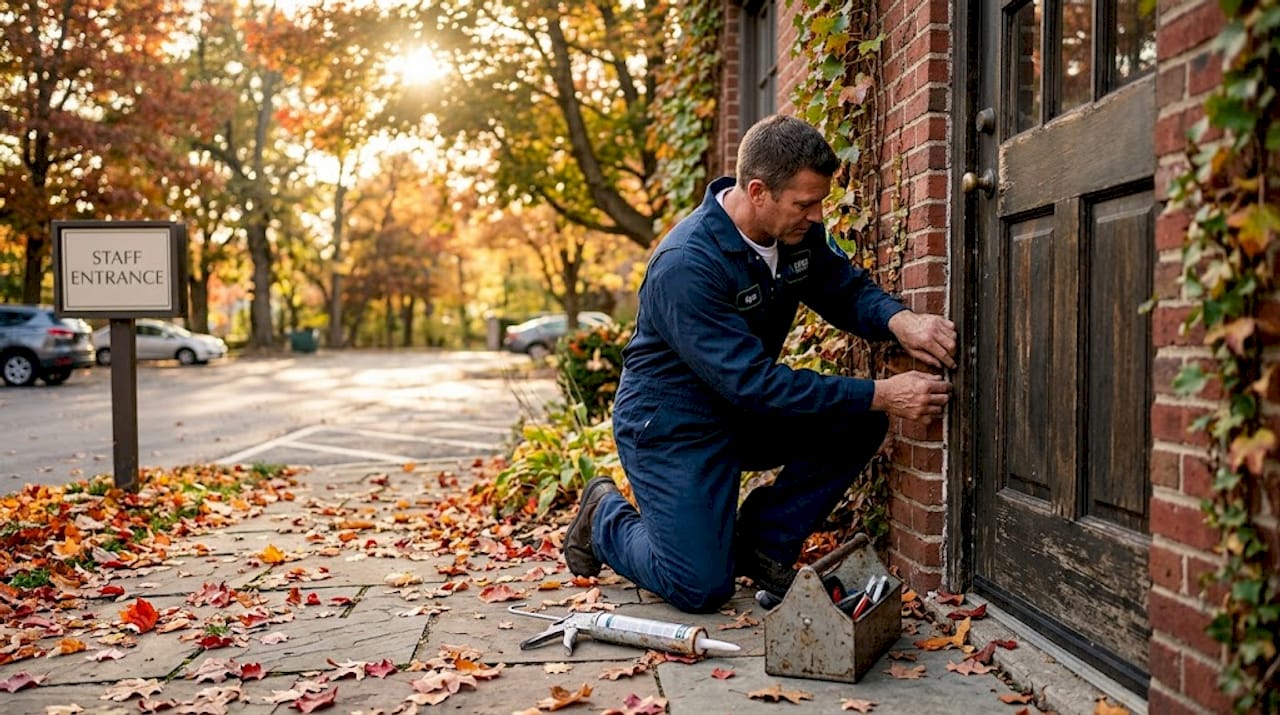
- Exterior door seals and sweeps: Gaps as small as 1/4 inch are enough for a mouse. Check every exterior door quarterly and after any door replacement.
- Pipe and conduit penetrations: Utility lines entering through walls are common entry points that often go unchecked for years. Use steel wool and caulk, not just foam, which rodents can chew through.
- Window and vent screens: Torn or missing screens in guest rooms and kitchen exhaust areas invite flies and stinging insects throughout Ohio summers.
- Grease trap and drain maintenance: Floor drains and grease traps in hotel kitchens are breeding grounds for drain flies and cockroaches if not cleaned on schedule.
- Dumpster placement and management: Keep dumpsters away from building entrances, use tight-fitting lids, and schedule pickups frequently enough that waste does not overflow.
- Pool and landscape zones: Standing water in decorative planters or poor drainage near pool decks breeds mosquitoes and attracts rodents looking for a water source.
Pro Tip: Create a corrective work order system where any exclusion issue found during a pest inspection automatically triggers a maintenance ticket. Without that link, the finding sits in a report and nothing gets fixed. A restaurant pest control checklist for your food service areas is a useful starting template for kitchen-specific sanitation standards.
Ohio’s fall season deserves specific attention. As temperatures drop below 50 degrees Fahrenheit, mice and rats aggressively seek warmth. Conduct a full exterior exclusion audit every September before that pressure begins. Catching and sealing entry points before the season is far cheaper than a winter rodent infestation.
With prevention covered, let’s explore targeted treatment options and response protocols suited for Ohio hotels.
Targeted pest treatment and rapid response protocols
Treatment should follow confirmed pest activity, not a calendar. Targeted treatment replaces calendar spraying with data-driven interventions based on what monitoring actually reveals.
When a pest is confirmed, here is how to respond:
- Identify the pest before treating. A misidentified pest leads to the wrong product and a wasted service call. Require your vendor to confirm identification before applying any chemical.
- Document the treatment completely. Record the EPA registration number, active ingredient, concentration applied, application location, and the technician’s license number.
- Isolate the affected area immediately. For guest rooms, this means taking the room out of inventory. For kitchen zones, this may mean temporarily shutting down a prep station.
- Perform a clearance inspection before reopening. A vendor signs off that the area is pest-free and safe for guest reentry. This goes into your documentation file.
Bed bug treatment comparison: heat vs. chemical
| Factor | Heat treatment | Chemical treatment |
|---|---|---|
| Speed | Single treatment, 6 to 8 hours | Multiple visits over 2 to 4 weeks |
| Guest disruption | High during treatment, then done | Repeated room downtime |
| Resistance risk | None | Possible with repeated chemical use |
| Cost | Higher upfront | Lower per visit, higher total |
| Documentation need | Post-treatment clearance report | Full pesticide application log |
| Best for | Confirmed active infestation | Preventive or early-stage activity |
For a bed bug scenario specifically, refer to the pest control audit checklist to confirm your response steps are audit-ready. The legal exposure from a documented bed bug complaint with no response record is far greater than the cost of proper treatment.
We’ve now covered the pillars of an effective program. Next is a comparative summary to help you make informed pest management choices.
Comparing pest management approaches: vendor contracts versus integrated systems
Most Ohio hotels are paying for a vendor contract that is essentially reactive pest control with a nice logo on the invoice. Understanding the difference between that and a genuine IPM system is where significant cost savings live.
| Feature | Reactive vendor contract | Integrated pest management |
|---|---|---|
| Treatment trigger | Scheduled calendar dates | Confirmed pest activity |
| Documentation | Basic service reports | Six-category audit-ready records |
| Prevention focus | Minimal | Structural exclusion and sanitation |
| Staff involvement | None required | Training and daily monitoring |
| Response speed | Next scheduled visit | Immediate protocol activation |
| Long-term cost | Higher due to repeated treatments | Lower through root cause elimination |
Reactive pest management leads to guest complaints while IPM detects pest trends early before they reach a guest room. Case studies show IPM can reduce treatment costs and guest incidents by 73% when properly implemented.
Reactive vendor contract: pros and cons
- Pro: Simple to manage, no internal training needed
- Pro: Lower upfront cost per service visit
- Con: No early detection, pests are found by guests not staff
- Con: Minimal documentation, limited audit protection
- Con: Does not address root causes
Integrated pest management: pros and cons
- Pro: Data-driven, early detection prevents guest incidents
- Pro: Full documentation reduces legal and audit risk
- Pro: Addresses entry points and sanitation at the source
- Con: Requires internal staff training and daily checklists
- Con: Higher initial setup investment in time and tools
Digital IPM platforms that centralize records are now affordable for mid-size Ohio hotels. They connect commercial pest monitoring data with maintenance workflows, giving you one dashboard for vendor reports, work orders, and staff training logs.
With this comparison in hand, let’s look at why so many hotel pest programs fail even when the basics are in place.
Why most hotel pest programs fail and how to operationalize success
Here is the uncomfortable reality: most hotels that say they have a pest program do not actually have one. They have a vendor relationship. There is a critical difference.
Most hotel programs fail because they do not operationalize vendor reports into internal corrective action workflows. The vendor visits, leaves a report, and that report sits in a binder or an inbox. No work order gets generated. No entry point gets sealed. No staff member is notified. The next month, the vendor finds the same issue again.
The fix is not a better vendor. It is a better internal system. When a pest report identifies a gap under a utility door, that finding should automatically become a maintenance work order with a due date and an assigned technician. When a cockroach is found near a floor drain, the kitchen supervisor should receive a sanitation corrective action item the same day.
Documented corrective actions also build your legal defense. If a guest claims they were bitten by bed bugs during their stay, your documentation showing the room was inspected, treated, and cleared before their check-in is your best protection. No documentation means no defense.
Staff culture matters more than most managers expect. Housekeepers who feel comfortable reporting a pest sighting without fear of blame are your earliest detection system. A housekeeper who spots two cockroaches near a baseboard and says nothing because they do not want to cause problems is the reason an infestation reaches 50 cockroaches before it is found.
Pro Tip: Use a digital CMMS (computerized maintenance management system) to generate pest-related work orders in real time. When your vendor flags an entry point, the maintenance ticket is created before the technician leaves the building. Review the monthly pest maintenance guide to build a recurring workflow that keeps nothing from falling through the cracks.
The hotels that consistently outperform on pest management are not the ones with the most expensive vendor contracts. They are the ones where pest data drives internal action every single day.
Partner with Apex Pest Control for expert hotel pest management in Ohio
Apex Pest Control has been protecting Ohio businesses from pest threats since 1969, and our IPM programs are built specifically for the demands of hospitality environments. We do not drop off a service report and disappear. We help you connect pest findings to maintenance action so your program actually works between visits. Our services include rodent extermination designed to eliminate infestations at the source, and bed bug treatments that minimize guest room downtime while protecting your reputation. Every treatment is documented to keep you audit-ready. When you are ready to build a pest management program that actually protects your hotel, request a free quote and we will put together a plan tailored to your property’s specific risks and Ohio’s seasonal pest pressures.
Frequently asked questions
What is the most effective pest management strategy for hotels?
An integrated pest management program combining monitoring, prevention, documentation, and treatment as connected components, not isolated tasks, consistently outperforms calendar-based reactive spraying in both cost and guest incident rates.
How often should hotels in Ohio schedule pest control service visits?
Monthly visits are the minimum for food service areas, with quarterly inspections covering guest floors and other zones, and frequency should increase immediately when pest activity is detected.
What documentation is required for compliance in hotel pest management?
Hotels must maintain six documentation categories, including vendor service reports, monitoring logs, corrective action records, staff training logs, pesticide data sheets, and the active pest management plan, all retrievable for unannounced audits.
How should hotels respond when a guest reports bed bugs?
Immediate room isolation, professional inspection, confirmed treatment, and documented clearance before reentry are required, along with relocating the guest and any guests in adjacent rooms as a precaution.
Why is connecting pest control findings to maintenance work orders important?
Linking pest intelligence to maintenance repairs closes the prevention loop, eliminating the entry points and conditions that cause repeated infestations and driving treatment costs down significantly over time.