



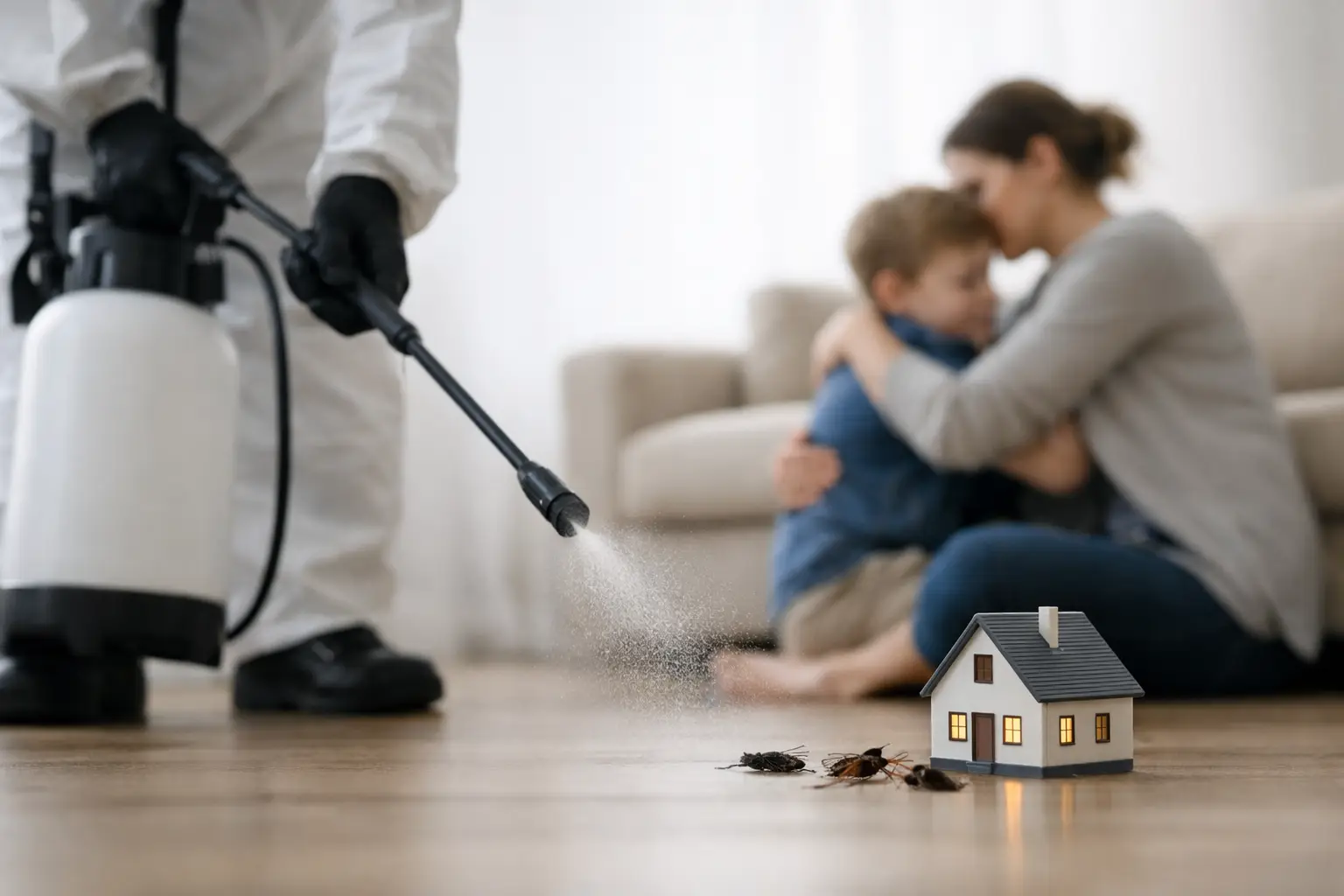
You do not want guesswork after a pest treatment. If you are asking how long after extermination is it safe to return, the right answer depends on what was treated, which products were used, how they were applied, and who will be re-entering the space – adults, children, pets, or sensitive occupants.
Most of the time, the safest rule is simple: follow the exact re-entry instructions given by your licensed pest control provider. That guidance is based on the product label, the treatment area, ventilation, and your property’s specific conditions. A general internet answer can point you in the right direction, but it should never override the instructions attached to your actual service.
How long after extermination is it safe in most homes?
For many routine residential pest treatments, people can often return once treated surfaces are dry and the space has been properly ventilated. In practical terms, that may mean a few hours. In other cases, especially with more intensive treatments such as bed bug services, fumigation, or applications in enclosed interior areas, the safe waiting period may be longer.
This is where homeowners can get tripped up. “Extermination” is not one single process. A crack-and-crevice treatment for ants is very different from a flea treatment across carpeted rooms, and both are different from a commercial fumigation. The safe re-entry window changes with the chemistry, the method, and the exposure risk.
If your technician says stay out for two hours, four hours, or until a specific time the next day, that is the rule to follow. It is not a suggestion. Product labels are legal safety documents, and professional technicians build their instructions around them.
What affects how long after extermination it is safe?
The biggest factor is treatment type. Liquid treatments applied to baseboards, entry points, or exterior perimeters usually have a shorter re-entry period than treatments that involve widespread indoor application, aerosolized materials, or space treatments.
Ventilation matters too. A well-ventilated home with open windows and active airflow may dry and clear faster than a closed building with limited air movement. Temperature and humidity can also affect drying time.
Occupant sensitivity is another variable. Homes with infants, pregnant family members, elderly residents, people with asthma, or pets may require more caution. The same is true for commercial facilities such as healthcare environments, food handling spaces, schools, and properties with strict compliance requirements.
The pest itself also influences the treatment plan. Roach control may rely heavily on baits and targeted applications with minimal disruption. Bed bug treatments often require more preparation and a more controlled return timeline. Flea treatments may involve carpets, upholstery, and floors where people and pets have more direct contact.
Common treatment categories and typical timing
For general insect control, many customers are told to wait until the application has dried, which is often around two to four hours. For interior sprays, that drying period is one of the most important safety markers.
For flea or tick treatments, technicians may recommend a longer wait, often several hours, because products are applied in areas with high foot traffic and pet contact. You may also receive instructions about vacuuming timelines and when pets can safely re-enter.
For bed bug treatments, the waiting period varies significantly. Chemical treatments may require several hours before re-entry. Heat treatments follow a different process and still require technician clearance before you come back inside.
For rodent control, safety questions are usually less about re-entry time and more about bait placement, trap location, and making sure children and pets cannot access control devices.
For fumigation, the timeline is much longer and much stricter. You should only re-enter after the property has been officially cleared according to the fumigation protocol.
When is it safe for children and pets?
Children and pets should be treated as the most sensitive occupants in the home. They spend more time on floors, touch more surfaces, and are more likely to put hands or objects in their mouths. That means the bar for safety is higher.
In many standard treatments, children and pets can return after treated areas are fully dry and the technician confirms re-entry is allowed. Even then, it is smart to keep pets from licking treated surfaces and to prevent children from touching application areas until everything is settled.
Fish tanks, reptile enclosures, bird cages, and other sensitive animal habitats deserve special attention. Birds in particular can be highly sensitive to airborne contaminants. If you have exotic pets or enclosed habitats, tell your pest professional before treatment begins so the service plan can be adjusted.
Pet owners should also ask one practical question many people forget: when can pet items go back? Food bowls, toys, bedding, litter mats, and crates may need to stay out of treatment zones until the technician says it is safe.
Signs you should wait longer before re-entering
Even if a general timeline has passed, there are cases where waiting a bit longer is the better move. If treated surfaces still feel damp, if there is noticeable airborne residue, or if the technician instructed additional ventilation, give the property more time.
If anyone in the household has a respiratory condition, chemical sensitivity, or a compromised immune system, ask for a more conservative recommendation. A dependable provider will give you clear, property-specific guidance instead of pushing a generic answer.
For commercial spaces, the same principle applies. An office may be ready sooner than a daycare, restaurant, or medical facility. The occupancy risk is not the same, and the treatment plan should reflect that.
What you should do after extermination
Once you are cleared to return, do not immediately wipe down every treated area. That can reduce the effectiveness of the service. Many products are designed to keep working after application, especially around baseboards, cracks, crevices, and entry points.
Instead, follow the post-treatment instructions exactly. You may be told to avoid mopping for a certain period, delay vacuuming in targeted areas, or leave baits undisturbed. These details matter because they affect both safety and results.
It also helps to air out the space if your technician recommends it. Open windows, run fans, and replace items only after treated areas are dry. If linens, dishes, toys, or food prep surfaces were part of the concern, ask whether any extra cleaning steps are necessary.
Questions worth asking your exterminator before service
The safest customers are usually the ones who ask specific questions before treatment starts. Ask how long after extermination it is safe to return, whether that timeline changes for pets or children, and what signs tell you the area is ready.
Also ask what not to clean, when regular activity can resume, and whether any rooms need special handling. If you run a commercial facility, ask about documentation, restricted access timing, and any steps needed to stay compliant with your internal safety protocols.
A professional company should answer these questions clearly and without vague language. You should know when you can come back, what precautions to take, and what results to expect.
Why professional instructions matter more than generic advice
Online estimates are helpful for orientation, but they are not a substitute for licensed guidance. Two homes with the same pest problem may receive different products, different application methods, and different re-entry instructions.
That is why experienced providers build treatment plans around the property, the infestation level, and the people using the space. A family home in Ohio with kids and dogs may need a different safety approach than a warehouse, apartment turnover, or food processing area.
At Apex Pest Control, safety is not treated as an afterthought. It is part of the service itself – from product selection and application method to re-entry instructions and post-treatment support. That is what gives customers peace of mind after an already stressful pest problem.
The short answer most people need
If you want the simplest answer to how long after extermination is it safe, here it is: for many standard treatments, wait until the product is dry and the technician says re-entry is allowed, which is often a few hours. For more intensive or specialized treatments, the wait may be longer.
The key is not to rely on a one-size-fits-all timeline. Safe re-entry depends on the treatment, the property, and the people or animals returning to that space. When your pest professional gives you a specific window, follow it exactly.
A good extermination service does more than eliminate pests. It leaves you with clear instructions, real protection, and confidence about when your home or facility is ready to use again.