



TL;DR:
- Early detection of termite signs like mud tubes and swarmers can prevent costly structural damage. Homeowners should inspect annually, focusing on moist, vulnerable areas, and confirm signs before treatment. Professional pest control ensures accurate diagnosis and effective treatment to protect Ohio homes from subterranean termites.
Knowing how to identify pest infestations before they spiral into costly damage is one of the most practical skills any Oakwood homeowner can have. Termites, in particular, are a silent threat across Ohio. They can hollow out the wooden framing of a house for months before a single visible sign appears. Pests like rodents and insects spread serious diseases and cause structural damage that compounds every season you miss it. This guide walks you through exactly what to look for, where to look, and what to do once you find it.
Table of Contents
- Key Takeaways
- How to identify pest infestations: understanding termites in Oakwood
- Physical signs of a termite infestation
- Detection methods you can use at home
- Common misidentifications to avoid
- What to do after confirming an infestation
- My perspective on termite identification in Ohio homes
- Let Apexpestcontrol protect your Oakwood home
- FAQ
Key Takeaways
| Point | Details |
|---|---|
| Early signs save money | Termite infestations often go unnoticed until structural damage appears, so recognizing mud tubes and swarmers early is critical. |
| Local housing matters | Older Oakwood homes with wood framing, crawl spaces, and aging foundations are especially vulnerable to termite entry. |
| DIY inspection has limits | Moisture meters and flashlights help, but professional-grade monitoring catches what homeowners typically miss. |
| Misidentification delays treatment | Water damage and carpenter ant activity are frequently confused with termite damage, which wastes time and money. |
| Act after confirmation | Once signs are confirmed, contact a licensed pest control provider and explore baiting or chemical treatment options promptly. |
How to identify pest infestations: understanding termites in Oakwood
Oakwood sits within the greater Dayton area, and like much of Ohio, its climate creates ideal conditions for termite activity. Warm, humid summers followed by wet springs give subterranean termites, the most common species in Ohio, exactly the moisture they need to thrive. The eastern subterranean termite (Reticulitermes flavipes) is the species Oakwood homeowners encounter most often. Colonies can grow to hundreds of thousands of workers, and they operate almost entirely underground or inside wood.
Termites enter homes through several predictable routes:
- Wood-to-soil contact near foundations, porch steps, or deck posts
- Cracks in concrete slabs as narrow as 1/32 of an inch
- Expansion joints in basement floors and walls
- Gaps around utility pipes where they pass through the foundation
- Crawl spaces with poor ventilation and moisture buildup
Seasonal timing matters here. In Oakwood, termite swarmers typically emerge in spring, between March and May, when temperatures warm and after rainfall. These swarmers are the reproductive members of the colony. Spotting them indoors near windowsills or light fixtures is one of the earliest and clearest termite warning signs a homeowner will encounter. Many older homes in neighborhoods near Oakwood Park and around Far Hills Avenue have wood framing styles and basement configurations that create multiple entry opportunities.
Physical signs of a termite infestation
Most termite damage goes unseen for months. The colony eats wood from the inside out, so the exterior surface can look completely normal while the interior is compromised. Here is what to check for specifically.
Wood damage patterns. Tap wooden surfaces along baseboards, door frames, window frames, and floor joists with a screwdriver handle. Hollow-sounding wood is a red flag. When you probe it, termite-damaged wood often reveals a honeycomb interior packed with soil and debris. This pattern is distinct from rot, which tends to crumble outward.
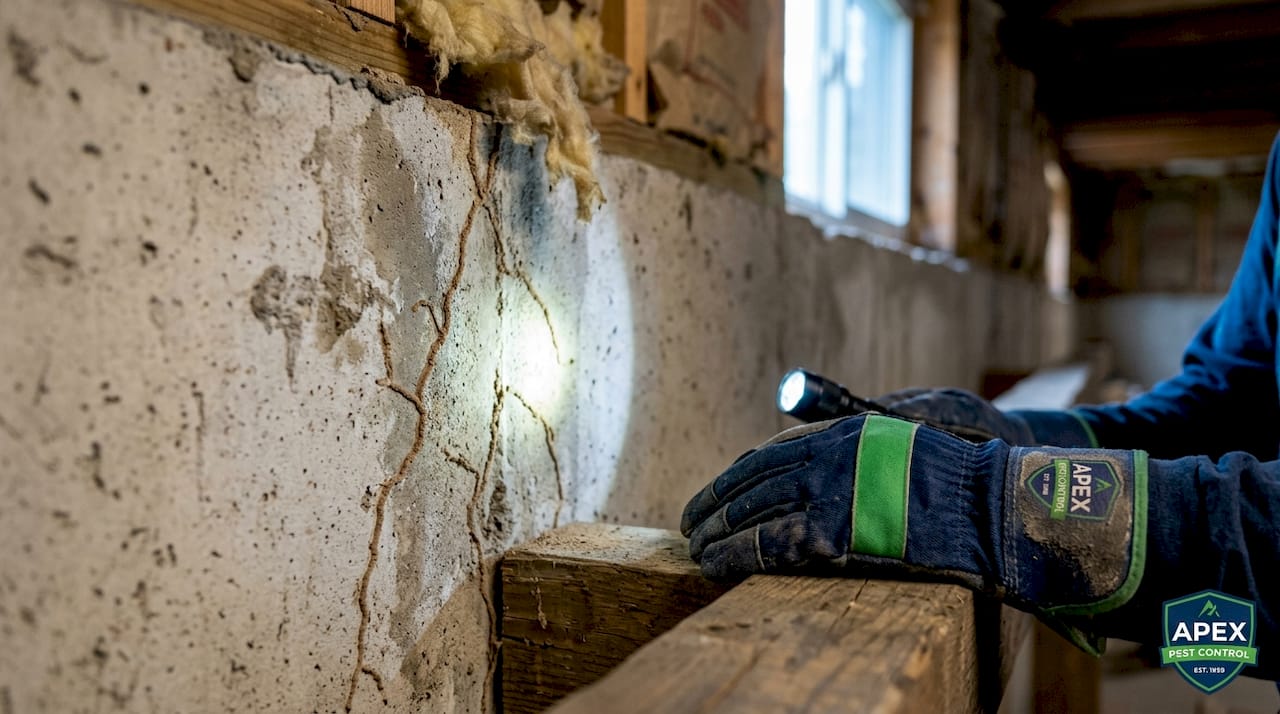
Mud tubes. These pencil-width tunnels run along foundation walls, floor joists, and support beams. Termites build them from soil and saliva to maintain humidity while traveling between the ground and their food source. Finding a mud tube is close to definitive evidence of subterranean termite activity. Break one open. If it is active, you may see live termites inside. If it repairs itself within a few days, the colony is still active.
Frass. Drywood termites leave behind tiny pellet-shaped droppings called frass. They push it out of the wood through small kick-out holes. Frass looks like fine sawdust but with a hexagonal shape under magnification. Finding frass near wooden trim or furniture is a strong identification signal.
Blistering or cracked paint. Termites traveling close to the surface of painted wood can cause the paint to bubble or blister in patterns that mimic water damage. This is one of the most commonly missed pest infestation signs because homeowners assume it is a moisture issue.
| Sign | Termites | Water damage | Carpenter ants |
|---|---|---|---|
| Mud tubes | Yes | No | No |
| Frass (pellets) | Yes | No | No (coarse sawdust) |
| Hollow wood sound | Yes | Sometimes | Yes |
| Paint blistering | Yes | Yes | No |
| Live insects visible | Rarely (early) | No | Sometimes |
Pro Tip: Run a flathead screwdriver along the bottom of wooden door frames and baseboards in your basement. Soft spots or crumbling wood that give way with light pressure deserve a much closer look.
Detection methods you can use at home
You do not need professional equipment to run a solid first-pass inspection. What you do need is a plan and the right tools.
-
Start with the basement and crawl space. These are the highest-risk zones in any Oakwood home. Bring a flashlight and look for mud tubes running up the foundation walls, along floor joists, or on any wood in contact with the ground.
-
Check moisture-prone areas. Termites follow moisture. Inspect around water heaters, plumbing connections, and any area with past water intrusion. A basic moisture meter, available at most hardware stores for under $30, can reveal elevated moisture in wood before it becomes visible damage.
-
Inspect the exterior perimeter. Walk the outside of your home and look for mud tubes near the foundation, particularly on the shaded north and east sides where soil stays damp longer. Check deck posts, wooden fence connections to the house, and any exterior wood trim close to grade level.
-
Look for swarmers and discarded wings. Termite swarmers shed their wings immediately after mating. Finding small, uniform wings near windowsills, door thresholds, or light fixtures inside your home, particularly in spring, is one of the strongest early detection signals available.
-
Check attic framing. Many homeowners skip the attic. Look for darkened or sagging rafters, frass deposits near wood surfaces, and any sign of insect activity around roof penetrations.
| Method | Cost | Skill needed | Detection accuracy |
|---|---|---|---|
| Visual inspection | Free | Low to moderate | Moderate |
| Moisture meter | $20–$40 | Low | Good for moisture risk |
| Termite monitoring stations | $50–$150 | Moderate | High over time |
| Professional inspection | $75–$150 | None required | Highest |
Pro Tip: Schedule your self-inspection in late March or April in Oakwood. That timing coincides with peak swarmer activity and gives you the best chance of catching a new infestation before the colony expands through summer.
Common misidentifications to avoid
One of the biggest mistakes Oakwood homeowners make is treating the wrong problem. Confirming physical signs before taking action is always the right call, regardless of the pest. With termites specifically, here are the mix-ups that happen most often.
Carpenter ants vs. termites. Both damage wood, but differently. Carpenter ants excavate smooth, clean galleries and push coarse, sawdust-like debris out of exit holes. Termites leave soil-packed galleries and finer frass. Carpenter ants are also visibly segmented with a pinched waist. If you see the insect itself, that detail alone helps you identify common pests correctly.
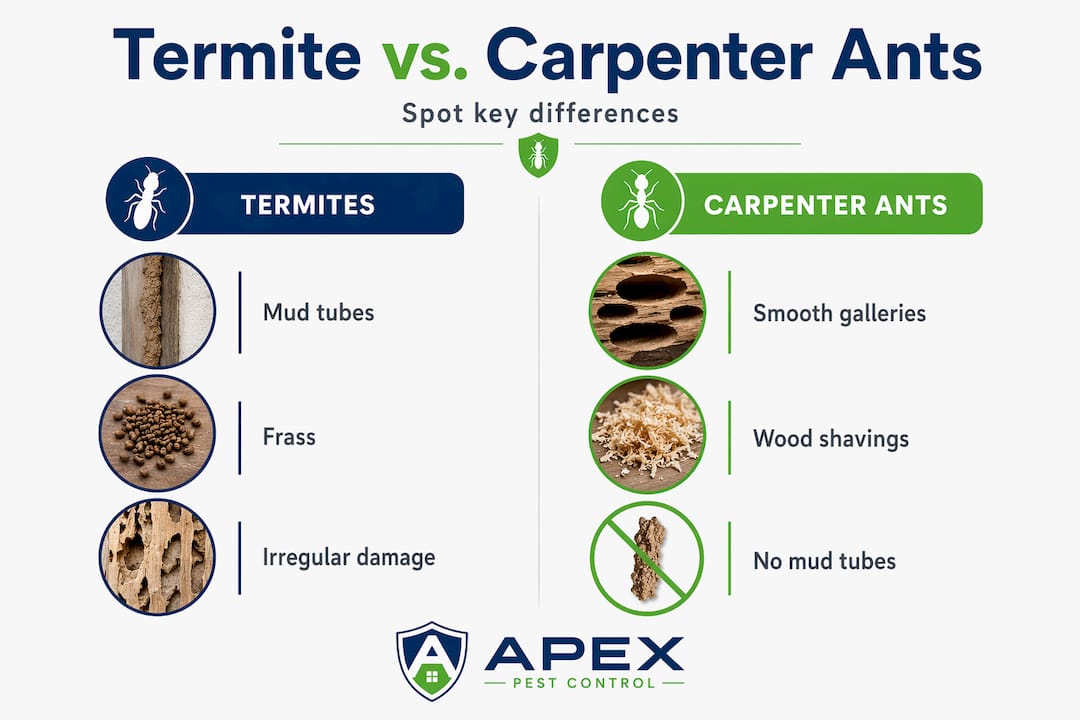
Water damage vs. termite damage. Blistering paint, soft wood, and staining can all result from a leaking pipe rather than termites. The key difference is mud tubes. Water damage does not produce mud tubes. If you find blistering wood but no tubes, check plumbing first. Dust and droppings from indoor pests can look similar to residue from building materials, which is another reason physical confirmation matters so much.
Rodent damage. Mice and rats gnaw through wood, insulation, and drywall. Their damage is rougher, often with visible tooth marks and larger openings. You might also find rodent droppings, which are elongated and tapered, nothing like termite frass. For more on spotting rodent activity, Apexpestcontrol has a dedicated rodent activity guide worth reviewing.
- Never apply termite treatment based on a single ambiguous sign
- Always look for multiple indicators before concluding an infestation is present
- If signs are unclear, a professional inspection provides certainty without requiring you to guess
What to do after confirming an infestation
Once you have confirmed termite activity, speed matters. Early detection saves homeowners thousands in structural repairs. Here is how to move forward effectively.
-
Document what you found. Take photos of mud tubes, damaged wood, frass, and swarmers before disturbing anything. This helps the pest control professional assess severity and choose the right treatment.
-
Contact a licensed Ohio pest control company. Do not wait for the problem to grow. A licensed exterminator can confirm the species, map the extent of the infestation, and recommend treatment.
-
Understand your treatment options. Liquid termiticides applied to the soil around the foundation create a chemical barrier. Bait stations placed in the ground attract foragers and carry a slow-acting toxicant back to the colony. Your pest professional will recommend the right approach based on infestation size and home layout.
-
Address moisture issues in parallel. Fix any plumbing leaks, improve crawl space ventilation, and redirect downspouts away from the foundation. Termites follow moisture. Removing it reduces reinfestation risk significantly.
-
Schedule annual inspections going forward. In Oakwood, the combination of mature housing stock and Ohio’s humid summers means termites are a recurring threat, not a one-time event. Annual inspections catch new activity before it escalates. Integrated pest management principles recommend combining monitoring, prevention, and targeted treatment rather than relying on chemical application alone.
My perspective on termite identification in Ohio homes
I have watched what happens when homeowners in Ohio skip their annual inspections or dismiss early signs as “probably just water damage.” The cost is rarely small. By the time bowed floors or crumbling door frames become obvious, the colony has often been active for two to four years. That is not a repair. That is a renovation.
What I have learned working with homes across the Ohio region is that local knowledge changes everything. Oakwood’s housing stock, a mix of mid-century brick homes and older wood-frame construction near the Miami Valley corridor, has specific vulnerabilities that generic pest guides simply do not address. Homes with detached garages connected by wooden walkways, or properties with mature tree roots near the foundation, face higher termite pressure than newer construction with concrete barriers.
My strong recommendation is to combine a visual inspection with a moisture meter check every spring. Do not wait for visible damage. Handling pest infestations early reduces both health risks from allergens and the structural damage that comes from delayed action. The homeowners I respect most treat pest detection the same way they treat smoke detectors: routine, non-negotiable, and not something you think about only when there is already a problem.
If you are uncertain about what you found, call a professional before you treat. A wrong diagnosis costs more than a professional inspection.
— Dushan
Let Apexpestcontrol protect your Oakwood home
Apexpestcontrol has been serving Ohio homeowners since 1969, and termite identification and removal is one of the core services the team delivers in the Oakwood area. Whether you have found a mud tube in your crawl space or want a baseline inspection before buying or selling a home, the Apexpestcontrol team brings the equipment and local experience to give you a clear answer fast. Their residential pest control guide explains the full scope of services available, from termite baiting systems to ongoing prevention programs built on integrated pest management principles. Apexpestcontrol also handles rodents, bed bugs, ants, and stinging insects, so one call covers your entire home. Request a free quote today by calling 1-800-684-2284 or visiting apexpestcontrol.net.
FAQ
What are the first signs of a termite infestation?
The earliest signs of pest infestations from termites include mud tubes on foundation walls, discarded wings near windows, and hollow-sounding wood when tapped. Spotting swarmers indoors during spring is one of the most reliable early warnings.
How do I tell termite damage apart from water damage?
Termite damage almost always comes with mud tubes or frass nearby, while water damage does not. If you find blistered or soft wood but no mud tubes, inspect your plumbing before concluding termites are the cause.
Can I identify a termite infestation myself?
Yes, a basic DIY inspection using a flashlight, screwdriver, and moisture meter can reveal key signs of pest infestations. However, professional inspections use monitoring equipment that detects activity homeowners routinely miss, especially in wall cavities and under slabs.
When is termite season in Oakwood, Ohio?
Subterranean termites in Oakwood are most visibly active from March through May, when warm temperatures and spring rain trigger swarming. That is the best window for homeowners to inspect their property for early pest infestation signs.
How often should Oakwood homeowners inspect for termites?
Annual inspections are the standard recommendation, particularly for homes with crawl spaces, aging wood framing, or past moisture problems. Consistent pest detection methods catch new infestations before colonies grow large enough to cause structural damage.